No fees unless we win.
Get a free consultation

What To Do if You Believe You Are a Victim of Medical Malpractice

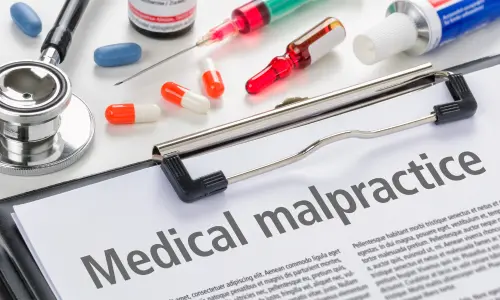
When you seek medical attention, you are going in to solve a health issue you’re experiencing. For someone seeking a medical solution, walking away with more problems can be traumatizing and dangerous. Medical malpractice can affect anyone, but not everyone will know what to do if they are made a victim.

Find Medical Attention Somewhere Else

First and most importantly, you must preserve your health. Your safety and well-being come first. Set up calls with offices unaffiliated with the office you have issues with and take care of yourself. If you can, make sure the new physician is in your insurance carrier’s network to avoid losing money unnecessarily. Your health is the priority.

Document Everything You Can

Gather all the documents and records you possibly can and do your best to organize them. Since you may forget details due to stress and fear, write down your thoughts and take notes wherever possible. Write down dates, times, dosages, names, procedures, and anything else you can think of. You should include all communications between you and the medical office that you can gather. Save and print anything you think could be helpful, like:

  • Pictures
  • Emails
  • Statements
  • Prescriptions
  • Hospital bills
  • Diagnostic images or information

Even if you are not ready to pursue legal action, keeping a journal of everything will help you remember details and process any trauma or confusion you may have undergone. Keep track of any injuries or diminishment in mental health that could be due to your negative experience.

Request Your Medical Records

You are entitled to copies of your own medical records, including any X-rays or other diagnostic materials. You should not explain why you are requesting them, as this can alert the office and help the other side of any potential legal case. If you are told you can’t have access to them or are questioned, stand firmly, and continue to request them without giving a reason. Requesting them before any sort of claim you file will keep them from being altered or changed in any way.

What NOT To Do

  • Don’t post about it on social media or online forums, even if your account is private.
  • Don’t contact the hospital or physician yet—this could work against you as a pretrial notice or in another way. Wait until you speak with an attorney.
  • Don’t threaten legal action or warn any parties of your intentions

Contact a Diligent Medical Malpractice Attorney

Your best move is to leave the details of your case to an experienced legal professional before you move forward with anything at all. Call Zoll & Kranz for a free consultation if you have questions or believe you are a victim of medical malpractice.

Different Types of Nursing Home Negligence

Nursing home negligence encompasses a range of neglectful acts and abuse committed against residents of nursing homes, assisted living facilities, or other kinds of care facilities. It damages the mental, emotional, and physical health of residents. Bear in mind that negligence in these facilities can look different for people with differing needs. Victims and their families can and should promptly seek legal action against these neglectful acts.

Abandonment

Abandonment happens when someone with custody of another person deserts or leaves them without caring for them or their well-being. In a nursing home, this can look like:

  • Leaving a resident in a public area for extended periods of time;
  • Ignoring calls or requests;
  • Failure to respond to an accident or a dangerous situation.

Nursing home staff who leave residents without care for too long can seriously damage the well-being of those residents.

Medical Neglect

Medical neglect is one of the more obvious kinds of damage to a resident. The failure to meet a patient’s medical needs can result in a slew of negative outcomes. This can look like:

  • Not providing proper medications at the right times or mixing medications without checking;
  • Not turning patients who are bedridden, resulting in the development of sores;
  • Not supplying care for wounds resulting in sepsis or infection, inadequate diabetic care, etc.

Some long-term care facilities have been sued for sedating residents rather than caring for them.

Neglect of Basic Needs

If a patient or resident does not have their basic needs of nutrition, hydration, or a clean, safe environment—the outcomes will be damaging. When these needs are neglected, there is a risk of malnutrition, dehydration, and other issues like theft or accidents. Patients must be fed regularly and must be given food that meets their dietary and allergy needs. Sometimes in nursing homes, basic needs are overlooked when the facility has more complex issues to address for some residents—but the base needs people have should never be ignored.

Self-Neglect

Caregivers also have the responsibility to keep residents from slipping into self-neglect. Self-neglect in residents occurs when they lose the ability to care for themselves but refuse assistance. It is the caregiver’s duty to identify the patient’s needs, regardless of what they say they do or do not need.

Neglect of Hygiene

Nursing home residents have many hygiene needs. Caretakers must regularly:

  • Replace and wash bedsheets;
  • Wash residents’ clothes;
  • Bathe residents/help them bathe themselves.

Residents’ personal hygiene and bathroom needs must be met, and they should not appear dirty or disheveled. Their rooms must also be kept clean and in order. Failure to care for a patient’s hygienic needs can result in infections and illnesses.

Social/Emotional Neglect

Keeping residents happy and content is key to keeping them healthy. As humans, we have a need to socialize with others. If residents are being ignored or kept away from other residents, family, and friends, this is social/emotional neglect. Patients with physical or mental disabilities need to be moved around the facility or guided around to avoid neglect because they cannot meet these needs themselves. Emotional neglect may also occur when a resident suffers harassment, threats, or fear from a caretaker.

Stop Nursing Home Negligence and Abuse With Our Help

If you believe your loved one or someone you know is suffering negligence or abuse in their nursing home or assisted living facility, contact Zoll & Kranz, LLC for a free, private consultation.

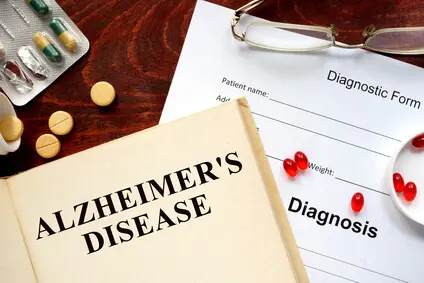
Zoll & Kranz Files Lawsuits Over Wrongful Alzheimer’s Disease Diagnoses

The law firm of Zoll & Kranz, LLC has filed lawsuits on behalf of four people the firm says were wrongly told they have Alzheimer’s disease.

According to the Complaints filed in each case, each person was wrongly told he or she had Alzheimer’s disease by someone who was not even qualified to make such a diagnosis. The Toledo Clinic Cognitive Center’s director, Sherry Ann Jenkins, ordered medical imaging tests using her husband’s ordering privileges, then read the scans and said she saws signs of Alzheimer’s disease. Sherry Ann Jenkins was not qualified to order these types of scans and was not qualified to make this type of diagnosis.

Recent coverage by the Toledo Blade (here), describes the agony suffered by the firm’s clients as they and their families were told—wrongly—that they have a degenerative brain disease that will progressively destroy their mental faculties and eventually cause death. The clients described the anguish of making arrangements for one’s own mental decline.

David Zoll, founding partner of Zoll & Kranz, expects more than just these four people have been misdiagnosed by Sherry Ann Jenkins. He is very concerned that some victims of this scheme may not even realize the diagnosis was false. Zoll & Kranz recommends anyone who received a diagnosis at The Toledo Clinic Cognitive Center seek a second opinion from a qualified doctor.

For more information or to talk with a member of the Zoll & Kranz investigatory team, call (419)-841-9623 or reach us through our website at.

Zoll & Kranz Attorney Included in the 2014 Ohio Super Lawyers

We are pleased to announce that Partner David Zoll has been included in the 2014 Ohio Super Lawyers list for the seventh year in a row. The Super Lawyers recognition is exclusively awarded to 5% of attorneys in the state.  In the same regard, the Rising Stars recognition is awarded to only 2.5% of all Ohio attorneys.

Super Lawyers, a Thomson Reuters business, is a research-driven, peer influenced rating service of outstanding lawyers who have attained a high degree of peer recognition and professional achievement.  Attorneys are selected from more than 70 practice areas and all firm sizes, assuring a credible and relevant annual list.

The annual selections are made using a patented multiphase process that includes:

  • Peer nominations
  • Independent research by Super Lawyers
  • Evaluations from a highly credentialed panel of attorneys

The objective of the Super Lawyers lists is to create a credible, comprehensive and diverse listing of outstanding attorneys to be used as a resource for both referring attorneys and consumers seeking legal counsel.

Please join us in congratulating partner, David Zoll.

To read more about the ZK attorneys and their accomplishments please visit

Are Speedy FDA Approvals Jeopardizing Drug Safety?

Public Citizen, a patient advocate group, proposes that since Congress passed legislation to accelerate the approval process for drugs they are more likely to be given safety warnings or pulled from the market.

According to Public Citizen, appropriate time may not be given to study the potential adverse risks before the product(s) are allowed to go to market.  The risk is endangering patients by raising the likelihood these drugs may be found dangerous after being taken.

Products cleared before the 1992 Prescription Drug User Fee Act, which sped approvals, had a 21.2 percent chance of eventually being given either a black box warning or being pulled for safety reasons, the study found. Drugs approved after PDUFA had a 26.7 percent chance of receiving the same outcomes, said the study that examined all non-biologic products approved from 1975 through 2009.

The law firm of Zoll & Kranz, LLC (“ZK”) devotes its practice to the field of pharmaceutical and medical device litigation.

If you believe you may have suffered injury as a result of a dangerous drug or medical device, contact ZK toll-free at (888)841-9623 or visit the firm’s website at www.toledolaw.com. Initial consultations are always free and confidential.

Parents Warned Not To Use Spray Sunscreen On Children

The Huffington Post (7/7, 11.54 M) reported yesterday that Consumer Reports has issued a warning about spray sunscreen that advises parents to stay away from using them on children.

The Food and Drug Administration announced their investigation of spray sunscreen safety in 2011, but have yet to release a verdict.”We now say that until the FDA completes its analysis, the products should generally not be used by or on children,” says Consumer Reports. “We have also removed one sunscreen spray — Ocean Potion Kids Instant Dry Mist SPF 50 — from the group of recommended sunscreens in our sunscreen Ratings, because it is marketed especially for children.”

The article notes that Consumer Reports tested sunscreens in the past and found that those containing titanium dioxide and zinc oxide could have nanoparticles — particles known for causing developmental issues in animals.

It also noted that the American Academy of Dermatology also warns against sprays.

The law firm of Zoll & Kranz, LLC (“ZK”) devotes its practice to the field of pharmaceutical, medical device and consumer product litigation. ZK is dedicated to compelling companies to produce safer products. Injured clients and partnering attorneys from across the U.S. appreciate and rely upon over 50 years of combined experience in pharmaceutical mass torts and multidistrict litigation. ZK’s experienced team includes a practicing physician-attorney and all the technology, knowledge and experience necessary to succeed in this complex legal field. For more information about the spray sunscreen warning, contact ZK toll-free at (888)841-9623. Initial consultations are always free and confidential.

Are Nursing Home Residents Receiving Dangerous Drugs?

Carefully monitor medication being given to nursing home residents, as there have been reports of residents receiving powerful antipsychotic drugs, usually to suppress issues relating to Alzheimer’s disease and other forms of dementia.

According to National Public Radio, this practice is known as “chemical restraint.” Among the drugs used are Risperdal and Seroquel, which are approved to treat bipolar disorder and schizophrenia. NPR reported that the drugs used commonly have black box warnings, some of which say they can increase a user’s risk for heart failure, infections and death.

A 2011 study found that “88 percent of Medicare claims for antipsychotics prescribed in nursing homes were for treating symptoms of dementia, even though the drugs aren’t approved for that.”

NPR reports the federal government launched a campaign in 2011 to reduce antipsychotic drug use at nursing homes by 15 percent. Although prescriptions have dropped over the last three years, almost 300,000 nursing home residents are still given antipsychotic drugs.

If you would like to see information about the antipsychotic medications prescribed by facilities in your area, you can click on the NPR link located at the bottom of this page.

Zoll & Kranz, LLC – Defective Medical Drug and Device Lawyers

Source: http://www.npr.org/blogs/health/2014/12/08/368524824/old-and-overmedicated-the-real-drug-problem-in-nursing-homes

Has the Number of FDA Drug Recalls Increased?

If it seems like there have been many drug recalls in the news lately, it is probably because the number of recalls has increased over the past two years.

According to medcitynews.com, the number of U.S. Food and Drug Administration (FDA) recalls has increased and is on track to break an all-time record in 2014.

“As FDA data show, the last two years have seen almost as many recalls (2,061) as the previous nine years combined (2,217) — and that’s only counting the first seven months of 2014,” Alexander Gaffney of the Regulatory Affairs Professionals Society said, according to medcitynews.com.

The website reported that about 70 percent of the recalls have been of the Class II variety, meaning they could cause reversible health side effects. About 21 percent have been Class I, meaning that the products could cause serious ill effect in a user, or even death.

“It’s difficult to blame any one factor for the rise in recalls, but one trend may be to blame for a sizeable portion of it,” Gaffney said, according to the website. “Beginning in 2012, FDA initiated a crackdown on compounding pharmacies after a massive and deadly outbreak of fungal meningitis which killed more than 60 people.”

Can I File a Lawsuit If a Recalled Drug Has Injured Me?

The deadly fungal meningitis outbreak Gaffney discussed was the due to contaminated steroid spinal injections made by the New England Compounding Center. NECC ended up settling lawsuits for more than $100 million over injuries and deaths related to the outbreak.

Zoll, Kranz & Borgess investigates defective drug and devices as we are advocates for those injured.  To learn more about ZKB or to receive a free consultation contact us today toll-free at (888)841-9623.

Zoll & Kranz, LLC – Defective Medical Drug and Device Lawyers

Source: http://medcitynews.com/2014/08/number-fda-drug-recalls-shooting-still-ironing-exactly/

FDA Announces Medical Device Tracking System

According to Reuters, the US Food and Drug Administration (FDA) announced last month that it would be requiring companies to include tracking codes on medical devices, allowing the agency to monitor them for safety issues or recalls.

According to the FDA, the tracking codes will be unique device identifier or UDI codes, which will be placed into a database that the agency will maintain, and will be publicly searchable.

“A consistent and clear way to identify medical devices will result in more reliable data on how medical devices are used,” Dr. Jeffrey Shuren, director of the FDA’s medical device division said in a statement.

The agency said it plans to phase in the system by focusing on medical devices that carry the greatest risk of complications including pacemakers, defibrillators, heart pumps and artificial joints.

Tracking numbers assigned to devices will include the product’s lot number, expiration date and manufacturing date. Devices will be separated into three categories, Class I to III, with Class III being the highest risk.

Manufacturers will be required to have records that will include all UDI codes through an accreditation process.

This is a welcome change; as of last week, the FDA had already issued 50 medical device recalls in 2013.

A defective medical device can lead to serious complications causing death and catastrophic injuries.

If you or a loved one has been injured because of a dangerous drug or medical device, please contact our office immediately for a free consultation.

We are available by calling toll free (419) 827-3194.

Our firm offers confidential, no obligation consultations.

Zoll & Kranz, LLC – Medical Drug and Device Attorneys

FDA Issues Warning About Counterfeit Sexual Enhancement Product

According to NBC News, the US Food and Drug Administration (FDA) announced earlier this month that a counterfeit dietary and male sexual enhancement product could be harmful to people with diabetes, high blood pressure, high cholesterol and heart disease.

In a safety warning, the FDA said that a fake product being represented as “ExtenZe Maximum Strength” is being sold in various markets. Monrovia, Calif.-based Biotab Nutraceuticals makes ExtenZe.

An FDA investigation revealed that the counterfeit ExtenZe contains sildenafil, the active ingredient in Pfizer’s Viagra, which is only available in prescription medications. The real version of ExtenZe does not contain sildenafil.

The FDA said that people could check their product to see if they have a counterfeit version. The fake product can be identified using the lot number 0512058 and the expiration date, “EXP. May 16,” stamped on the outer carton and embossed on the blister card.

Customers who purchased and used the counterfeit product are being told to contact a healthcare professional.

There have been many issues reported with dietary and sexual supplements in the news lately, including OxyElite Pro, distributed by USPlabs LLC of Dallas, which was sold nationwide and has been recalled.

Our lawyers represent victims of dangerous supplements and drugs that have been recalled due to safety issues. For more information, contact our experienced pharmaceutical drug and device attorneys by calling toll-free (888)-841-9623. today.