No fees unless we win.
Get a free consultation
16 Reviews
5.0
★★★★★

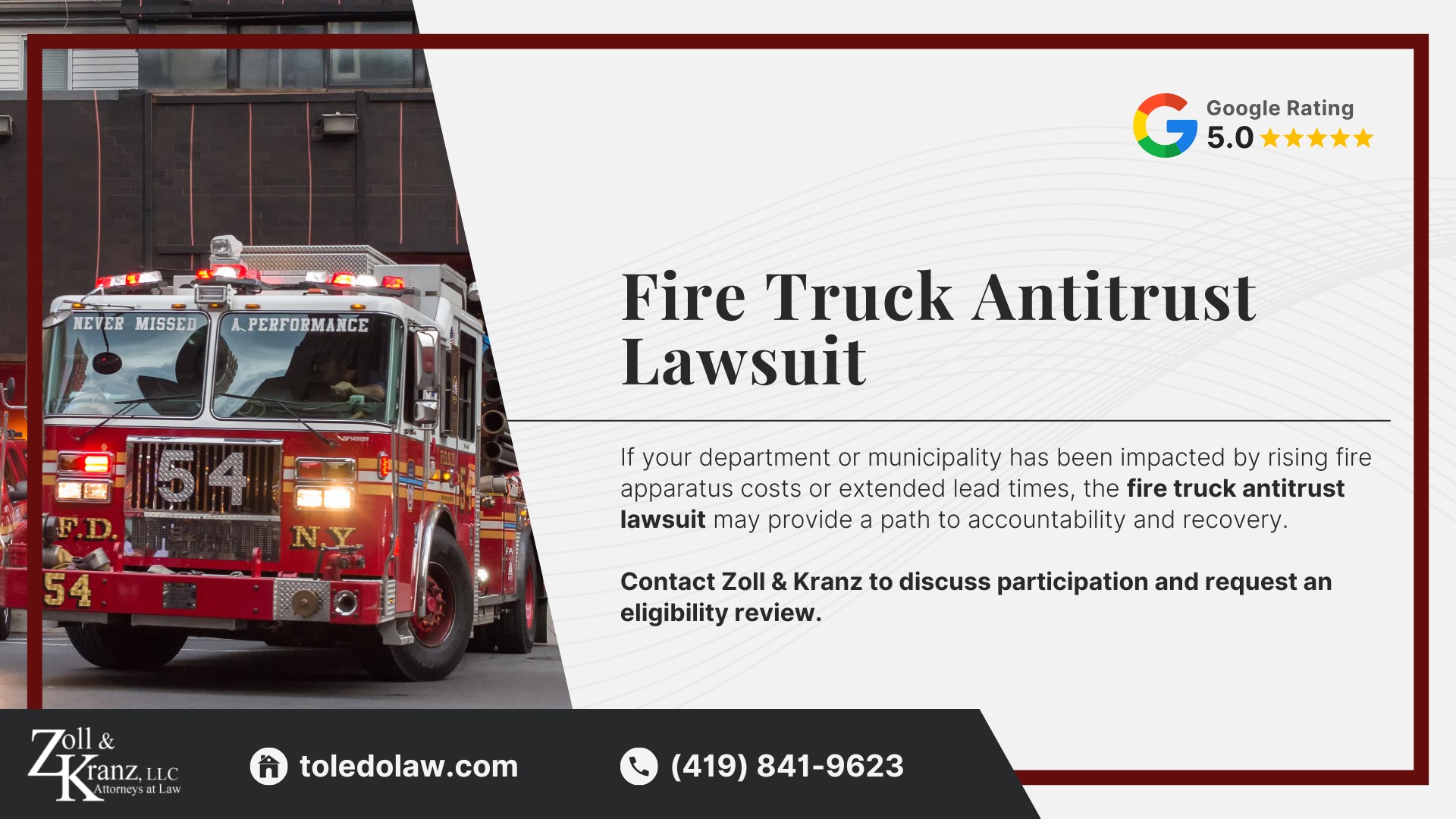
Fire Truck Antitrust Lawsuit

Overview of the Fire Truck Antitrust Lawsuit

The Fire Truck Antitrust Lawsuit is a nationwide action brought by public entities alleging that unlawful consolidation in the fire apparatus market has driven higher prices and longer delivery timelines for essential equipment.

The claims focus on how reduced competition has allegedly restricted supply and left cities, counties, and fire districts with fewer meaningful purchasing options while public safety needs remain urgent.

Contact Zoll & Kranz to discuss participation and learn what documents your agency should preserve for an eligibility review.

Fire Truck Antitrust Lawsuit

A Nationwide Antitrust Action to Protect Public Safety and Restore Competition

The fire truck antitrust litigation is brought on behalf of public entities that purchase fire engines, ladder trucks, and other fire apparatus for emergency response.

The lawsuits allege that reduced competition in the fire apparatus market contributed to higher purchase prices, longer delivery timelines, fewer practical vendor options, and increased costs for public buyers.

For fire departments, delayed apparatus replacement can affect maintenance budgets, reserve fleet planning, mutual aid coverage, and long-term capital planning.

The litigation seeks monetary recovery for alleged overcharges and, in some complaints, court-ordered relief aimed at restoring competition. The allegations must still be proven, and defendants may dispute the claims.

If your department or municipality has been impacted by rising fire apparatus costs or extended lead times, the fire truck antitrust lawsuit may provide a path to accountability and recovery.

Contact Zoll & Kranz to discuss participation and request an eligibility review.

Why Public Agencies Are Filing Now

Public agencies say the fire apparatus crisis has moved beyond ordinary market conditions.

Across the country, fire departments nationwide report soaring prices, longer delivery times, and difficulty sourcing replacement parts for aging fire apparatus and frontline vehicle fleets, including ladder trucks.

Outside reporting also describes a surge of price hikes and dramatic price increases over the past decade / last decade, which public entities say forces budget tradeoffs that can affect public safety and response readiness.

For many agencies, the tipping point is not only the sticker cost of new fire apparatus but also the operational impact: keeping older trucks in service longer, paying more for maintenance, and trying to stay in operation while waiting for production backlogs to clear.

These pressures are driving city claims and county claims in multiple jurisdictions, including Los Angeles County in California, and cases filed by or involving entities in places like Ann Arbor, La Crosse (Wisconsin), and South Dakota, as public entities begin taking action through an antitrust suit and related lawsuit filings.

What the Lawsuit Alleges: Market Consolidation and Anticompetitive Conduct

The fire truck antitrust lawsuit alleges that consolidation in the fire apparatus market reduced competition among fire apparatus manufacturers and that fewer competing manufacturers and direct competitors now control a highly concentrated market.

The alleged conduct is considered “unlawful consolidation” leading to closed plants, limited production, a decision to restrict supply, and a resulting ability to raise prices.

Separate public reporting and case summaries describe allegations that three manufacturers dominate much of the U.S. market and are accused of coordinated conduct that contributed to price increases and reduced output.

Several complaints also allege information-sharing through the Fire Apparatus Manufacturers Association (often referenced as the fire apparatus manufacturers association or FAMA), including exchanges of competitively sensitive information that plaintiffs say reduced incentives to compete on prices and lead times.

The cases generally invoke federal antitrust laws, including claims under the Sherman Act, and seek structural and monetary relief.

How the Alleged Conduct Impacts Fire Departments and Taxpayers

Plaintiffs and public agencies argue that the alleged consolidation and coordination have real consequences for departments, communities, and the line firefighters who depend on reliable apparatus to respond to fires and emergencies.

There are equipment shortages, increased maintenance costs, soaring prices for new orders, and reduced availability of replacement parts, all of which strain public budgets and operational readiness.

From a taxpayer perspective, agencies allege the fire truck prices they pay today have doubled in some procurement cycles and that recurring price hikes and long delivery time windows create cascading costs: interim vehicle purchases, refurbishments, overtime, and repairs needed to keep older fire apparatus in service.

Public entities also argue that these market conditions divert funds from other essential needs and reduce choices for fire departments when procurement is time-sensitive.

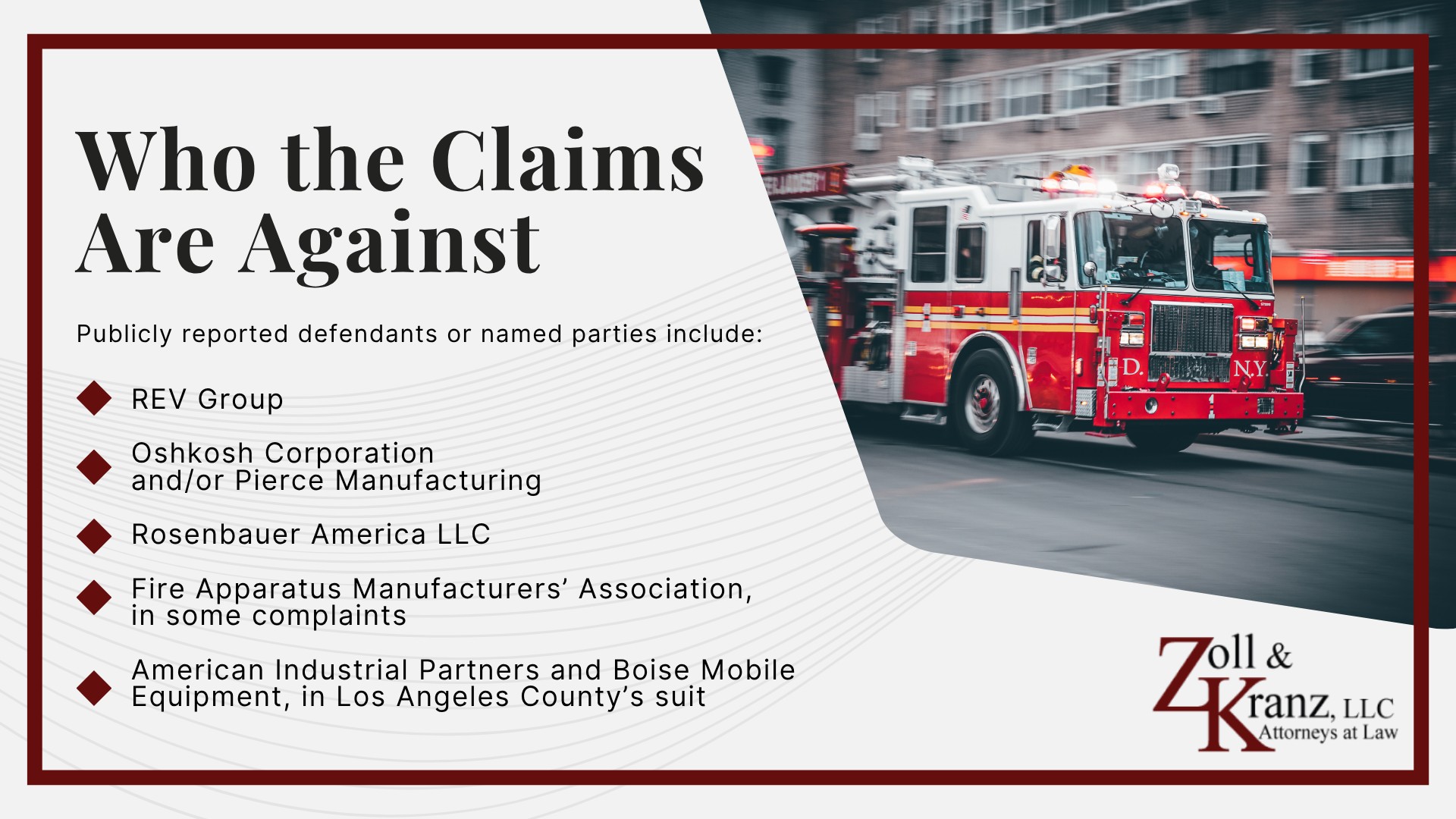
Who the Claims Are Against

The defendants vary by complaint.

Public case materials and reporting commonly discuss claims involving major fire truck manufacturers and, in some cases, an industry association or private equity-related defendants.

Publicly reported defendants or named parties include:

  • REV Group
  • Oshkosh Corporation and/or Pierce Manufacturing
  • Rosenbauer America LLC
  • Fire Apparatus Manufacturers’ Association, in some complaints
  • American Industrial Partners and Boise Mobile Equipment, in Los Angeles County’s suit

Defendants may dispute the allegations, and the claims have not been proven.
Who May Be Eligible to Participate

Eligibility depends on the facts, jurisdiction, and the posture of the proceeding, but the materials emphasize public entities that have purchased fire trucks or new fire apparatus and experienced prices, delays, or procurement impacts.

Public reporting reflects actions by cities, counties, and municipalities, such as La Crosse, as well as other public buyers that allege overcharges or delayed deliveries in the fire truck market.

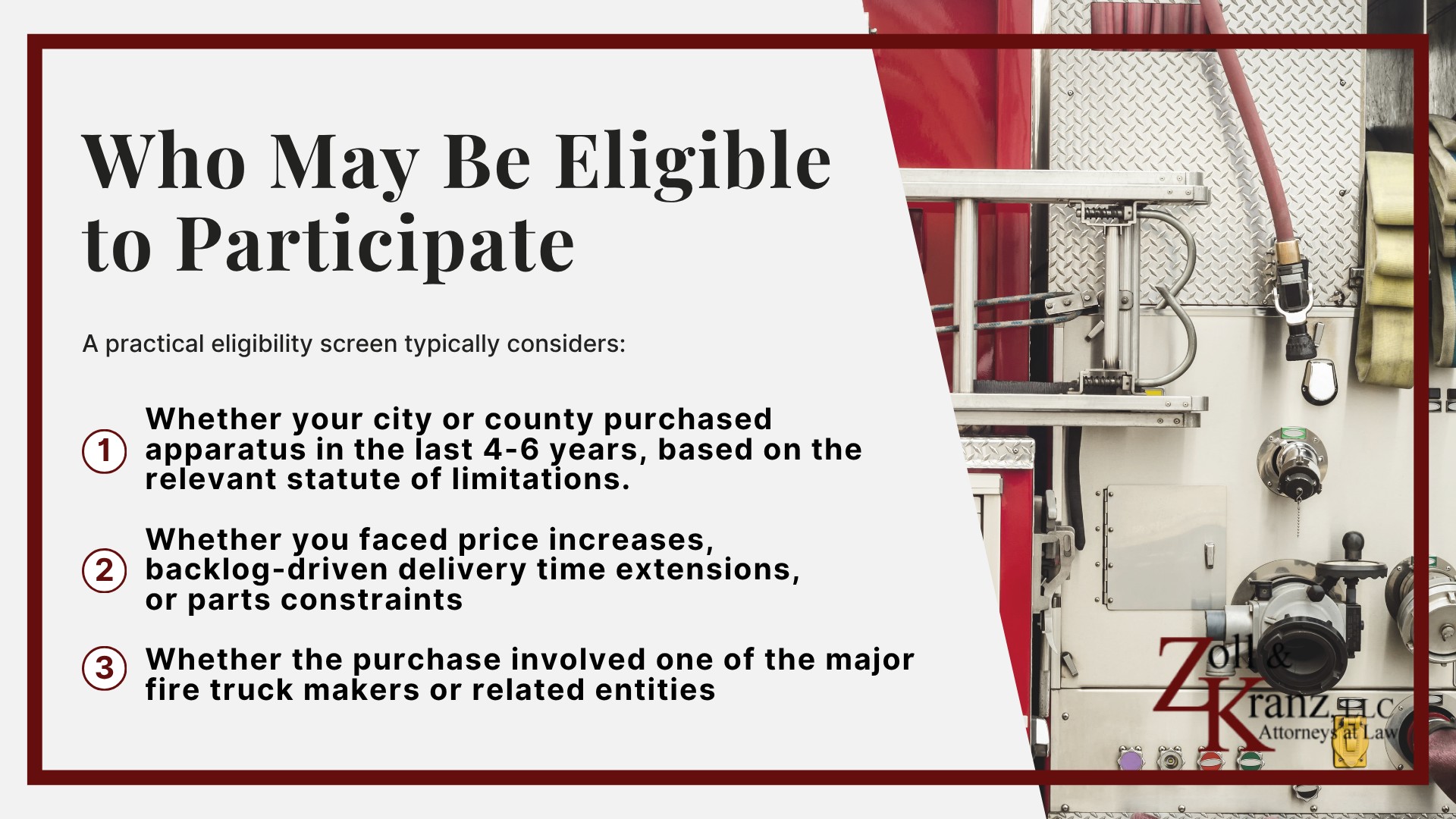
A practical eligibility screen typically considers:

  1. Whether your city or county purchased apparatus during the relevant past decade / last decade
  2. Whether you faced price increases, backlog-driven delivery time extensions, or parts constraints
  3. Whether the purchase involved one of the major fire truck makers or related entities

What the Lawsuit Seeks: Damages and Court-Ordered Relief

Claims seek monetary recovery and structural relief intended to restore competition, and it references core remedies including treble damages and reforms aimed at unwinding allegedly anticompetitive acquisitions.

Public agency announcements also describe requests for injunctive relief and monetary recovery tied to alleged overcharges and delays.

Damages and relief commonly sought include:

  • Treble damages (triple damages) under federal antitrust laws
  • Restitution for alleged overcharges, including inflated fire truck prices and delay-related costs
  • Civil penalties (where asserted under applicable law)
  • Mandatory attorneys’ fees (where authorized)
  • Injunctive relief, including potential structural reforms (and in some filings, unwinding challenged mergers)

Key Evidence to Preserve

Because these cases often turn on procurement history and what public entities paid compared to competitive benchmarks, preserving documentation early can matter, especially for agencies that bought engines, ladder trucks, or other fire apparatus during periods of price increases and extended lead times.

Evidence to preserve includes:

  • Purchase files for purchased fire trucks and new fire apparatus (bids, specs, scoring sheets, approvals)
  • Contracts, invoices, change orders, and pricing worksheets showing prices, price hikes, and any escalator terms
  • Delivery schedules, build slots, backlog notices, and communications about delivery time extensions
  • Maintenance logs and replacement parts invoices are tied to keeping older units in service because of delays
  • Internal budget impacts (council/board packets, CIP documents, emergency appropriations) showing taxpayer impact
  • Comparable quotes from competing manufacturers and any vendor correspondence about constrained supply or limited options
  • Public records tied to the complaint filing and any related notices (litigation holds, preservation letters)

How the Legal Process Works for Public Entities

Many fire apparatus antitrust cases have been centralized for coordinated pretrial proceedings in the Eastern District of Wisconsin as In re: Fire Apparatus Antitrust Litigation, MDL No. 3179.

Centralization allows one federal court to manage shared pretrial issues such as motions, discovery, protective orders, market definition, expert schedules, and damages methodology.

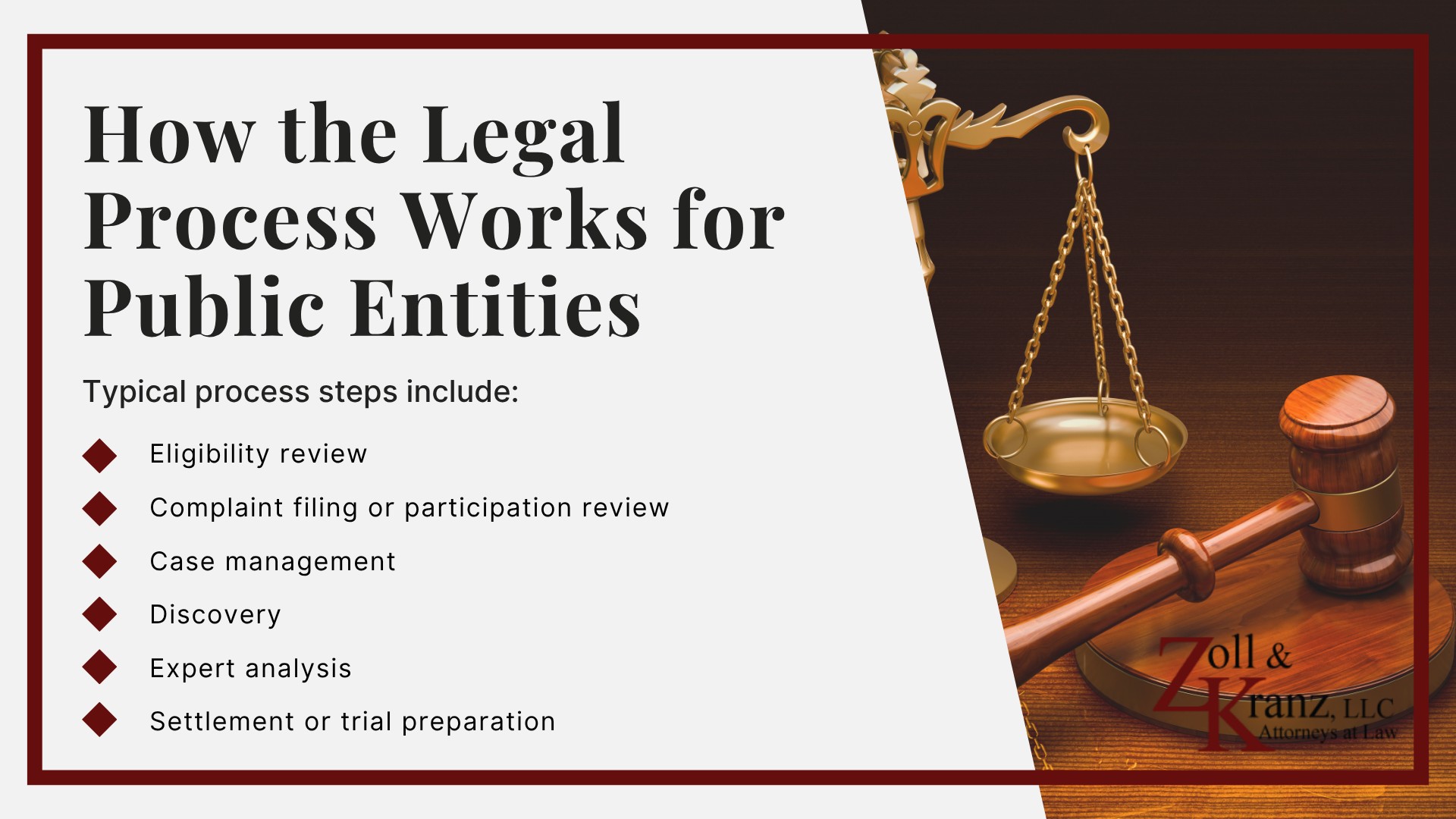
Typical process steps include:

  • Eligibility review: Confirm the public entity’s purchases, vendors, pricing, delivery history, and available records.
  • Complaint filing or participation review: Determine whether the entity should file, join, or monitor the litigation based on counsel’s advice.
  • Case management: The court sets schedules for pleadings, motions, discovery, and coordination.
  • Discovery: Parties exchange documents and take depositions about pricing, output, market structure, supply constraints, and procurement impact.
  • Expert analysis: Economists and industry experts may analyze market definition, alleged overcharges, damages, and competitive effects.
  • Settlement or trial preparation: Cases may resolve through settlement or proceed toward further litigation depending on the court’s rulings and evidence.

Contact Zoll & Kranz to Discuss Participation

If your city or county has faced soaring prices, extended delivery time, difficulty sourcing replacement parts, or other impacts tied to the fire truck market, the fire truck antitrust lawsuit may provide a path to recovery and reforms intended to restore competition.

This is a public-entity effort to protect public safety and relieve the budget pressure created when agencies have “no meaningful choice” in a concentrated market.

The complaints generally allege that consolidation and an alleged conspiracy among dominant manufacturers and industry participants contributed to price increases and restricted supply, leaving agencies with fewer practical procurement alternatives and higher total costs over time.

These are allegations that must be proven, but they are significant enough that public entities are taking action to preserve their rights and recover taxpayer funds where permitted by law.

If you are evaluating participation, the most useful first step is an eligibility review based on your procurement history.

Collect or preserve bid documents, vendor quotes, contracts, invoices, change orders, delivery schedules, and communications about delays or escalation, along with maintenance and replacement-parts records tied to keeping older apparatus in service.

Zoll & Kranz can help you identify what records matter most, assess how your purchases may fit within the litigation, and explain what participation looks like from intake through potential discovery and resolution.

Contact Zoll & Kranz to discuss participation, preserve key procurement records, and request an eligibility review for your department or public entity.

Frequently Asked Questions

Published by:
Share
Picture of Michelle L. Kranz
Michelle L. Kranz

Michelle is a founding partner of Zoll & Kranz, located in Toledo, Ohio. Michelle has been a plaintiff’s lawyer for the entirety of her practice – over 32 years. She devotes the majority of her time to complex consolidated litigation and class action including advocating for people injured by medical devices, prescription medications, or corporate negligence.

This article has been written and reviewed for legal accuracy and clarity by the team of writers and attorneys at Zoll & Kranz, LLC and is as accurate as possible. This content should not be taken as legal advice from an attorney. If you would like to learn more about our owner and experienced Ohio injury lawyer, Michelle L. Kranz, you can do so here.

Zoll & Kranz, LLC does everything possible to make sure the information in this article is up to date and accurate. If you need specific legal advice about your case, contact us. This article should not be taken as advice from an attorney.

Do you have a case?

A serious injury can have life-altering results.

Don’t settle for less than you deserve, speak with an award-winning personal injury lawyer today.

16 Reviews
5.0
★★★★★
Recovered damages
$10 Million+

Table of Contents

Practice Areas
About Zoll & Kranz, LLC

For over 37 years, Zoll & Kranz has been fighting for clients who have been the victims of the wrongful death of a loved one.

Do you believe you’re entitled to compensation?

Use our Instant Case Evaluator to find out in as little as 60 seconds!

Guides & Resources