A lawsuit in Ohio proceeds through specific litigation stages after a claim is not resolved through pre-litigation settlement.
The personal injury lawsuit process typically includes steps such as consultation, investigation, claim filing, negotiation, and potentially litigation.
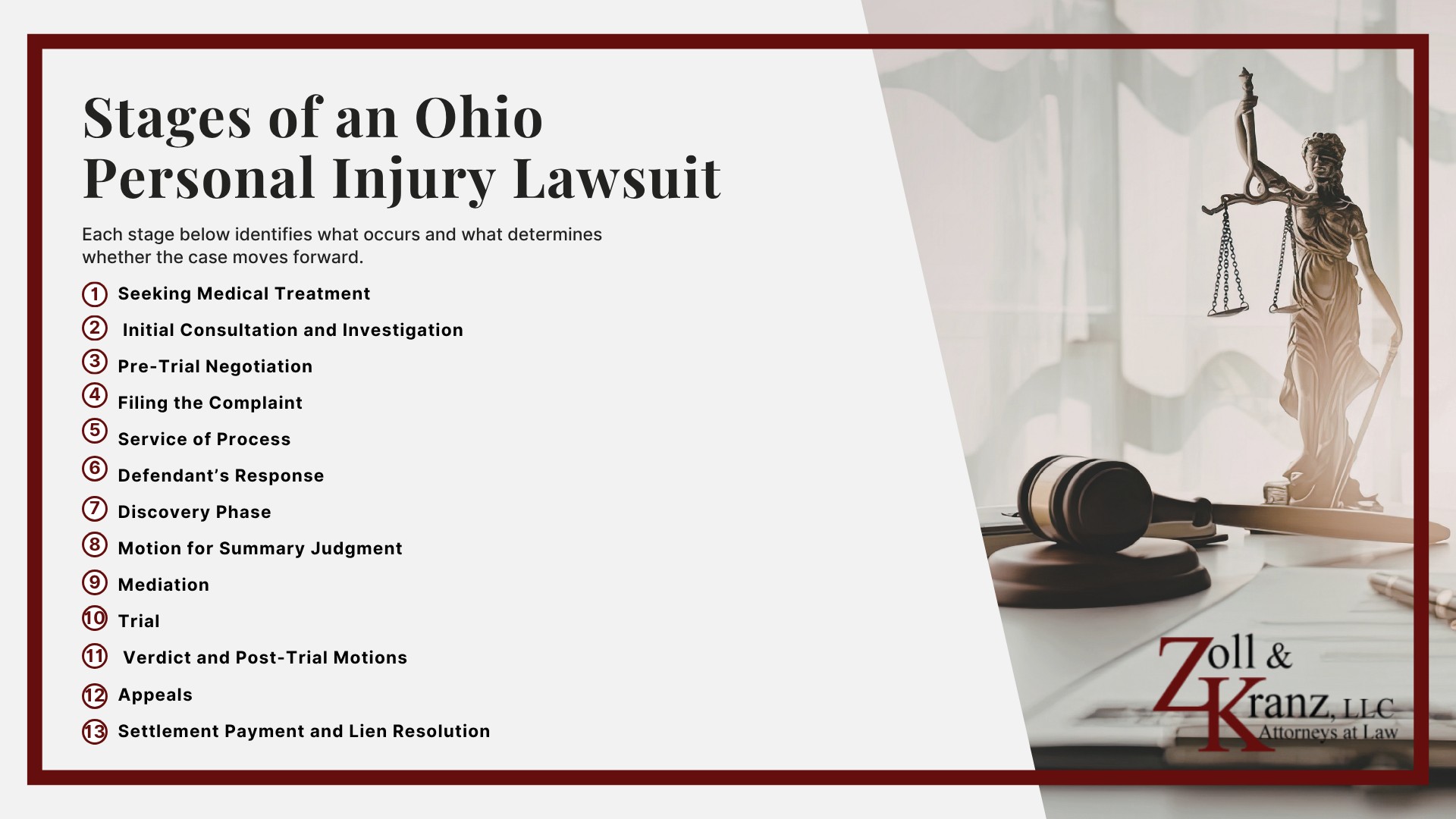
Each stage below identifies what occurs and what determines whether the case moves forward.
Step 1 – Seeking Medical Treatment
The first stage begins when the injured party seeks medical attention. Medical appointments document when treatment began, and medical records show diagnosis and response to treatment. This stage continues until MMI is reached.
Step 2 – Initial Consultation and Investigation
An initial consultation with legal counsel evaluates how the accident happened and whether the at fault party can be identified. Police reports, witness testimony, and accident scene evidence are reviewed during a thorough investigation.
Step 3 – Pre-Trial Negotiation
A formal demand letter sets out the injury, liability, and damages including medical bills, lost wages, and future costs.
Insurers frequently respond with a lower valuation or request additional information before meaningful negotiations begin.
For minor injuries, the negotiation process may resolve in a few weeks through back and forth negotiations.
Step 4 – Filing the Complaint
When pre-trial negotiation does not resolve the personal injury claim, the next step is claim filing.
A formal complaint is filed in court to officially start the litigation phase if a settlement is not reached prior to it.
Once the complaint is filed, the litigation process moves under court deadlines that control every later stage.
Step 5 – Service of Process
The defendant is served with the summons and complaint through certified mail, a process server, or the sheriff. Where multiple parties involved must be served, the timeline extends. Improper service can delay the entire legal process.
Step 6 – Defendant’s Response
The defendant has 28 days to file an answer under Ohio court rules. The answer defines what is contested and what moves into the next stage. The defendant may also file counterclaims, cross-claims, or third-party claims if other parties are alleged to share liability.
Step 7 – Discovery Phase
Discovery is the formal stage where each side tests the strength of the legal claim against the available record, including medical documentation, employment records, and expert opinions.
During the discovery phase, both parties use various techniques to uncover evidence and learn more about their case, including interrogatories, requests for production of documents, and depositions.
The discovery phase of a personal injury lawsuit is often the longest step, typically lasting several months to a year, depending on case complexity.
Many personal injury lawsuits settle during or shortly after the discovery phase, often at mediation.
Step 8 – Motion for Summary Judgment
Either party may file a motion for summary judgment under Ohio court rules. If granted, the case may be dismissed or limited. If denied, the case proceeds toward trial.
Step 9 – Mediation
When the case does not settle during discovery, most Ohio courts require mediation before scheduling a trial.
Mediation is a non-binding process required by most courts before a case can proceed to trial.
A neutral third party mediator reviews the evidence and legal arguments developed during discovery and helps both sides negotiate a possible settlement.
If mediation fails, a case may proceed to a courtroom trial, which can take 12 to 18 months or more to schedule after filing a lawsuit.
Step 10 – Trial
A personal injury trial is where the court or jury hears evidence and decides the case when it does not resolve through settlement or earlier dispute resolution techniques. The plaintiff must prove liability and damages to recover compensation.
Step 11 – Verdict and Post-Trial Motions
The verdict is the formal decision issued by the court or jury at the end of trial.
The average time from filing a personal injury case to verdict is a bit over two years, not including appeals or post-trial motions.
Within 28 days after the verdict, either side may file post trial motions to challenge the result or seek relief under Ohio civil procedure.
Step 12 – Appeals
Either side may file a notice of appeal within 30 days of the final judgment. An appeal can extend the personal injury case timeline by 12 to 18 months or more and is reviewed by the appropriate Ohio court of appeals based on the trial court record, adding another phase to the legal process.
Step 13 – Settlement Payment and Lien Resolution
If the case resolves through a settlement agreement or final judgment, payment is issued after resolving liens from medical providers, health insurers, and other lienholders. The injured party receives the net recovery once these obligations are addressed.