No fees unless we win.
Get a free consultation
•
31 Reviews
5.0
★★★★★

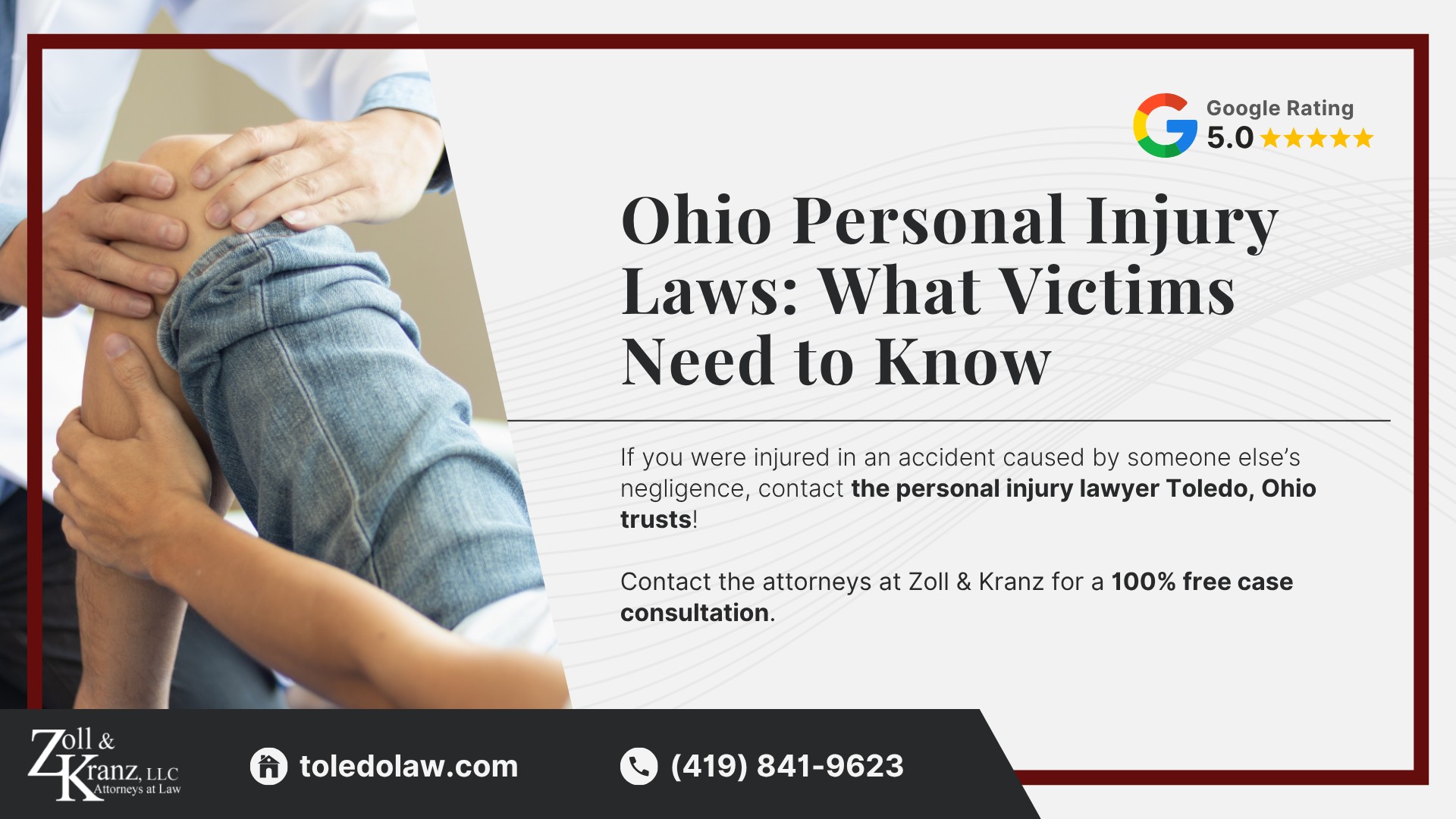
Ohio Personal Injury Laws: What Victims Need to Know

Ohio Laws Impacting the Personal Injury Lawsuit Process

Ohio personal injury laws determine how an injured person proves fault, how shared responsibility can affect compensation, what damages may be available, and how long someone has to file a lawsuit.

For many ordinary personal injury claims, Ohio generally provides a two-year statute of limitations, often measured from the date of injury.

Different deadlines and accrual rules can apply to medical malpractice, product liability, claims involving minors, and other specialized cases.

Ohio also follows a modified comparative negligence rule, which can reduce compensation when an injured person shares responsibility for an accident.

Damages may include medical expenses, lost income, pain and suffering, and other losses supported by the evidence, although Ohio law places limits on certain types of damages.

Wrongful death claims follow a separate statutory framework and generally must be filed within two years of the person’s death.

Because the applicable deadline, liability standard, and damages rules depend on the type of claim, identifying the controlling Ohio law early can help preserve the right to seek compensation.

Zoll & Kranz can evaluate how Ohio personal injury laws apply to the circumstances, identify filing deadlines, investigate liability, document damages, and pursue compensation through settlement or litigation when appropriate.

If you were injured because of another person or company’s conduct, contact Zoll & Kranz for a free consultation or use the chat feature on this page to discuss your potential claim.

Ohio Personal Injury Laws What Victims Need to Know

An Overview of Ohio’s Personal Injury Laws and Statutes

Ohio personal injury laws can affect whether an injured person has a valid claim, how responsibility is assigned, what compensation may be available, and how much time remains to take legal action.

While most cases are based on negligence, different rules can apply depending on how the injury occurred and who may be responsible.

For everyday people, these distinctions are not always obvious. A car accident claim may involve different legal requirements than a medical malpractice, premises liability, defective product, dog bite, or wrongful death case.

Filing deadlines, evidence requirements, damages rules, and defenses can also vary substantially from one type of claim to another.

Understanding the applicable law becomes especially important when fault is disputed, an insurance company challenges the severity or cause of an injury, or the losses involve ongoing medical treatment and time away from work.

Missing a filing deadline or resolving a claim before its full value is understood can affect the injured person’s ability to recover compensation.

Zoll & Kranz represents injured people throughout Greater Toledo and Northwest Ohio.

Our attorneys review each client’s legal needs, investigate how the injury occurred, identify the Ohio laws and deadlines that apply, document damages, and pursue compensation from the parties responsible for the harm.

If you or a loved one was injured because of another person or company’s conduct, contact Zoll & Kranz for a free consultation. You can also use the chat feature on this page to discuss your potential claim with our legal team.

What Laws Govern Personal Injury Claims in Ohio?

Ohio personal injury laws are not contained in a single personal injury statute.

An Ohio personal injury case may instead be governed by provisions of the Ohio Revised Code, Ohio court decisions, the Rules of Civil Procedure, insurance regulations, and statutes that apply to specific types of claims.

Most personal injury claims are based on negligence, but other legal theories may apply depending on how the injury occurred.

A case may involve statutory liability, strict liability, product liability, medical malpractice, premises liability, wrongful death, or another basis for recovery.

The applicable law can affect what the injured party must prove, the defenses available to the defendant, the damages that may be recovered, and the deadline for filing a lawsuit.

Common personal injury cases in Ohio include:

  • Car, truck, motorcycle, bicycle, and pedestrian accidents
  • Falls and other premises liability claims
  • Dog bite claims
  • Defective products and medical devices
  • Medical malpractice
  • Nursing home negligence
  • Hazardous or toxic chemicals exposure claims
  • Serious and catastrophic injuries
  • Wrongful death

More than one area of law can apply to the same claim.

For example, a person injured in a car accident may need to consider Ohio negligence law, comparative fault, insurance coverage, the applicable statute of limitations, and damages rules before resolving the claim or filing a lawsuit.

What Must You Prove in an Ohio Personal Injury Case?

For an ordinary negligence claim, the injured party generally must establish that the defendant owed a duty of care, breached that duty, and proximately caused the injury and resulting damages.

How those elements apply depends on the circumstances.

A driver may breach a duty by violating a traffic law or failing to use reasonable care.

A property owner may be responsible for certain dangerous conditions, while medical negligence claims are governed by separate standards applicable to healthcare providers.

Evidence is needed to establish both liability and damages.

Depending on the claim, an Ohio personal injury attorney may gather evidence such as photographs, video, witness statements, accident reports, maintenance records, medical records, medical bills, wage documentation, and expert opinions.

The fact that someone was injured does not by itself establish liability.

The injured party must connect the defendant’s legally wrongful conduct to the injury and the damages being claimed.

How Ohio’s Comparative Negligence Law Works

Ohio follows a modified comparative negligence rule under Ohio Revised Code Section 2315.33.

An injured person may recover compensatory damages when their percentage of fault is not greater than the combined fault of the other responsible parties, but the damages are reduced according to the injured person’s share of responsibility.

For example, a plaintiff who establishes $100,000 in compensatory damages but is found 20% responsible would generally recover $80,000.

If the plaintiff’s percentage of fault is greater than the combined fault of the other responsible parties, recovery is barred.

Comparative negligence can arise in many types of personal injury claims.

A driver who was rear-ended may still face an argument that their own actions contributed to the collision, while a person injured on another person’s property may be accused of failing to notice or avoid a hazardous condition.

An insurance company may assign percentages of fault while evaluating a claim, but that assessment does not conclusively determine legal responsibility.

If a comparative-fault dispute reaches a jury trial, the jury determines the percentages of fault attributable to the parties and other responsible persons. In a nonjury case, the court makes those findings.

Because the allocation of fault directly affects the amount an injured person can recover, an Ohio personal injury attorney can gather evidence concerning how the accident occurred and challenge unsupported attempts to shift responsibility to the injured person.


Ohio Statute of Limitations for Personal Injury Claims

A statute of limitations establishes how long an injured person has to file a lawsuit. Under Ohio Revised Code Section 2305.10, an action for bodily injury generally must be commenced within two years after the cause of action accrues.

For most ordinary bodily injury claims covered by the statute, the claim accrues when the injury or loss occurs.

This means an injured person generally has two years to file a personal injury lawsuit in Ohio, although the start date and applicable deadline can change when an exception or different statute applies.

Section 2305.10 also generally applies a two-year limitations period to product liability claims, subject to separate accrual rules and statutes of repose.

The statute includes a discovery rule for certain injuries caused by exposure to hazardous or toxic chemicals, ethical drugs, and ethical medical devices.

For qualifying injuries, the claim generally accrues when competent medical authority informs the person that the injury is related to the exposure or when reasonable diligence should have revealed that relationship, whichever occurs first.

Other personal injury claims follow different rules.

Medical malpractice generally has a one-year limitations period, while an Ohio wrongful death action generally must be filed within two years after the person’s death.

Claims involving minors and certain other circumstances may also be subject to special rules.

Ohio law can also toll certain limitations periods when a defendant is outside the state, has absconded, or conceals themselves.

However, these tolling provisions contain exceptions and do not apply to specified statutes of repose, so an injured person should not assume that a defendant’s absence automatically extends every filing deadline.

There is no single injury statute of limitations that can safely be calculated from the accident date in every case.

The applicable statute, type of claim, injured person’s age, identity of the defendant, and circumstances surrounding the injury can all affect the deadline.

Settlement negotiations also do not automatically extend the state’s statute of limitations.

The applicable filing deadline should be identified early even when the parties are actively discussing settlement.

What Damages Can You Recover Under Ohio Law?

A successful Ohio personal injury claim may provide compensation for losses legally caused by the defendant.

The damages available depend on the nature and severity of the injury, evidence of current and future losses, comparative fault, applicable statutory restrictions, and the circumstances of the individual case.

Ohio Revised Code Section 2315.18 distinguishes between economic and noneconomic damages in ordinary tort actions.

Economic damages compensate measurable financial losses, while noneconomic damages address the physical, emotional, and personal effects of an injury.

An Ohio personal injury lawyer may seek compensation for supported losses such as medical treatment, future care, lost wages, diminished earning capacity, physical limitations, pain and suffering, and emotional distress.

The amount recoverable must be supported by the evidence, and no attorney can guarantee a particular financial result.

Economic, Noneconomic, and Punitive Damages

Economic damages compensate measurable financial losses caused by an injury.

Depending on the case, these may include:

  • Medical bills and future medical treatment
  • Surgery and rehabilitation expenses
  • Prescription medication
  • Lost wages
  • Reduced future earning capacity
  • Other documented financial losses caused by the injury

Noneconomic damages compensate losses that do not have a direct financial value.

They may include physical pain and suffering, mental anguish, emotional distress, disfigurement, disability, loss of consortium, and other intangible effects recognized under Ohio law.

Punitive damages serve a different purpose.

Rather than compensating the injured person for a specific loss, they may be awarded in qualifying cases to punish particularly wrongful conduct and deter similar behavior.

Under Ohio Revised Code Section 2315.21, a plaintiff generally must establish entitlement to punitive damages by clear and convincing evidence.

The defendant’s conduct must demonstrate malice or aggravated or egregious fraud, or a principal must have knowingly authorized, participated in, or ratified qualifying conduct by an agent.

A determination of compensatory damages is also generally required before punitive damages may be awarded.

Ohio ordinarily limits punitive damages to no more than twice the compensatory damages awarded against that defendant, although separate limits apply to individuals and qualifying small employers and statutory exceptions may apply.

Ohio Limits on Noneconomic Damages

For many ordinary tort actions, Ohio Revised Code Section 2315.18 limits the amount of noneconomic damages an injured person can recover.

The general limit is the greater of $250,000 or three times the plaintiff’s economic loss, subject to a maximum of $350,000 per plaintiff and $500,000 per occurrence.

The ordinary cap does not apply when the noneconomic loss results from certain serious injuries, including:

  • Permanent and substantial physical deformity
  • Loss of use of a limb
  • Loss of a bodily organ system
  • A permanent physical functional injury that permanently prevents independent self-care and the performance of life-sustaining activities

Section 2315.18 does not impose a corresponding cap on compensatory damages representing proven economic loss.

The statute’s ordinary framework also does not apply to medical claims, wrongful death actions, or qualifying actions against the state or political subdivisions because those claims are governed by separate Ohio laws.

As a result, the damages rules that apply to a serious injury can depend both on the nature of the injury and the legal classification of the claim.

Ohio Wrongful Death Laws

Ohio treats wrongful death as a separate statutory cause of action.

Under Ohio Revised Code Section 2125.02, a wrongful death lawsuit is brought in the name of the deceased person’s personal representative for the benefit of the surviving spouse, children, parents, and qualifying next of kin.

Recoverable wrongful death damages may include:

  • Loss of expected financial support
  • Loss of the deceased person’s services
  • Loss of companionship, care, guidance, protection, and other forms of society
  • Loss of prospective inheritance
  • Mental anguish suffered by qualifying family members
  • Reasonable funeral and burial expenses

These damages can include both financial losses and non-economic damages arising from the death, such as loss of companionship and mental anguish.

The general rule is that an Ohio wrongful death action must be commenced within two years after the person’s death.

Certain product-related wrongful death claims are subject to additional statute-of-repose provisions and exceptions.

A wrongful death claim should also be distinguished from a survival action.

Wrongful death compensates qualifying beneficiaries for losses they suffer because of the death, while a survival action preserves certain claims and damages that belonged to the deceased person before death.

Zoll & Kranz: Get Help Understanding Ohio Personal Injury Law

A serious injury can leave you dealing with medical treatment, lost income, insurance disputes, and questions about your legal rights.

The laws that apply can depend on how the injury occurred, who may be responsible, the type of damages involved, and the filing deadline for the claim.

Zoll & Kranz represents injured people throughout Greater Toledo and Northwest Ohio in cases involving motor vehicle accidents, catastrophic injuries, wrongful death, premises liability, defective products, and other harm caused by negligence.

The law firm also has experience with complex litigation involving medical devices, prescription medications, toxic exposures, and corporate negligence.

Our attorneys can investigate what happened, preserve evidence, identify applicable Ohio laws and filing deadlines, document damages, address insurance and liability disputes, and provide legal counsel throughout settlement negotiations or litigation.

Founding partner Michelle Kranz has practiced as a plaintiff’s lawyer for more than 30 years and has extensive experience handling complex injury litigation.

Zoll & Kranz offers free consultations and handles qualifying personal injury cases on a contingency fee basis, meaning there are no upfront attorney fees and attorney fees are paid only if the firm obtains a recovery, subject to the written fee agreement.

If you were injured because of another person or company’s conduct, contact Zoll & Kranz for a free consultation.

You can also use the chat feature on this page to discuss your potential claim and learn what legal options may be available.

Frequently Asked Questions

Published by:
Share
Picture of Michelle L. Kranz
Michelle L. Kranz

Michelle Kranz is a founding partner of Zoll & Kranz, located in Toledo, Ohio. Michelle has practiced as a plaintiff's lawyer for over 32 years, representing Ohioans injured in car accidents, other auto accidents, and other personal injury matters. Michelle also has extensive experience with large-scale consolidated litigation and class actions involving medical devices, prescription medications, and corporate negligence.

This article has been written and reviewed for legal accuracy and clarity by the team of writers and attorneys at Zoll & Kranz, LLC and is as accurate as possible. This content should not be taken as legal advice from an attorney. If you would like to learn more about our owner and experienced Ohio injury lawyer, Michelle L. Kranz, you can do so here.

Zoll & Kranz, LLC does everything possible to make sure the information in this article is up to date and accurate. If you need specific legal advice about your case, contact us. This article should not be taken as advice from an attorney.

Other Toledo Personal Injury Lawsuit Resources
All
FAQs
Injuries & Conditions
Legal Help
Other Resources
Settlements & Compensation
You can learn more about this topic by visiting any of our Toledo Personal Injury Lawsuit pages listed below:
Common Types of Personal Injury Damages
How Do Personal Injury Settlements Work in Toledo?
How Much Does a Personal Injury Attorney Cost to Hire?
Ohio Personal Injury Lawsuit Timeline
Personal Injury Claims for Minors in Ohio
Statute of Limitations in Ohio Personal Injury Cases
Toledo Personal Injury Lawsuit Guide
Types of Evidence in Personal Injury Cases
Why Hire a Toledo Personal Injury Attorney?
Do you have a case?

A serious injury can have life-altering results.

Don’t settle for less than you deserve, speak with an award-winning personal injury lawyer today.

•
31 Reviews
5.0
★★★★★
Recovered damages
$108 Million+

Table of Contents

Legal Guides
About Zoll & Kranz

For over 37 years, Zoll & Kranz has been fighting for Ohioans injured in car accidents, other auto accidents, and other personal injury matters.

Do you believe you’re entitled to compensation?

Use our Instant Case Evaluator to find out in as little as 60 seconds!

Guides & Resources

Other Toledo Personal Injury Lawsuit Resources

All
FAQs
Injuries & Conditions
Legal Help
Other Resources
Settlements & Compensation