
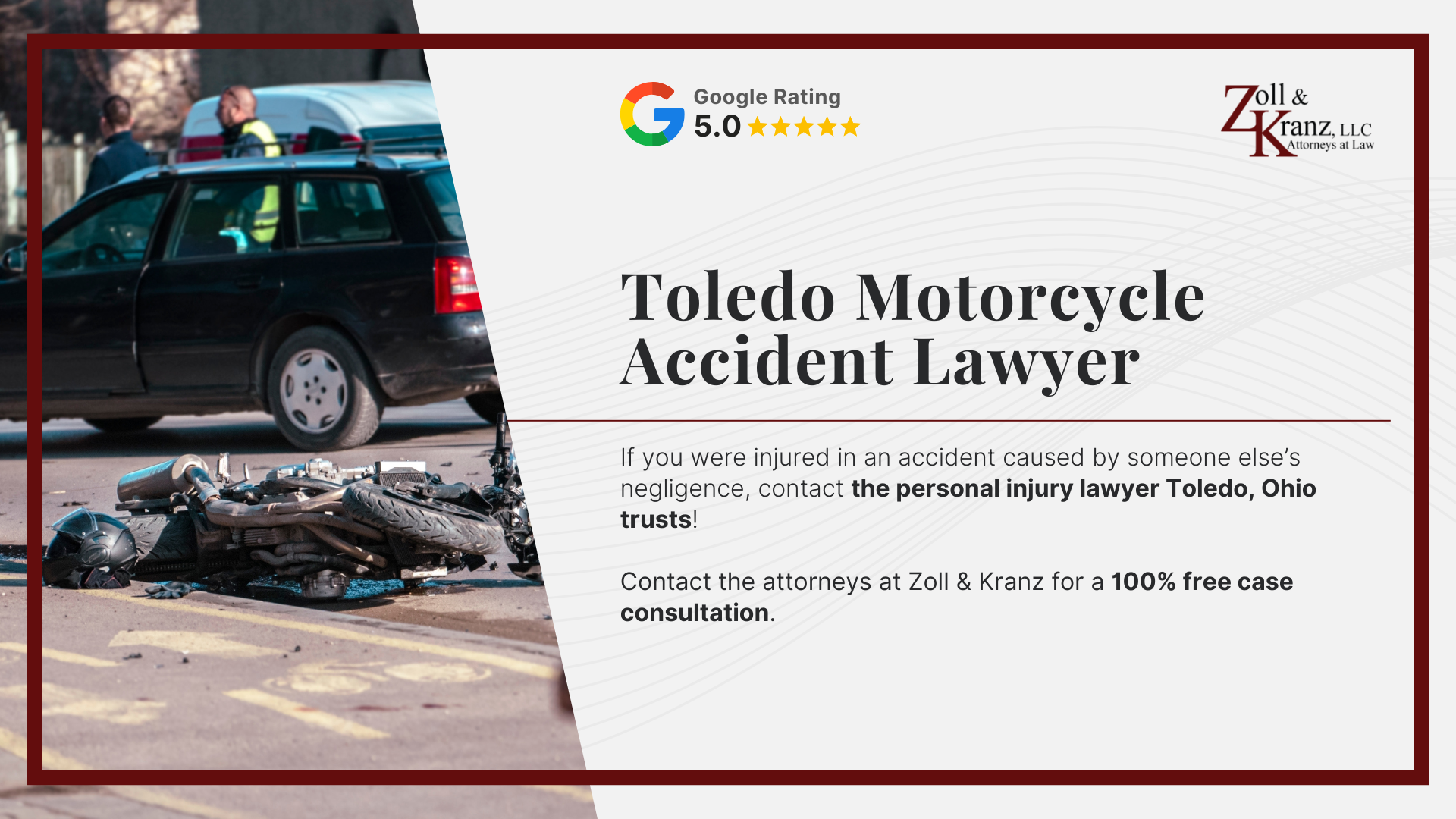
A motorcycle crash can leave injury victims facing immediate medical emergencies, severe trauma, and confusion about what happened and who is responsible.
Because riders are often thrown from the motorcycle, many are unable to document the scene or speak with witnesses before receiving medical care.
In these situations, the other party may begin shaping the narrative early, sometimes pointing to traffic laws or rider behavior in an effort to shift fault.
When injury victims cannot take action themselves, legal support becomes critical to preserve evidence and determine which negligent party responsible caused the crash.
The steps below are recommended after a motorcycle accident, but health and safety must always come first.
Steps to take after a motorcycle accident:
- Move to safety if possible and call 911 so law enforcement and emergency medical services respond to the scene.
- Seek medical treatment immediately, even if injuries are not obvious, as many motorcycle injuries worsen over time.
- Follow medical instructions and document treatment, including emergency room visits, imaging, and follow-up care.
- If you are physically able, document the scene by taking photos or video of vehicles, road conditions, debris, and visible injuries.
- Collect contact information from the other party, witnesses, and responding officers if possible.
- Avoid discussing fault at the scene or making statements that could be used to assign unfair blame.
- Preserve damaged riding gear and the motorcycle, including helmets, clothing, and equipment.
- Limit communication with insurance companies until you understand your legal rights and options.
- Save all medical records, bills, and proof of lost income related to the crash.
- Contact a motorcycle accident lawyer to investigate the crash, apply traffic laws correctly, and identify the negligent party responsible.
Gathering Evidence for a Motorcycle Accident Claim
Evidence determines how effectively a motorcycle accident claim can prove fault, causation, and damages, especially when insurers attempt to shift blame to the rider.
When an accident caused serious harm, the at-fault driver may still deny responsibility, and insurance companies often rely on incomplete narratives formed in the first hours after the crash.
Injury claims also require proof of losses, including medical bills and income disruption, as well as documentation of property damage to the motorcycle and riding gear.
Witness statements often become decisive when the parties disagree about lane position, speed, or right of way, particularly in collisions involving multiple vehicles or other drivers who contributed to the crash.
A thorough evidence record supports personal injury lawsuits when settlement negotiations fail, and it prevents the claim from being decided on assumptions or the version of events that favors the insurer.
Common evidence in a motorcycle accident claim includes:
- Police crash reports and citations identifying the at-fault driver’s conduct
- Photographs or video of the accident scene, roadway conditions, and vehicle positions
- Motorcycle and gear documentation showing property damage (helmet impact, torn clothing, broken components)
- Witness statements and witness contact information to support how the accident caused the collision
- Medical records, imaging, treatment summaries, and documentation of medical bills
- Surveillance footage or traffic camera recordings when available
- Expert analysis, including accident reconstruction, when fault is disputed or injuries are severe
- Insurance communications and claim documentation related to the crash and damages
Damages in Motorcycle Accident Personal Injury Claims
Damages represent the losses a rider suffers after a crash, including financial harm and the personal impact of the injury on daily life and long-term stability.
A motorcycle accident lawyer reviews medical records, wage documentation, and treatment plans to calculate medical expenses, current bills, and the projected cost of care, including physical therapy and future procedures.
Lost wages and future earnings lost often become major components of the claim when injuries prevent a rider from returning to work or reduce long-term earning capacity.
Because multiple parties involved may share responsibility, damages must be documented clearly so liability disputes do not reduce the value of legitimate losses.
By organizing evidence and presenting a complete damages picture, an attorney helps injured riders recover compensation, pursue full compensation supported by records, and recover damages that reflect both immediate and future consequences.
Common damages in motorcycle accident claims include:
- Medical expenses, including emergency care, hospitalization, surgery, and follow-up treatment
- Physical therapy, rehabilitation, and long-term treatment costs
- Current bills for prescriptions, medical equipment, and specialist visits
- Lost wages and reduced earning capacity
- Future earnings lost due to disability or permanent limitations
- Pain and suffering
- Emotional distress and trauma-related symptoms
- Permanent disability, impairment, or disfigurement
- Property damage to the motorcycle and riding gear
- Out-of-pocket costs tied to recovery and daily support needs
- Wrongful death damages, including funeral expenses and family losses