Evidence is the foundation of most nursing home negligence claims because it helps explain what happened, when it occurred, and whether a facility met the applicable standard of care.
Medical records, care plans, staffing documentation, photographs, witness statements, and other records can provide important information about a resident’s treatment and condition over time.
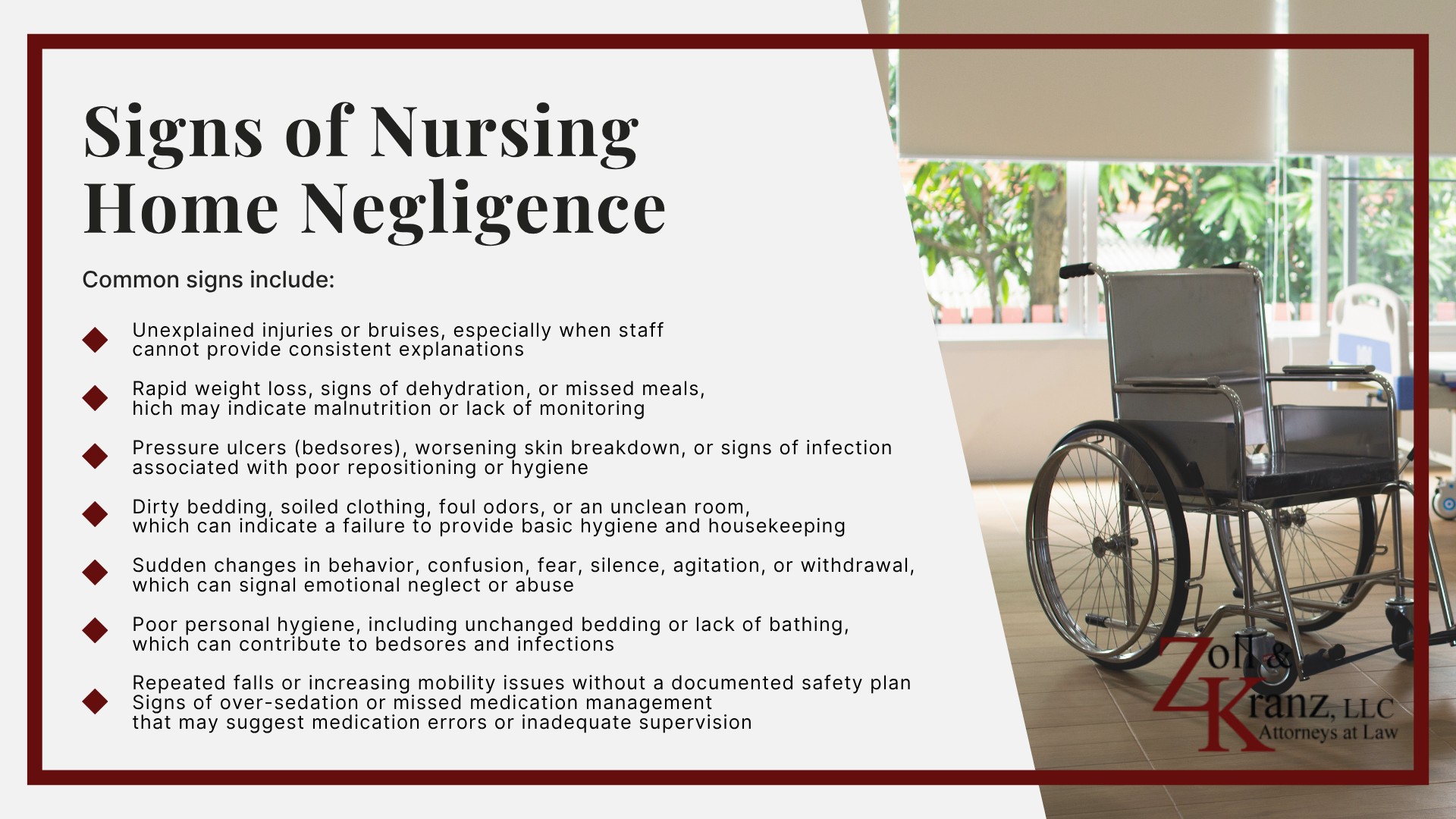
In cases involving nursing home neglect, evidence may help show whether injuries resulted from missed care, inadequate supervision, or failures to follow established care plans.
Documentation can also be important when allegations involve emotional abuse, particularly when behavioral changes, care notes, or witness observations help establish a pattern of concerning conduct.
Understanding the types of evidence commonly used in these cases can help families recognize what information may be important if they suspect a loved one has been harmed.
Types of Evidence in Nursing Home Negligence Cases
A nursing home negligence claim generally requires proof that the facility owed a duty of care, breached that duty, and caused harm.
A breach of duty can occur through action or inaction, such as failing to provide proper medical care, failing to prevent predictable falls, ignoring wound care protocols, or delaying emergency response.
In practical terms, families and attorneys look for documentation that shows what happened, what staff knew, and what steps were or were not taken.
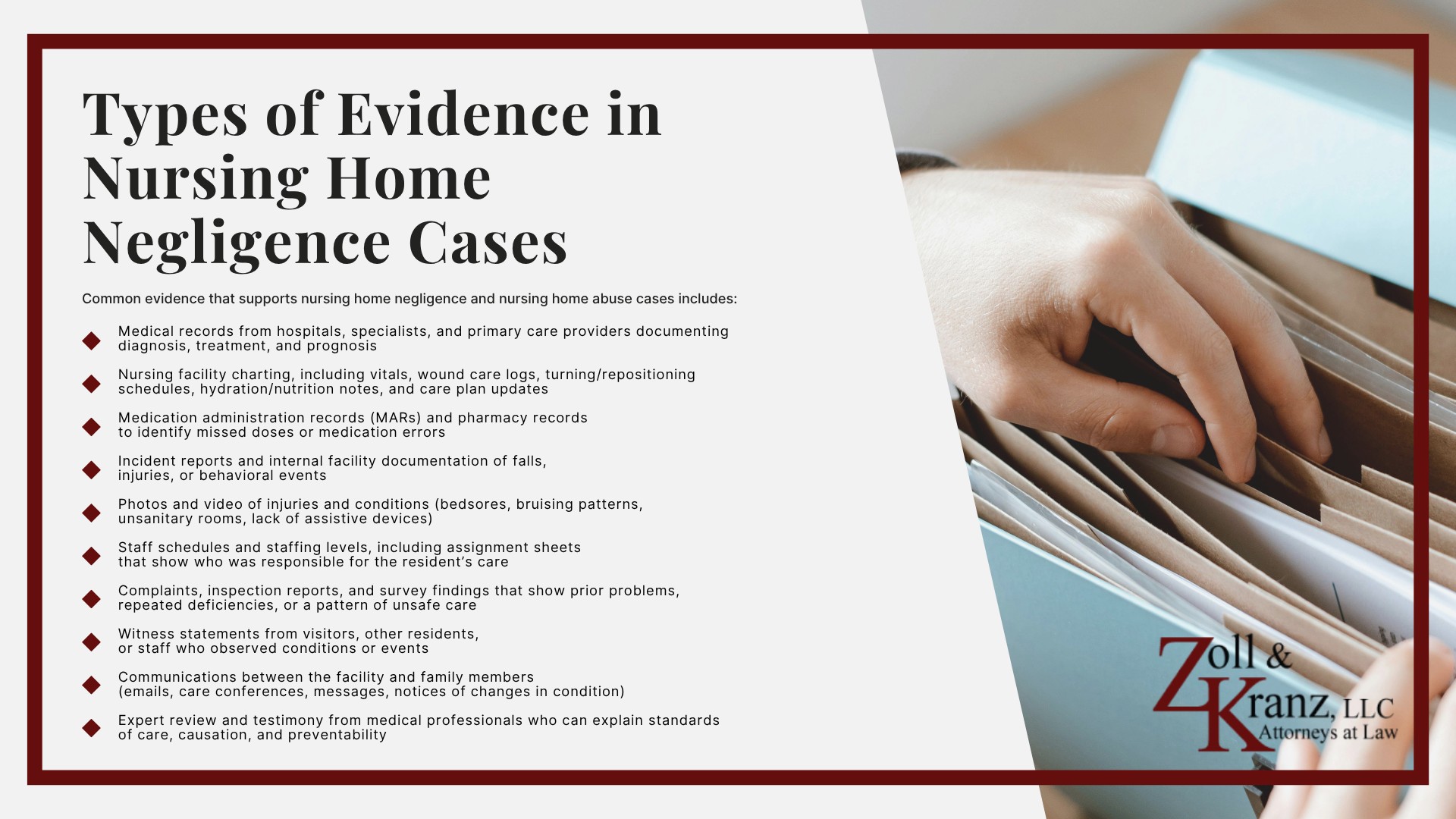
Common evidence that supports nursing home negligence and nursing home abuse cases includes:
- Medical records from hospitals, specialists, and primary care providers documenting diagnosis, treatment, and prognosis
- Nursing facility charting, including vitals, wound care logs, turning/repositioning schedules, hydration/nutrition notes, and care plan updates
- Medication administration records (MARs) and pharmacy records to identify missed doses or medication errors
- Incident reports and internal facility documentation of falls, injuries, or behavioral events
- Photos and video of injuries and conditions (bedsores, bruising patterns, unsanitary rooms, lack of assistive devices)
- Staff schedules and staffing levels, including assignment sheets that show who was responsible for the resident’s care
- Complaints, inspection reports, and survey findings that show prior problems, repeated deficiencies, or a pattern of unsafe care
- Witness statements from visitors, other residents, or staff who observed conditions or events
- Communications between the facility and family members (emails, care conferences, messages, notices of changes in condition)
- Expert review and testimony from medical professionals who can explain standards of care, causation, and preventability
Expert testimony can be especially important when the case involves complex medical issues, causation disputes, or questions about whether the facility’s conduct caused the injury rather than an underlying condition.
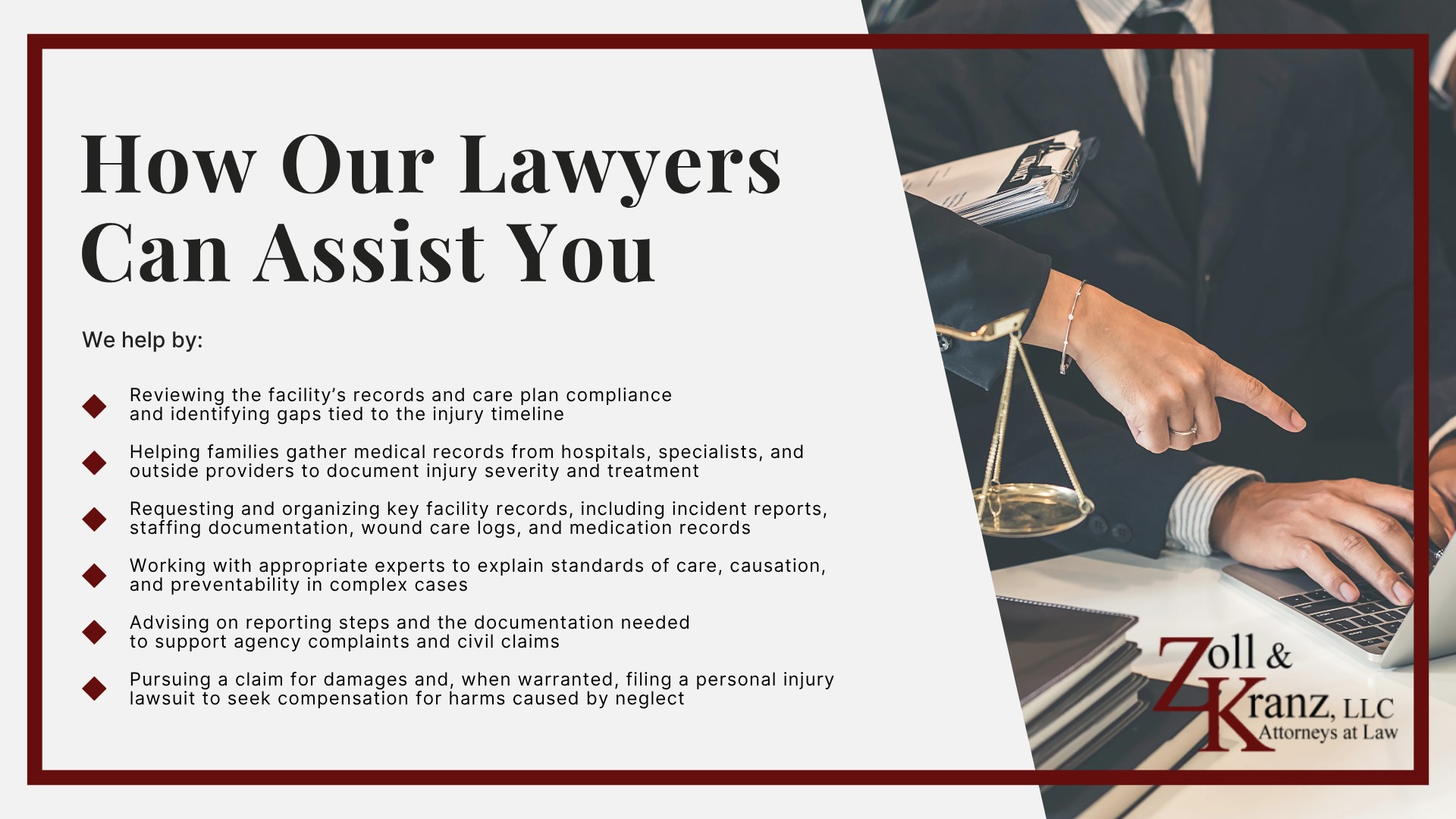
An experienced attorney can help request and organize records, interview staff, and consult appropriate experts to support what the evidence shows.
Timing also matters.
You may only have a certain amount of time from the date of injury to file a lawsuit, and waiting can risk losing the right to take legal action.
If you believe the nursing home fails to provide safe care, acting promptly protects both the resident and the evidence.
Impact of Evidence on Nursing Home Negligence Cases
Evidence determines whether a case can be proven with clear documentation rather than competing narratives.
Strong records help show the baseline condition of the resident, the facility’s care obligations, the timeline of decline or injury, and whether warning signs were ignored.
In nursing home negligence disputes, the facility may argue the harm was unavoidable or caused by preexisting conditions, and detailed records can confirm whether staff followed care plans, documented changes in condition, and responded appropriately.
Evidence also affects case value and resolution posture.
Thorough documentation can support damages tied to medical treatment, rehabilitation, pain, and long-term care needs, and it can strengthen negotiation leverage when the defense disputes fault.
When the evidence shows repeated failures, ignored risks, or patterns consistent with elder abuse, it can also support more aggressive legal strategies and a stronger settlement position.
Preserving Evidence After Nursing Home Negligence
Preservation starts with protecting the resident and securing records before they are lost or altered.
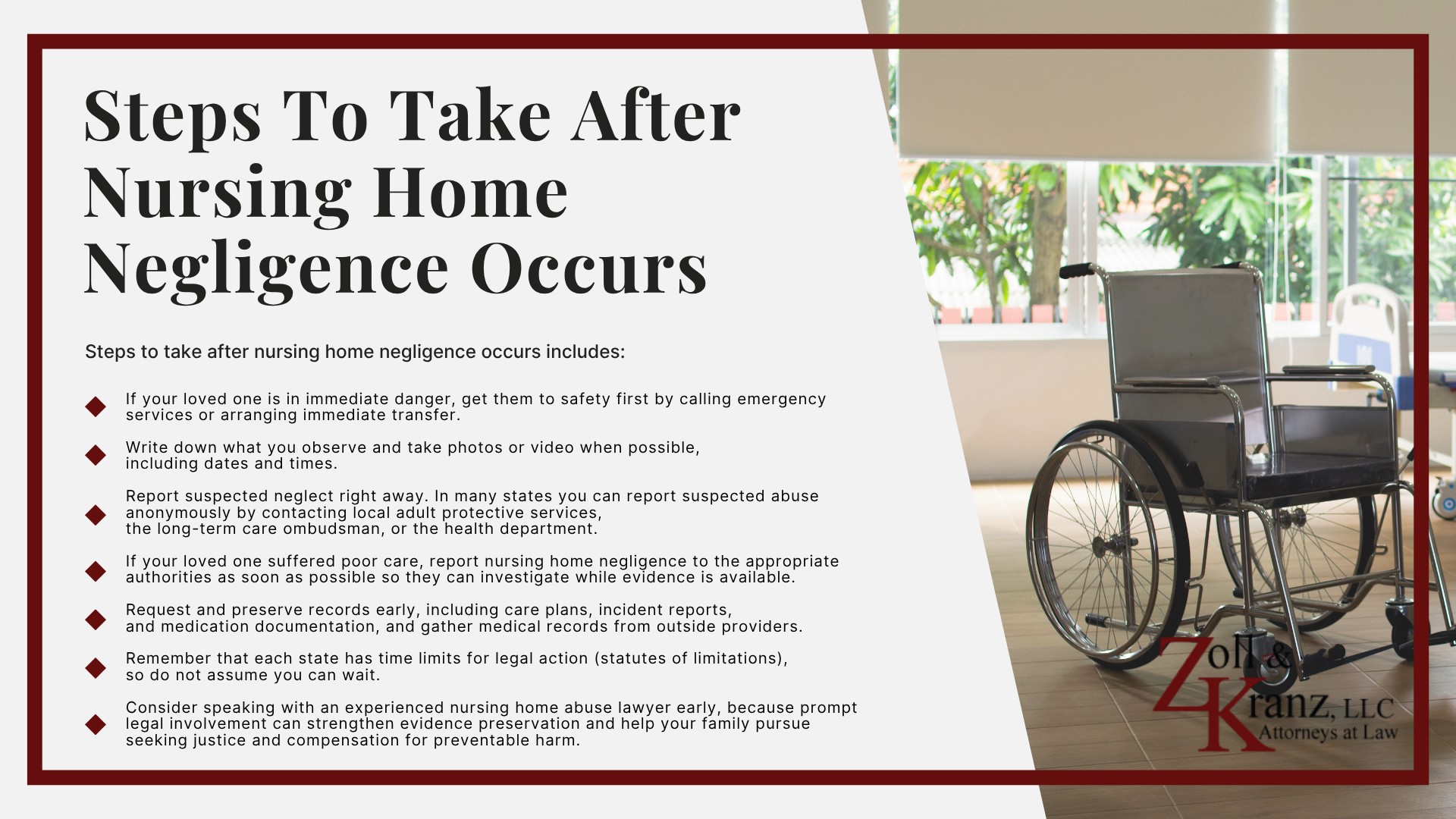
If you suspect immediate danger, serious physical abuse, or sexual abuse, take urgent steps to protect the resident and report suspected abuse to law enforcement and adult protective services.
If the resident is in an assisted living facility or a skilled nursing facility, document conditions as soon as possible with photos, written notes, and dated observations.
Practical preservation steps include:
- Request complete copies of the resident’s chart, care plan, incident reports, and medication records in writing
- Keep a dated log of symptoms, injuries, missed care, and changes in behavior or function
- Photograph injuries and unsafe conditions consistently over time
- Identify potential witnesses and record what they observed while memories are fresh
- Preserve hospital discharge paperwork and outside provider records that document the injury and treatment
- Avoid relying on verbal explanations alone; request information in writing when possible
- Speak with an attorney early so preservation letters, record requests, and expert review can begin promptly
If you are investigating neglect or abuse, an elder abuse attorney can help you move quickly, preserve evidence, and evaluate whether the facts support a claim.
If you need immediate guidance, a nursing home abuse attorney can explain the next steps for protecting the resident and documenting the proof needed to pursue a case.