Within a nursing home, the duty of care covers several distinct obligations, each governing a different part of resident care.

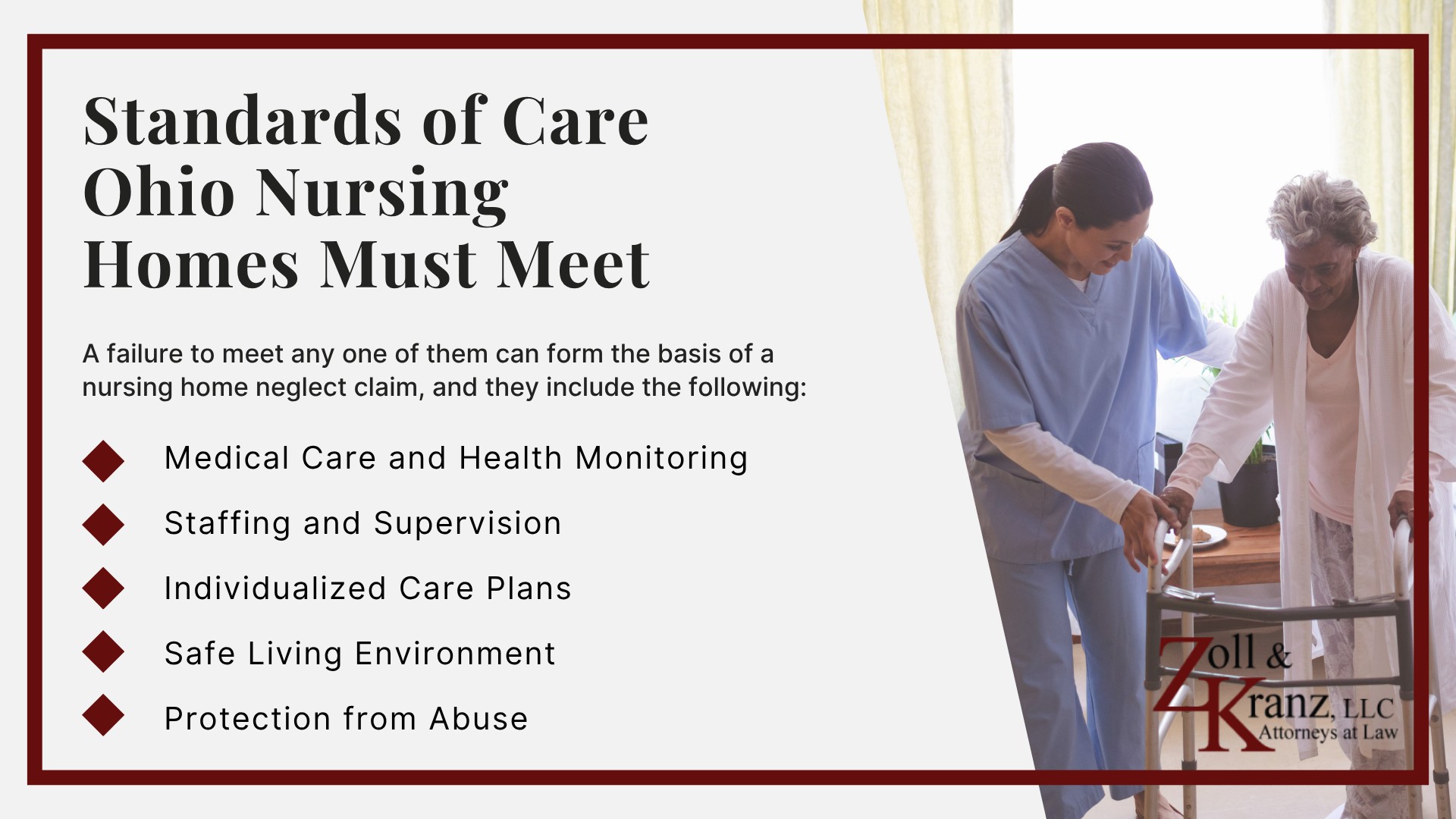
A failure to meet any one of them can form the basis of a nursing home neglect claim, and they include the following:
Medical Care and Health Monitoring
Residents must receive proper nutrition, hydration, and hygiene care.
Staff must monitor health, document changes, and promptly report concerns to prevent harm from medical neglect.
The facility must provide medical care that responds to the changing condition of each resident.
This includes timely access to medical attention and a medical provider when symptoms change or new conditions develop.
Staffing and Supervision
Facilities must employ qualified staff and ensure adequate supervision to prevent neglect and accidents.
Ohio nursing homes are required to maintain adequate staffing levels at all times, with enough properly trained certified nursing assistants, licensed nurses, and other healthcare professionals on every shift to meet the documented needs of the residents.
Federal law requires facilities to provide nursing services on a 24-hour basis, with a licensed nurse designated as charge nurse for each tour of duty.
Individualized Care Plans
Facilities must create, follow, and update an individualized care plan designed to help each resident maintain their highest practicable physical, mental health, and psychosocial well being.
A care plan is the document that translates the standards of care into specific actions for one resident.
The plan covers the schedule of medication, repositioning, hygiene, feeding assistance, and supervision the resident requires.
The facility must review and update the care plan as the resident’s condition changes, and staff are required to follow the plan on every shift.
Safe Living Environment
Nursing homes must ensure a safe, clean, and comfortable environment, including preventing falls by securing rugs, improving lighting, and using grab bars.
The duty to maintain a safe environment extends to the physical condition of the building, the cleanliness of the rooms, the safety of mobility paths, and the protection of residents from foreseeable harm inside the facility.
Protection from Abuse
Facilities must protect residents from all forms of abuse (physical, emotional, sexual, and financial abuse) and neglect, including conducting thorough background checks on employees to prevent nursing home neglect.
This duty requires nursing home administrators to screen every employee before hiring and to supervise staff conduct on every shift, and it extends to the daily care that keeps each resident safe.
Further, facilities must prevent abuse, neglect, and injuries by providing residents nourishing meals, maintaining hygiene, monitoring health, and ensuring adequate staffing, as mandated by the Nursing Home Reform Act.
The administrators must also investigate any complaint of abuse committed and report incidents to the appropriate state authorities, including Adult Protective Services where applicable.