Inattentive care often appears before the chart reflects a change.
Family members on regular visits are usually the first to notice repeated physical, hygiene, and behavioral signs.
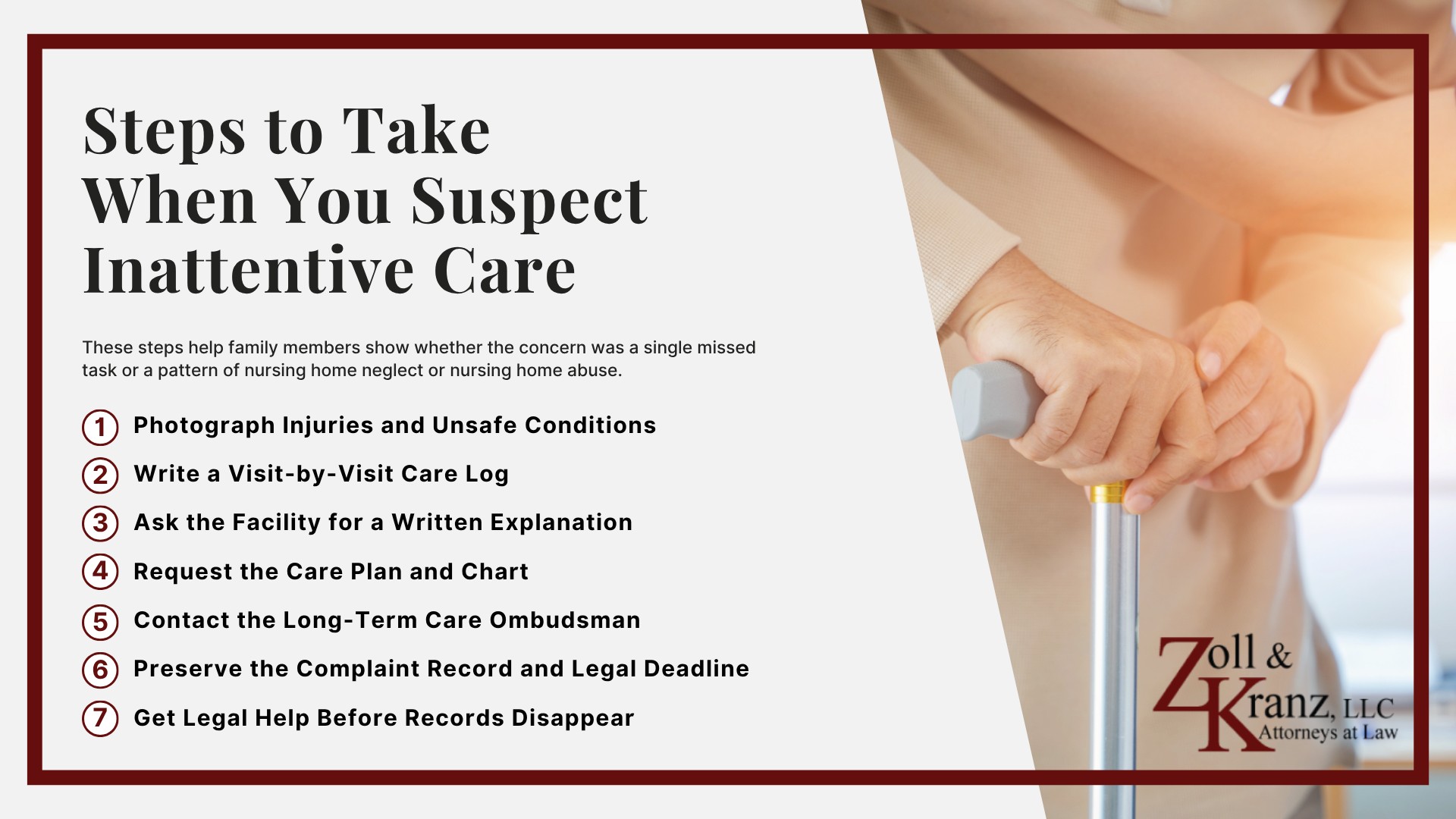
A written log with dates, times, staff names, and observed changes can become useful evidence if the facility failed to provide proper care.
Physical Signs
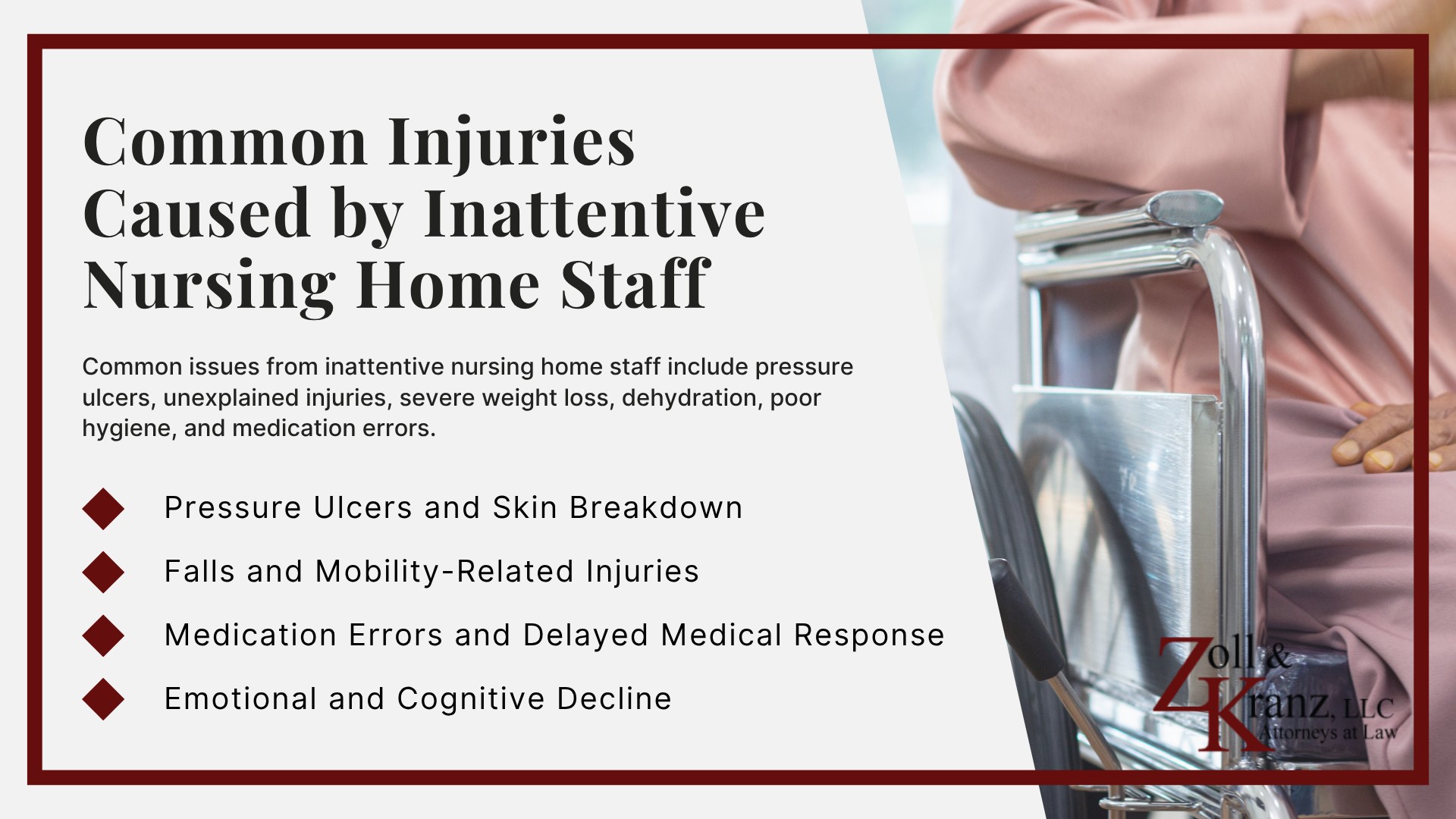
Unexplained injuries or bruises on residents may indicate neglect or abuse, as they can result from falls or lack of supervision in nursing homes.
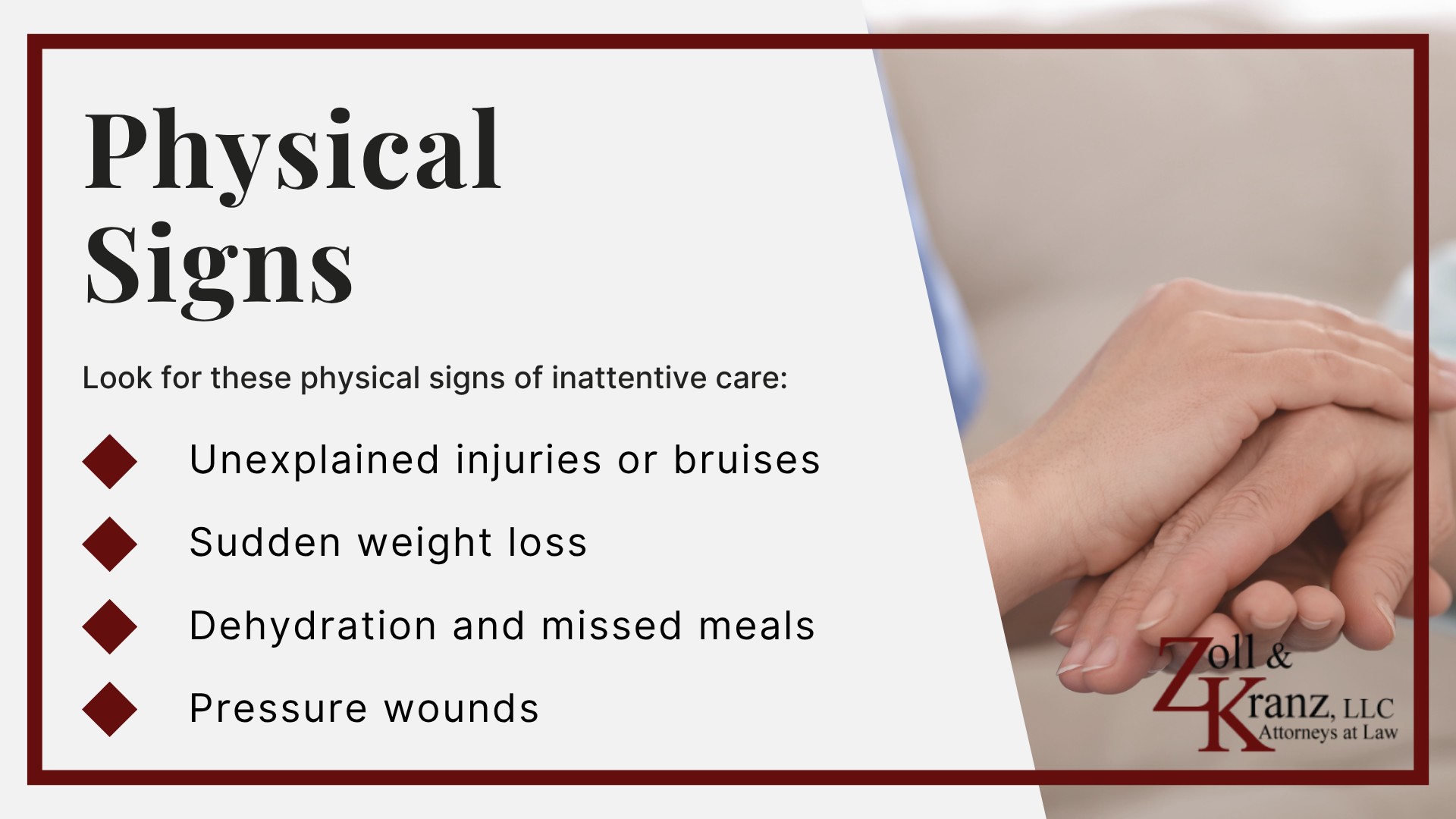
Look for these physical signs of inattentive care:
- Unexplained injuries or bruises: Bruising on the arms, wrists, hips, or back can come from unwitnessed falls, rough transfers, or contact with bed rails.
- Sudden weight loss: Signs of neglect can include sudden weight loss, which may indicate that residents are not receiving adequate nutrition or assistance with meals. Rapid weight loss may point to missed meals, skipped hydration, or lack of feeding help.
- Dehydration and missed meals: Dry mouth, cracked lips, sudden confusion, or untouched food trays can show that food and fluid intake are not being tracked, which is a documented pattern in dehydration and malnutrition claims against nursing homes.
- Pressure wounds: Skin breakdown over the sacrum, heels, hips, or shoulders points to missed repositioning, poor incontinence care, or delayed wound care.
Hygiene and Daily Care Signs
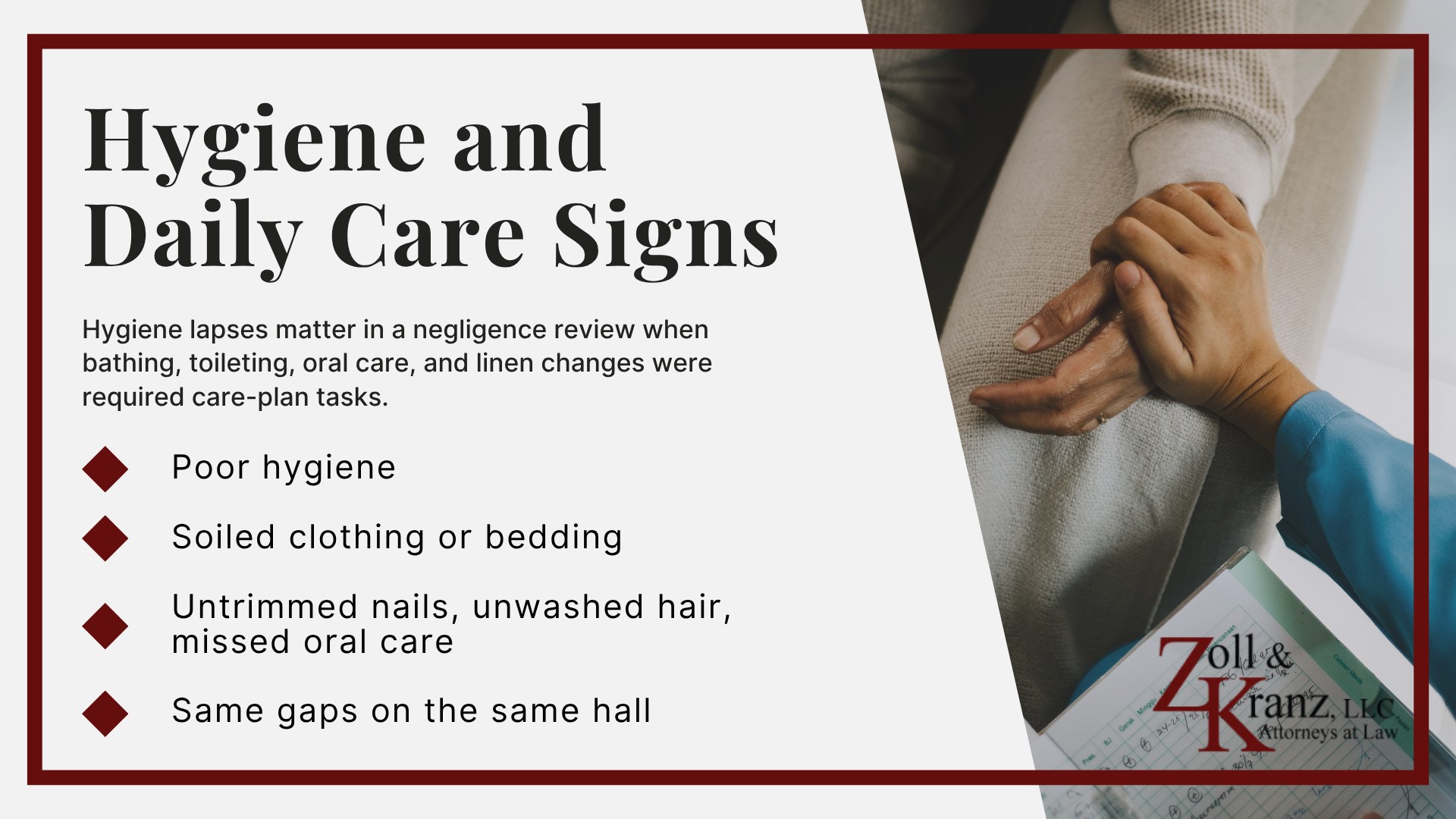
Hygiene lapses matter in a negligence review when bathing, toileting, oral care, and linen changes were required care-plan tasks.
- Poor hygiene: Poor personal hygiene among residents can be a clear sign of neglect, as it often indicates that staff are not providing necessary assistance with daily care routines. A resident found unbathed, in dirty clothing, or with repeated body odor should be documented.
- Soiled clothing or bedding: Repeated soiling without a documented change can point to missed toileting rounds or inadequate staffing levels.
- Untrimmed nails, unwashed hair, missed oral care: These are routine personal hygiene tasks that certified nursing assistants are expected to complete.
- Same gaps on the same hall: Similar lapses affecting many residents may show unit-level staffing issues.
Behavioral Signs
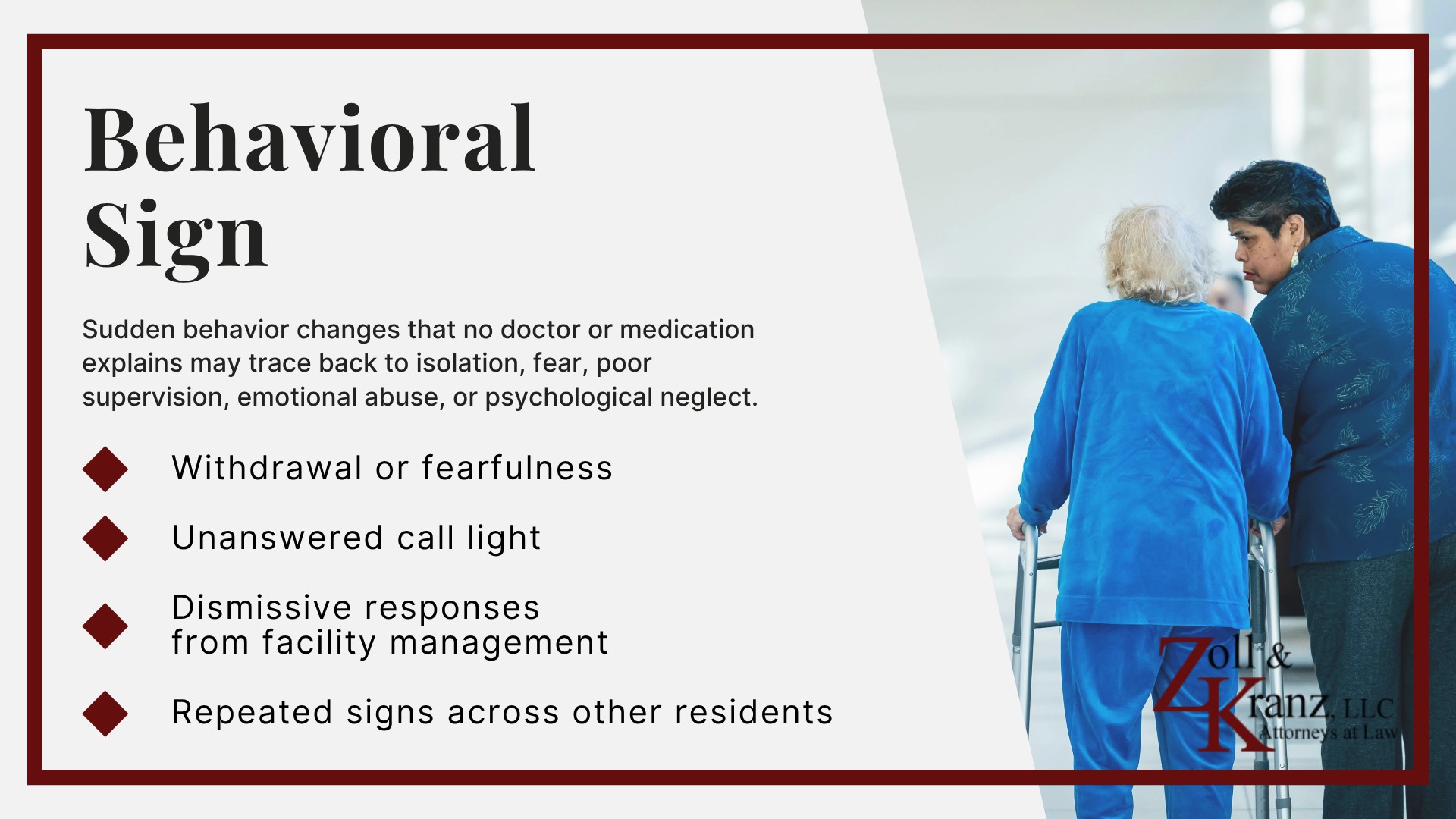
Sudden behavior changes that no doctor or medication explains may trace back to isolation, fear, poor supervision, emotional abuse, or psychological neglect.
- Withdrawal or fearfulness: Fear around specific staff members or silence when staff enter the room should be written down.
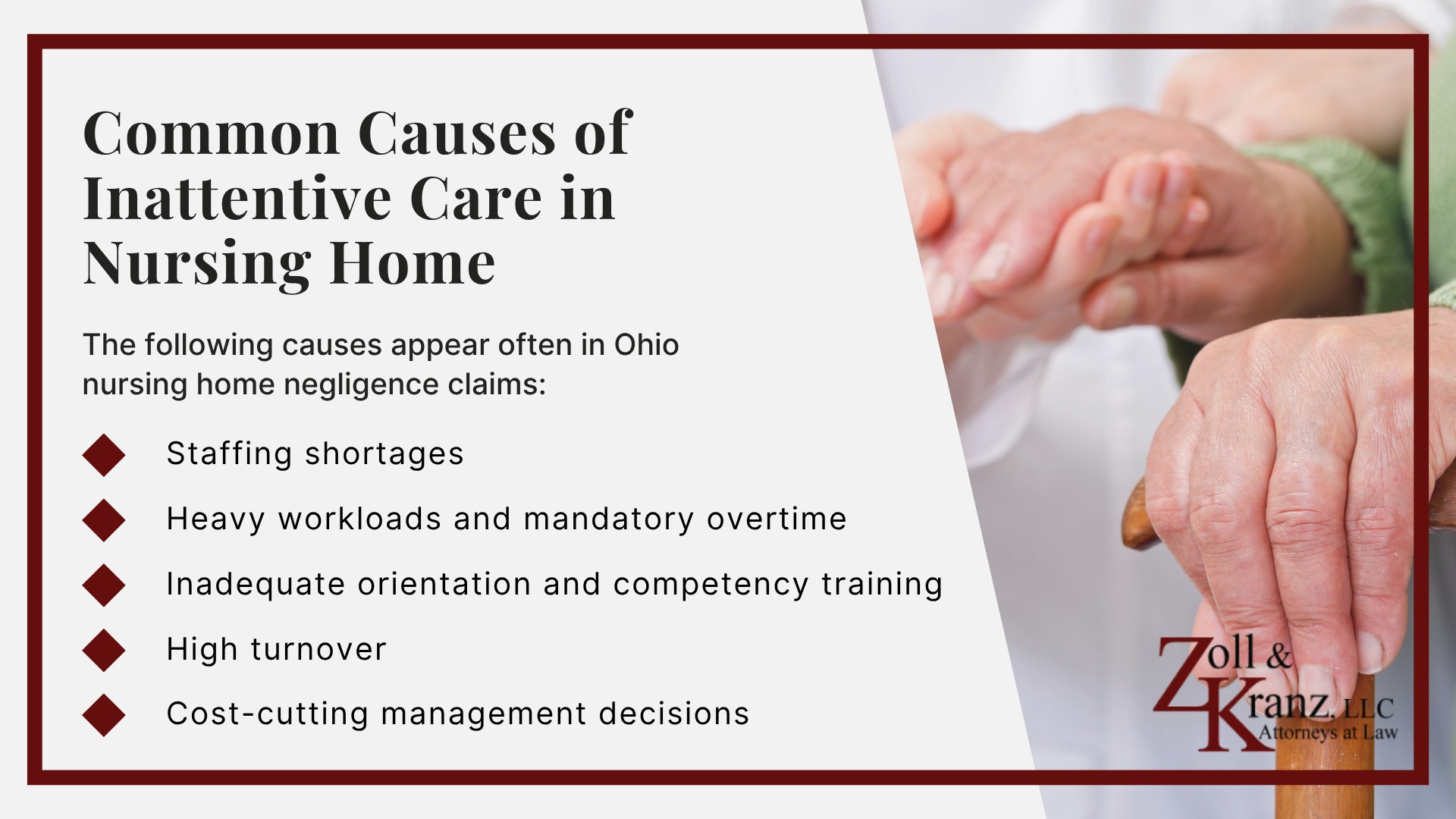
- Unanswered call lights: Long response times can show that staff members were not available when residents needed help, and residents may wait without supervision while staff are pulled to other tasks on the unit.
- Dismissive responses from facility management: Staff who cannot explain an injury or brush off direct questions create a documentation issue.
- Repeated signs across other residents: Similar concerns across one hall suggest a broader unit problem, not one missed task.