When you visit a loved one, you and other family members are often the first to recognize that something is wrong.
A resident who is being hurt may stay silent, so what you observe can matter more than what they say.
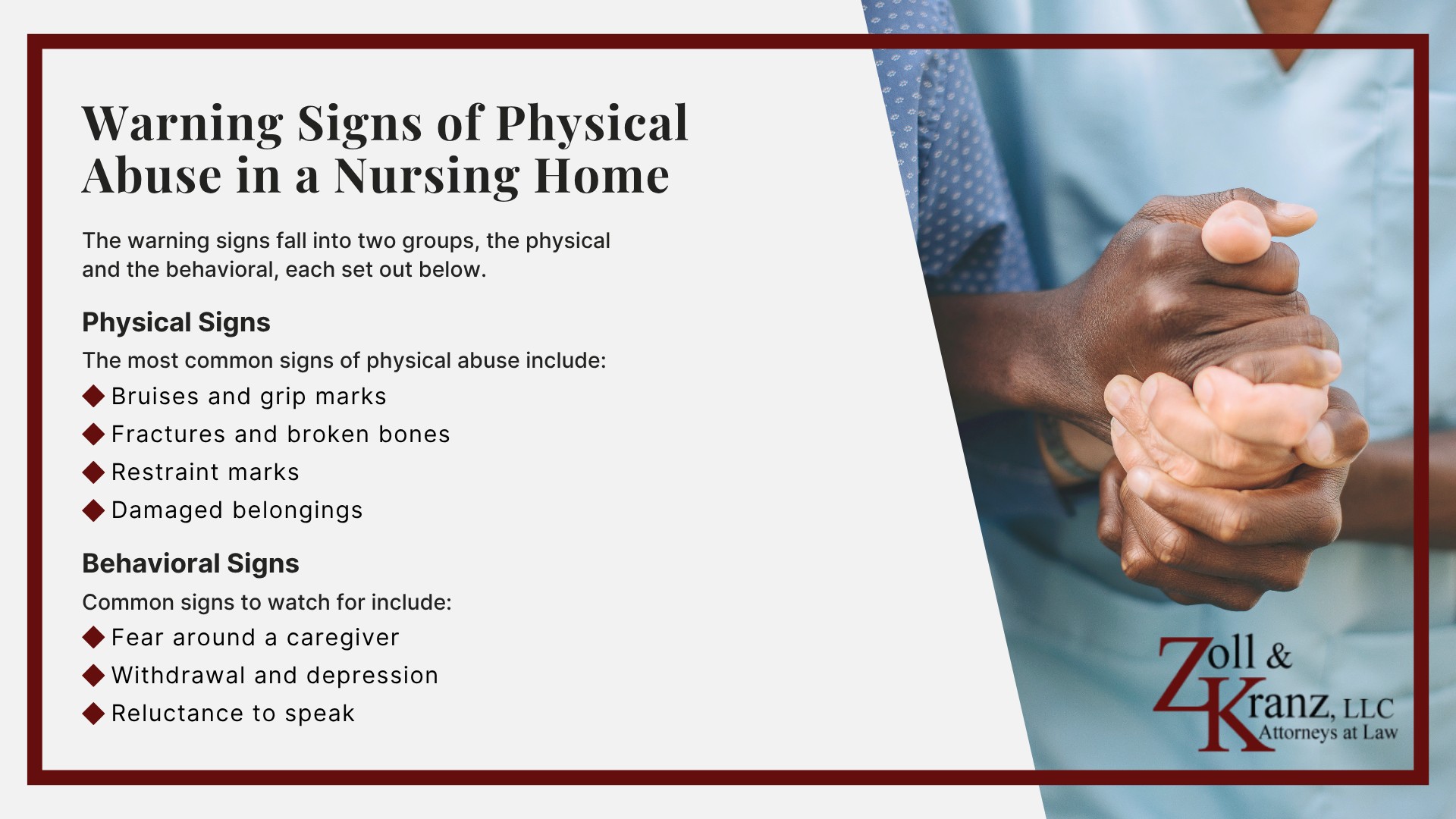
The warning signs fall into two groups, the physical and the behavioral, each set out below.
Physical Signs
Signs of physical abuse include unexplained bruises and broken bones.
Repeated emergency room visits for injuries the home cannot explain often point to ongoing abuse.
The most common signs of physical abuse include:
- Bruises and grip marks: Finger-shaped marks on the wrists or upper arms indicate a resident was seized and held.
- Fractures and broken bones: Breaks, sprains, or head injuries that staff cannot explain point to physical trauma.
- Restraint marks: Raw or broken skin at the wrists and ankles results from tie-downs or improper restraint.
- Damaged belongings: Broken eyeglasses or hearing aids suggest a struggle.
Behavioral Signs
A resident who has been assaulted often reveals it through mood and conduct before any account is given.
Fear, withdrawal, and sudden silence often appear before any visible injury, and they are easy to miss in a resident who already struggles to communicate.
Common signs to watch for include:
- Fear around a caregiver: Flinching, broken eye contact, or visible anxiety when one staff member approaches.
- Withdrawal and depression: A once-social resident retreating, losing interest, or refusing to engage.
- Reluctance to speak: Falling silent or looking to staff for approval before answering a question.