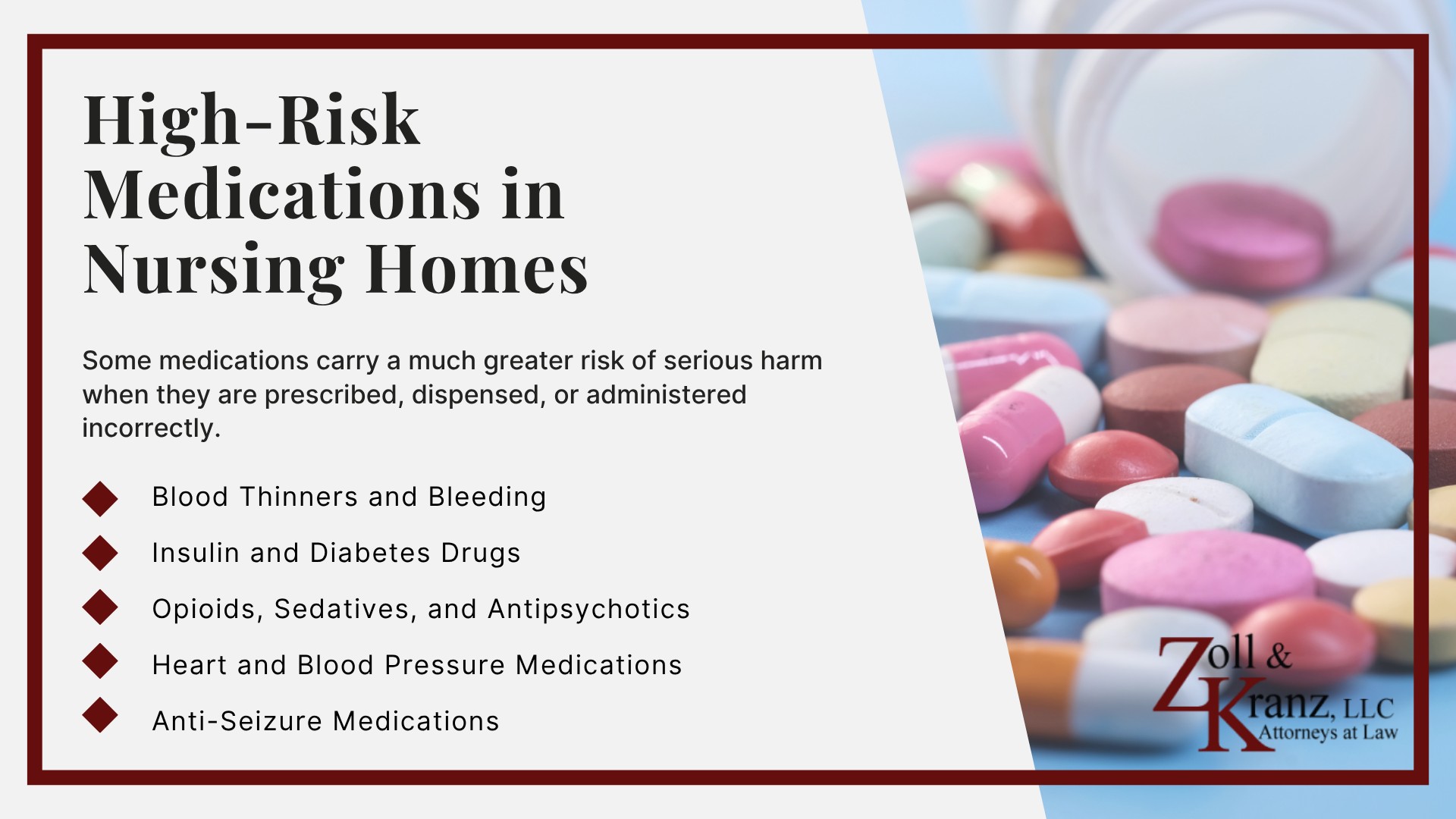
Some medications carry a much greater risk of serious harm when they are prescribed, dispensed, or administered incorrectly.
Nursing home residents often take multiple prescription drugs for chronic illnesses, making them especially vulnerable to medication errors, adverse drug reactions, and dosing mistakes.
Even a single missed dose, duplicate dose, or incorrect medication can quickly result in serious consequences including hospitalization, permanent injury, or death.
According to the U.S. Department of Health and Human Services Office of Inspector General, medication-related adverse events are among the most common types of preventable harm affecting skilled nursing facility residents.

Understanding which medications present the greatest risks can help families recognize warning signs and understand how medication errors occur.
Blood Thinners and Bleeding
Blood thinners such as warfarin require careful dosing and regular monitoring because even small errors can lead to life-threatening bleeding or dangerous blood clots.
Incorrect doses, missed laboratory monitoring, or drug interactions may result in internal bleeding, stroke, or other serious complications.
A ProPublica analysis of government inspection reports, cited by CMS, linked warfarin medication errors to at least 165 nursing home residents who were hospitalized or died between 2011 and 2014.
Insulin and Diabetes Drugs
Insulin is one of the highest-risk medications used in long-term care facilities because the correct dose often depends on blood glucose levels, meal timing, and the resident’s overall condition.
Administering too much insulin may cause severe hypoglycemia, confusion, seizures, loss of consciousness, or brain injury.
Missing a dose or giving too little insulin can also place residents at risk of diabetic emergencies requiring immediate medical attention.
Opioids, Sedatives, and Antipsychotics
Opioids, sedatives, and certain antipsychotic medications can depress breathing, increase confusion, impair balance, and significantly raise the risk of falls.
Older adults are particularly sensitive to these medications, making dosing errors especially dangerous.
Federal regulations also restrict the inappropriate use of antipsychotic medications as chemical restraints for staff convenience rather than legitimate medical treatment.
Heart and Blood Pressure Medications
Medications used to treat heart disease, high blood pressure, and abnormal heart rhythms often require precise dosing because small changes can produce serious cardiovascular effects.
Medication errors involving these drugs may contribute to dangerously low blood pressure, abnormal heart rhythms, fainting, falls, stroke, or worsening heart failure.
Nursing home staff must carefully monitor residents for side effects, medication interactions, and changes in vital signs after these medications are started or adjusted.
Anti-Seizure Medications
Anti-seizure medications help prevent seizures but require consistent administration to remain effective.
Missing doses, giving duplicate doses, or administering the wrong medication may increase the risk of breakthrough seizures, excessive sedation, confusion, or medication toxicity.
Because many residents take these medications long-term, accurate medication reconciliation and careful monitoring are essential whenever prescriptions change or residents transition between healthcare settings.