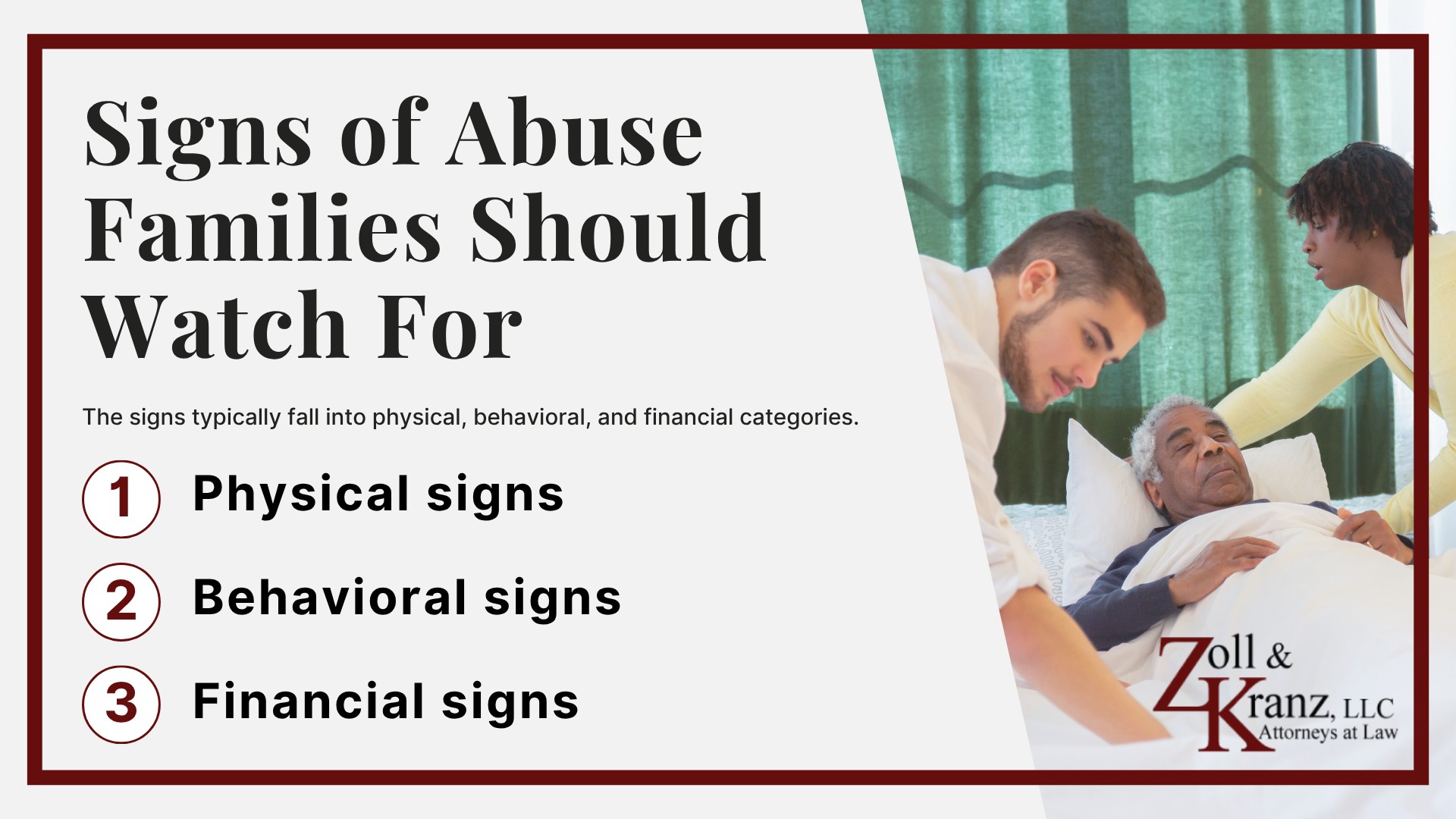
Nursing home residents can experience various types of abuse, including physical harm, emotional mistreatment, neglect, and sexual assault.
Ohio law under § 3721.21 and the Ohio Department of Health define abuse, neglect, misappropriation, and exploitation as the statutory categories of resident mistreatment in nursing facilities.
In practice, families and investigators usually sort the conduct considered abuse into five working categories that map onto those statutory definitions, and each category has its own warning signs, evidence patterns, and pathway for reporting under Ohio rules.
Families dealing with elder mistreatment of a vulnerable adult often see overlapping forms of conduct in the same case, which is why understanding the categories matters before any report is filed or a civil claim is started against the facility.
Physical Abuse
Physical abuse in nursing homes can involve unexplained injuries such as bruises, cuts, burns, and restraint marks.
Physical abuse covers any hitting, slapping, pushing, kicking, or rough handling that causes injury or pain to a resident, and improper use of physical or chemical restraints also falls in this category.
Photographs of visible injuries and a written record kept by the family across visits are usually the first pieces of evidence.
Emotional Abuse
Emotional abuse in nursing homes can include verbal harassment, intimidation, and isolation, which can significantly impact a resident’s mental health.
Emotional abuse is harder to photograph but no less serious, and sudden withdrawal, refusal to eat near specific staff, or visible distress when staff enter the room are the signals families catch first.
A written log with dates and staff names is the foundation for any later complaint.
Sexual Abuse
Unexplained bleeding or bruising in private areas can indicate sexual abuse in nursing homes.
Sexual abuse includes any non-consensual sexual contact, exposure, or sexually explicit speech directed at a resident, and cognitive impairment does not change the analysis since a resident with dementia cannot legally consent.
A sexual assault allegation should be reported to local police immediately, along with the resident being seen by a medical provider.
Financial Exploitation
Financial exploitation of nursing home residents can include missing cash, unapproved bank withdrawals, or sudden changes to legal documents.
Financial exploitation covers any unauthorized use of the money, property, or legal documents of a resident, and new names on bank accounts, missing belongings, or new powers of attorney signed by a cognitively impaired resident are the recurring signals.
The Ohio Attorney General Medicaid Fraud Control Unit and local police share jurisdiction.
Neglect
Neglect is a form of nursing home abuse that can manifest as missed medications, poor hygiene, and lack of assistance with daily activities.
Neglect in nursing homes can manifest as untreated bedsores, malnutrition, dehydration, and filthy living conditions.
Neglect is the most common form of nursing home abuse reported by Ohio families across long term care settings, and most neglect cases involve untreated bedsores, repeated medication errors, or failure to follow the care plan written for the resident.