Common nursing home infections often develop because residents are medically vulnerable and depend on facility staff to prevent, identify, and treat illness before it becomes severe.
Older residents may have weakened immune systems, chronic wounds, diabetes, swallowing problems, mobility limitations, catheters, feeding tubes, or other medical devices that increase the risk of bacterial infections, viral illness, and serious complications.
Infections can also spread more easily in long-term care facilities because residents live in close contact, share caregivers, and often require hands-on assistance with toileting, bathing, meals, wound care, and medication.
When staff fail to follow infection-control protocols, recognize warning signs, clean shared equipment, isolate sick residents, or notify medical providers promptly, a preventable infection may progress into hospitalization, sepsis, permanent decline, or death.

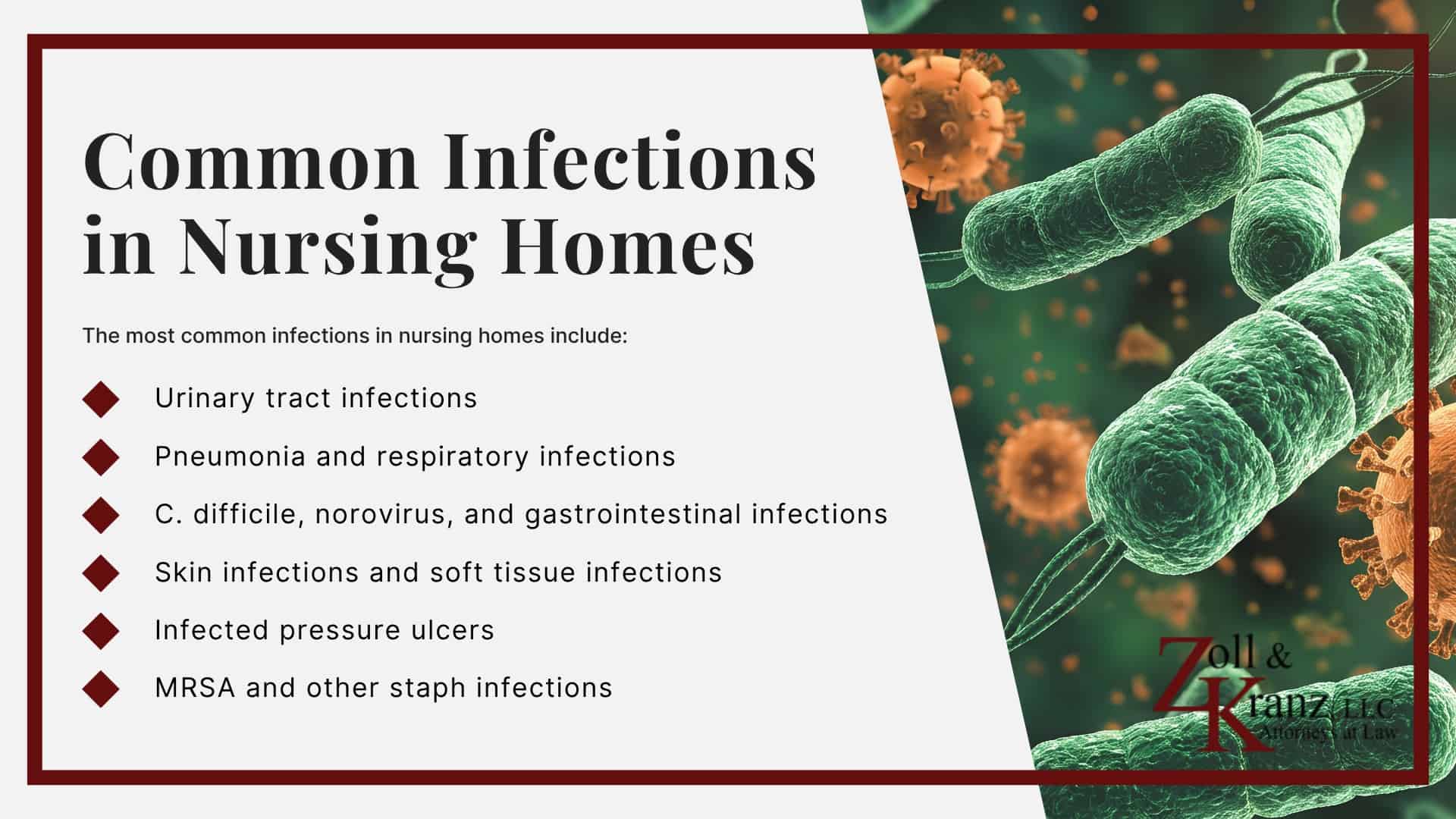
The most common infections in nursing homes include:
- Urinary tract infections: Urinary tract infections are among the most frequent infections seen in long-term care facilities, especially among residents with catheters, incontinence, dehydration, diabetes, or limited mobility. A UTI may affect the bladder, kidneys, or other parts of the urinary tract and can cause fever, pain, confusion, weakness, falls, or behavioral changes in older adults. Escherichia coli is one of the most common bacteria involved in urinary tract infections, and poor catheter care or delayed treatment can allow the infection to spread.
- Pneumonia and respiratory infections: Respiratory infections can include pneumonia, influenza, COVID-19, bronchitis, and other illnesses affecting the lungs and airways. Pneumonia is a leading cause of serious illness and death among older adults in nursing homes, especially residents with swallowing difficulties, weak cough reflexes, immobility, chronic lung disease, or recent hospitalization. Facilities may be liable when staff fail to monitor symptoms, follow vaccination policies, prevent aspiration risks, or respond to breathing problems in a timely manner.
- C. difficile, norovirus, and gastrointestinal infections: Gastrointestinal infections and diarrheal diseases can spread quickly in nursing homes when hand hygiene, isolation, cleaning, and outbreak-control procedures fail. C. difficile infections often follow antibiotic use and can cause severe diarrhea, dehydration, abdominal pain, fever, and dangerous complications. Norovirus outbreaks can spread rapidly through contaminated surfaces, shared spaces, food handling, or staff contact, placing frail residents at risk of dehydration and hospitalization.
- Skin infections and soft tissue infections: Skin infections and soft tissue infections may develop when cuts, wounds, surgical sites, pressure ulcers, or fragile skin are not cleaned, monitored, and treated properly. Residents with diabetes, poor circulation, limited mobility, or weakened immune systems face greater risk of chronic wound infections and diabetic wound infections. When nursing home staff fail to inspect skin, change dressings, reposition immobile residents, or report worsening wounds, a localized infection may spread into deeper tissue or the bloodstream.
- Infected pressure ulcers: Pressure ulcers develop when prolonged pressure reduces blood flow to skin and underlying tissue, most often in residents who cannot reposition themselves. Infected pressure ulcers can become painful, deep, and medically dangerous when staff fail to turn residents, keep skin clean and dry, provide proper nutrition, or treat early wounds. Severe pressure ulcer infections may lead to cellulitis, osteomyelitis, sepsis, hospitalization, or wrongful death.
- MRSA and other staph infections: Staph infections can spread through direct contact, contaminated surfaces, open wounds, shared equipment, or poor hygiene practices. Methicillin resistant staphylococcus aureus, commonly known as MRSA, is especially concerning because it is resistant to many commonly used antibiotics and may be harder to treat. MRSA and other antibiotic-resistant infections can cause skin abscesses, wound infections, pneumonia, bloodstream infections, and severe complications in medically fragile residents.
These infections are not automatically proof of negligence, but they should prompt careful review when they develop after admission, spread among multiple residents, worsen despite warning signs, or follow repeated failures in hygiene, isolation, wound care, catheter care, monitoring, or staffing.
A negligence claim often depends on whether the facility recognized the resident’s risk factors, followed the care plan, complied with infection-control rules, and responded appropriately once symptoms appeared.