Nursing home negligence is rarely the result of a single mistake.
In many cases, preventable injuries develop because a facility repeatedly fails to provide the care, supervision, and medical attention residents require over time.
Because many nursing home residents depend on caregivers for nearly every aspect of daily living, even small lapses in care can quickly lead to serious health complications.
Problems may stem from inadequate staffing, poor communication, insufficient training, or failures to follow individualized care plans.
While some situations involve intentional misconduct, such as physical abuse, sexual abuse, or other forms of elder abuse, many nursing home negligence claims arise from preventable breakdowns in everyday care.
Whether the resident lives in a nursing home or an assisted living facility, identifying the underlying cause of the harm is an important step in evaluating whether the facility met its legal responsibilities.
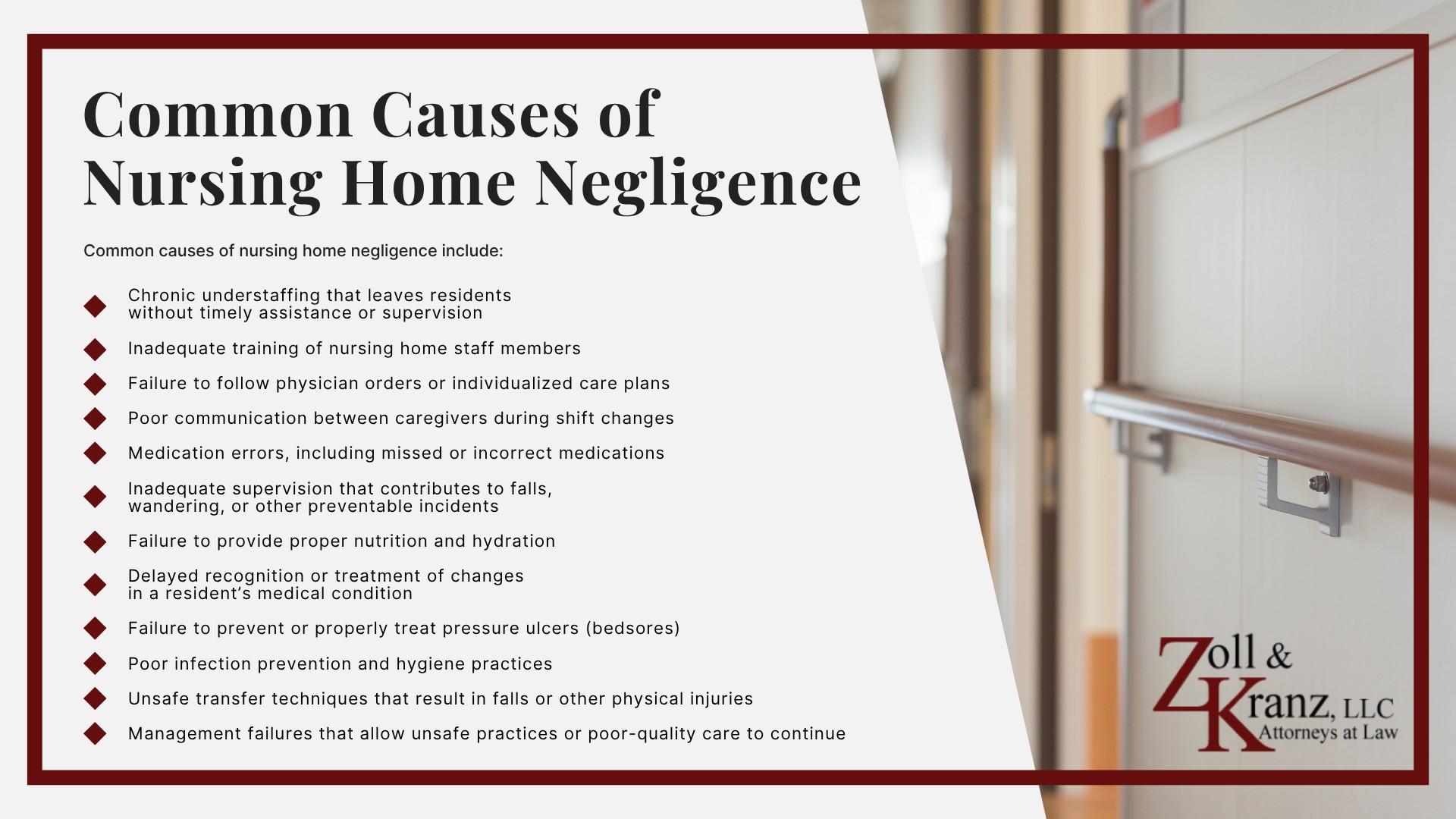
Common causes of nursing home negligence include:
- Chronic understaffing that leaves residents without timely assistance or supervision
- Inadequate training of nursing home staff members
- Failure to follow physician orders or individualized care plans
- Poor communication between caregivers during shift changes
- Medication errors, including missed or incorrect medications
- Inadequate supervision that contributes to falls, wandering, or other preventable incidents
- Failure to provide proper nutrition and hydration
- Delayed recognition or treatment of changes in a resident’s medical condition
- Failure to prevent or properly treat pressure ulcers (bedsores)
- Poor infection prevention and hygiene practices
- Unsafe transfer techniques that result in falls or other physical injuries
- Management failures that allow unsafe practices or poor-quality care to continue
Many of these issues are preventable when facilities maintain appropriate staffing levels, provide adequate training, and consistently follow established care standards.
When nursing homes fail to address these problems, residents may suffer avoidable injuries, declining health, or other serious complications that could have been prevented with appropriate care.
Understanding what caused a resident’s injuries can help families determine whether further investigation or legal action may be appropriate.
What is Considered Nursing Home Abuse or Neglect?
Although the terms are often used together, nursing home abuse and nursing home neglect describe different types of harmful conduct.
Abuse generally involves intentional acts that harm an elderly person, while neglect typically results from a facility fails to provide the care, supervision, or services residents need to remain safe.
Some incidents may involve both abuse and neglect, depending on the circumstances and the evidence available.
In certain situations, the facts may also support a separate medical malpractice case if the injury resulted from negligent medical treatment provided by a qualified healthcare professional.
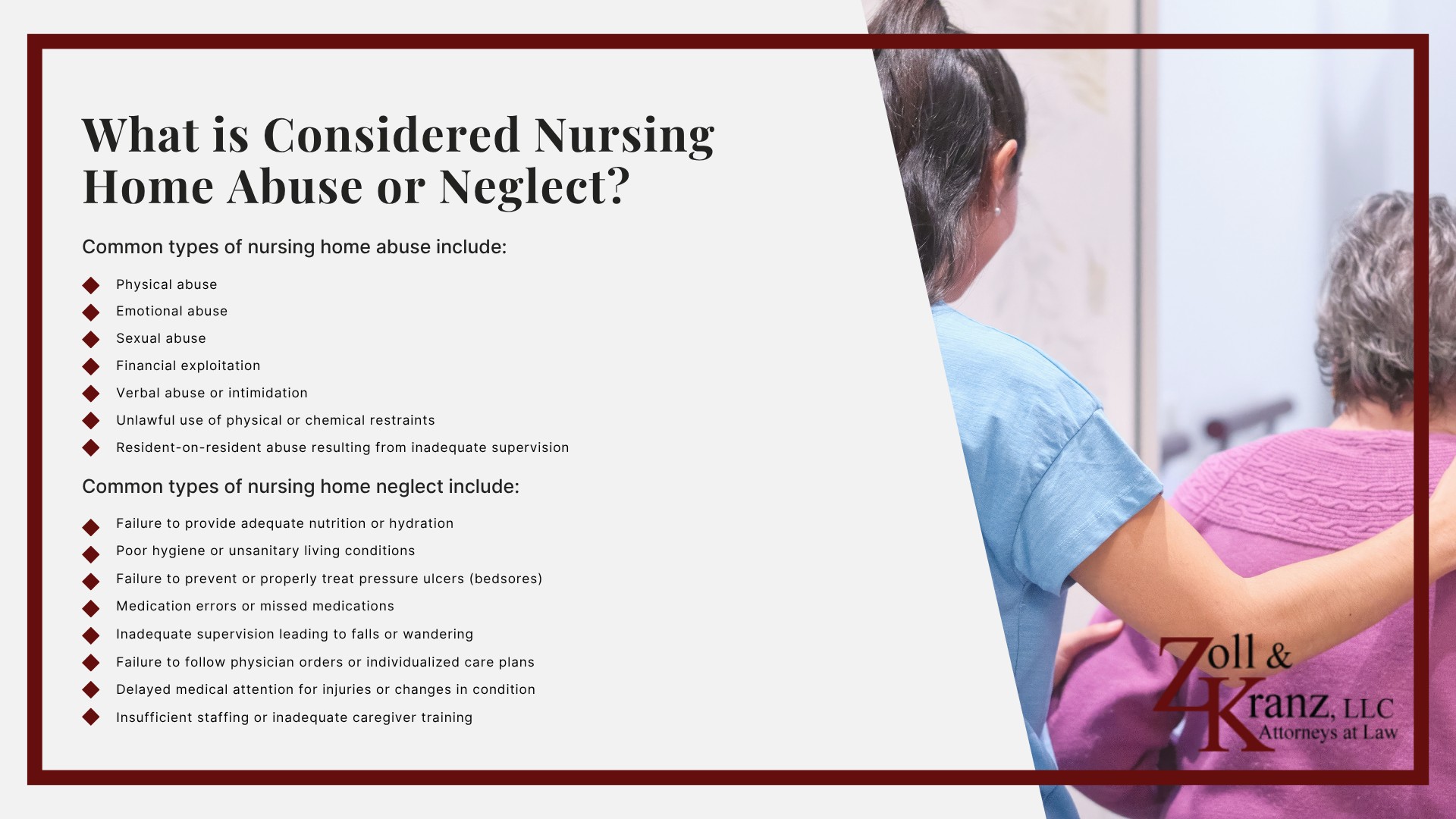
Common types of nursing home abuse include:
- Physical abuse
- Emotional abuse
- Sexual abuse
- Financial exploitation
- Verbal abuse or intimidation
- Unlawful use of physical or chemical restraints
- Resident-on-resident abuse resulting from inadequate supervision
Common types of nursing home neglect include:
- Failure to provide adequate nutrition or hydration
- Poor hygiene or unsanitary living conditions
- Failure to prevent or properly treat pressure ulcers (bedsores)
- Medication errors or missed medications
- Inadequate supervision leading to falls or wandering
- Failure to follow physician orders or individualized care plans
- Delayed medical attention for injuries or changes in condition
- Insufficient staffing or inadequate caregiver training
Residents living with Alzheimer’s disease or other forms of dementia may be especially vulnerable because they often rely on caregivers for nearly every aspect of daily living and may have difficulty reporting mistreatment.
Families should pay close attention to unexplained injuries, sudden behavioral changes, poor hygiene, weight loss, or other signs that a resident is not receiving appropriate care.
Whether the harm resulted from intentional abuse or negligent care, identifying the underlying cause is an important part of evaluating a potential legal claim.
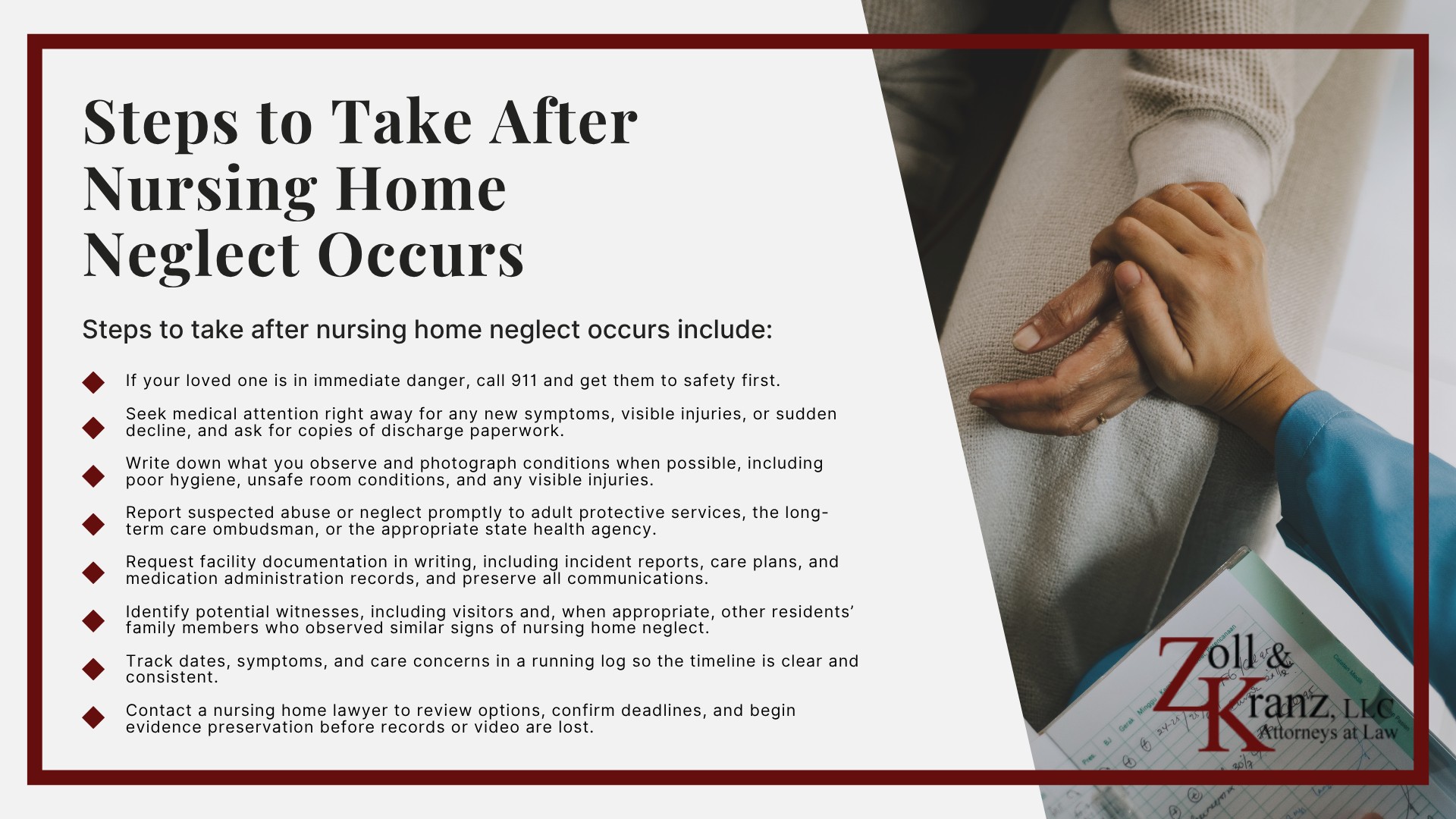
Prompt reporting, thorough documentation, and early investigation can help protect residents and preserve evidence if legal action becomes necessary.