Emotional abuse in nursing homes can be categorized into verbal and nonverbal forms, both of which can inflict significant emotional harm on residents.
Common examples of emotional abuse in nursing homes include yelling, ignoring, and treating residents with disrespect, which can lead to feelings of fear, worthlessness, and isolation.
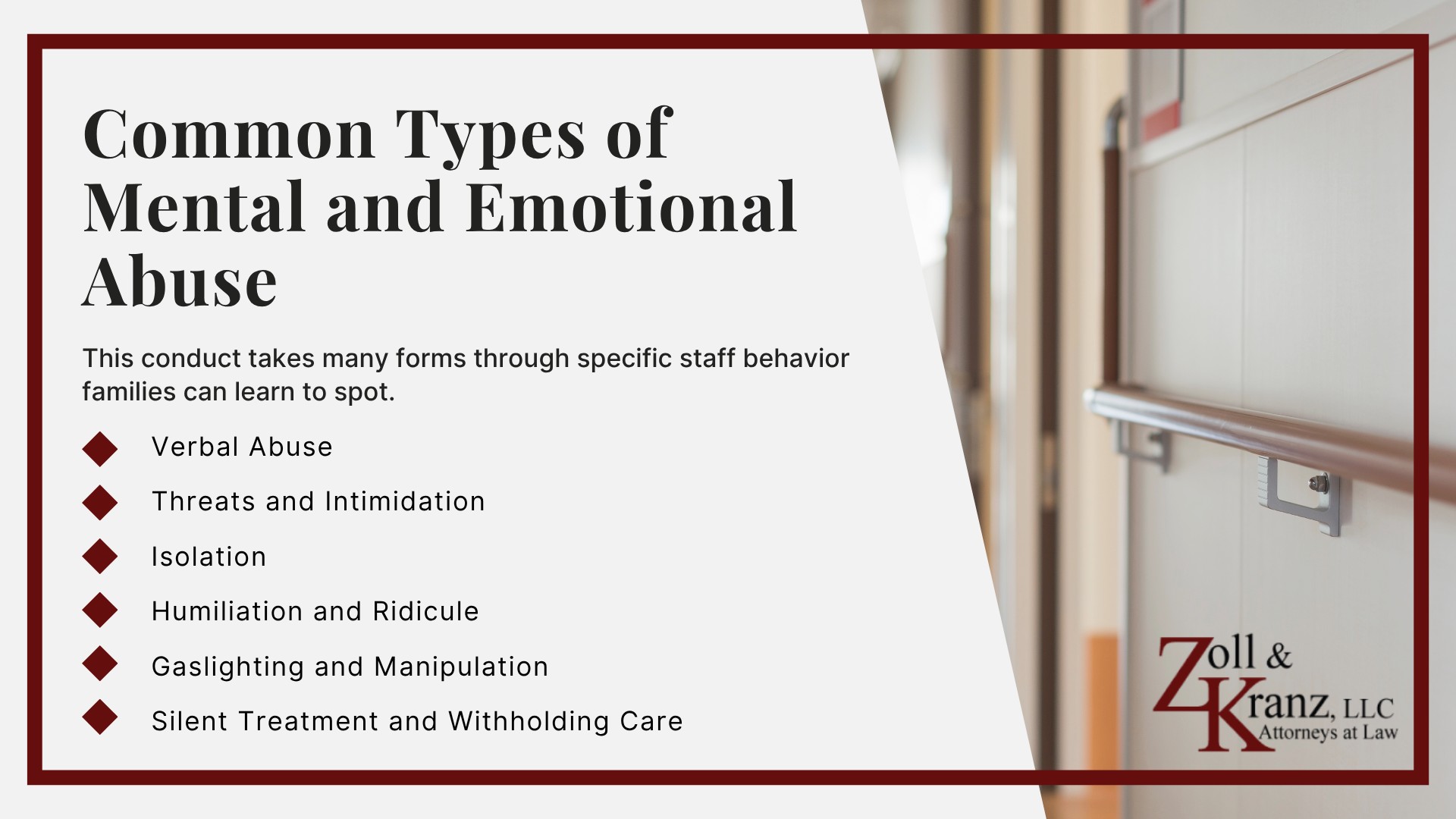
This conduct takes many forms through specific staff behavior families can learn to spot.
Verbal Abuse
Verbal psychological abuse includes yelling, mocking, insulting, name-calling, threats, infantilizing baby talk, and any speech directed at the resident that causes mental distress.
Psychological or emotional abuse in this category also includes swearing at residents, ridiculing them in front of other residents, and shaming them for incontinence, cognitive issues, or physical limitations.
Threats and Intimidation
Staff threats include what’s called patient threatening behavior, including warnings of physical harm, threats to withhold food or medication, threats to restrict family visits, and threats of retaliation if the resident complains.
Intimidation can be subtle, including silent hostile body language, glaring, or standing over the resident in a manner that asserts control.
Isolation
Social isolation includes preventing the resident from joining group activities and restricting visitor access without medical justification.
This also includes blocking telephone calls and family-preventing visits, along with separating the resident from other residents as a form of punishment.
This category also includes ignoring the resident for extended periods and refusing to acknowledge the resident when present in the room.
Humiliation and Ridicule
Humiliation includes mocking a resident’s appearance, intellect, hygiene needs, or cognitive impairments in front of staff, other residents, or visitors.
Patient ridiculing for needing help with daily tasks falls in the same category.
Gaslighting and Manipulation
Gaslighting includes denying that a resident remembers an event correctly, dismissing the resident’s stated concerns as confusion, and making the resident doubt their own perception of staff conduct.
Manipulation includes exploiting cognitive impairment to extract compliance, blaming the resident for problems they did not cause, and using guilt to make the patient feel guilty and to control behavior.
Silent Treatment and Withholding Care
The silent treatment includes refusing to speak to the resident, ignoring call lights, withholding companionship, and failing to respond to reasonable requests.
This category also includes withholding emotional comfort during pain or distress, which the Ohio Long-Term Care Ombudsman Program identifies as a form of emotional neglect.