The Ohio statute spells out exactly what a home owes. R.C. 3721.13 sets out more than 30 specific rights, and the statute treats that list as open-ended.

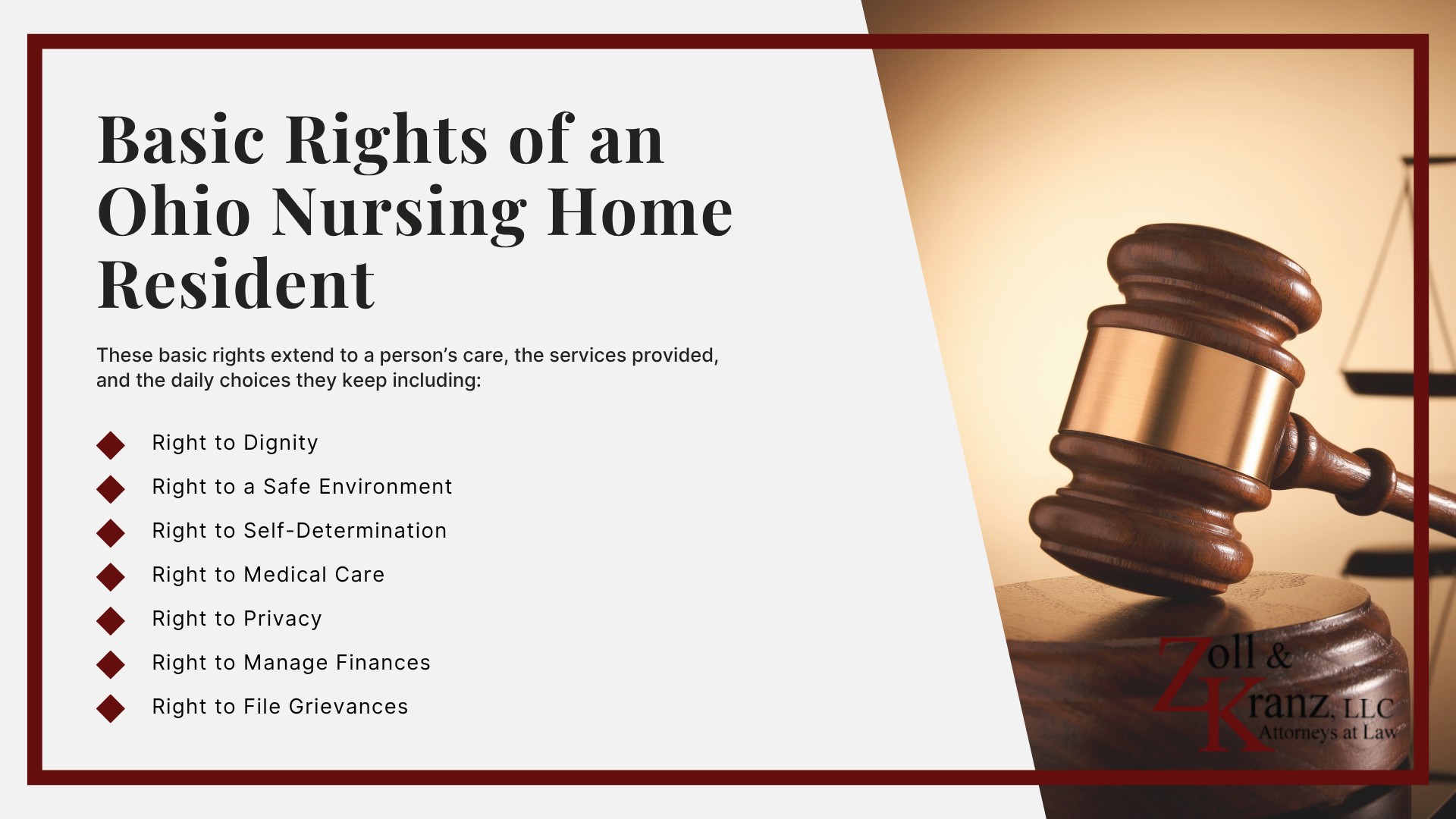
These basic rights extend to a person’s care, the services provided, and the daily choices they keep including:
Right to Dignity
A person keeps who they are inside the home. Residents have the right to dignity, autonomy, and quality care, and to be treated with consideration, respect, and full recognition of their individuality.
That right applies to the small things and the large. It protects privacy during personal care, a clean living space, and the right to receive respect, free from any treatment that strips away personal dignity.
Right to a Safe Environment
Safety is the first duty of every home. Residents have the right to be free from mental and physical abuse, and from nursing home neglect, whether verbal or emotional.
The duty is active. A facility must supervise, deliver the services it promised, answer reasonable requests, and protect a person from harm by staff and by other residents.
Right to Self-Determination
The power to make decisions stays with the person inside the home. Residents may participate in their own care planning process and help decide the treatment they receive.
That power is the right of self determination, and it continues through the stay.
Residents may request changes to their care plans at any time and may refuse medications and treatments they do not want. A refusal cannot be met with worse care or sedation.
Right to Medical Care
Care must be planned and reviewed on a schedule the statute sets.
A comprehensive assessment is required upon nursing home admission, within 14 days. Care plans should be developed within 7 days of that assessment.
Care plans must be reviewed at least every 3 months, and more often when a medical condition changes.
A patient may select an attending physician and remain involved as the home delivers the care in that plan to meet daily personal needs. Every treatment must be explained before it begins.
Right to Privacy
Contact with the outside world is protected. Residents have the right to private and unrestricted communication by phone, mail, and in person with family members, an attorney, and a physician.
A home may limit a visit only for narrow medical reasons, documented by the attending physician.
It may not cut off access to counsel or to public officials.
Right to Manage Finances
A resident controls their own money unless they choose otherwise. Residents must receive a written statement of services and charges upon admission, so the cost is clear from day one.
Residents may manage their own financial affairs unless they delegate that to the facility in writing.
A facility given that authority must provide quarterly accounts of residents’ funds, and the books remain open for review.
Right to File Grievances
Speaking up is protected. The right to present grievances and recommend changes belongs to every resident, and the home must maintain a grievance committee to hear them.
Retaliation is barred. A facility cannot punish, isolate, or discharge anyone for raising a concern or filing a complaint.
Other Rights Under R.C. 3721.13
R.C. 3721.13 also guarantees the following rights:
- The right to the highest practicable physical, mental, and psychosocial well being.
- The right to adequate and appropriate medical treatment and a medical care program, whatever the source of payment.
- The right to be fully informed of the basic rates and any related charges for the services provided.
- The right to confidentiality of personal and medical records, and to review them.
- The right to retain personal clothing and personal property in the room.
- The right to be free from chemical and physical restraints and from corporal punishment.
- The right to refuse to perform services for the home.
- The right to be free from experimental research without informed consent.
- The right to observe religious services and take part in community activities.
- The right to organize and join a resident council.
- The right to make personal decisions and to receive reasonable and appropriate notice of a room change.
- The right to a legal representative who can act to protect his or her rights.
- The right to be free from mental and physical abuse, neglect, and financial exploitation.