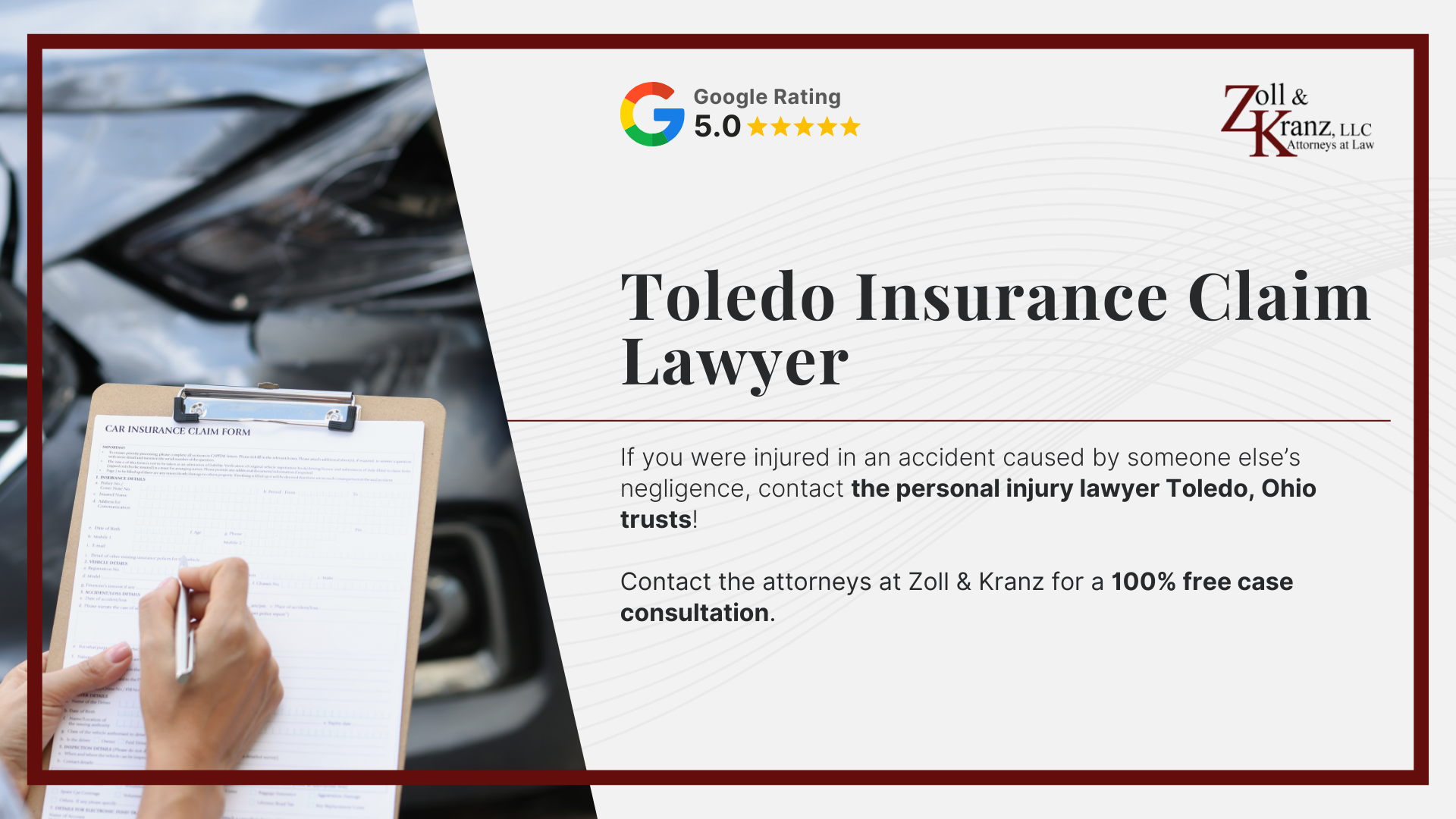
A Toledo insurance claim lawyer protects policyholders when an insurance company delays, denies, or undervalues benefits.
They interpret policy language, compare it to the facts of your loss, and challenge misapplied exclusions or conditions in insurance coverage.
When insurance coverage disputes arise (over property damage, health insurance benefits, or liability tenders), the insurance dispute attorneys coordinate evidence, expert reports, and sworn statements to compel fair treatment.
If informal talks fail, experienced insurance dispute lawyers pursue appraisal, bad-faith remedies, or litigation to enforce valid claims under Ohio insurance law.
The Responsibilities Of An Insurance Claim Lawyer In Personal Injury Cases
An insurance claim lawyer helps injury victims protect their rights when dealing with adjusters, coverage disputes, and settlement pressure.
In a personal injury case, an insurance attorney focuses on building a documented claim that ties liability and damages to objective proof.
This includes reviewing policy language, correcting misinformation, and pushing back when the insurer delays, denies, or undervalues the claim.
The goal is to move the case toward a resolution supported by evidence and consistent with the terms of coverage and applicable law.
Common responsibilities include:
- Reviewing insurance policies to identify coverage, exclusions, and notice requirements
- Collecting and organizing evidence such as medical records, bills, wage loss documentation, and property damage estimates
- Communicating with the insurance company on the client’s behalf and managing claim deadlines
- Responding to denials, delay tactics, and low settlement offers with documented rebuttals
- Coordinating expert input when needed to support causation, future care needs, or damages
- Preparing and pursuing litigation when an insurer refuses to act in good faith or the claim cannot be resolved fairly
Why It’s Beneficial To Hire A Lawyer To Deal With Insurance Claims
Insurance claims often become adversarial because insurers control the process and may look for ways to avoid paying valid claims, especially when the payout could be substantial.
Insurance companies often deny claims by arguing the policy does not cover the specific incident or damage, or by taking a narrow view of what the policy language means in practice.
A Toledo insurance claim lawyer investigates the claim, gathers evidence, handles all communication with insurers, and negotiates for a settlement so the claim is driven by documentation rather than delay tactics.
Lawyers assess total damages, including current and future medical costs, lost wages, and pain and suffering to pursue fair compensation that reflects the full impact of the loss.
This approach is useful across many claim types, including homeowners insurance claims, auto insurance claims, life insurance claims, health insurance claims, disability insurance claims, and business insurance claims, where denials and underpayment are common when high-dollar losses are involved.
Homeowners insurance claims often involve disputes over coverage for damage from fire, hurricanes, hailstorms, flooding, mold, and theft, and many insurers will look for ways to avoid paying claims tied to natural disasters or widespread events.
Auto insurance claims may involve disputes over collision coverage, comprehensive coverage, or underinsured and uninsured motorist benefits, particularly when fault or injury severity is contested.
Health insurance claims are frequently denied for treatments labeled “experimental,” “not medically necessary,” or “out of network,” leaving patients stuck between providers and an insurer’s internal rules.
Disability insurance claims can be denied based on biased medical reviews or unreasonably strict definitions of disability that do not reflect the claimant’s real limitations.
Life insurance claims may be denied based on alleged misstatements on applications or policy lapses, and business insurance claims can face delays or denials under commercial policies for property loss, theft, fire, or business interruption.