In Ohio, “medical malpractice” generally refers to a medical claim against medical providers that arises out of diagnosis, care, or treatment, including claims tied to decisions made inside a hospital or other medical facility.
A case is not proved by showing a bad outcome alone, it requires showing that a doctor breached the accepted standard of care that other medical professionals would have followed under similar circumstances.
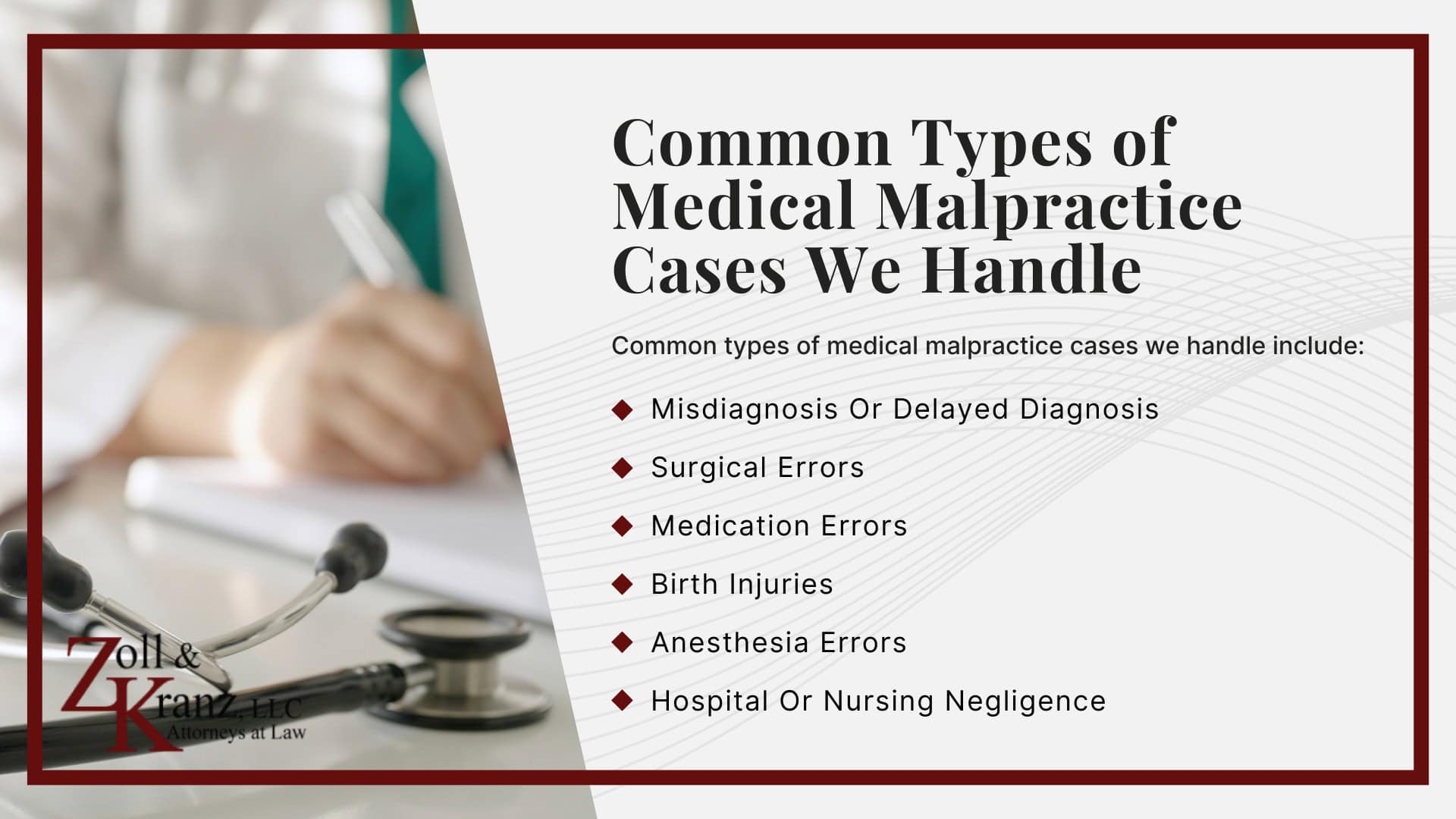
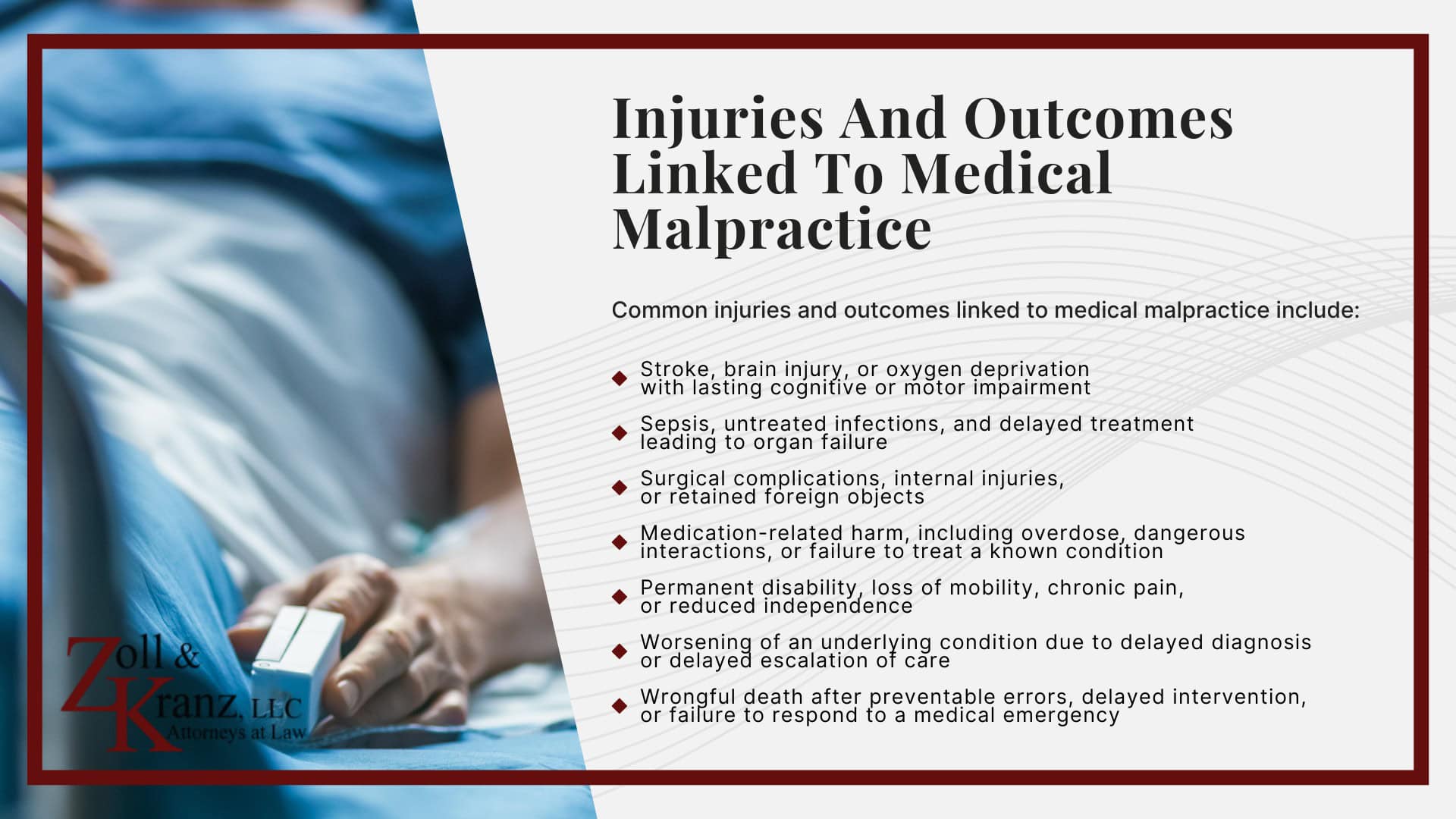
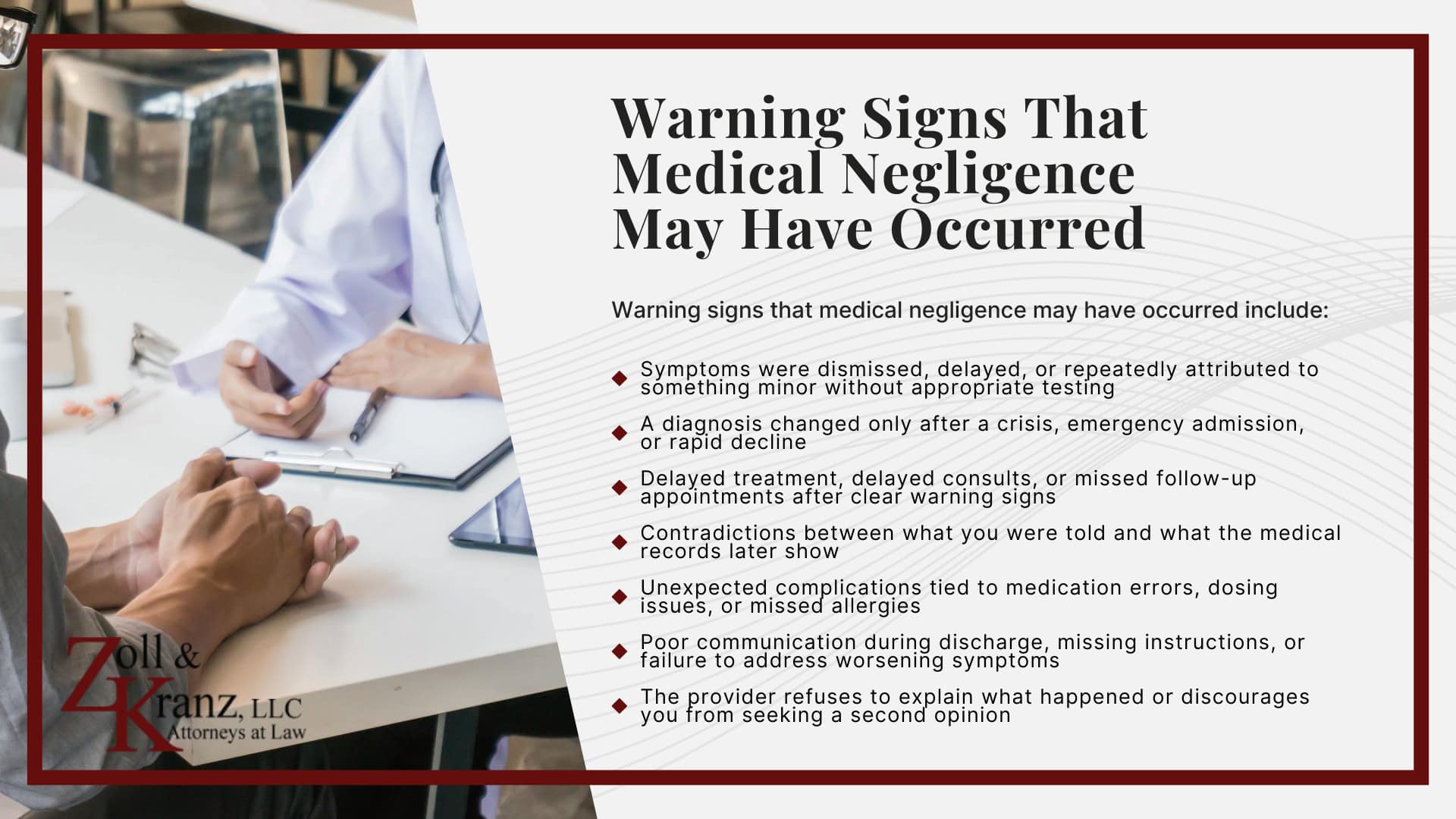
Many claims involve medical mistakes like missed diagnoses, surgical errors, medication errors, or failures to monitor and escalate care that lead to serious injuries or death.
These cases also can involve a medical device when the allegation is that a provider’s selection, placement, or management of the device fell below the standard of care, even if the device itself is not defective.
Ohio law also imposes procedural and timing rules for medical claims, including a one-year limitations period in many situations and a four-year statute of repose that can bar late-filed claims.
For injured victims considering legal action, the key is whether the facts and records support each required legal element, not whether the outcome was unexpected.
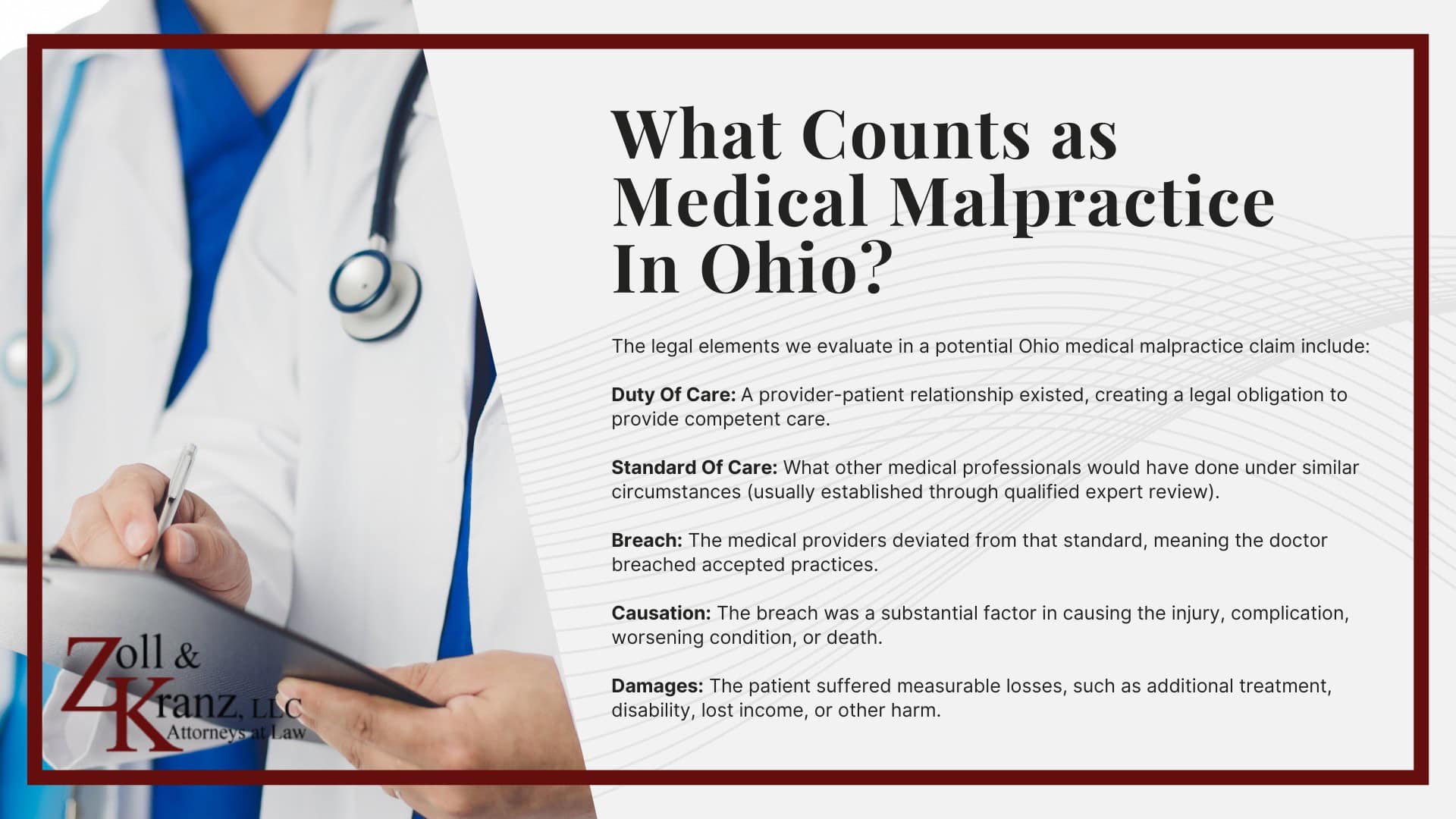
The legal elements we evaluate in a potential Ohio medical malpractice claim include:
- Duty Of Care: A provider-patient relationship existed, creating a legal obligation to provide competent care.
- Standard Of Care: What other medical professionals would have done under similar circumstances (usually established through qualified expert review).
- Breach: The medical providers deviated from that standard, meaning the doctor breached accepted practices.
- Causation: The breach was a substantial factor in causing the injury, complication, worsening condition, or death.
- Damages: The patient suffered measurable losses, such as additional treatment, disability, lost income, or other harm.
Because these claims depend on standards of care, they are typically built with expert review and detailed record analysis rather than assumptions about what “should have happened.”
Ohio procedure also commonly requires an affidavit of merit from a qualified expert with a medical liability complaint, which is one reason early investigation matters.
If a case involves multiple providers, we also analyze how each person’s role fits into the timeline, because responsibility can be shared across departments and decision points.
The goal is to build a case that is medically and procedurally sound before it is ever filed.
Medical Malpractice Is Negligent Care From A Provider, Not A Bad Outcome Alone
Not every complication or poor result means malpractice occurred, even when the outcome is devastating.
Medical malpractice focuses on whether healthcare professionals acted reasonably and followed accepted standards of care under the circumstances.
A claim arises when a doctor failed to do what a similarly trained provider would have done, or did something that competent providers would not have done.
That deviation is what makes conduct considered malpractice, not the severity of the injury alone.
Many patients experience serious harm without malpractice, while others suffer preventable injuries because basic steps were missed.
The distinction is established through records, timelines, and expert analysis, not hindsight or disagreement with a medical decision.
Ohio Laws And Deadlines That Apply to Medical Malpractice Cases
Ohio medical malpractice cases follow a different timeline than most personal injury claims, and deadlines can control whether a case can be filed at all.
In many situations, a medical claim must be filed within one year of accrual, and Ohio law also allows a written notice that can extend the filing time by 180 days in certain circumstances.
Ohio also has a four-year statute of repose for medical claims, which can bar a case even if the injury was discovered later.
Damages rules matter too, because Ohio caps certain non-economic damages in medical claims, which can affect medical malpractice compensation and how negotiations with an insurance company are approached.
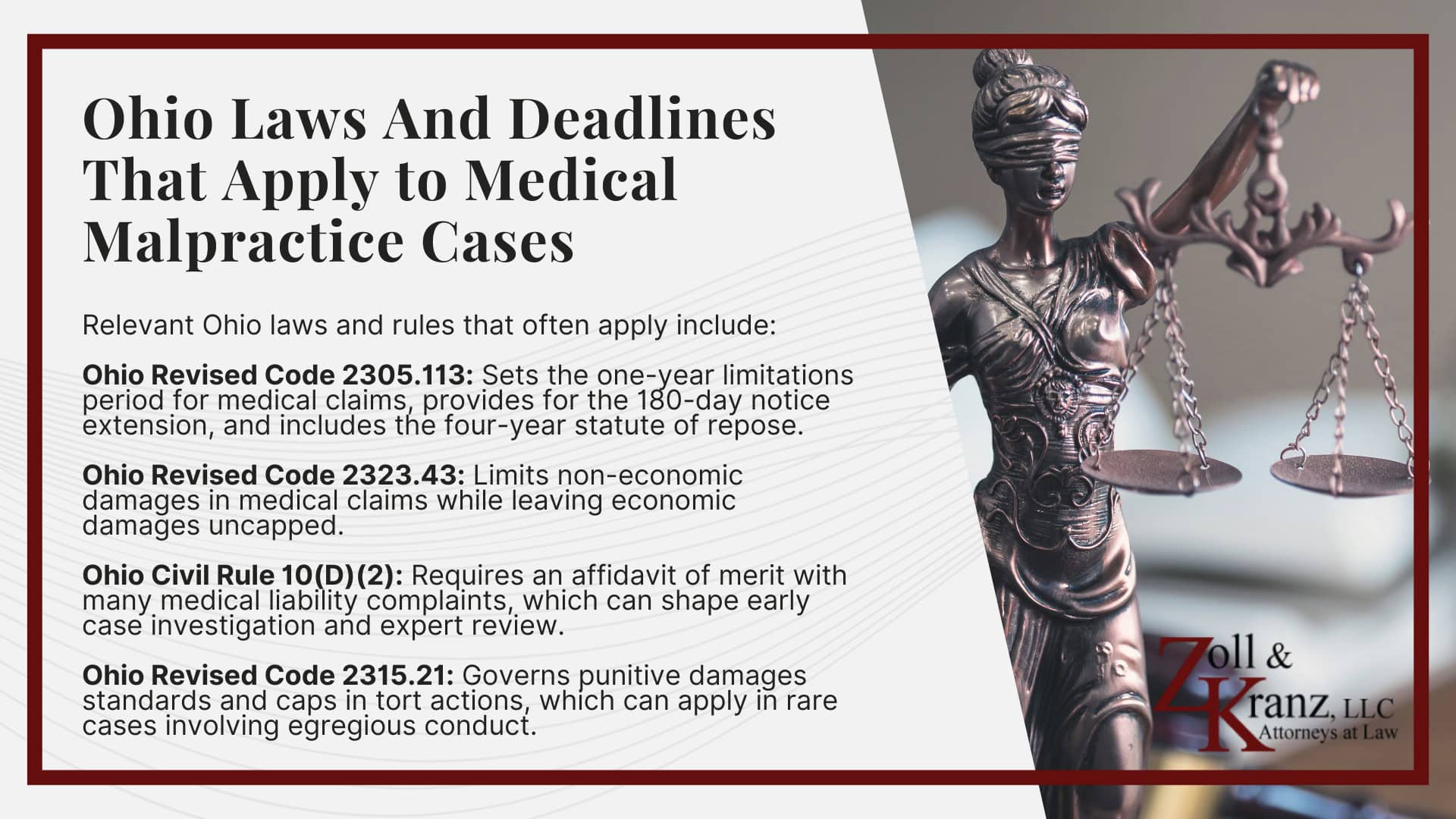
Relevant Ohio laws and rules that often apply include:
- Ohio Revised Code 2305.113: Sets the one-year limitations period for medical claims, provides for the 180-day notice extension, and includes the four-year statute of repose.
- Ohio Revised Code 2323.43: Limits non-economic damages in medical claims while leaving economic damages uncapped.
- Ohio Civil Rule 10(D)(2): Requires an affidavit of merit with many medical liability complaints, which can shape early case investigation and expert review.
- Ohio Revised Code 2315.21: Governs punitive damages standards and caps in tort actions, which can apply in rare cases involving egregious conduct.
These rules are one reason we treat timing and documentation as first-step issues.
Even when a patient clearly suffered harm, missing a deadline can end the case before it begins, and damage cap rules can change how a claim is valued and resolved.