Toxic exposure in Toledo can happen at work, at home, or through environmental contamination that spreads beyond an industrial site.
Some exposures are linked to older buildings and legacy materials, while others involve modern chemical use, storage, and disposal.
The risk is not limited to a single neighborhood because air, soil, and water pathways can carry contaminants in ways that are hard for residents to detect on their own.
Workplace exposures often involve repeated contact over months or years, which can make it harder to pinpoint the first day symptoms began.
Community exposures can involve hazardous waste releases, improper handling, or migration from disposal sites into groundwater or nearby properties.
Volatile organic solvents and other industrial chemicals may be inhaled, absorbed through skin contact, or ingested through contaminated water.
Certain substances are also associated with long latency periods, meaning illness can appear long after exposure ends.
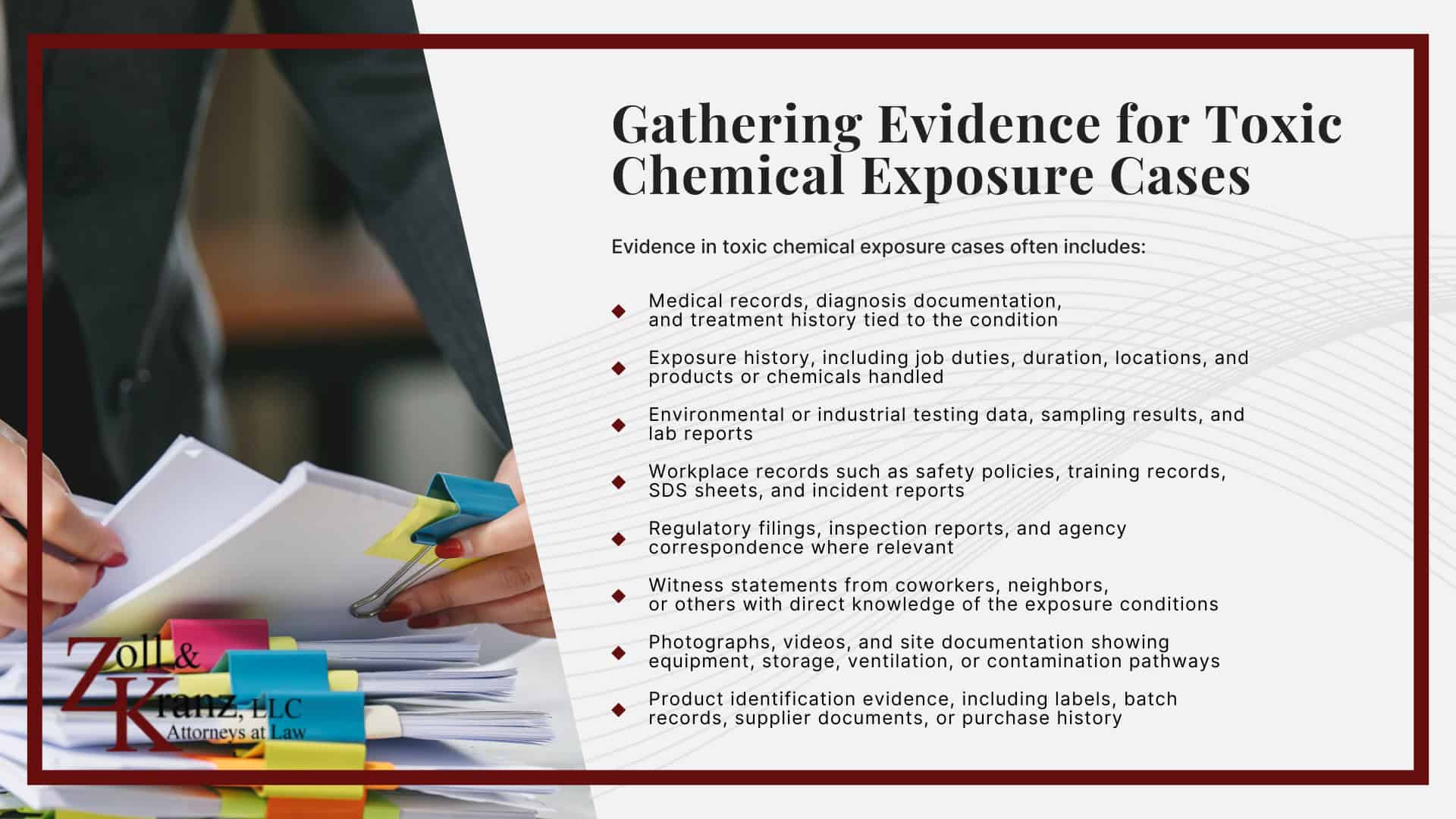
That is why these cases depend on documenting the exposure pathway, the timeline, and the medical connection between the substance and the harm.
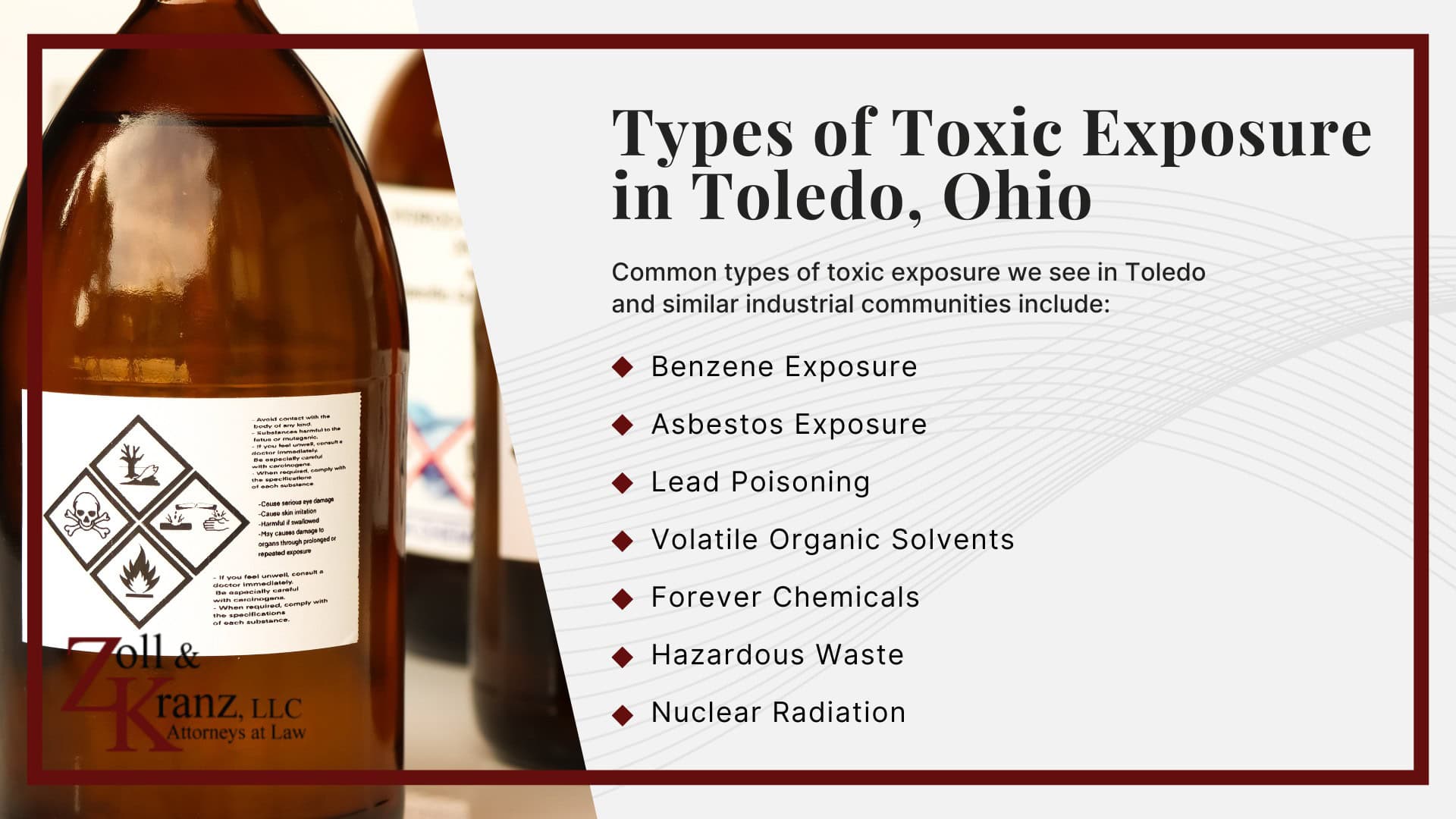
Common types of toxic exposure we see in Toledo and similar industrial communities include:
- Benzene Exposure: Often associated with petroleum products and certain industrial operations, and commonly evaluated in cases involving blood-related conditions (and cancers such as acute myelogenous leukemia) and long-term exposure histories.
- Asbestos Exposure: Frequently tied to older industrial sites, construction materials, and maintenance work, with risks that can emerge decades later.
- Lead Poisoning: Exposure through old paint, contaminated dust, soil, or water, which can be especially harmful for children and can also affect adults.
- Volatile Organic Solvents: Industrial degreasers and solvents that may contribute to serious health effects depending on duration, concentration, and protective controls.
- Forever Chemicals: PFAS-related exposure through environmental contamination in water, soil, or industrial discharge pathways.
- Hazardous Waste: Exposure tied to storage, spills, improper disposal, or site contamination that affects nearby workers and residents.
- Nuclear Radiation: Exposure scenarios tied to specialized facilities, materials handling, or contaminated environments where radiation controls fail or are absent.
Common Sources of Chemical Exposure
Exposure to toxic substances can occur through a range of settings, and the risk often depends on how frequently and how long a person is exposed.
Some exposures happen suddenly, while others develop quietly through repeated contact over years.
In industrial regions like Toledo, both workplace practices and surrounding community conditions can contribute to harmful exposure pathways.
Identifying the source is a critical first step in connecting an injury to the responsible party.
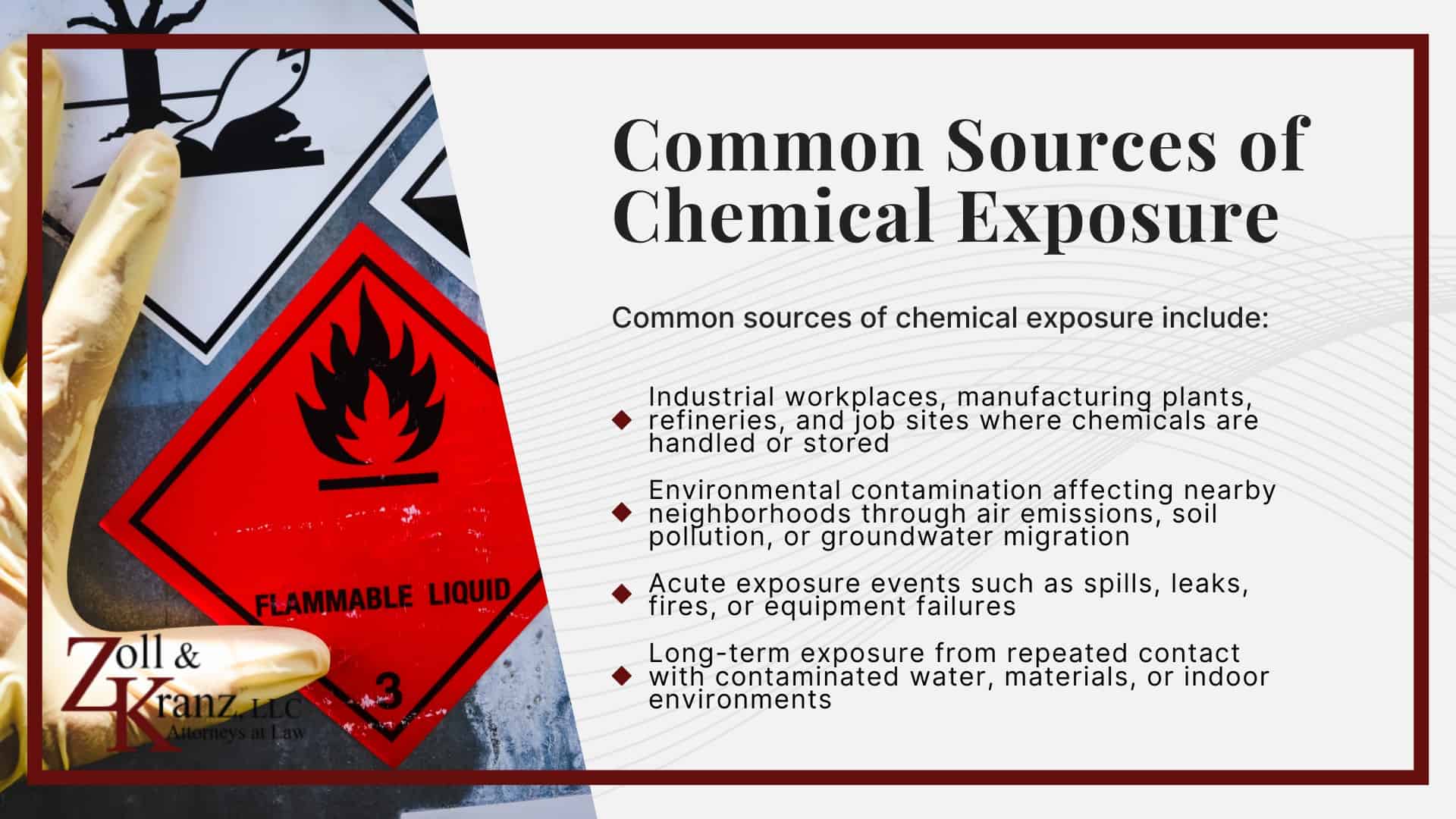
Common sources of chemical exposure include:
- Industrial workplaces, manufacturing plants, refineries, and job sites where chemicals are handled or stored
- Environmental contamination affecting nearby neighborhoods through air emissions, soil pollution, or groundwater migration
- Acute exposure events such as spills, leaks, fires, or equipment failures
- Long-term exposure from repeated contact with contaminated water, materials, or indoor environments