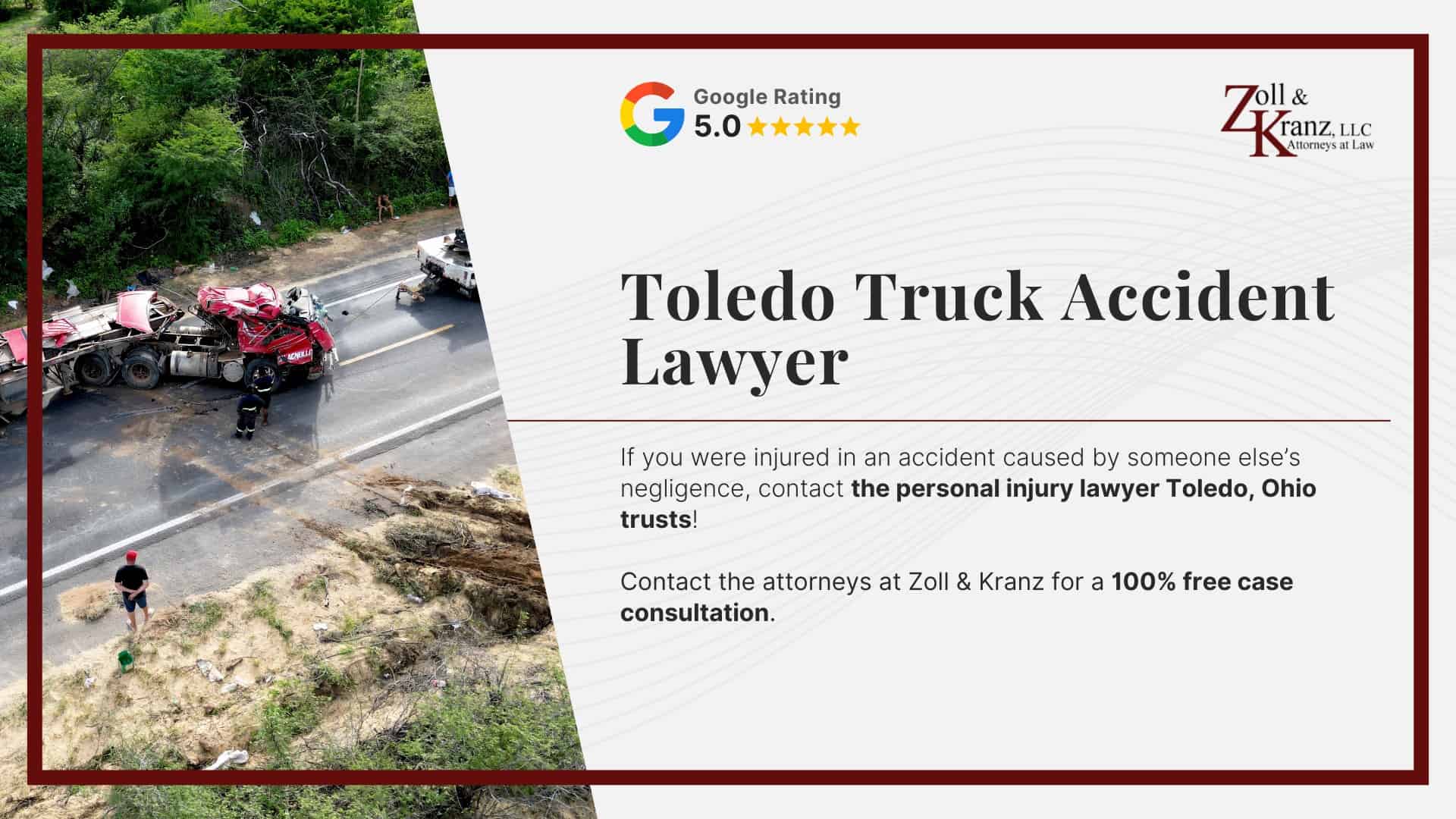
A truck collision can leave people facing immediate medical crises, major vehicle damage, and uncertainty about what happened and who is responsible.
Too often, victims are severely injured and cannot complete every recommended step at the accident scene.
Other crash victims may be transported before they can document conditions, speak with witnesses, or collect evidence, which is common in high-force collisions.
In those situations, a lawyer can help preserve records, locate witnesses, and identify responsible parties even when the injured person could not do so personally.
The steps below are recommended after a truck accident, but health and safety come first, and the priority is always to seek medical attention and stabilize injuries.
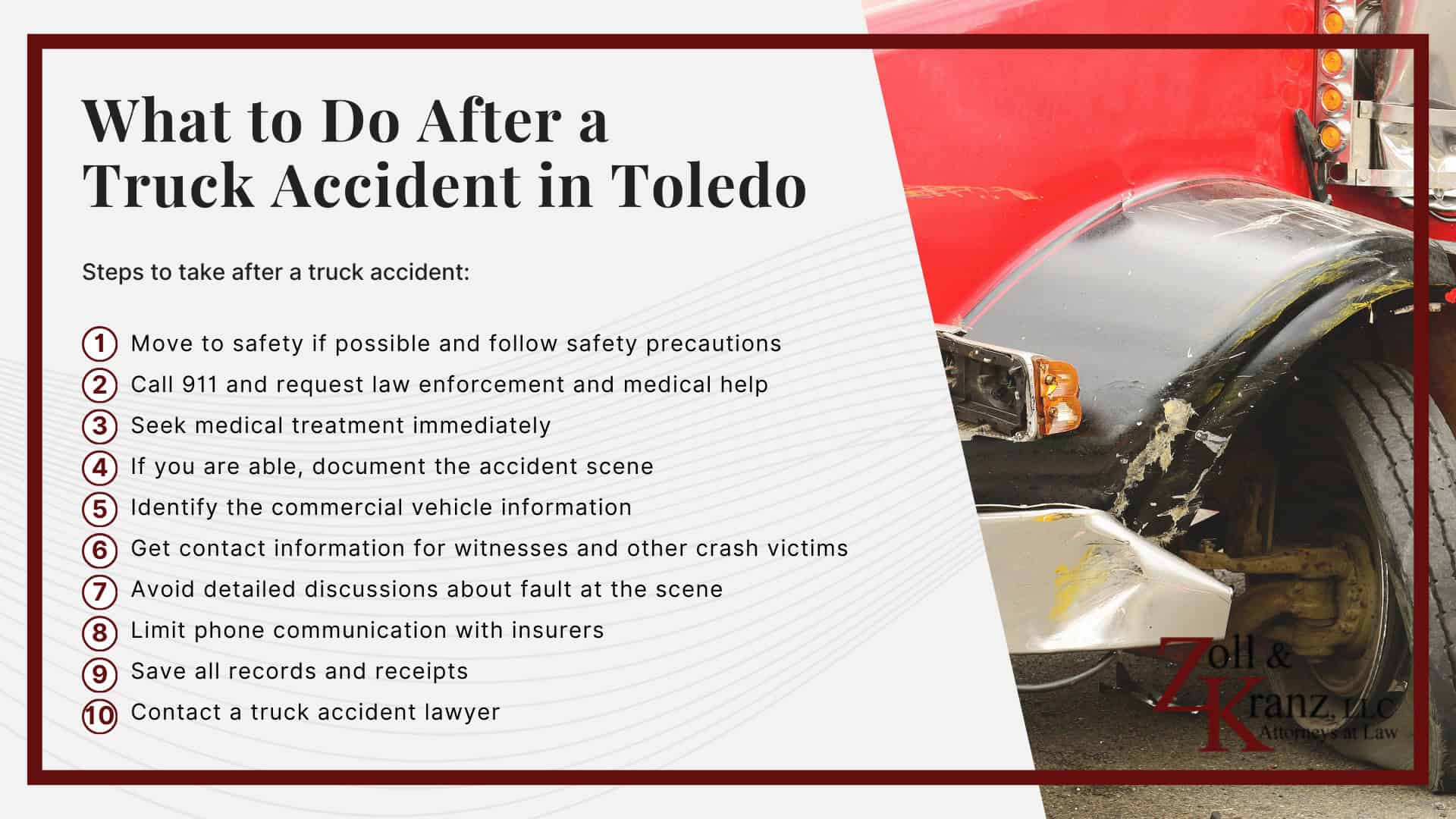
Steps to take after a truck accident:
- Move to safety if possible and follow safety precautions, including staying out of traffic and away from unstable vehicles or leaking fuel.
- Call 911 and request law enforcement and medical help so the crash is formally documented and emergency care is dispatched.
- Seek medical treatment immediately, including evaluation by medical professionals or transport to an emergency room, even if symptoms seem delayed.
- If you are able, document the accident scene with photos or video showing vehicle positions, roadway conditions, debris, weather, and visible injuries.
- Identify the commercial vehicle information, including the tractor trailers’ company name, DOT numbers, license plates, and trailer markings.
- Get contact information for witnesses and other crash victims who saw what happened before and during the collision.
- Avoid detailed discussions about fault at the scene, and do not argue with the truck driver or anyone representing the carrier.
- Limit phone communication with insurers, and do not provide a recorded statement from your cell phone before you understand your rights.
- Save all records and receipts, including medical paperwork, discharge instructions, prescriptions, towing, and repair estimates.
- Contact a truck accident lawyer to help preserve evidence, determine responsible parties, and protect the claim from early insurance tactics.
Gathering Evidence for a Truck Accident Case
Evidence drives the outcome of a truck accident claim because it establishes how the crash occurred, who is responsible, and what losses followed.
When the truck driver caused the collision, insurers may still dispute fault, question the severity of injuries, or argue that damages were unrelated to the crash.
Injured victims often face an uphill fight without a clear record linking the accident to the injuries and financial harm.
Eyewitness testimony can clarify critical details that are missing from reports, especially when the injured person was transported for emergency care.
Medical records are equally important because they document diagnoses, treatment, and the connection between the crash and the harm suffered.
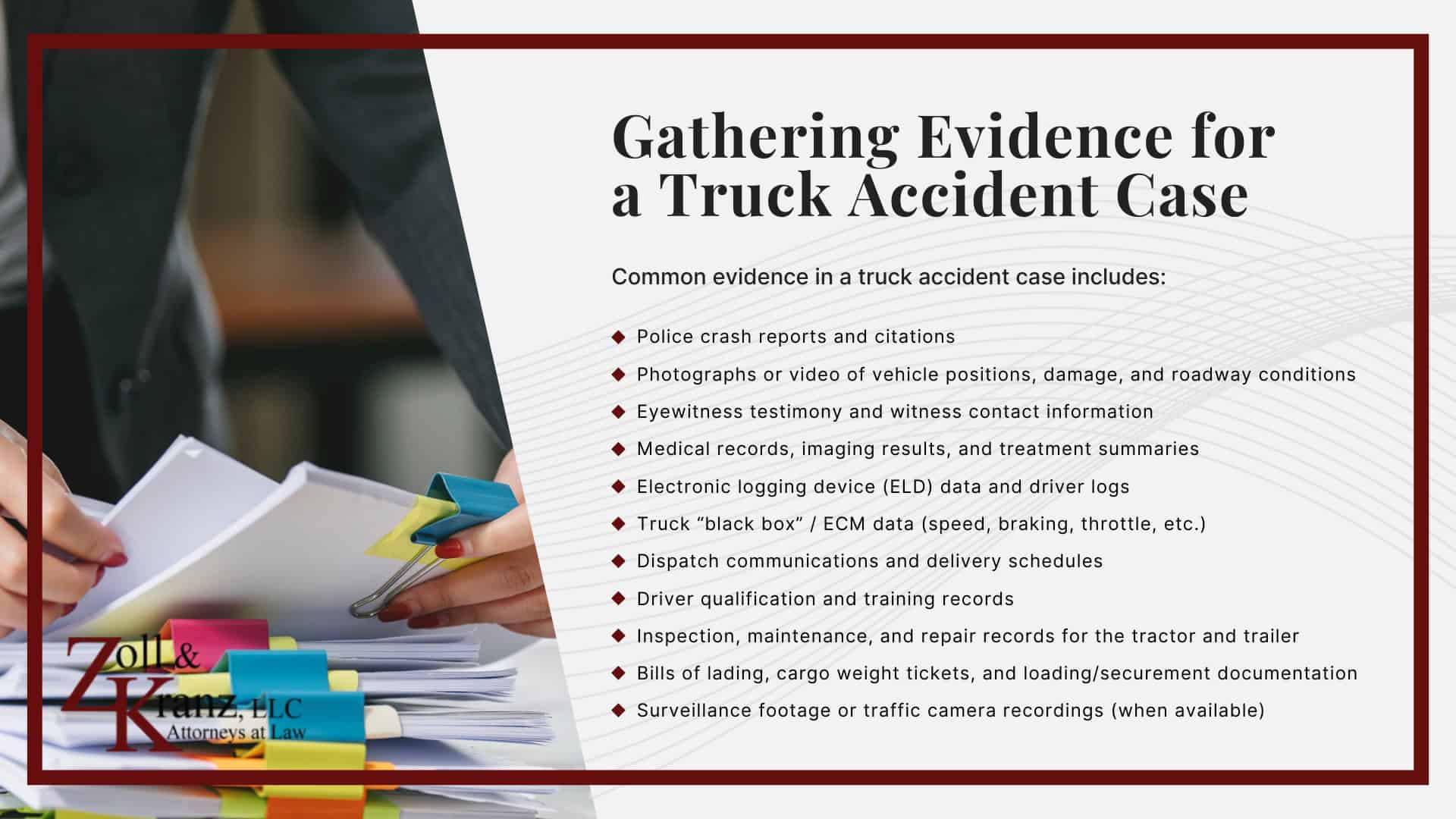
Common evidence in a truck accident case includes:
- Police crash reports and citations
- Photographs or video of vehicle positions, damage, and roadway conditions
- Eyewitness testimony and witness contact information
- Medical records, imaging results, and treatment summaries
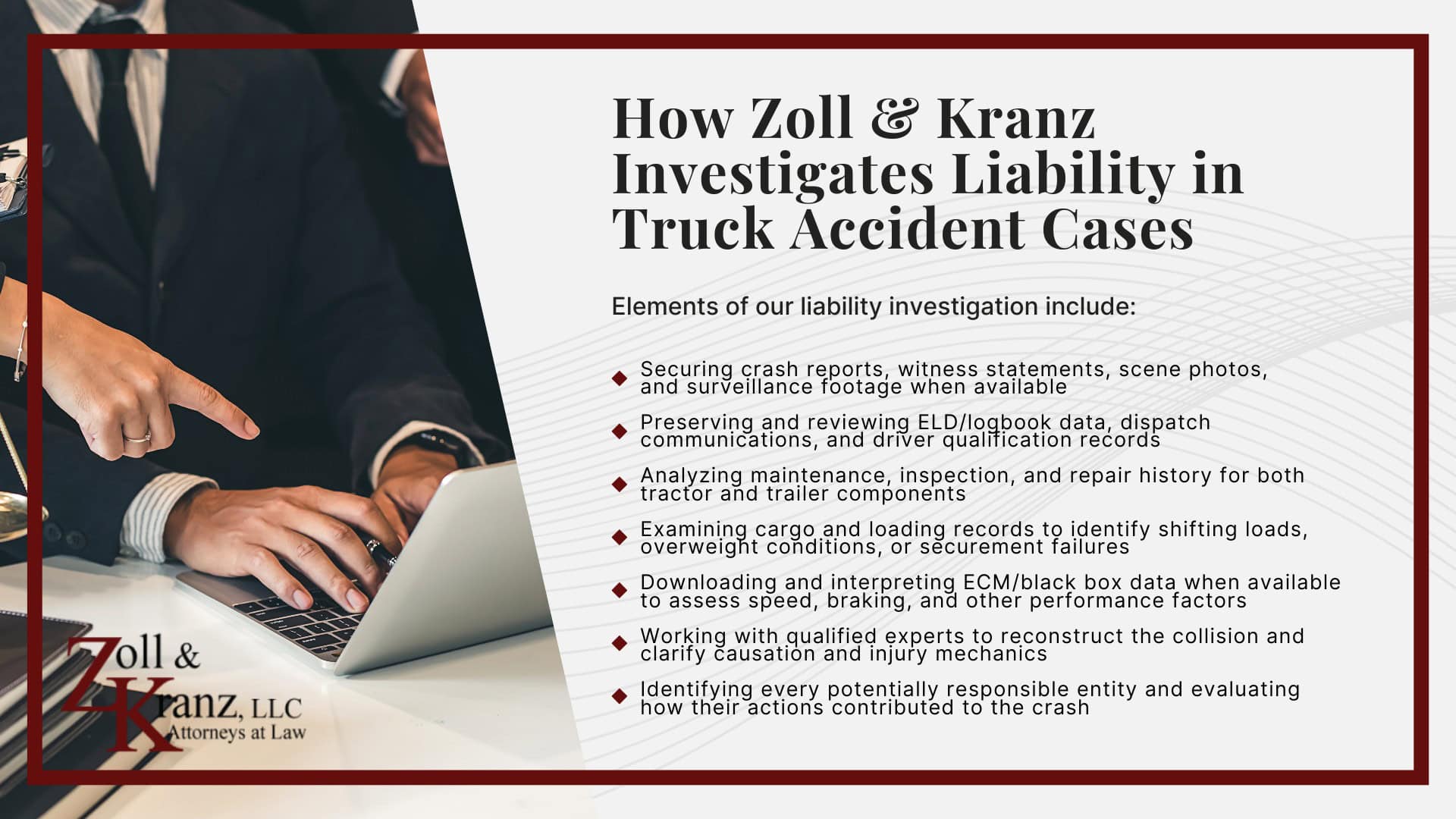
- Electronic logging device (ELD) data and driver logs
- Truck “black box” / ECM data (speed, braking, throttle, etc.)
- Dispatch communications and delivery schedules
- Driver qualification and training records
- Inspection, maintenance, and repair records for the tractor and trailer
- Bills of lading, cargo weight tickets, and loading/securement documentation
- Surveillance footage or traffic camera recordings (when available)
Damages in Truck Accident Cases
Damages are the losses a person suffers after a truck crash, including financial harm and the personal impact of injury on daily life and future stability.
A truck accident lawyer reviews medical records, wage documentation, and treatment plans to assess medical expenses and identify the full scope of harm, including underlying injuries that were not obvious in the first hours or days.
Even when injuries initially appear minor, the force of a commercial crash can aggravate prior conditions or develop into severe injuries that require long-term care, which must be reflected in the claim value.
By documenting every category of loss, an attorney advocates for maximum financial compensation supported by evidence and pushes back against offers that fall short of a fair settlement.
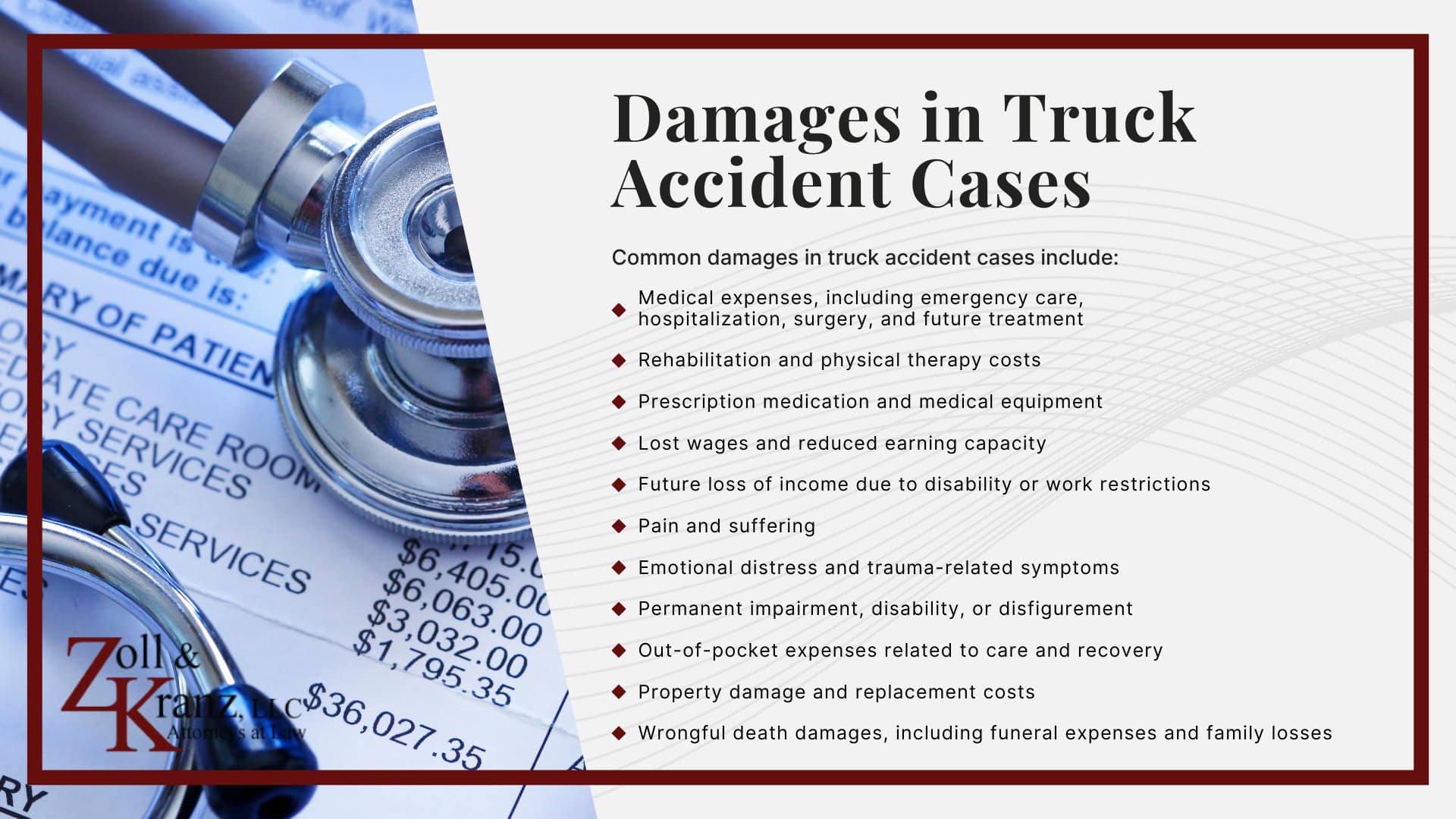
Common damages in truck accident cases include:
- Medical expenses, including emergency care, hospitalization, surgery, and future treatment
- Rehabilitation and physical therapy costs
- Prescription medication and medical equipment
- Lost wages and reduced earning capacity
- Future loss of income due to disability or work restrictions
- Pain and suffering
- Emotional distress and trauma-related symptoms
- Permanent impairment, disability, or disfigurement
- Out-of-pocket expenses related to care and recovery
- Property damage and replacement costs
- Wrongful death damages, including funeral expenses and family losses