Ohio wrongful death law allows a civil claim when a victim’s death results from another party’s wrongful act, neglect, or default under circumstances where the victim could have brought a personal injury claim if they had lived.
Under the Ohio wrongful death statute, the lawsuit is filed in the name of the personal representative of the deceased person, not individually by a grieving spouse or relative.
The personal representative is typically the executor named in the deceased individual’s will, or an administrator appointed when there is no will, through the probate process.
The claim is brought for the benefit of the spouse, children, and parents (who are presumed to be damaged), and it may also be brought for the benefit of other family members who qualify as “other next of kin.”
The case must be filed in the appropriate court and within the required time limit, or the right to pursue justice can be lost even when liability is clear.
If the death followed an accident, early steps matter because evidence and insurance positions often harden quickly after the date of loss.
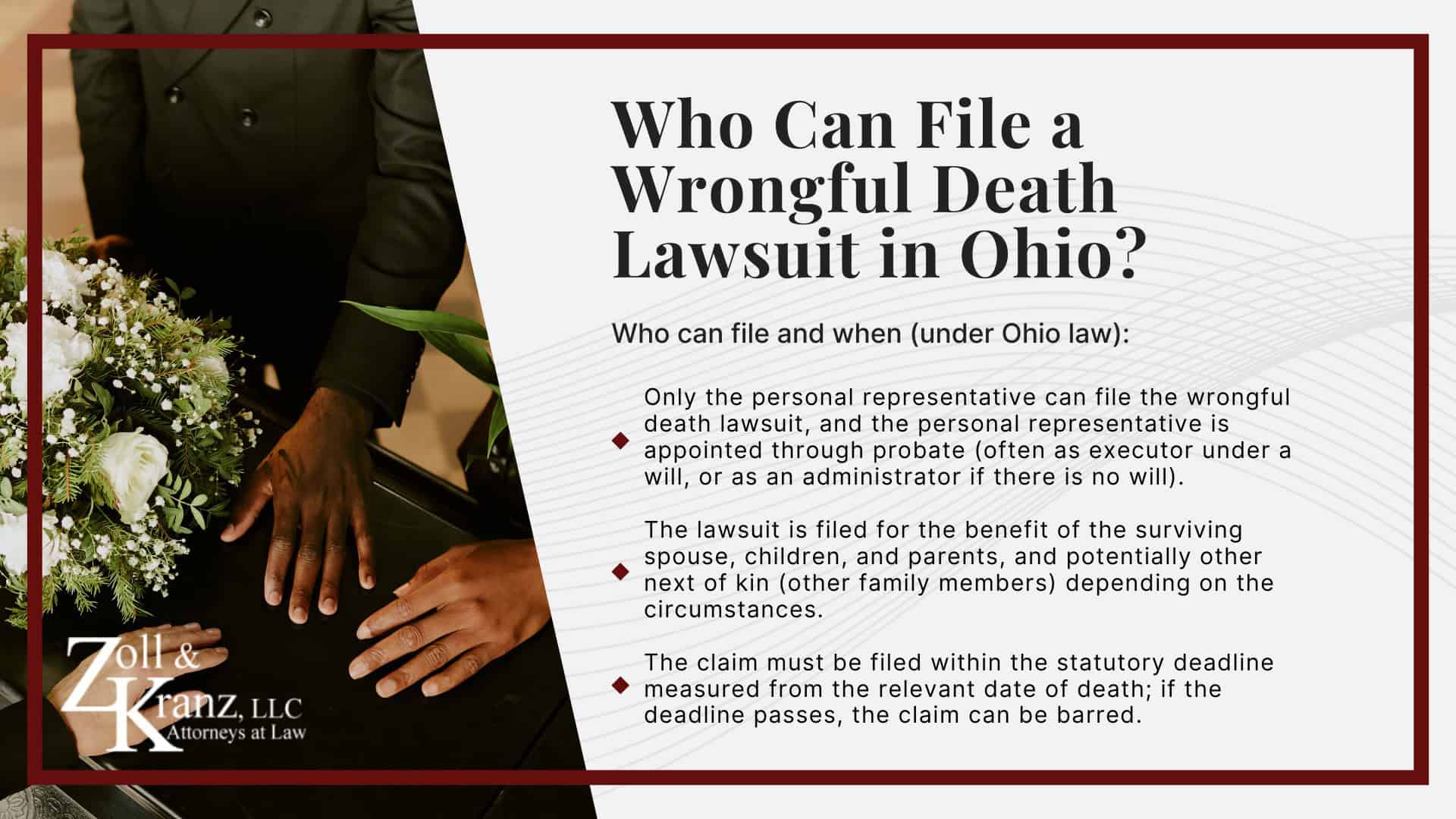
Who can file and when (under Ohio law):
- Only the personal representative can file the wrongful death lawsuit, and the personal representative is appointed through probate (often as executor under a will, or as an administrator if there is no will).
- The lawsuit is filed for the benefit of the surviving spouse, children, and parents, and potentially other next of kin (other family members) depending on the circumstances.
- The claim must be filed within the statutory deadline measured from the relevant date of death; if the deadline passes, the claim can be barred.
In practice, this means families often need to address probate appointment issues early so the correct person has authority to act.
Even when a spouse is the primary survivor, the lawsuit still proceeds through the personal representative rather than in the spouse’s individual name.
The court process also addresses how any recovery is allocated among eligible beneficiaries, which can include other family members depending on the facts.
A lawyer can guide the family through these requirements while keeping the case focused on accountability, proof, and damages tied to the loss.
Wrongful Death vs. Criminal Cases
A wrongful death case is a civil lawsuit filed by the estate’s personal representative to seek financial damages after a death caused by another party’s negligence or wrongful conduct.
A criminal case is brought by the government and focuses on punishment, public safety, and whether the accused violated criminal law.
The burden of proof is different: criminal cases require proof beyond a reasonable doubt, while wrongful death claims are typically decided under a preponderance of the evidence standard.
A criminal prosecution may result in jail, probation, or fines paid to the state, while a wrongful death case seeks compensation for the losses suffered by surviving family members.
The two processes can happen at the same time, and a criminal case is not required before a civil claim can move forward.
A lack of criminal charges does not prevent a wrongful death lawsuit if the evidence supports civil liability.
Evidence from a criminal investigation can sometimes help a wrongful death case, but the civil claim still requires its own proof and damages analysis.
Zoll & Kranz focuses the wrongful death case on documentation, liability, and damages while keeping the process respectful and grounded in the facts.
Wrongful Death vs. Survival Claims
In Ohio, a wrongful death claim focuses on the losses suffered by surviving beneficiaries after a fatal incident, while a survivorship claim focuses on the losses the deceased person could have recovered if they had lived.
Ohio’s survival statute allows certain personal injury claims to survive the person’s death and be pursued by the estate.
By contrast, Ohio’s wrongful death law allows the personal representative to pursue damages on behalf of the beneficiaries for the harm caused by the death itself.
This distinction matters because a close family member may be affected in different ways than the estate, and the damages can be treated differently depending on the claim type.
If you want to discuss which claims apply to your situation and what you may deserve, Zoll & Kranz can provide assistance by reviewing the incident details and the available evidence.
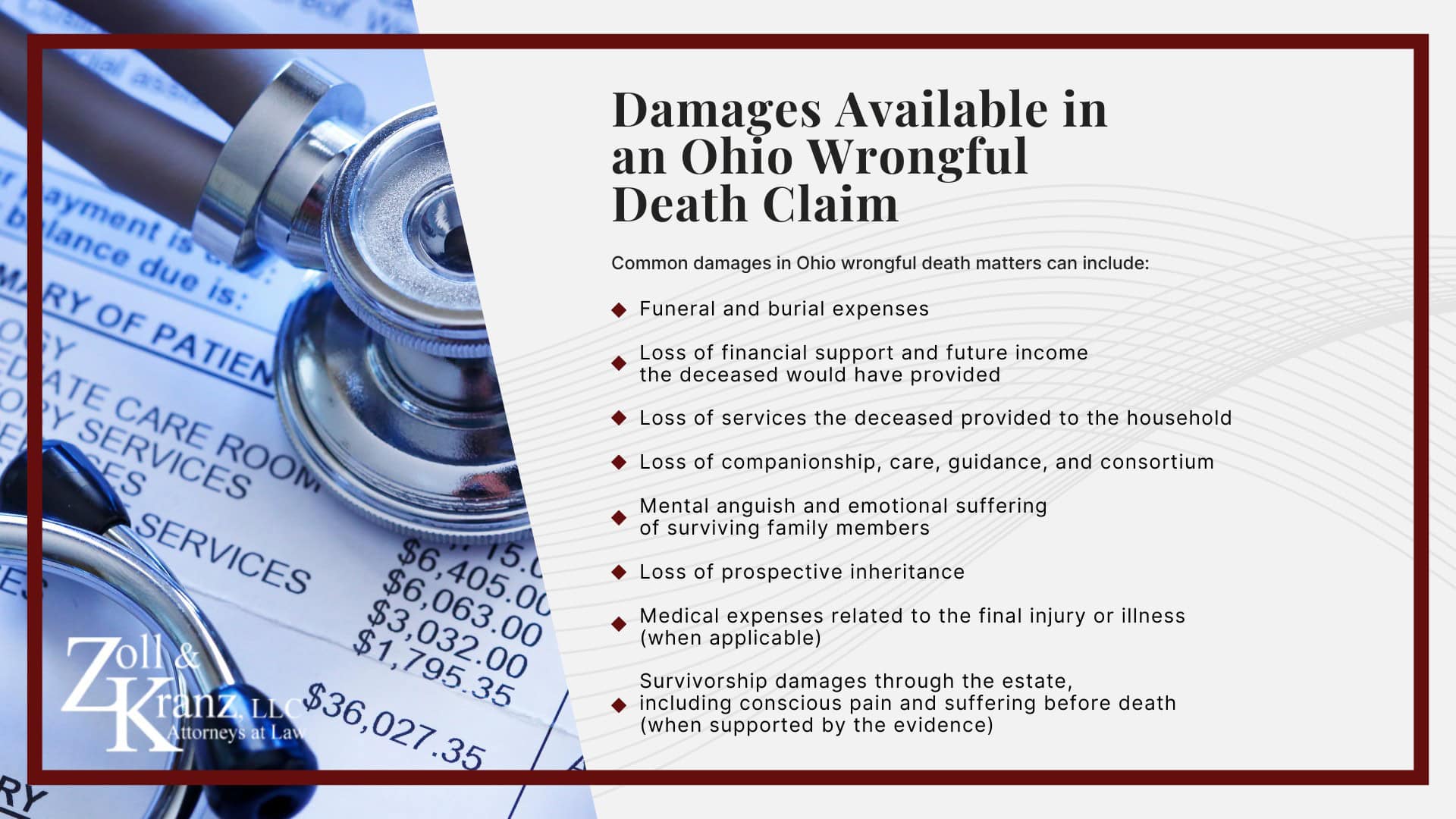
- Wrongful death claim: Seeks damages for the survivors’ losses (for example, loss of support and loss of companionship), and it can include reasonable funeral and burial costs under Ohio law.
- Survivorship claim: Seeks damages tied to the decedent’s own injuries and losses before death (such as pain and suffering, medical expenses, and property-related harms), pursued through the estate under Ohio’s survival statute.
Ohio Wrongful Death Laws You Should Know
Ohio wrongful death law sets strict rules for who may sue, what must be proven against the defendant, and what damages may be recovered.
The statute of limitations can cut off a family’s claim if the case is not filed on time, even when liability appears clear.
These laws are designed to provide a structured path to economic damages and other recovery while also giving defendants defined legal protection from stale claims.
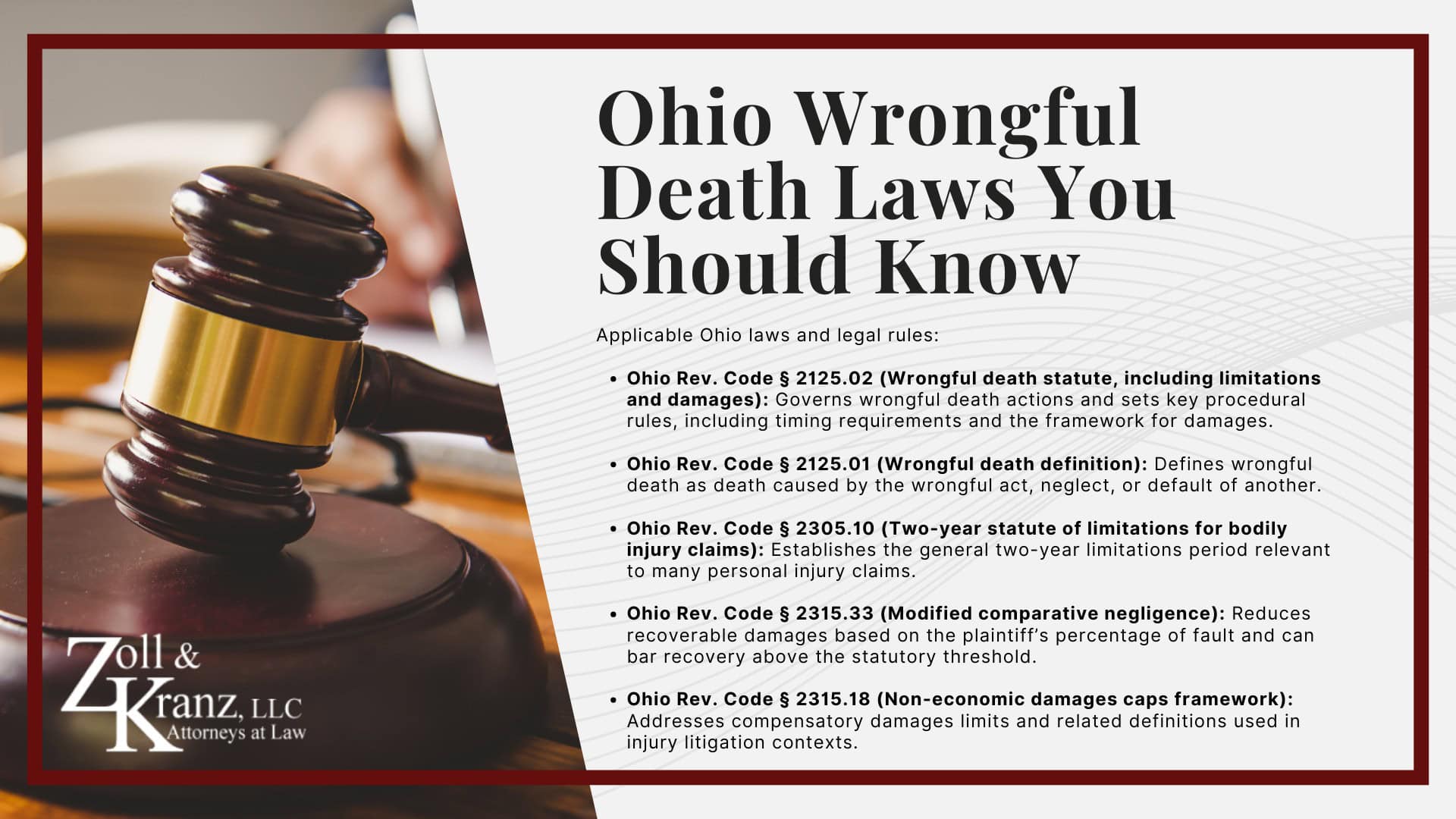
Applicable Ohio laws and legal rules:
- Ohio Rev. Code § 2125.02 (Wrongful death statute, including limitations and damages): Governs wrongful death actions and sets key procedural rules, including timing requirements and the framework for damages.
- Ohio Rev. Code § 2125.01 (Wrongful death definition): Defines wrongful death as death caused by the wrongful act, neglect, or default of another.
- Ohio Rev. Code § 2305.10 (Two-year statute of limitations for bodily injury claims): Establishes the general two-year limitations period relevant to many personal injury claims.
- Ohio Rev. Code § 2315.33 (Modified comparative negligence): Reduces recoverable damages based on the plaintiff’s percentage of fault and can bar recovery above the statutory threshold.
- Ohio Rev. Code § 2315.18 (Non-economic damages caps framework): Addresses compensatory damages limits and related definitions used in injury litigation contexts.
These rules affect how quickly a case must be evaluated, how evidence is developed, and how damages are calculated and presented.
They also shape how fault is argued when the defense claims shared responsibility.
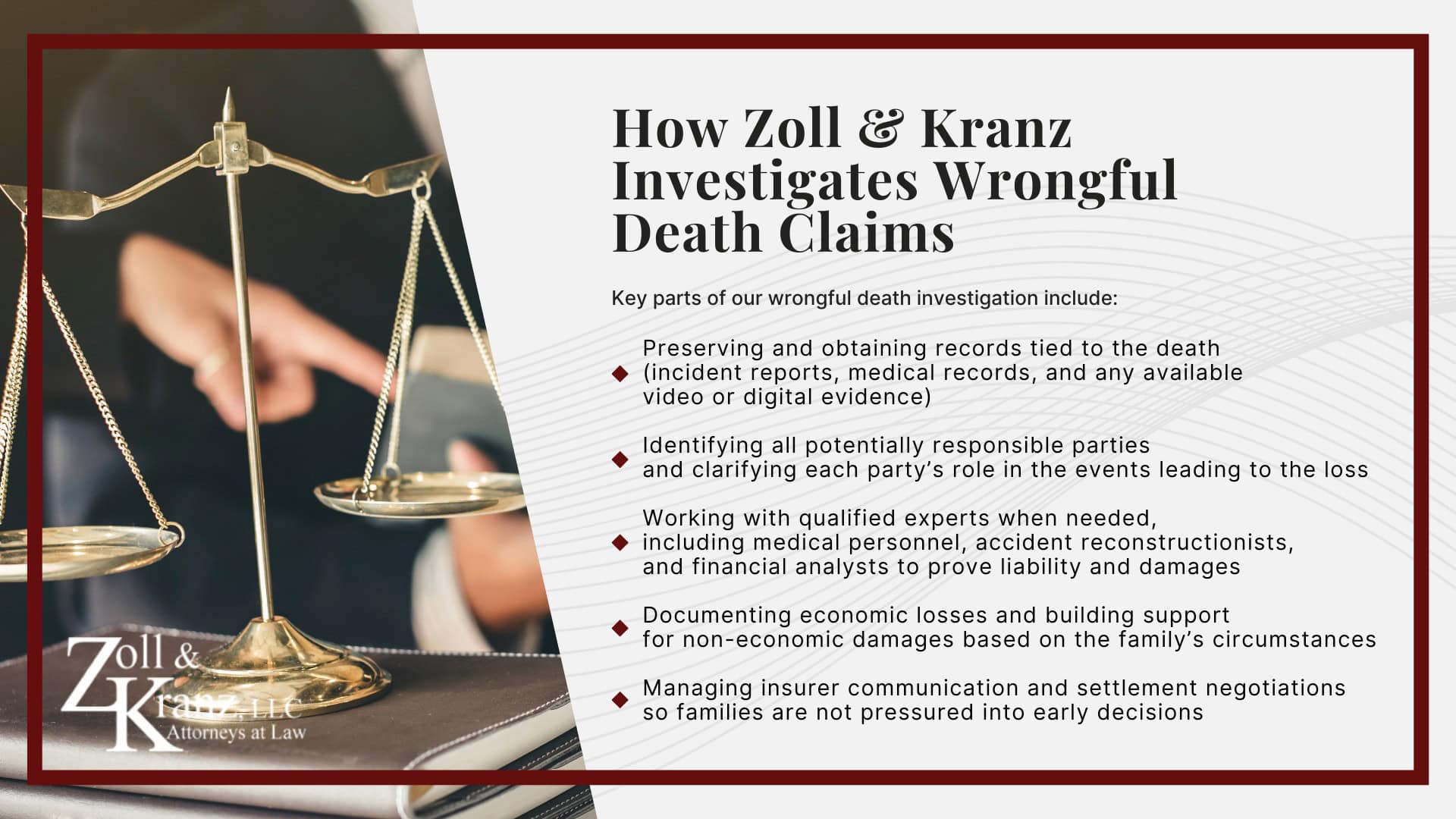
A wrongful death lawyer applies these statutes to the facts of the case and positions the claim with documentation that supports both liability and damages.