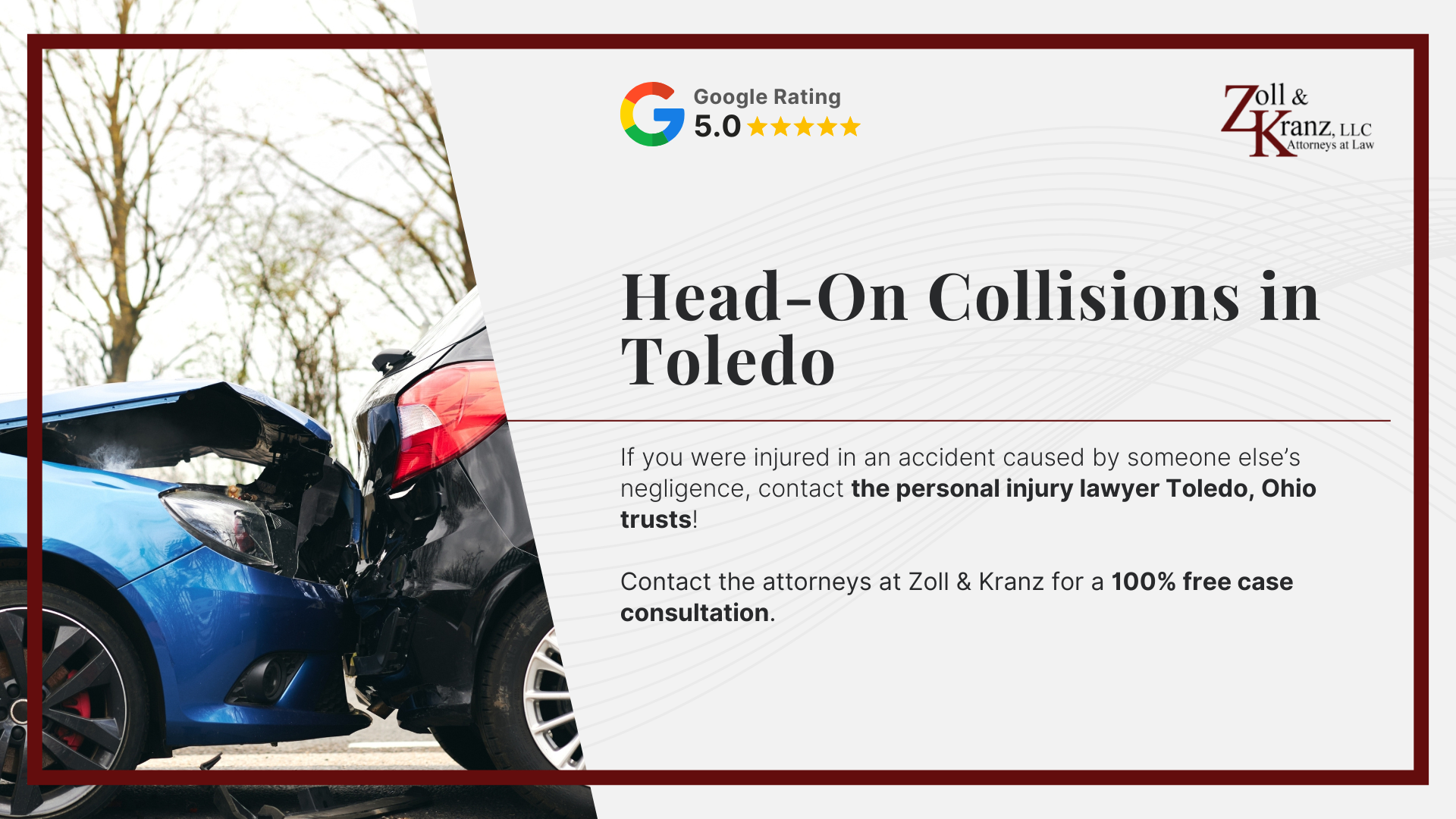
A head-on collision claim in Toledo usually starts with identifying why a driver crossed into the path of an oncoming vehicle and whether driver focus was compromised by distraction or impairment.
Investigators review police reports, physical evidence, and witness statements to recreate the timeline, including impact points, skid patterns, and the sudden deceleration that occurs when two vehicles collide head-on.
That reconstruction often connects the mechanics of the crash to injuries, such as chest trauma from the steering wheel or other forces seen in high-speed car crashes.
Your claim then turns to traffic laws and how they apply to lane departures, improper passing, failure to maintain control, or impaired driving.
A personal injury lawyer can help gather proof, establish liability, and manage communication with the insurance company while the evidence is still fresh.
Ohio’s comparative negligence law assigns each driver a percentage of fault, and that percentage directly affects the compensation you can recover.
Beyond medical bills and lost income, a claim may also include pain and suffering, emotional distress, and loss of quality of life, especially in cases involving fatal crashes or permanent injuries.
Steps in the legal process include:
- Get medical care and document symptoms, diagnoses, and treatment from the start.
- Report the crash, obtain the police report, and identify witnesses who can confirm how the collision happened.
- Preserve evidence, including photos, vehicle damage, debris fields, and any signs of lane crossover toward the oncoming vehicle.
- Open the insurance claim, which typically moves through initial filing, settlement negotiation, denial of claim, and possibly a lawsuit.
- If you can prove the other driver was at fault, submit the claim with their insurance company and support it with investigation findings.
- Calculate damages, including medical costs, wage loss, and non-economic damages like pain and suffering, emotional distress, and loss of quality of life.
- Address comparative negligence arguments, since any assigned percentage of fault can reduce what you recover.
- If the insurer disputes fault or refuses a fair settlement, your lawyer can file a lawsuit and use discovery, expert review, and negotiations to push the case toward resolution.
Steps to Take After a Head-On Collision in Toledo
After a head-on collision in Toledo, the priority is medical care, even if it means you cannot immediately complete every recommended step.
Many victims suffer serious injuries that limit mobility, memory, or the ability to deal with paperwork in the hours and days after the crash.
When that happens, a lawyer can step in to preserve evidence, communicate with insurers, and protect your claim while you focus on recovery.
This support becomes especially important when poor visibility, roadway conditions, or multiple vehicles involved complicate how the collision occurred.
Legal assistance can also help document losses and deadlines you may not be physically able to manage.
Acting through counsel allows injured victims to protect their rights and work toward the ability to recover compensation without added stress.
Steps to take:
- Check yourself and your passengers for injuries and call 911 immediately if anyone is seriously hurt.
- If it is safe, move your vehicle to the side of the road to reduce the risk of additional collisions involving other vehicles involved.
- Take photos of the accident scene, vehicle damage, road conditions, and any factors such as poor visibility.
- Seek medical evaluation as soon as possible, even if symptoms seem minor at first.
- Write down everything you remember about the crash once you are physically able, including what happened before and after impact.
- Arrange for work coverage and childcare if your injuries prevent you from returning to normal responsibilities.
Once immediate needs are addressed, continue following medical recommendations and keep records of all treatment.
Avoid detailed discussions with insurance companies until you understand your legal position.
A lawyer can handle those communications and help document how the injuries affect your daily life.
Taking these steps early helps preserve evidence and supports a stronger path to recover compensation.
Laws for Head-On Collisions in Toledo, OH
Head-on collisions in Toledo are governed by Ohio traffic and civil laws, and the legal analysis usually ties the facts to a few key duties drivers must follow.
Many cases revolve around lane and roadway rules, drivers are expected to stay on the correct side of the roadway and maintain their lane, which becomes critical when one vehicle drifts into oncoming traffic or a wrong way driver causes a crash.
Speed and stopping-distance obligations also matter, because Ohio requires drivers to travel at a reasonable speed for conditions and not faster than will allow them to stop within the assured clear distance ahead, issues that come up in low-visibility head-on impacts and secondary crashes.
Depending on the evidence, liability may also involve reckless operation or impaired driving rules, especially when the driving conduct shows a disregard for safety or a failure to respond to obvious danger.
On the civil side, deadlines matter: Ohio generally gives injured people two years to file a personal injury case, and wrongful death actions also generally must be filed within two years.
Ohio also uses a modified comparative fault system, meaning compensation can be reduced if the injured person is assigned a share of blame, and recovery is barred if that share exceeds the legal threshold, so the evidence used to assign fault can directly affect the outcome.