
Car accident injuries can be as wide-ranging and unique as the auto accident itself.
The type of collision, vehicle speed, point of impact, and use of seat belts or airbags all influence how the body absorbs force.
Even people involved in the same crash may suffer very different injuries depending on how their body moved inside the vehicle at the moment of impact.
Some injuries are immediately visible, while others develop gradually as swelling increases or internal damage becomes more apparent.
Many victims experience pain and limitations that worsen in the hours or days after a crash.
Whiplash is the most common car accident injury and occurs when the neck snaps back and forth due to sudden vehicle movement.
Symptoms often appear later and include stiffness, headaches, reduced range of motion, and radiating pain into the shoulders or arms.
Soft tissue injuries such as sprains and strains are also common and can cause significant pain, swelling, and limited mobility that interferes with daily activities.
More serious accidents often result in blunt force trauma to the chest and torso.
Broken ribs are a frequent injury in high-impact collisions and can make breathing painful, limit mobility, and increase the risk of complications like pneumonia.
Abdominal injuries and internal bleeding may not be immediately apparent but can become life-threatening without prompt medical evaluation.
Spinal injuries range from muscle strain and herniated discs to spinal cord damage, which can lead to paralysis and permanent loss of function.
Head injuries are another major concern after car crashes.
Traumatic brain injuries can occur when the head strikes the steering wheel, window, or another surface, or from the brain shifting inside the skull due to sudden deceleration.
These injuries range from concussions to severe TBIs that cause long-term cognitive impairment, memory loss, and difficulty performing basic tasks.
Burn injuries and serious lacerations may also occur, especially when vehicles catch fire or windows shatter during impact.
Beyond physical harm, car accident injuries often carry emotional and financial consequences.
Chronic pain can involve ongoing neck, back, or jaw pain, reduced flexibility, and progressive conditions such as osteoarthritis.
Psychological injuries, including anxiety and post-traumatic stress disorder, are common after traumatic collisions and can worsen physical pain, slow recovery, and affect overall well-being.
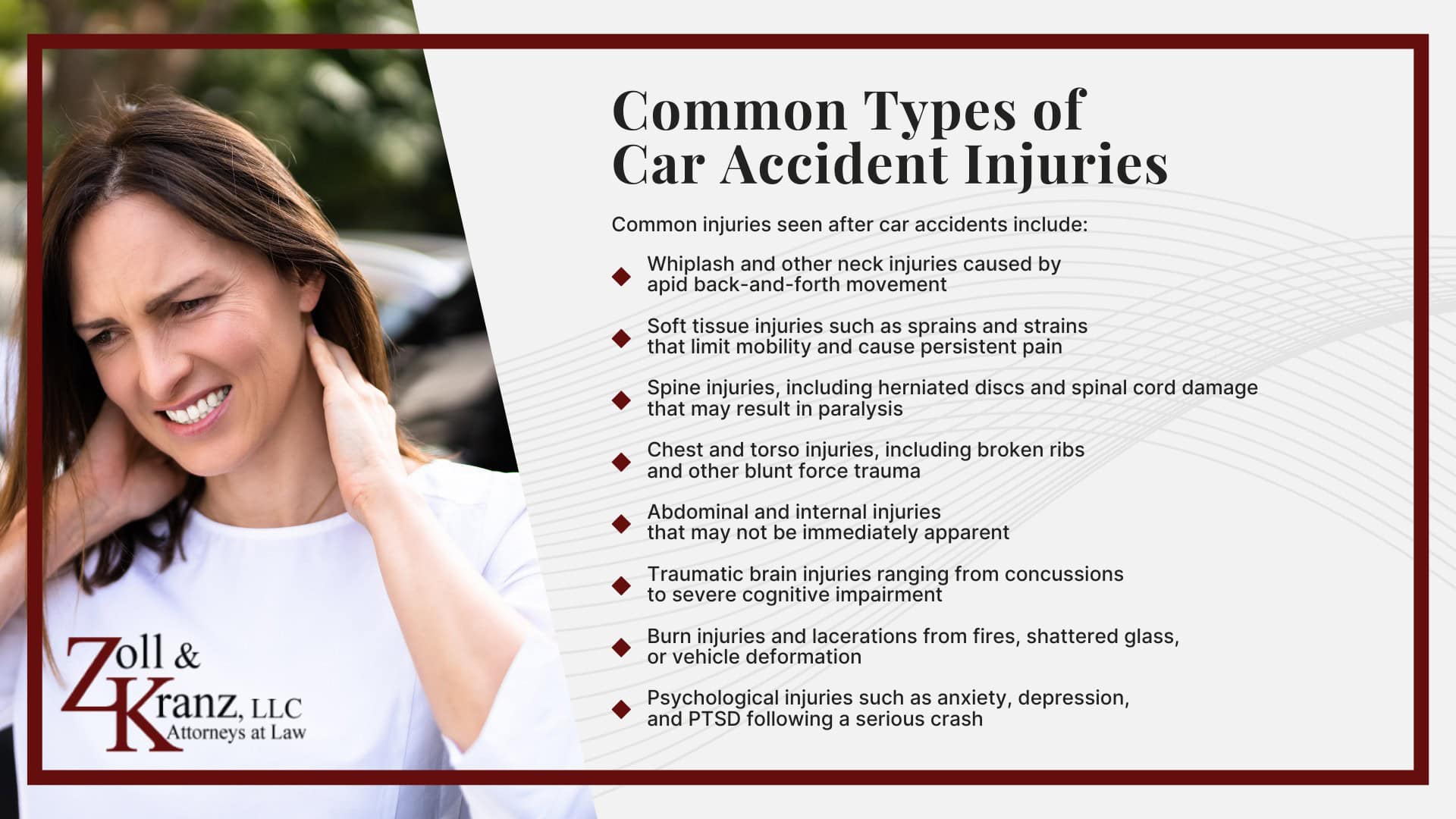
Common injuries seen after car accidents include:
- Whiplash and other neck injuries caused by rapid back-and-forth movement
- Soft tissue injuries such as sprains and strains that limit mobility and cause persistent pain
- Spine injuries, including herniated discs and spinal cord damage that may result in paralysis
- Chest and torso injuries, including broken ribs and other blunt force trauma
- Abdominal and internal injuries that may not be immediately apparent
- Traumatic brain injuries ranging from concussions to severe cognitive impairment
- Burn injuries and lacerations from fires, shattered glass, or vehicle deformation
- Psychological injuries such as anxiety, depression, and PTSD following a serious crash
Financial strain may follow as victims face mounting medical bills, lost wages, rehabilitation costs, and the need for home or vehicle modifications.
For many, the recovery process is long and difficult, particularly when injuries are severe or permanent, and the impact can affect the ability to work, maintain relationships, and enjoy life.
How Car Accident Injuries Occur
In a motor vehicle crash, the body keeps moving even when the car stops, which is why injuries often come from sudden deceleration, impact with the interior, and twisting forces.
The steering wheel, dashboard, seat belt, and airbags can all be sources of blunt force trauma depending on how the collision unfolds and where the injured person is seated.
Neck pain and spine injuries commonly occur when the head and torso snap forward, backward, or sideways, stretching muscles and ligaments and sometimes compressing the spine.
Abdominal injuries can happen when the seat belt loads the torso or when an occupant strikes the wheel or console, and these injuries are especially concerning because they may not be immediately apparent.

Limb injuries can occur when knees hit the dash, arms brace against the door, or feet get trapped during intrusion, and the severity often depends on speed, vehicle size, and whether the passenger compartment is compromised.
In severe cases, multiple impacts inside the vehicle can occur in seconds, creating layered injuries that don’t fully show up until adrenaline fades.