DUI accidents are injury claims that focus on what happens when alcohol impaired driving causes a preventable crash and leaves someone hurt, out of work, and facing mounting bills.
In Toledo, drunk driving accident cases often start with the same core question: did impaired driving cause the collision, and can the evidence prove it clearly enough to hold the drunk driver accountable?
Drunk driving crashes tend to involve delayed reaction time, lane departures, rear-end impacts, and wrong-way driving: patterns that can support liability when combined with officer observations and crash-scene proof.
Drunk driving laws matter because they help define prohibited conduct, including operating with an unlawful blood alcohol concentration, and they support the argument that the driver’s behavior was not just “careless,” but legally unsafe.
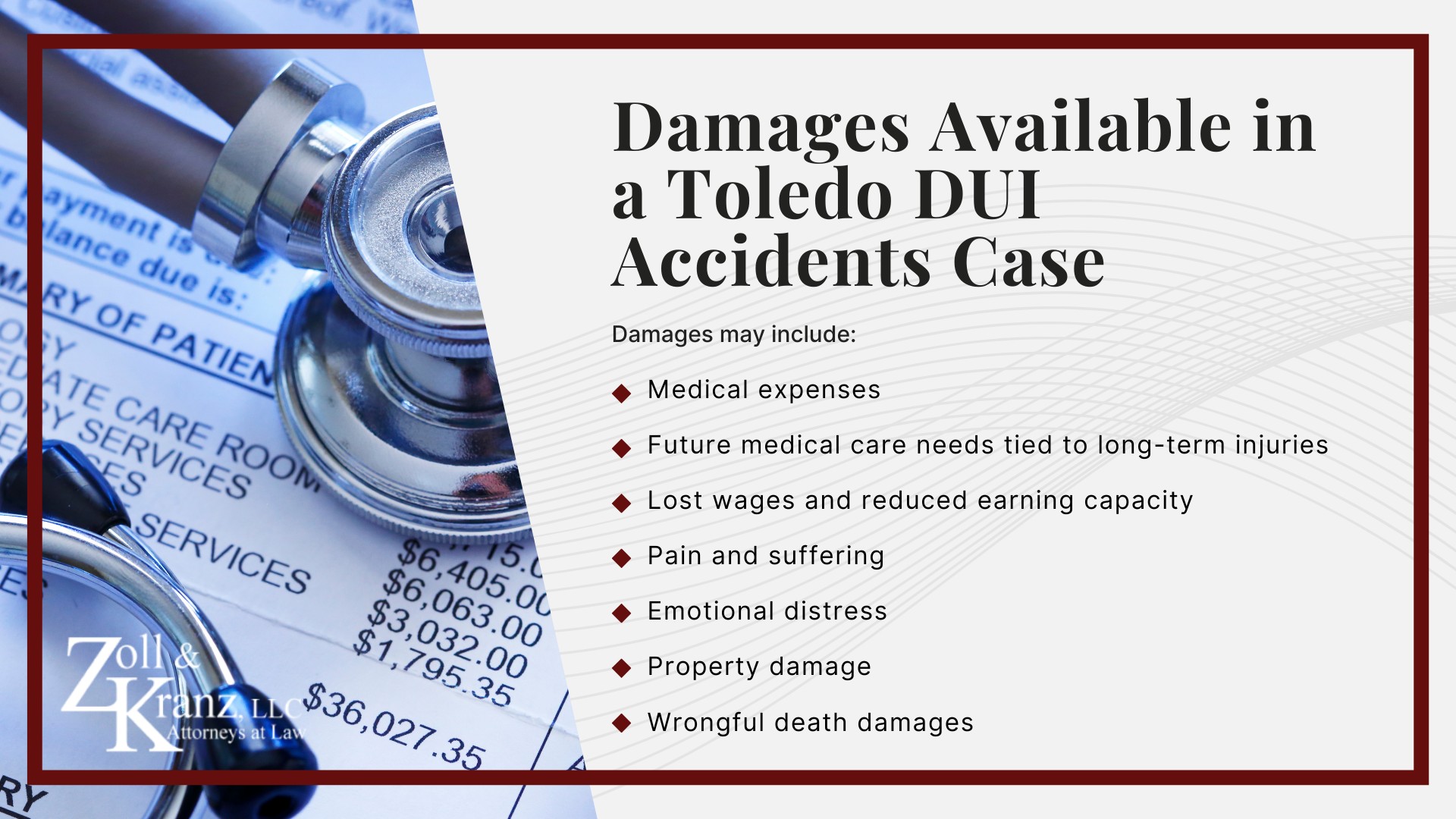
While drunk driving statistics show how common alcohol impaired drivers are on the road, your claim is about your specific harm: medical care, lost wages, and what it takes to recover compensation that reflects the real impact of the crash.
In serious cases, families may be dealing with a fatal crash where a drunk driver killed someone, and the legal path may shift into a wrongful death case alongside other claims.
DUI accidents can also raise insurance complications, especially if the impaired drivers involved have limited coverage or no coverage at all, which is why uninsured motorist coverage can become an important part of recovery.
When the stakes are high, a drunk driving accident lawyer helps preserve proof early and presents a case that insurers can’t minimize or rewrite.
Drunk Driving Statistics: Toledo, Ohio, and Nationwide
Drunk driving remains a major public safety concern in Toledo, across Ohio, and nationwide.
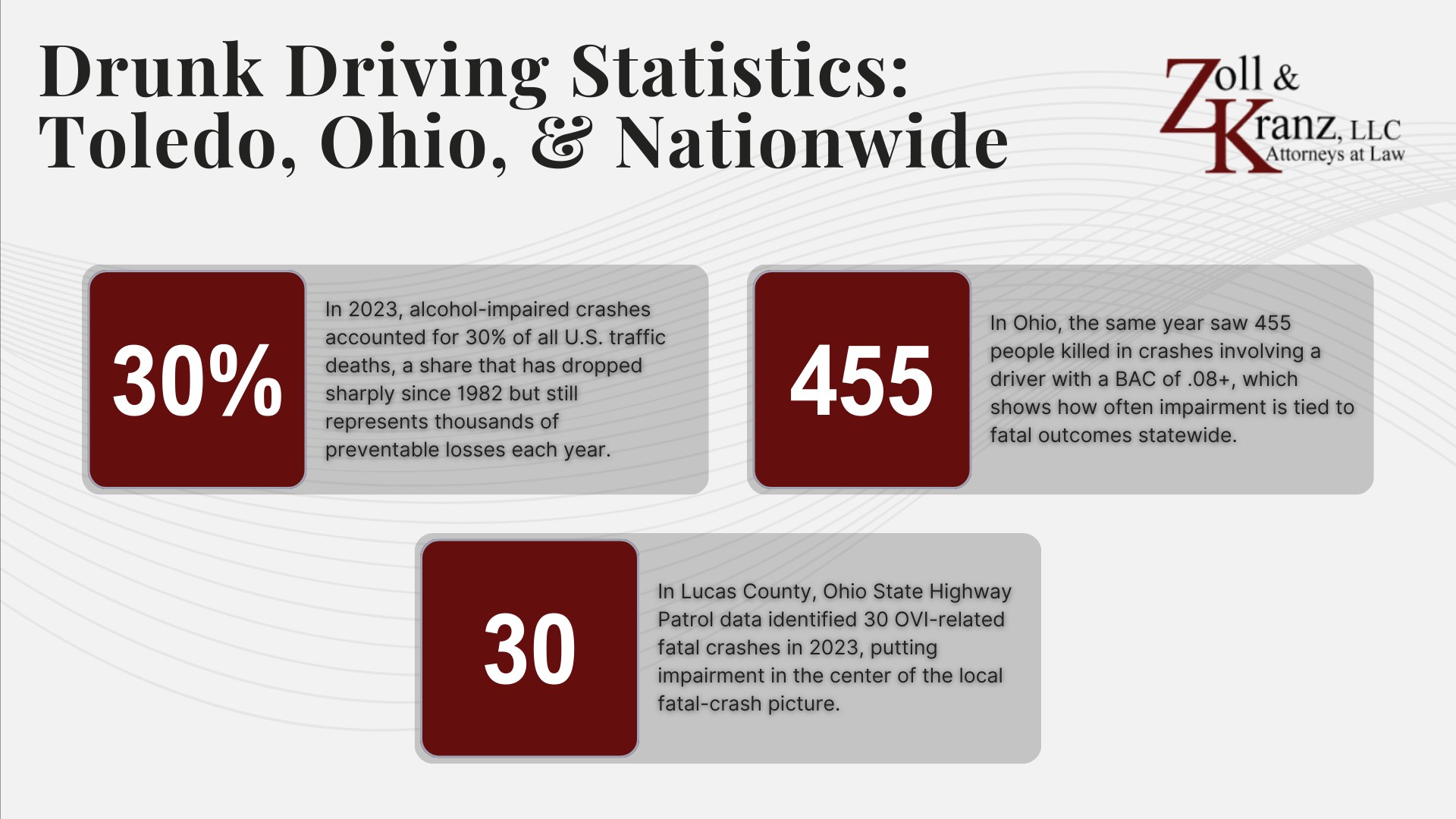
In 2023, alcohol-impaired crashes accounted for 30% of all U.S. traffic deaths, a share that has dropped sharply since 1982 but still represents thousands of preventable losses each year.
In Ohio, the same year saw 455 people killed in crashes involving a driver with a BAC of .08+, which shows how often impairment is tied to fatal outcomes statewide.
In Lucas County, Ohio State Highway Patrol data identified 30 OVI-related fatal crashes in 2023, putting impairment in the center of the local fatal-crash picture.
For injury claims, these numbers matter because they reflect how often impaired driving leads to catastrophic harm, especially on ordinary roads in ordinary conditions.
They also help explain why insurers and investigators scrutinize impairment evidence, timing, and roadway context in Toledo-area cases.
Ohio DUI Laws
Ohio uses the term OVI (Operating a Vehicle Under the Influence) for drunk driving offenses, and the core statute is Ohio Revised Code 4511.19.
Ohio law allows an OVI charge based on impairment “under the influence,” and it also sets per se prohibited alcohol concentrations, including 0.08 for most adult drivers and a higher tier at 0.17.
An arrest can also trigger license consequences, including an administrative suspension process handled through the BMV and the courts.
Because OVI penalties depend on factors like prior history and test results, it helps to understand the main legal categories Ohio applies.
Who Is At Fault for a DUI Accident?
In many drunk driving accident scenarios, the drunk driver is the at-fault party because alcohol impaired driving increases crash risk and violates basic safety duties behind the wheel.
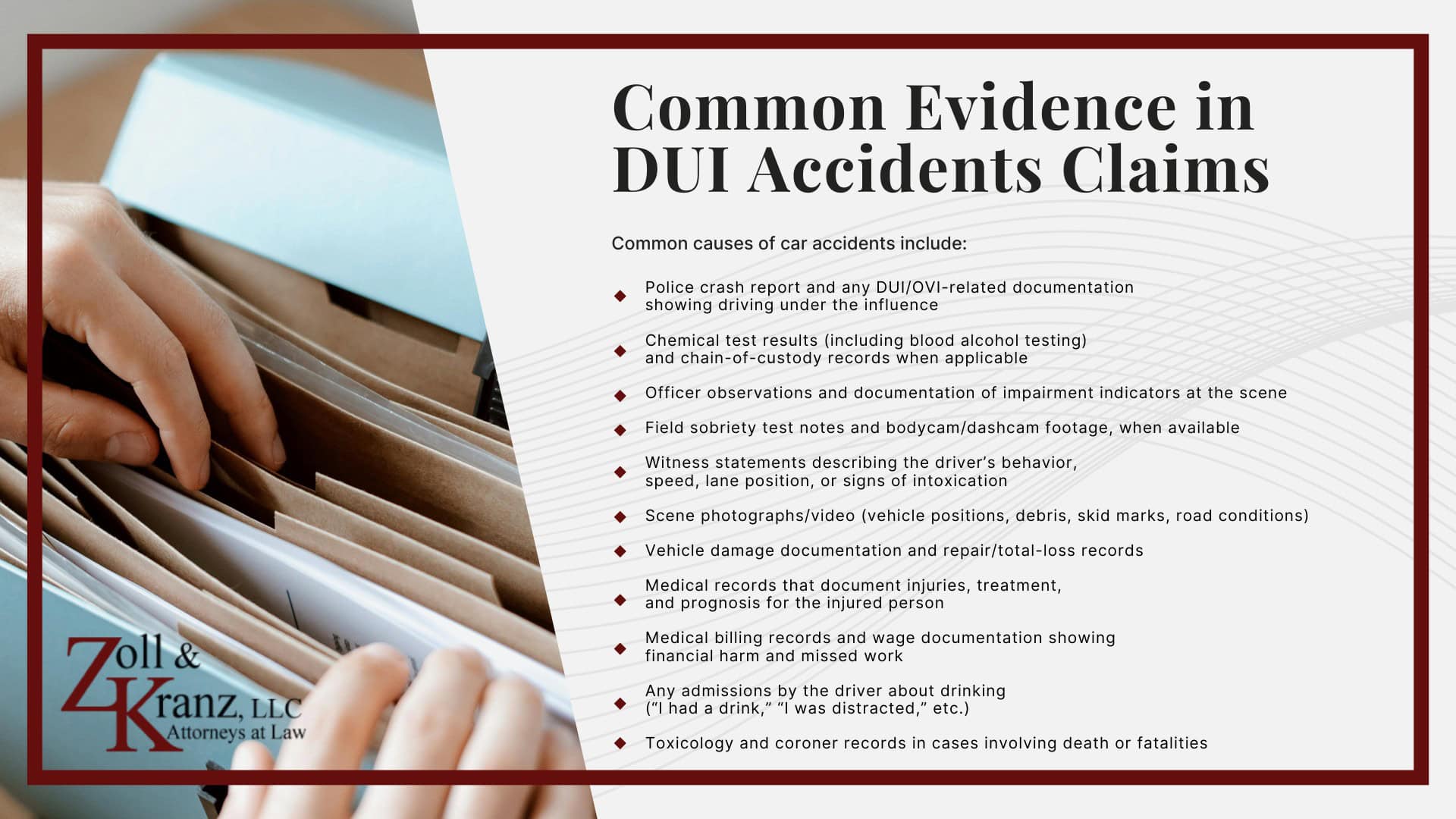
Liability is often supported by chemical testing and investigation details.
These can include breath or blood results reflecting blood alcohol concentration, officer observations, witness reports, and evidence of unsafe driving before impact.
That said, fault analysis can be broader than one person, especially in complex car crashes involving multiple vehicles or chain reactions.
In some cases, the defense argues another driver contributed, so the focus becomes sorting out what each driver did and whether impairment was the primary cause of the collision.
There are also situations where additional responsibility may be considered, such as negligent entrustment (someone knowingly letting an impaired person drive) or alcohol service issues, depending on the facts and applicable law.
And when the at-fault driver is uninsured or underinsured, the question of who pays can shift toward your own policy options, including uninsured motorist coverage, even though the drunk driver remains legally responsible.
The bottom line is that drunk driving accident claims are built on evidence, not assumptions, and proving impairment plus causation is what turns suspicion into accountability.