When an unexpected accident is caused by negligent parties, the claims process begins with a detailed review of how the crash occurred and the injuries that followed.
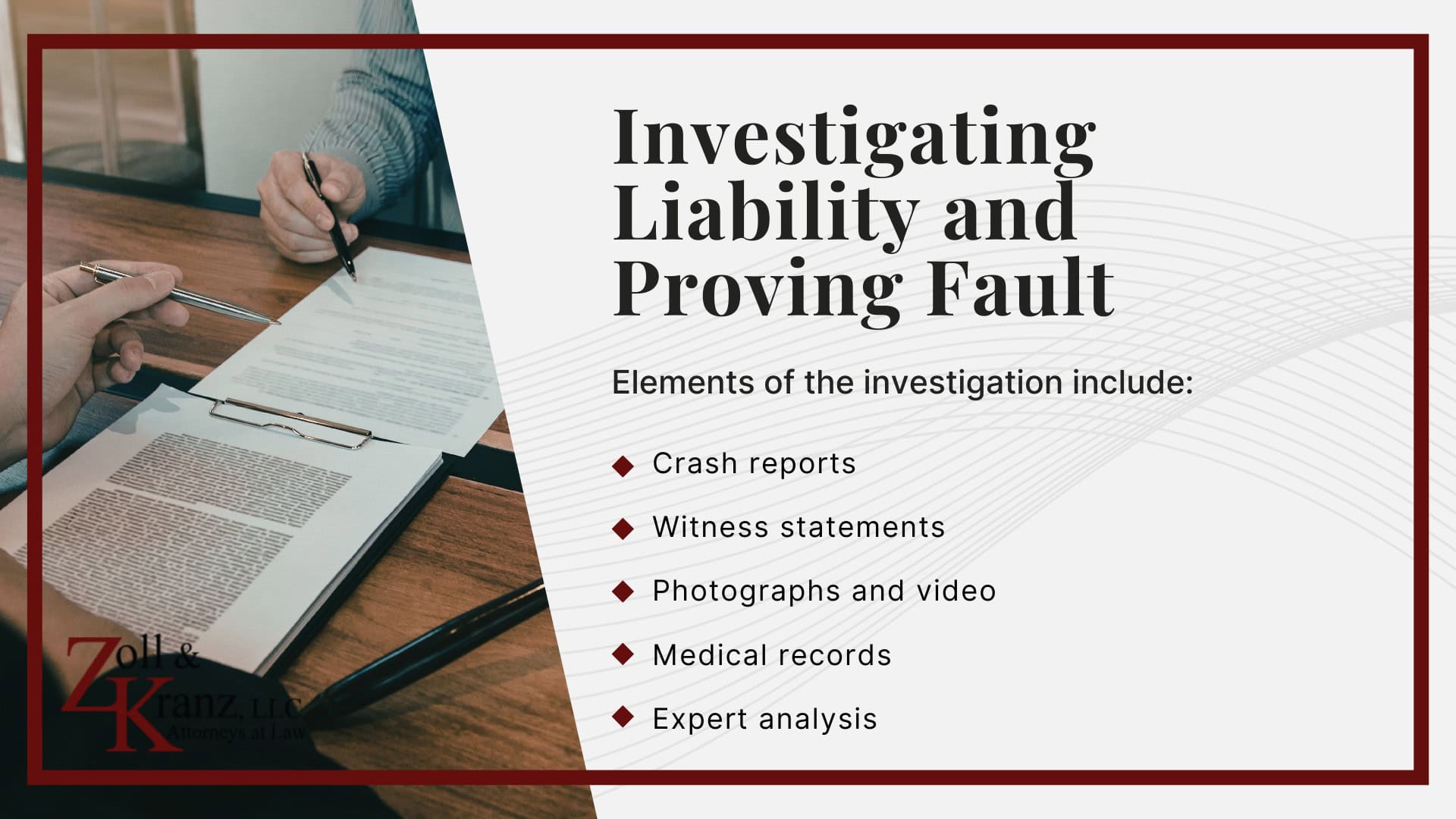
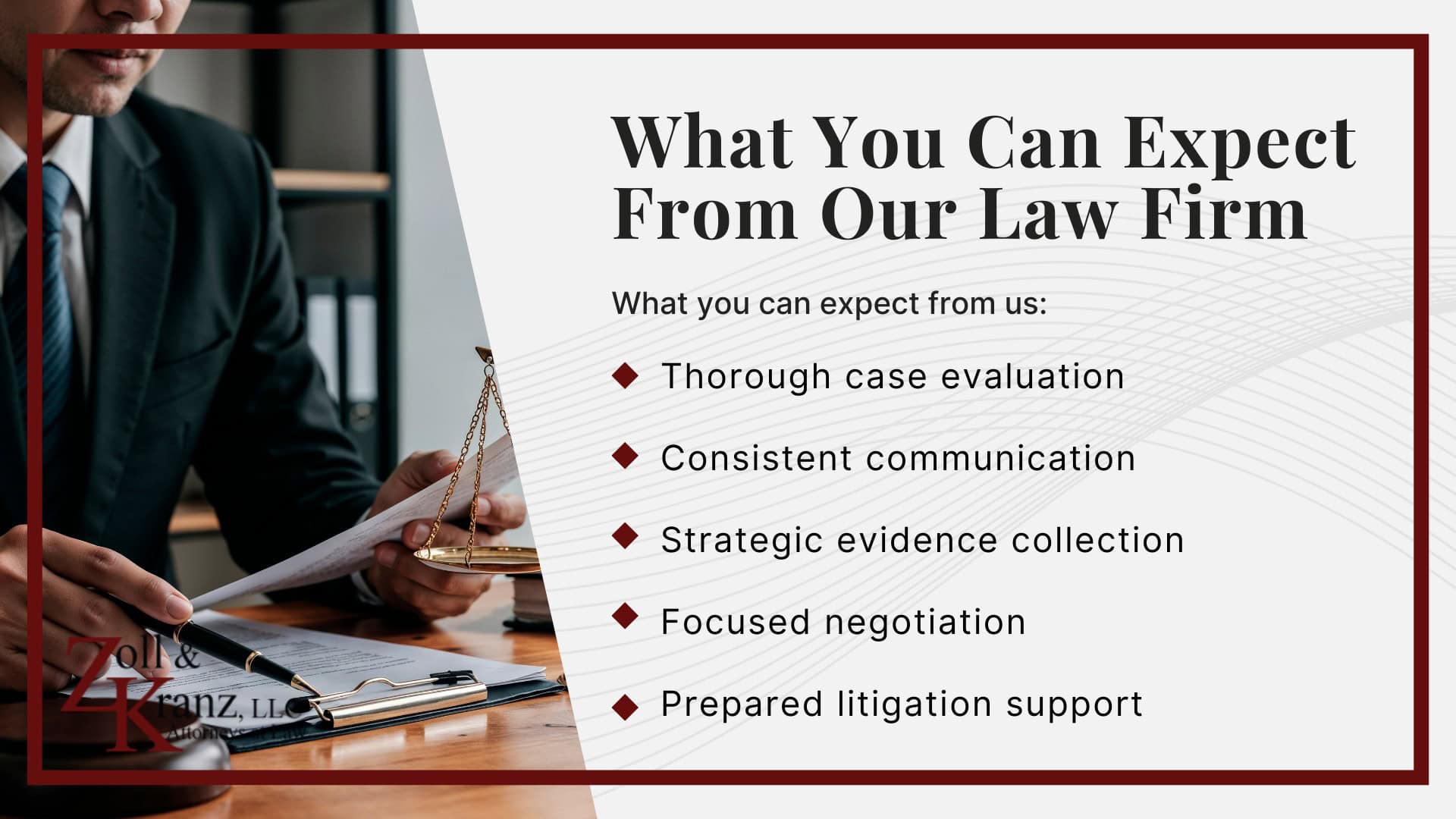
An experienced attorney evaluates medical records, witness statements, and damage reports to determine liability and the scope of harm suffered.
For collisions in Downtown Toledo or along major highways, this often includes analyzing traffic conditions, visibility issues, and roadway design.
Once responsibility is established, the attorney works to pursue compensation for medical care, lost income, long-term effects, or wrongful death losses.
If an insurance company refuses to negotiate fairly, the next step may involve filing a formal claim or lawsuit to protect the client’s rights.
Each stage requires careful documentation to support the request for fair compensation.
The process continues until the evidence is fully developed and a resolution is reached through settlement or litigation.
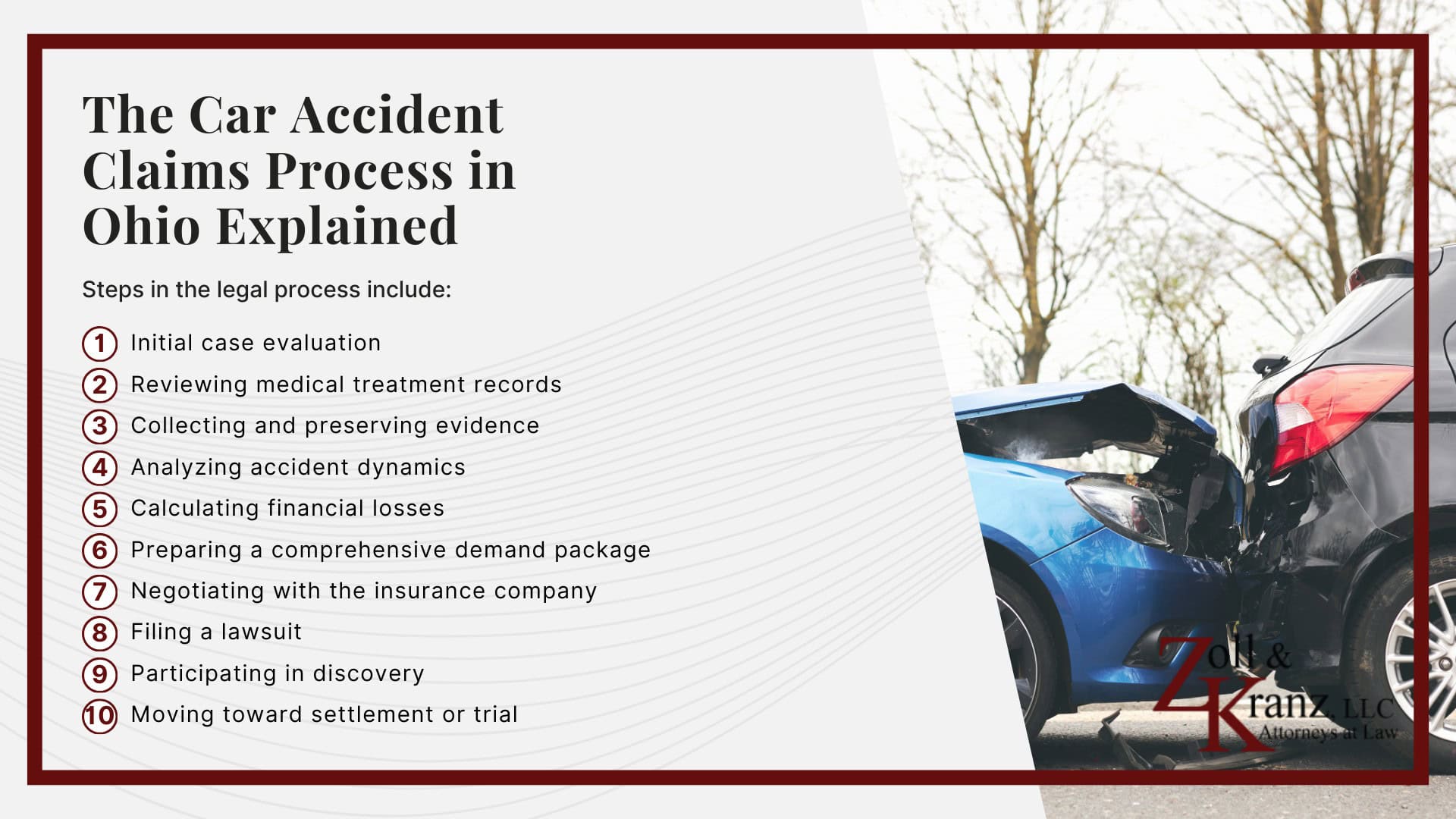
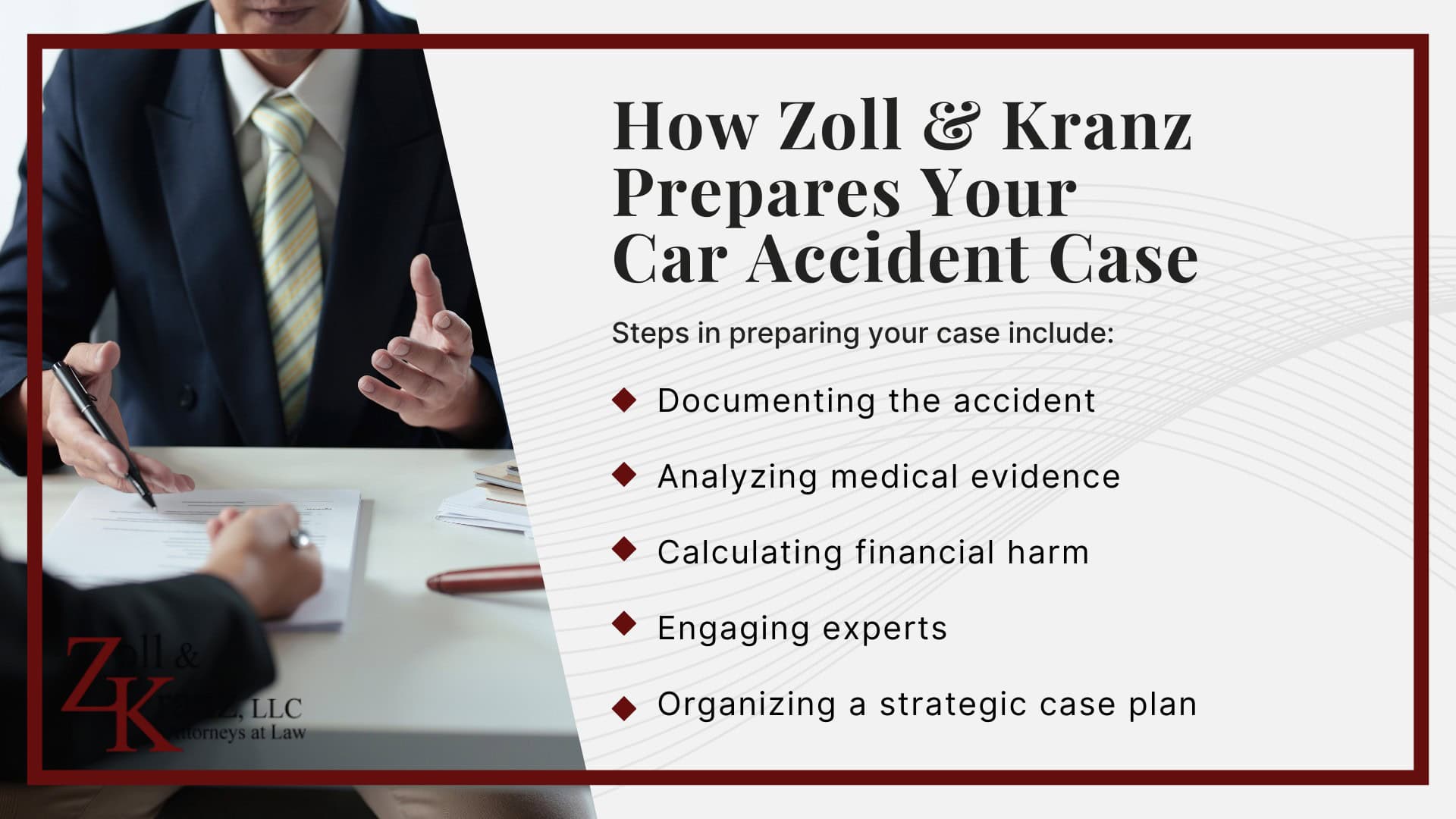
Steps in the legal process include:
- Initial case evaluation to understand how the accident occurred and identify all potentially negligent parties.
- Reviewing medical treatment records to assess the severity of injuries and long-term implications.
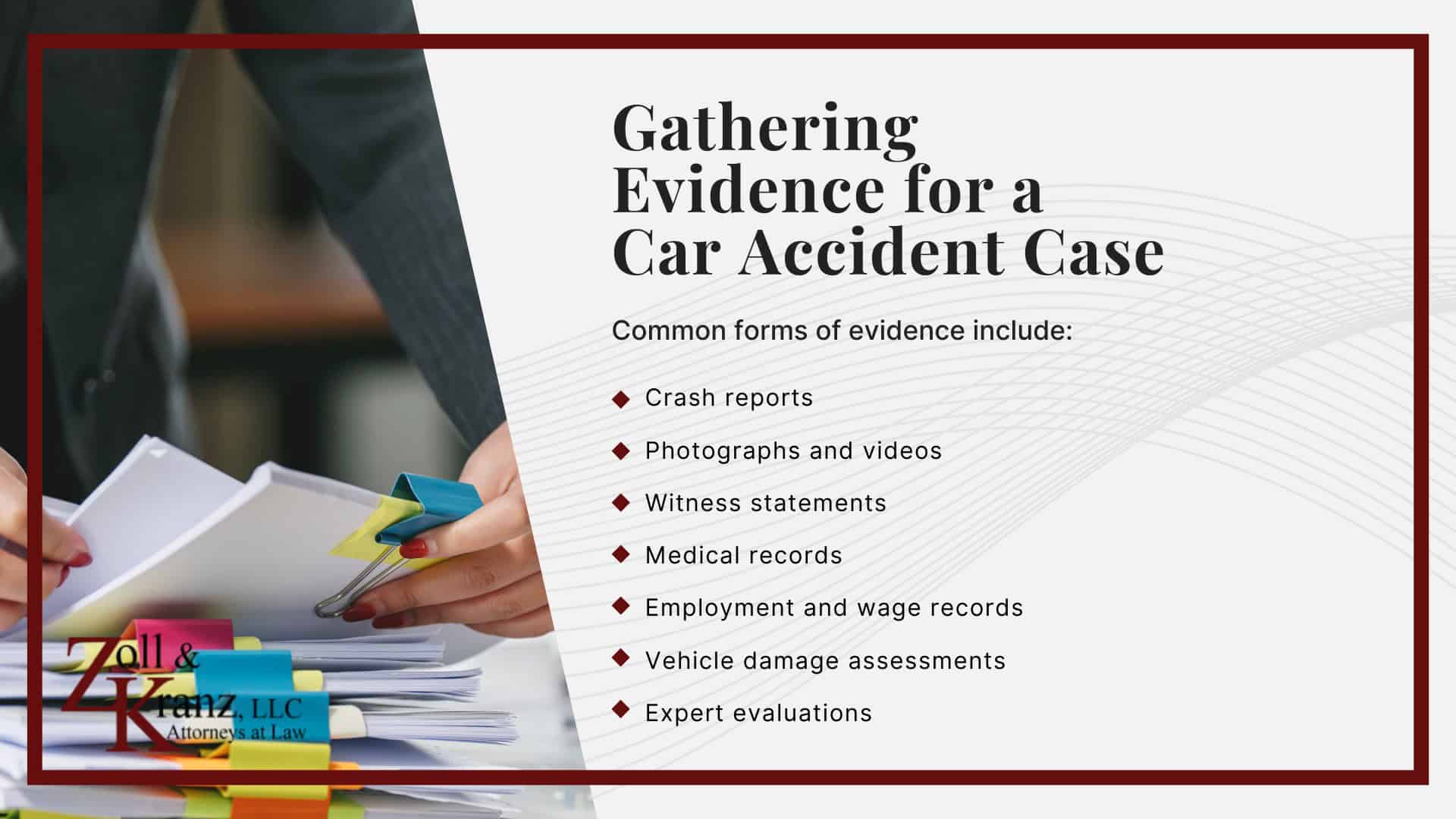
- Collecting and preserving evidence, including crash reports, photographs, surveillance footage, and witness statements.
- Analyzing accident dynamics, such as speed, visibility, road conditions, and contributing factors unique to Toledo roadways.
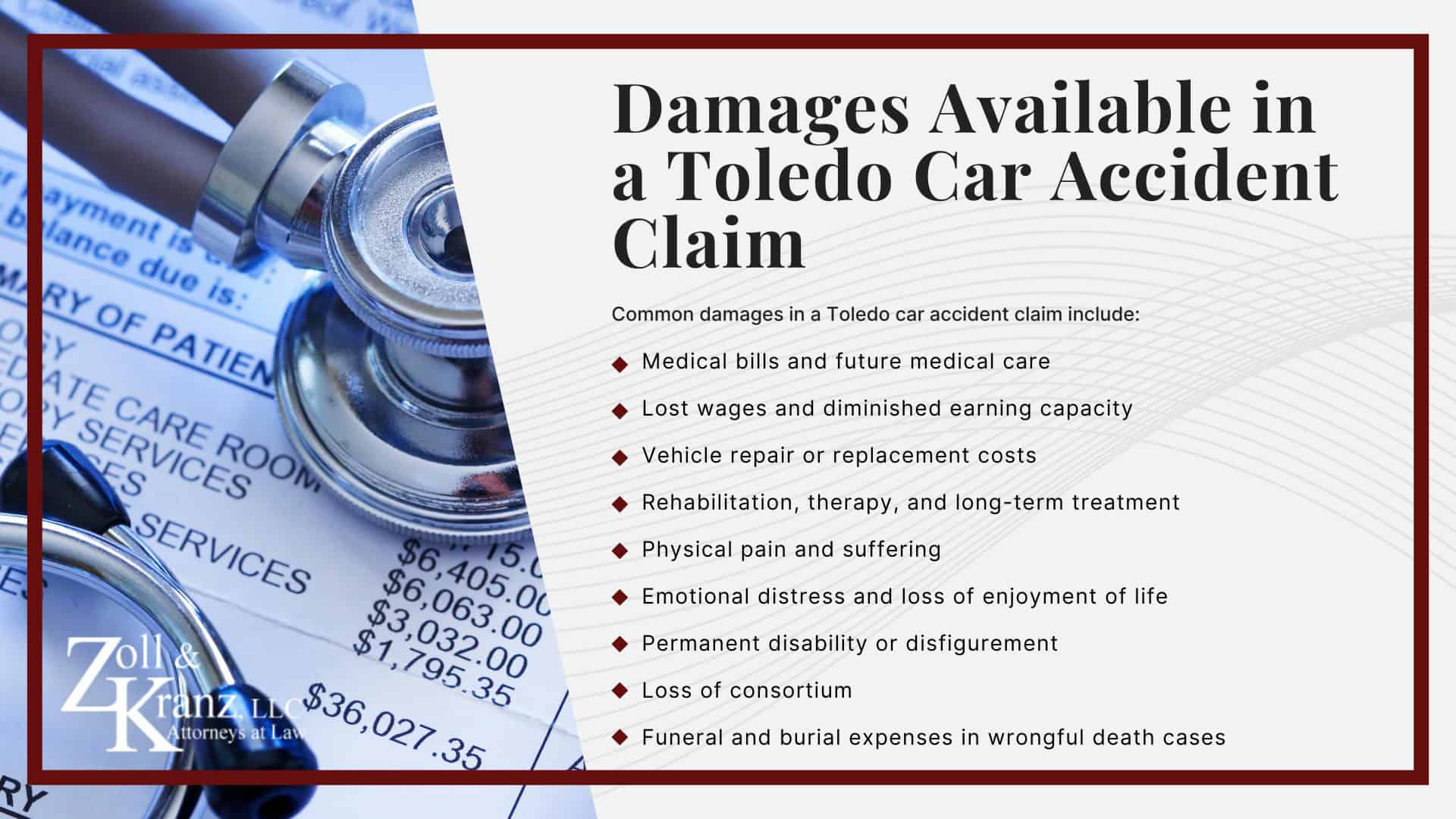
- Calculating financial losses, including medical expenses, lost wages, property damage, and projected future costs.
- Preparing a comprehensive demand package supported by documentation and expert input.
- Negotiating with the insurance company to seek a resolution that reflects the full impact of the injuries.
- Filing a lawsuit if negotiations stall, liability is disputed, or the insurer undervalues the claim.
- Participating in discovery, including depositions, document exchanges, and expert evaluations.
- Moving toward settlement or trial, depending on how the evidence develops and whether fair compensation is offered.
How Car Accident Claims Work in Ohio
Ohio is an at-fault state, which means the person whose poor judgment or negligent actions caused the crash is responsible for the losses that follow.
Whether the case involves rear-end accidents, failure to yield, or unsafe maneuvers at an intersection, the at-fault driver must be identified through evidence gathered at the accident scene and through later investigation.
Ohio also follows a modified comparative negligence system, allowing injured individuals to pursue compensation as long as they are not more than 50 percent responsible for the accident caused by another party.
To succeed, the burden of proof requires showing that the defendant owed a duty of care, breached that duty, caused the collision, and created measurable damages such as medical costs, wage loss, or long-term impairment.
Clear documentation (medical records, photographs, statements, and official reports) plays a central role in demonstrating fault and linking the injuries directly to the event.
Common Causes of Car Accidents in Toledo, OH
Car crashes in Toledo often occur when an at-fault party fails to follow basic safety rules or makes decisions that put others at risk.
Distracted driving and impaired driving remain two of the most frequent contributors, especially on busy roads and during peak traffic hours.
Collisions at stop signs and traffic signals also occur when drivers ignore right-of-way laws or act without regard for surrounding vehicles.
These same behaviors lead to serious truck accidents and motorcycle accidents throughout the region.
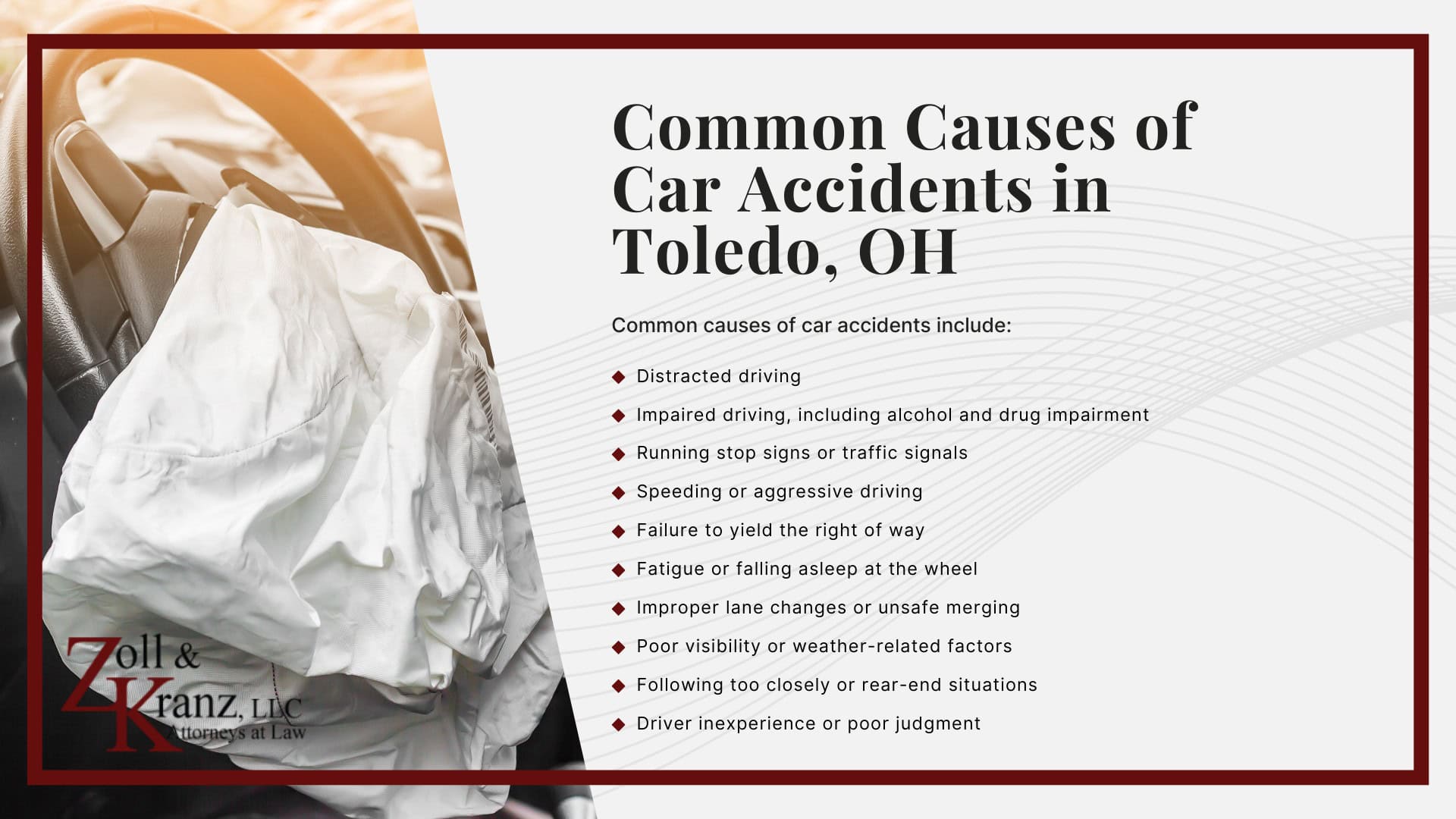
Common causes of car accidents include:
- Distracted driving
- Impaired driving, including alcohol and drug impairment
- Running stop signs or traffic signals
- Speeding or aggressive driving
- Failure to yield the right of way
- Fatigue or falling asleep at the wheel
- Improper lane changes or unsafe merging
- Poor visibility or weather-related factors
- Following too closely or rear-end situations
- Driver inexperience or poor judgment