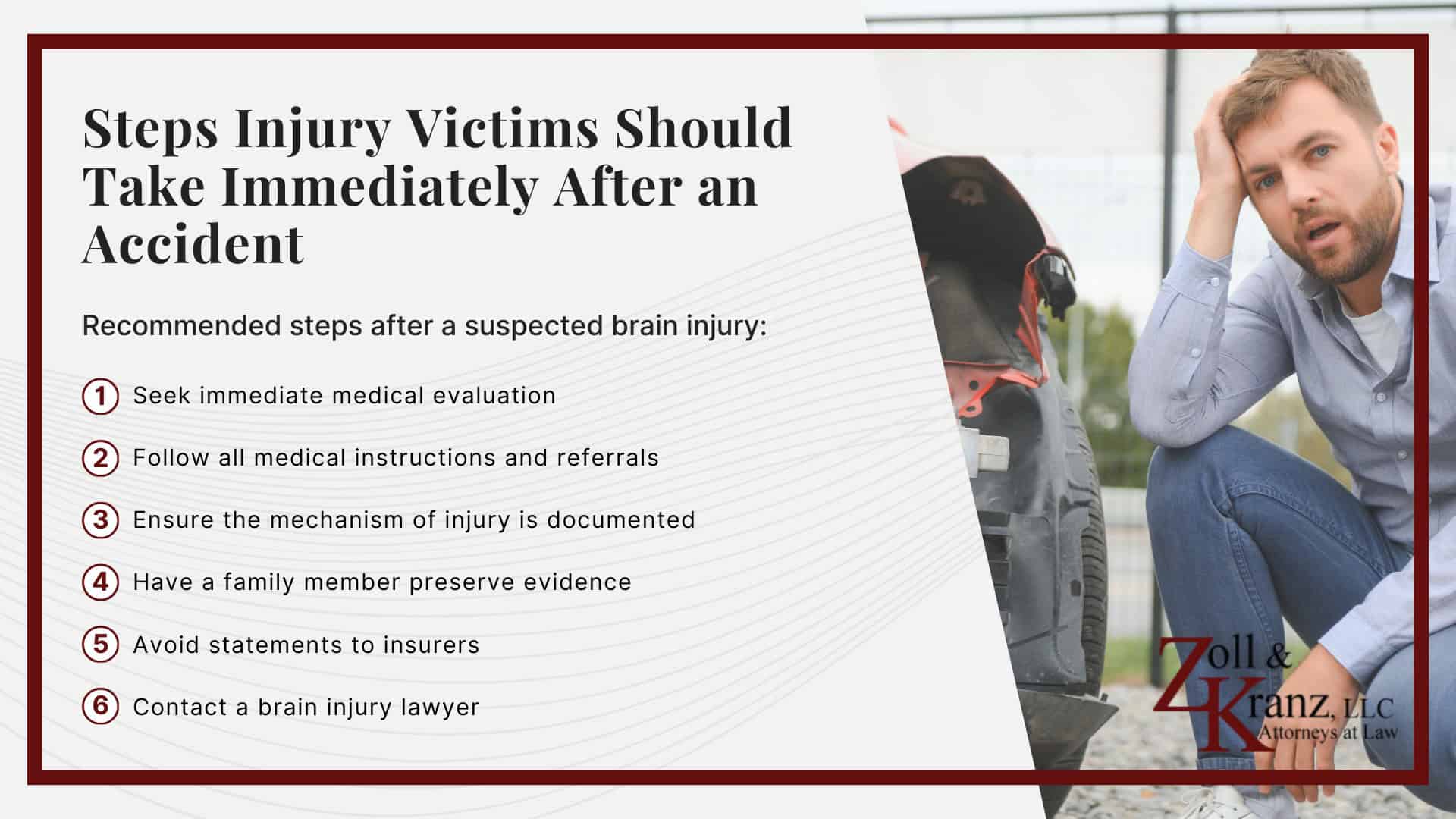
When a TBI stems from someone else’s negligence, whether in car accidents, workplace accidents, unsafe premises, or medical errors, a personal injury attorney can file a civil claim to hold the responsible party accountable.
Your legal team will secure medical attention and coordinate with medical professionals to document concussion symptoms, diffuse axonal injury, anoxic brain injury, or other serious brain damage.

From there, experienced TBI attorney support includes investigating liability, notifying insurance companies, preserving evidence, and preparing brain injury claims that cover medical costs, lost wages, and ongoing treatment needs.
Brain injury attorneys often work with the Brain Injury Association resources and specialist providers to translate complex findings into clear proof of harm for brain injury survivors and brain injury victims.
Ohio’s Statute of Limitations for Traumatic Brain Injury Cases
In most Ohio personal injury cases (including many motor vehicle accidents and TBIs) you generally have two years from the date of injury to file suit (with different timelines for medical malpractice or wrongful death).
Because concussion symptoms or severe cognitive impairments can appear or evolve over time, contacting a personal injury lawyer quickly protects your rights and preserves evidence in brain injury claims.
If you suspect a TBI after blunt force trauma or a mild concussion, do not delay; early legal representation helps ensure crucial medical records and expert opinions are secured before the deadline.
Common Evidence in Traumatic Brain Injury Claims
Evidence is often the difference between a claim that reflects the true impact of a brain injury and one that is minimized as “temporary” or subjective.
Traumatic brain injuries can present differently depending on the person, and the elderly and young children may show subtle changes that require careful documentation over time.
Symptoms like memory issues, sleep disruption, and mood swings are real consequences of brain trauma, but insurers often demand objective support before valuing them appropriately.
Lawyers collect, retain, and present evidence in a structured way, preserving incident records early, securing medical documentation, and coordinating expert review to connect the event to the diagnosis and long-term limitations.
This approach is especially important in cases involving severe injuries, where future care needs and permanent impairment must be supported by clear records and credible opinions.
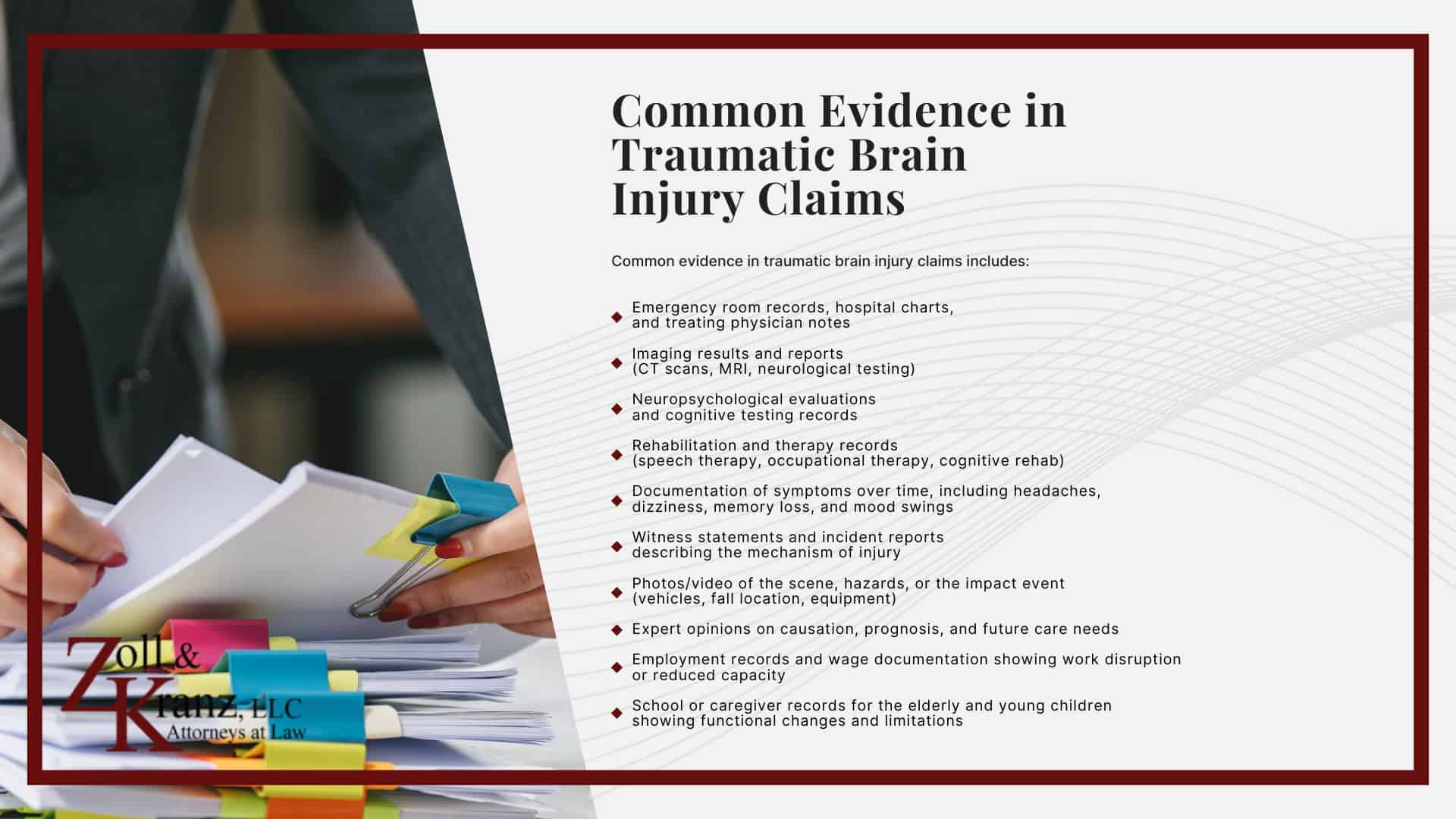
Common evidence in traumatic brain injury claims includes:
- Emergency room records, hospital charts, and treating physician notes
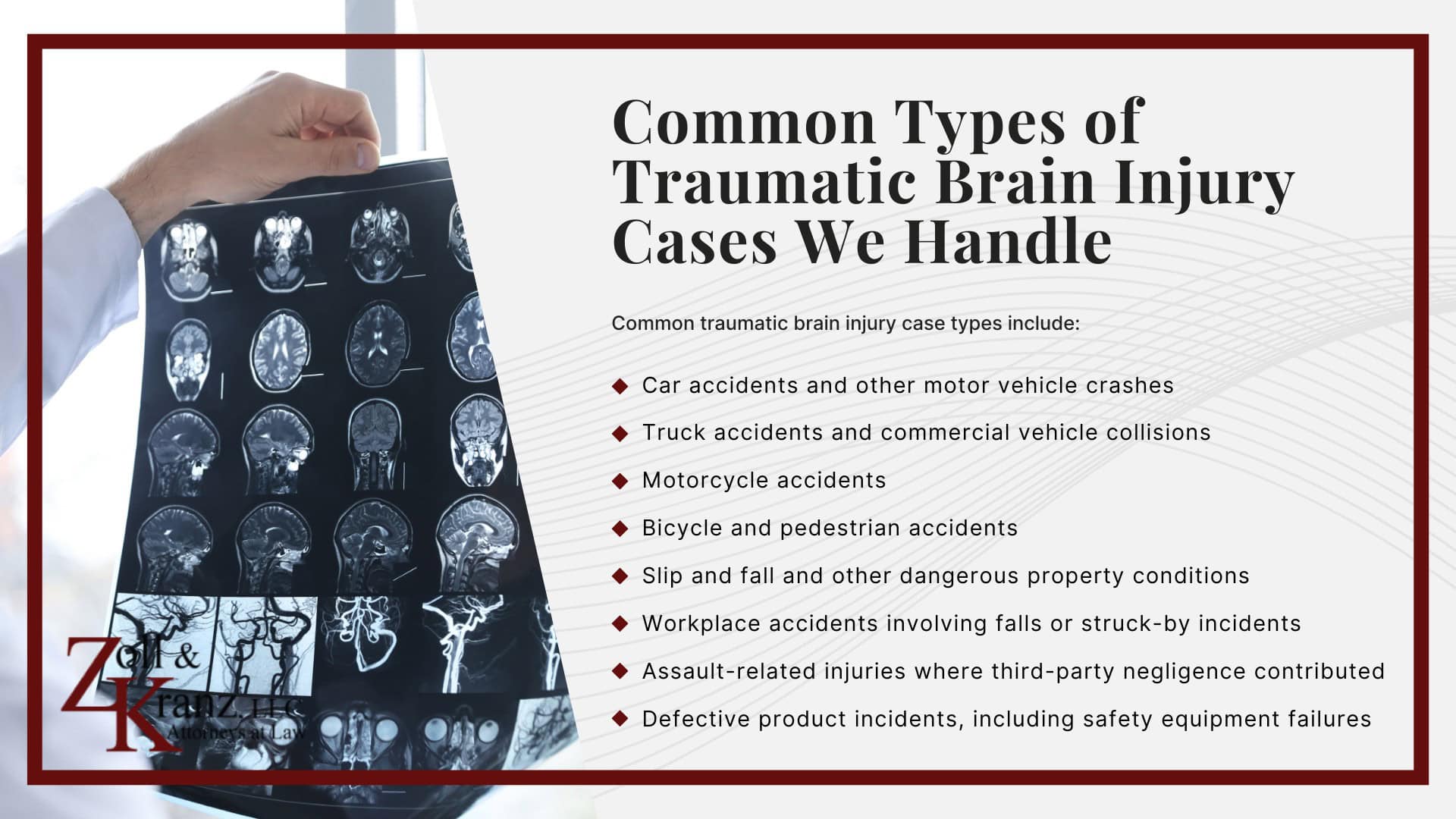
- Imaging results and reports (CT scans, MRI, neurological testing)
- Neuropsychological evaluations and cognitive testing records
- Rehabilitation and therapy records (speech therapy, occupational therapy, cognitive rehab)
- Documentation of symptoms over time, including headaches, dizziness, memory loss, and mood swings
- Witness statements and incident reports describing the mechanism of injury
- Photos/video of the scene, hazards, or the impact event (vehicles, fall location, equipment)
- Expert opinions on causation, prognosis, and future care needs
- Employment records and wage documentation showing work disruption or reduced capacity
- School or caregiver records for the elderly and young children showing functional changes and limitations
Damages Available in a Toledo Traumatic Brain Injury Case
Damages in a traumatic brain injury case are meant to address the full scope of harm caused by the injury, including financial loss and the personal impact on daily life.
A TBI can involve anything from concussion symptoms to a skull fracture with lasting cognitive and neurological impairment, and the claim value should reflect that medical reality.
Zoll & Kranz documents treatment needs, work disruption, and long-term limitations so the case is not reduced to only the initial hospital bills.
The goal is to pursue full compensation supported by records, expert input, and clear proof of physical pain and suffering.
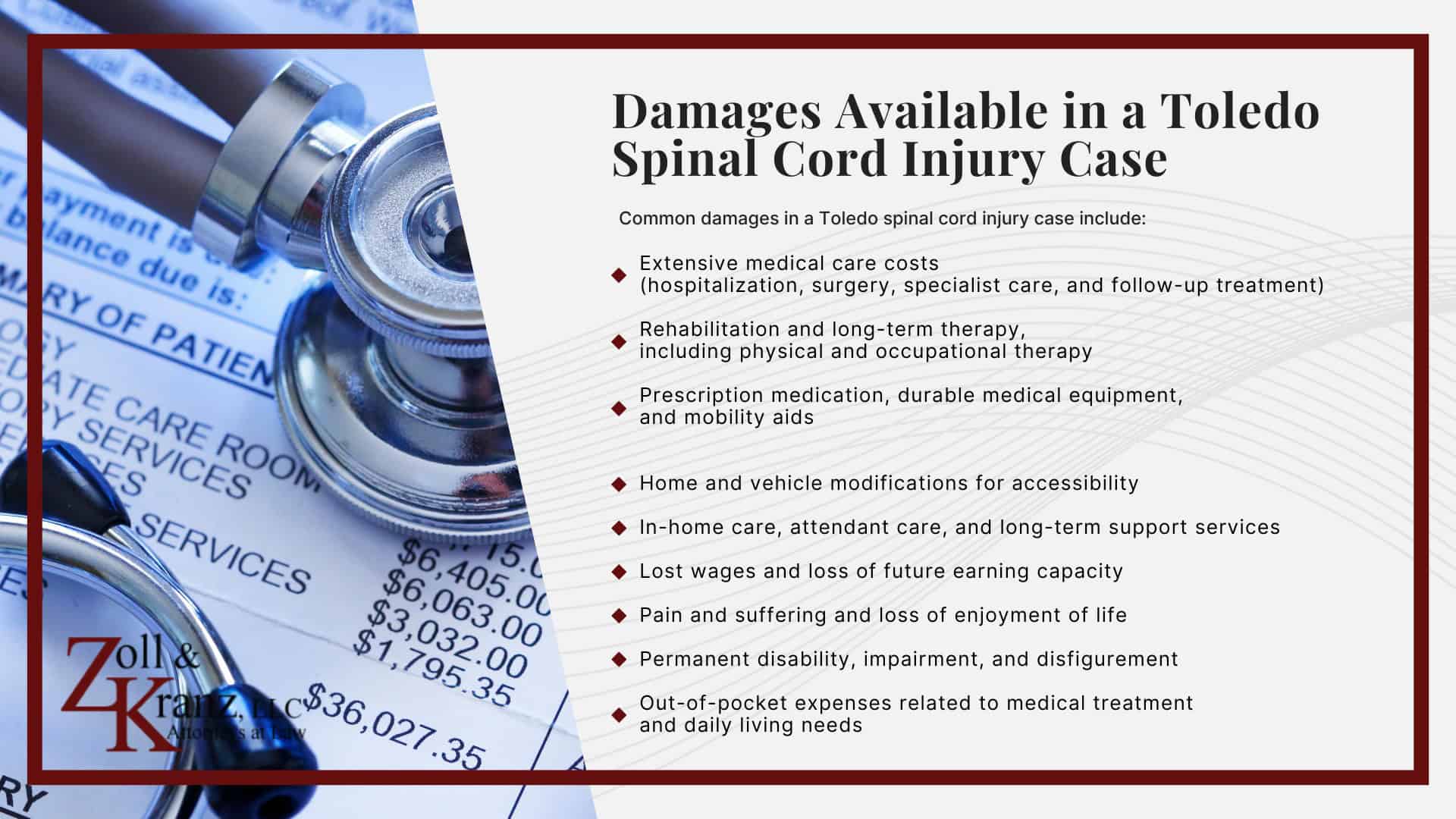
Common damages in a Toledo traumatic brain injury case include:
- Medical bills, including emergency care, hospitalization, and ongoing medical treatment costs
- Neurological care, rehabilitation, and cognitive therapy
- Prescription medication and assistive devices
- Lost income and loss of future earning capacity
- Pain and suffering, including physical pain and suffering
- Emotional distress, anxiety, depression, and sleep disruption
- Loss of enjoyment of life and diminished quality of life
- Permanent disability
- Out-of-pocket costs related to recovery and support needs