
A Toledo auto accident lawsuit usually starts as an insurance claim and only becomes a car accident lawsuit when negotiations fail or the insurer disputes fault or damages.
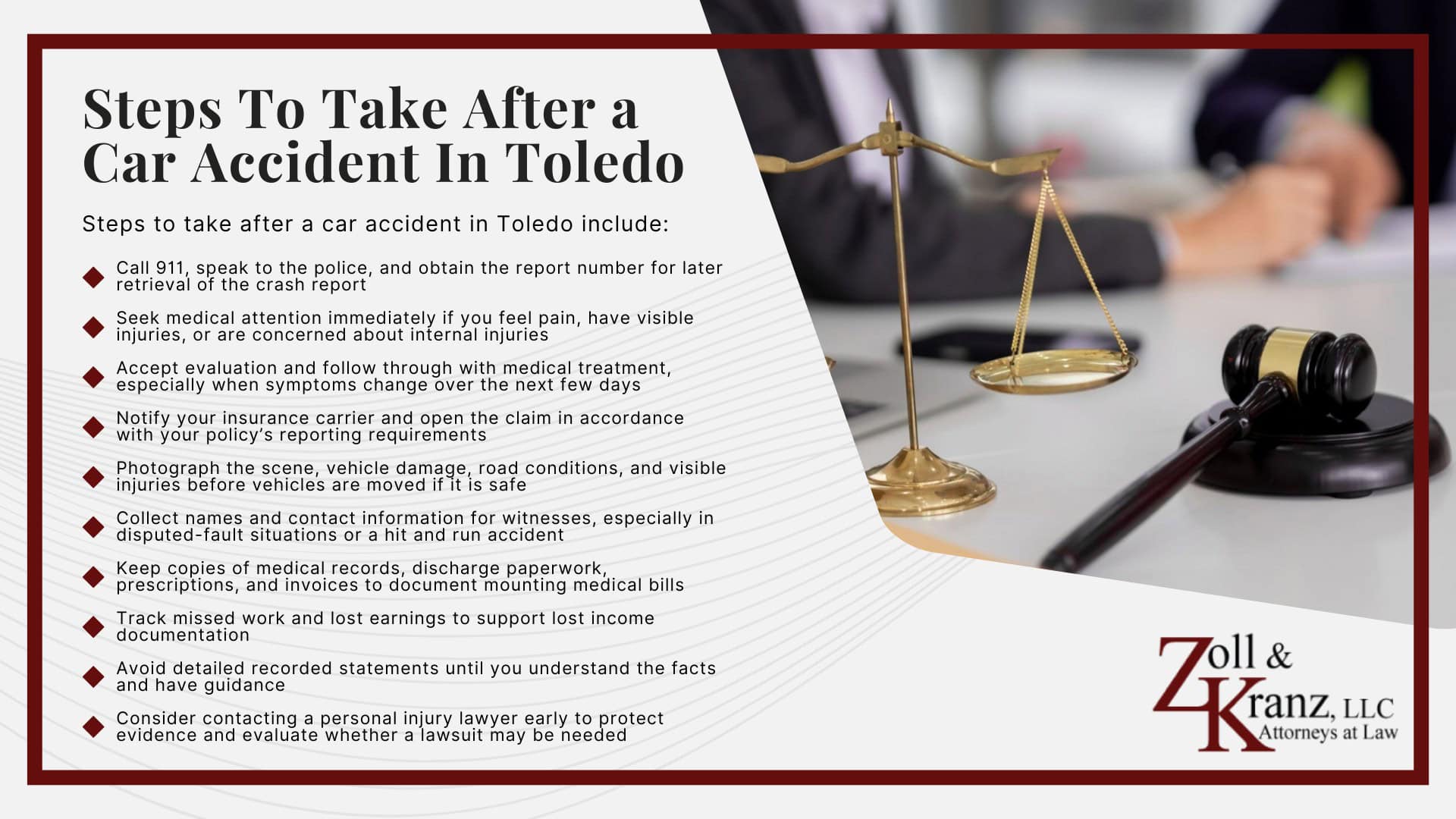
In most motor vehicle accidents, the early timeline is focused on medical care, proof gathering, and claim presentation.
The later timeline depends on whether the matter stays in settlement talks or moves into the formal legal process, including filing, discovery, and trial preparation.
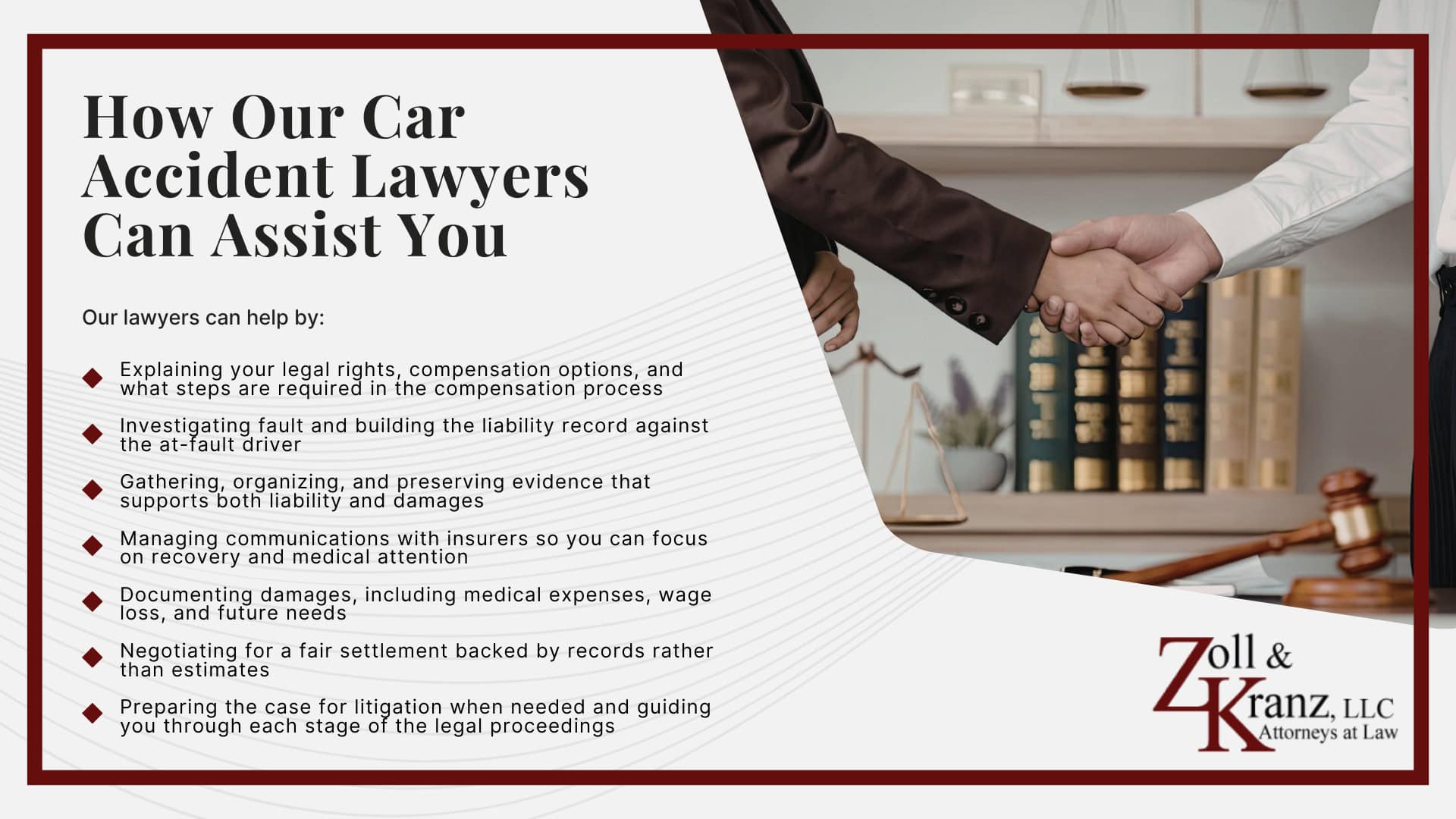
A car accident lawyer can explain what steps tend to occur first, what deadlines control timing, and what evidence typically drives case value.
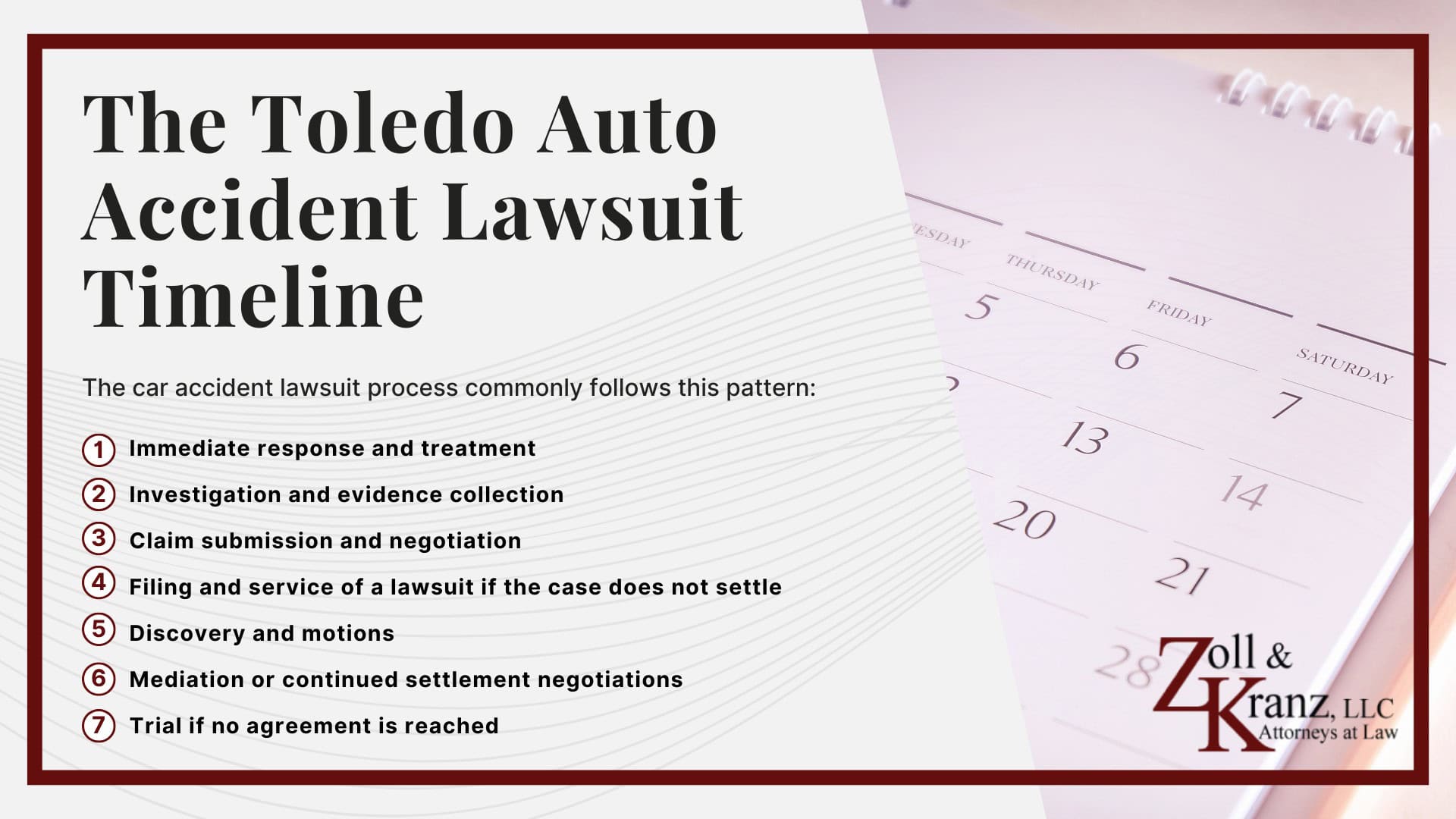
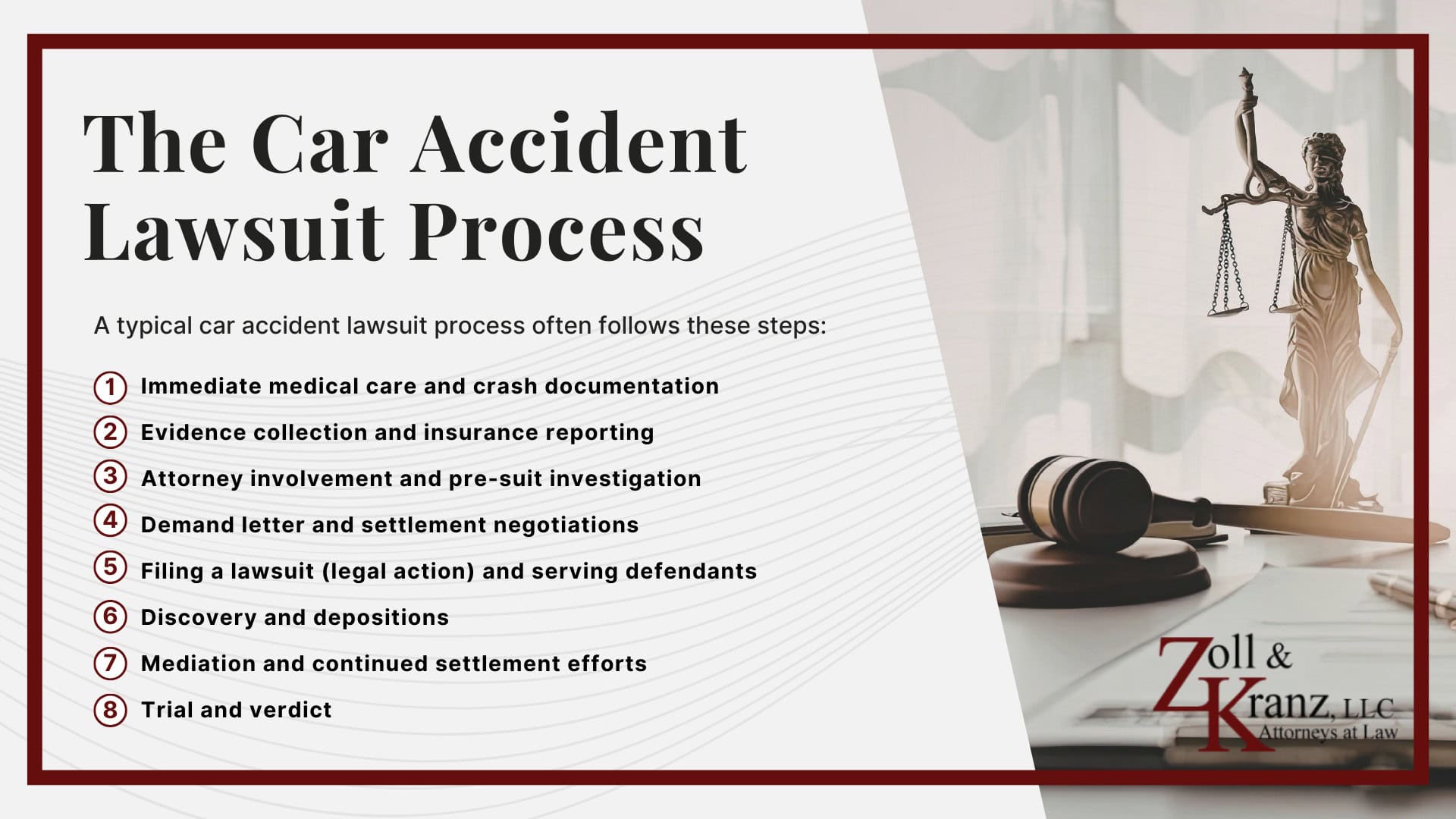
The car accident lawsuit process commonly follows this pattern:
- Immediate response and treatment
- Investigation and evidence collection
- Claim submission and negotiation
- Filing and service of a lawsuit if the case does not settle
- Discovery and motions
- Mediation or continued settlement negotiations
- Trial if no agreement is reached
The timeline can shorten when fault is clear and car accident injuries are straightforward, and it can lengthen when liability is disputed, injuries are severe, or expert review is required.
A personal injury attorney can keep the case moving by organizing records, responding to insurer requests, and preparing the claim as if it may be litigated.
Determining Fault in Car Accidents
Determining fault is often the first major milestone because it directly affects the insurance claim, the settlement position, and, in many cases, insurance premiums going forward.
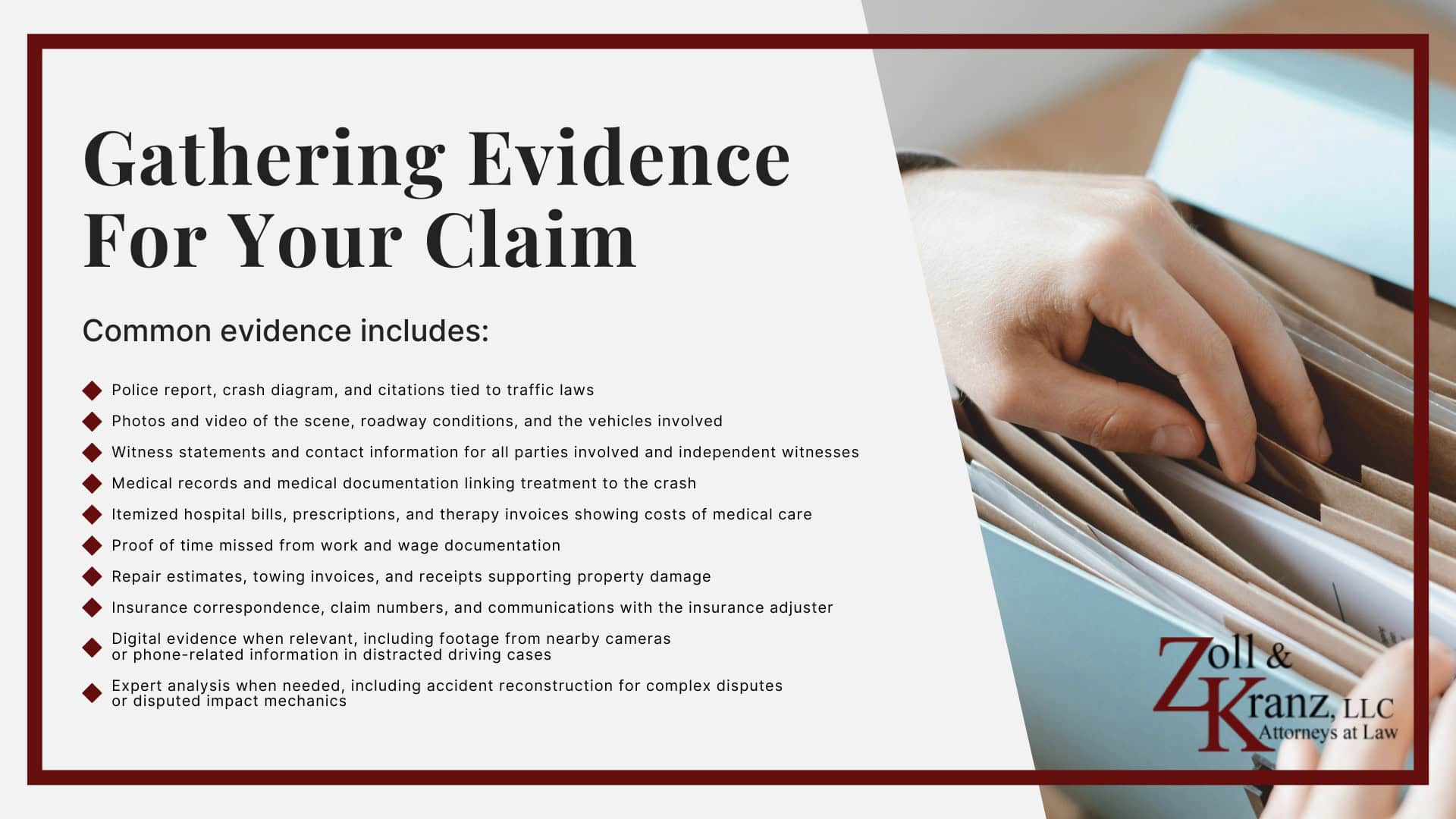
The first step is typically gathering evidence from the accident scene, including photos, video, damage patterns, and police reports.
Once that information is collected, analyzing it is essential, especially when driver accounts conflict or when the insurer questions how the car crash occurred.
Fault analysis usually includes reviewing applicable car accident laws and traffic rules.
Violations such as running a red light, unsafe lane changes, or speeding can serve as primary evidence of negligence.
Negligence can also involve reckless conduct, such as driving under the influence or excessive speeding.
To prove negligence in an auto accident, you generally must show that the other party owed a duty of care, breached that duty, and caused the accident and resulting injuries.
Insurance companies determine fault based on the evidence gathered during the claims process, and adjusters may apply shared-fault rules to assign a percentage of fault to each driver.
Applying negligence and liability rules is how insurers and courts decide responsibility when multiple drivers share blame.
In many states, including those that follow comparative negligence principles, compensation can be reduced by the claimant’s percentage of fault.
If an accident lawsuit is filed, a judge or jury ultimately decides who is at fault for the car accident case and what percentage applies.
Compensation in Car Accident Lawsuits
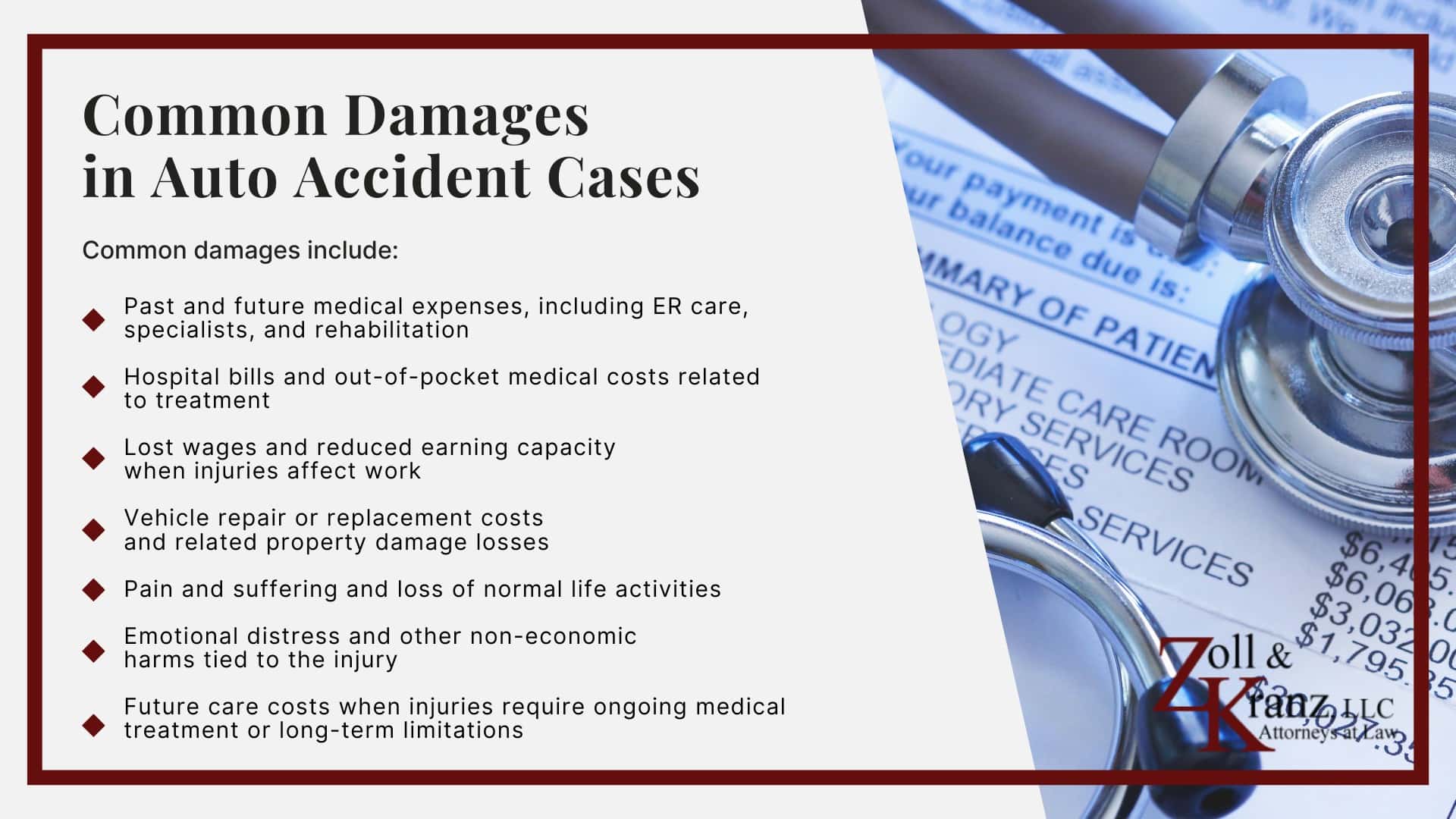
In a personal injury lawsuit arising from a car accident, compensation generally falls into economic and non-economic categories.
Economic damages are measurable financial losses, while non-economic damages refer to intangible losses like emotional distress.
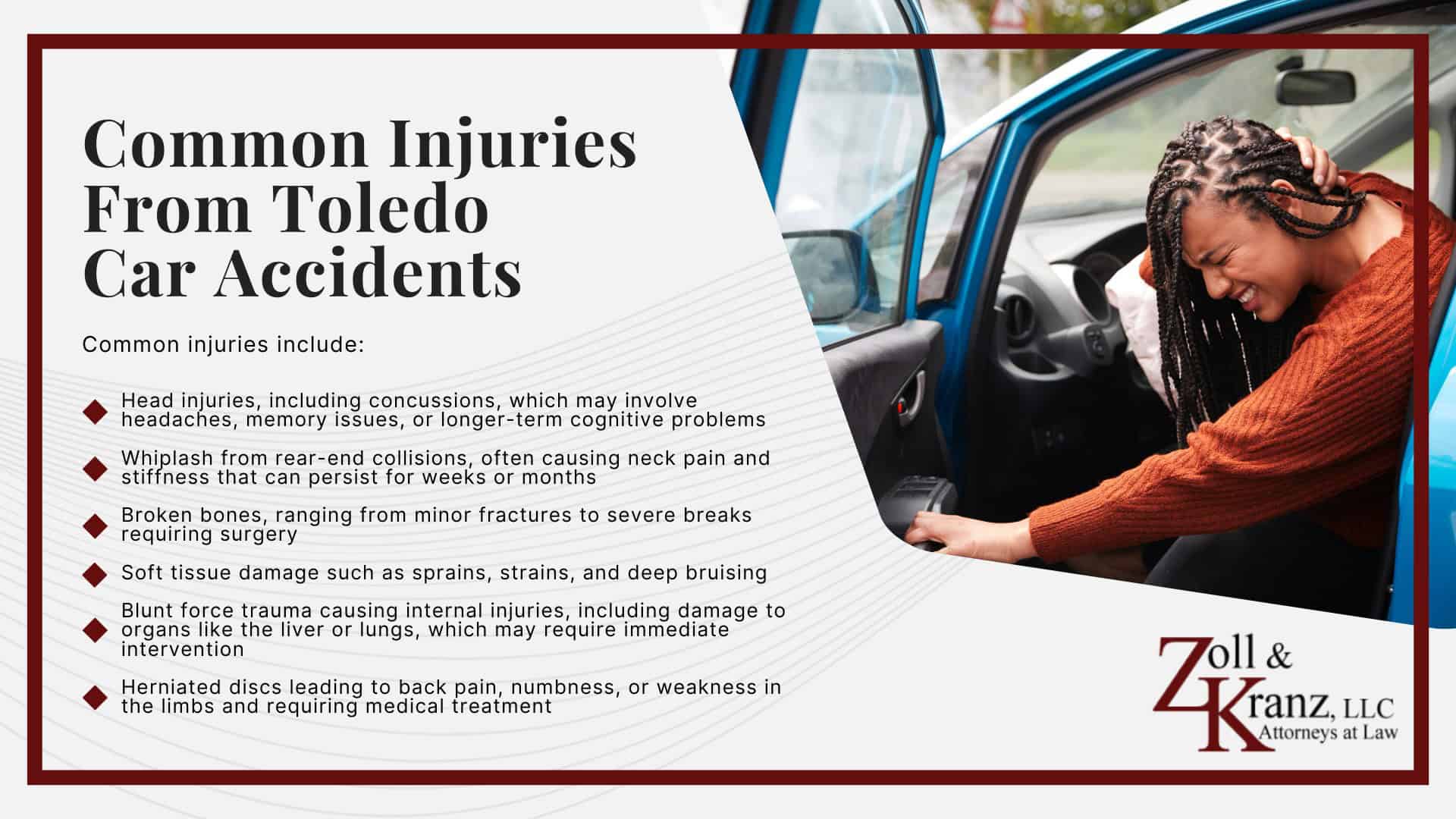
Car accident victims may seek compensation for medical costs tied to treatment and follow-up care, and lost wages may be claimed if injuries prevent work.
Compensation can also cover ongoing care, including rehabilitation, when the injury requires continued treatment.
Settlement values vary widely because liability, injury severity, available coverage, and documentation quality all affect outcomes.
Compensation for minor injuries is sometimes described as ranging roughly from $5,000 to $25,000, while severe injuries can exceed $250,000 and, in catastrophic cases, reach much higher amounts, depending on facts and coverage.
Those figures are not guarantees and are heavily dependent on evidence, medical proof, and the available insurance limits.
Comparative fault can also reduce recovery in many states, so disputes about the at fault party and shared fault can directly affect the amount you can recover compensation.
A car accident attorney or auto accident lawyer helps by tying each damages category to documentation, presenting a supported demand, and negotiating for fair compensation.
If the insurer refuses to offer reasonable terms, litigation may be required to seek compensation through the court process.
Toledo Auto Accident Statute of Limitations
Deadlines can shape the entire timeline.
In Ohio, the statute of limitations for filing a personal injury lawsuit is often two years, and missing it can end the ability to pursue the claim in court even if the evidence is strong.
If you are considering an auto accident lawsuit or car accident lawsuit, confirm the deadline early so negotiations do not run past the filing window.