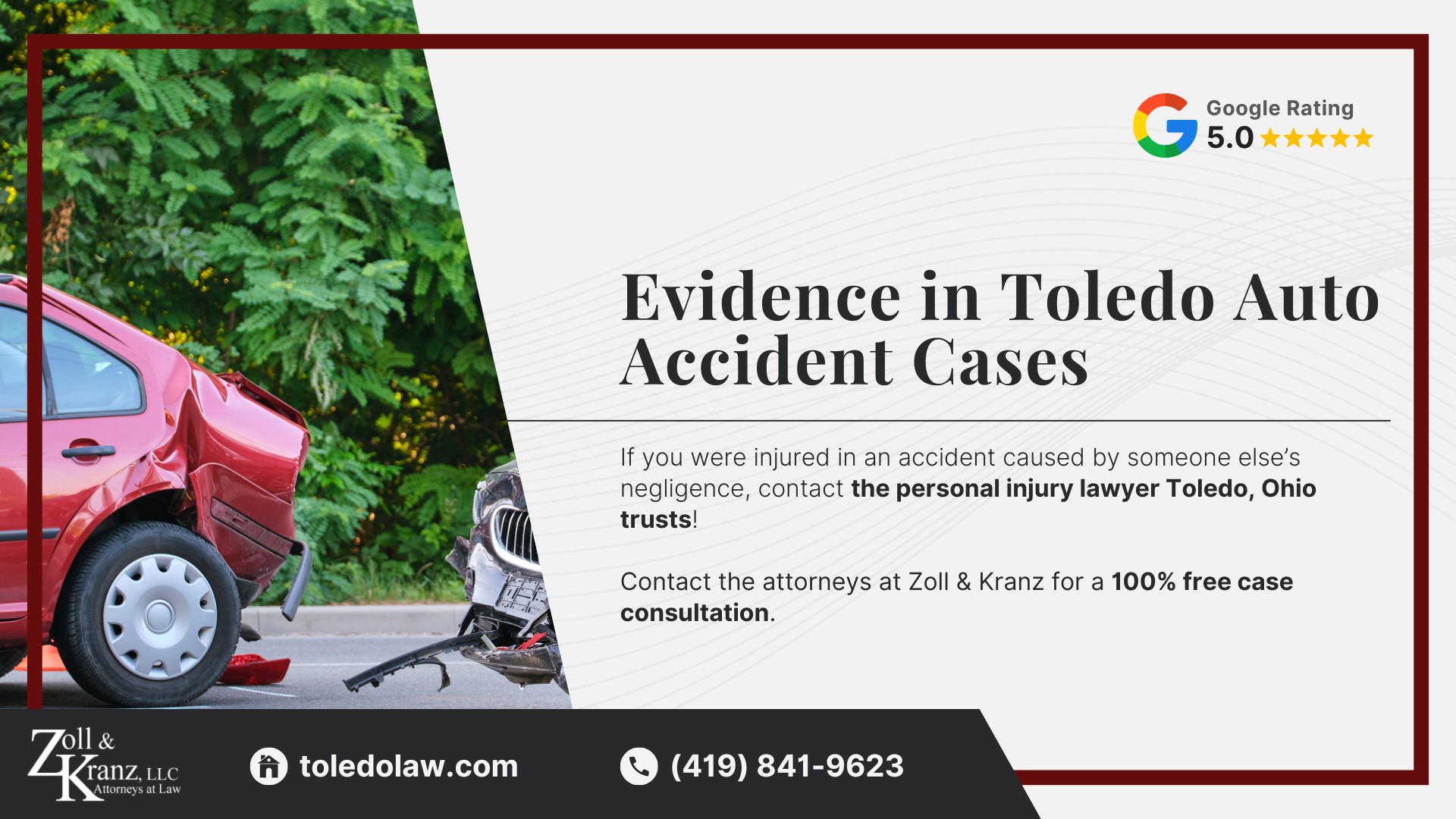
In auto accident cases in Toledo, evidence is what shows how the car crash happened, who was at fault, and how the injuries affected your life.
The sooner you begin collecting evidence, the easier it is to document the accident scene before vehicles move, debris is cleared, and witnesses disperse.
Insurance companies often challenge liability, injury causation, or the amount of damages, so strong evidence can make all the difference between a meaningful settlement offer and a disputed car accident claim.
Solid proof also helps support the decision to file a car accident lawsuit when negotiations fail.
Evidence matters because it answers the questions insurers and juries focus on: where each vehicle was, what each driver did, what the roadway conditions were, and what injuries can be linked to the crash.
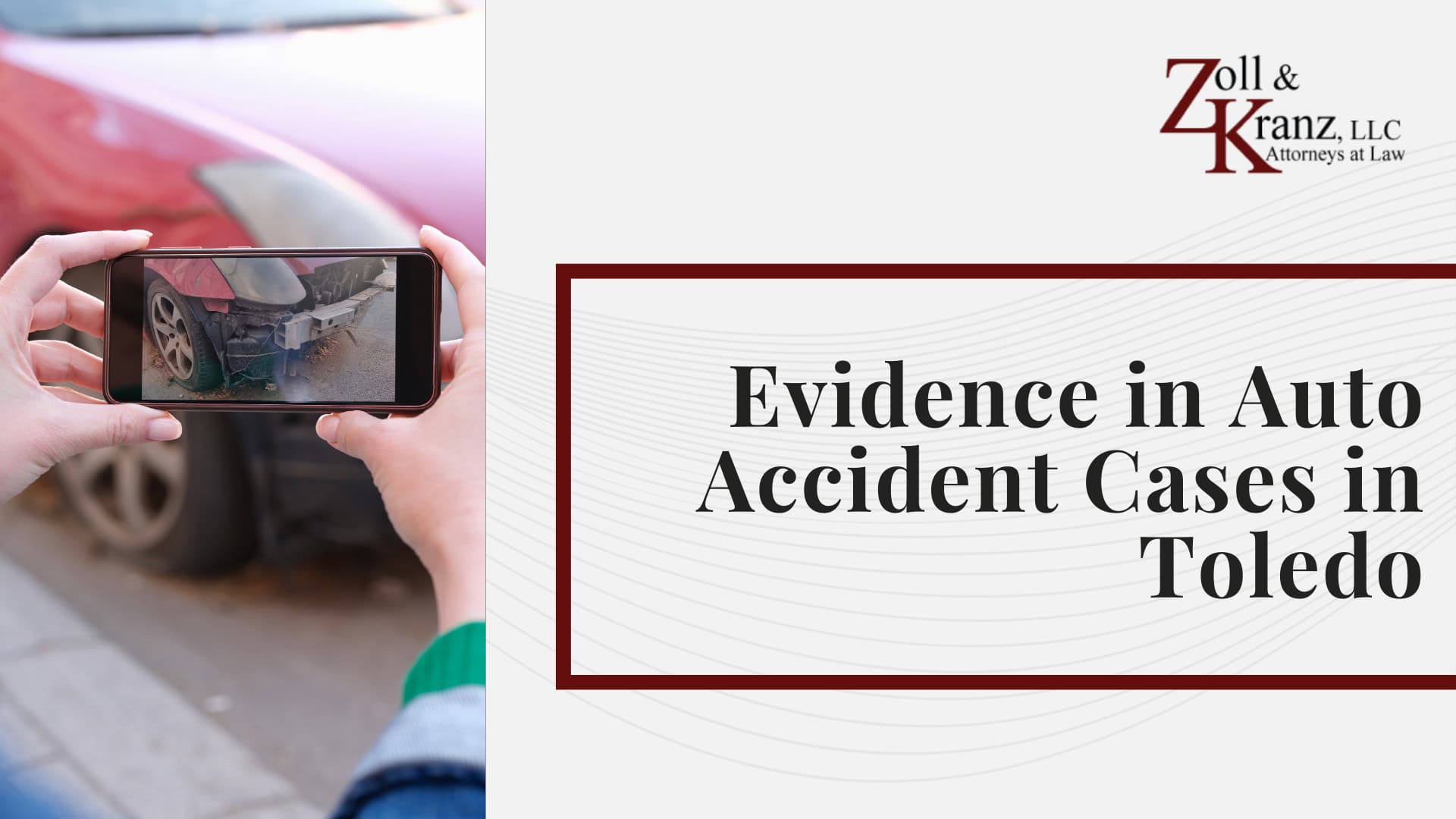
In many cases, even small details can change the liability analysis, such as the timing of a traffic signal, the presence of skid marks, or whether a driver was distracted.
When there is a dispute over how the accident happened, documentation is usually more persuasive than verbal explanations given weeks later.
A well-organized file also makes it easier to demonstrate the full scope of damages and to respond when an insurer requests records or challenges the claim.
Types of Evidence in Auto Accident Cases
The best car accident case files combine multiple forms of critical evidence that support both fault and damages.
Some evidence shows how the crash occurred and helps establish liability, while other evidence proves the scope of harm through medical documentation and financial records.
When you gather evidence across these categories, you reduce gaps that an insurer can use to argue uncertainty or minimize responsibility.
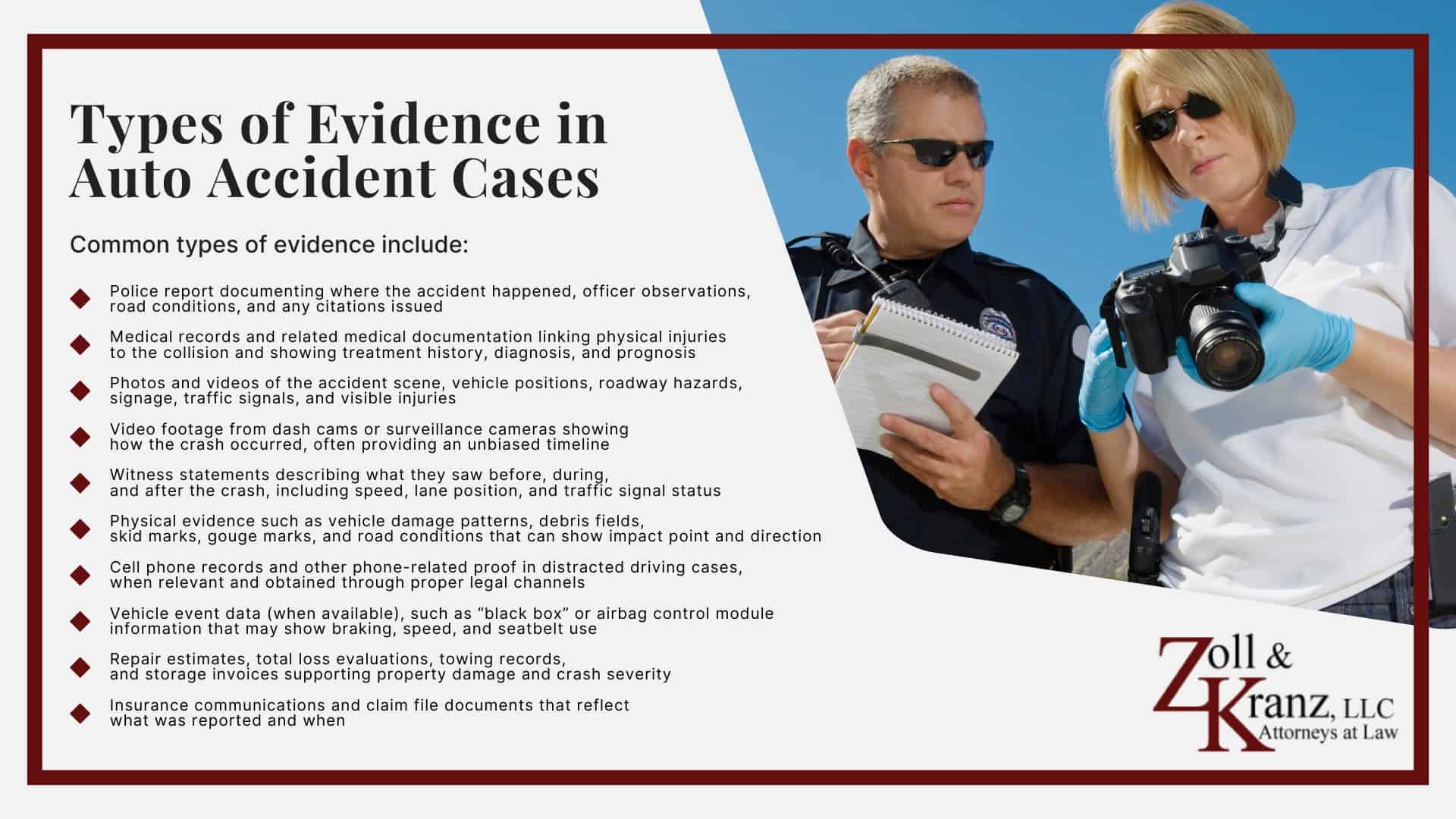
Common types of evidence include:
- Police report documenting where the accident happened, officer observations, road conditions, and any citations issued
- Medical records and related medical documentation linking physical injuries to the collision and showing treatment history, diagnosis, and prognosis
- Photos and videos of the accident scene, vehicle positions, roadway hazards, signage, traffic signals, and visible injuries
- Video footage from dash cams or surveillance cameras showing how the crash occurred, often providing an unbiased timeline
- Witness statements describing what they saw before, during, and after the crash, including speed, lane position, and traffic signal status
- Physical evidence such as vehicle damage patterns, debris fields, skid marks, gouge marks, and road conditions that can show impact point and direction
- Cell phone records and other phone-related proof in distracted driving cases, when relevant and obtained through proper legal channels
- Vehicle event data (when available), such as “black box” or airbag control module information that may show braking, speed, and seatbelt use
- Repair estimates, total loss evaluations, towing records, and storage invoices supporting property damage and crash severity
- Insurance communications and claim file documents that reflect what was reported and when
Impact of Evidence on Auto Accident Cases
Evidence affects both liability and damages in an auto accident case.
On liability, a detailed police report, clear photos, and credible witness statements can narrow disputes about how the collision occurred and who caused it.
Quality proof, such as surveillance footage or dashcam video, can significantly affect the outcome because it can recreate the moments leading up to impact and reduce “your word versus theirs” disputes.
Physical proof like skid marks and crush damage can also support reconstruction when drivers give conflicting accounts.
Evidence also drives settlement value.
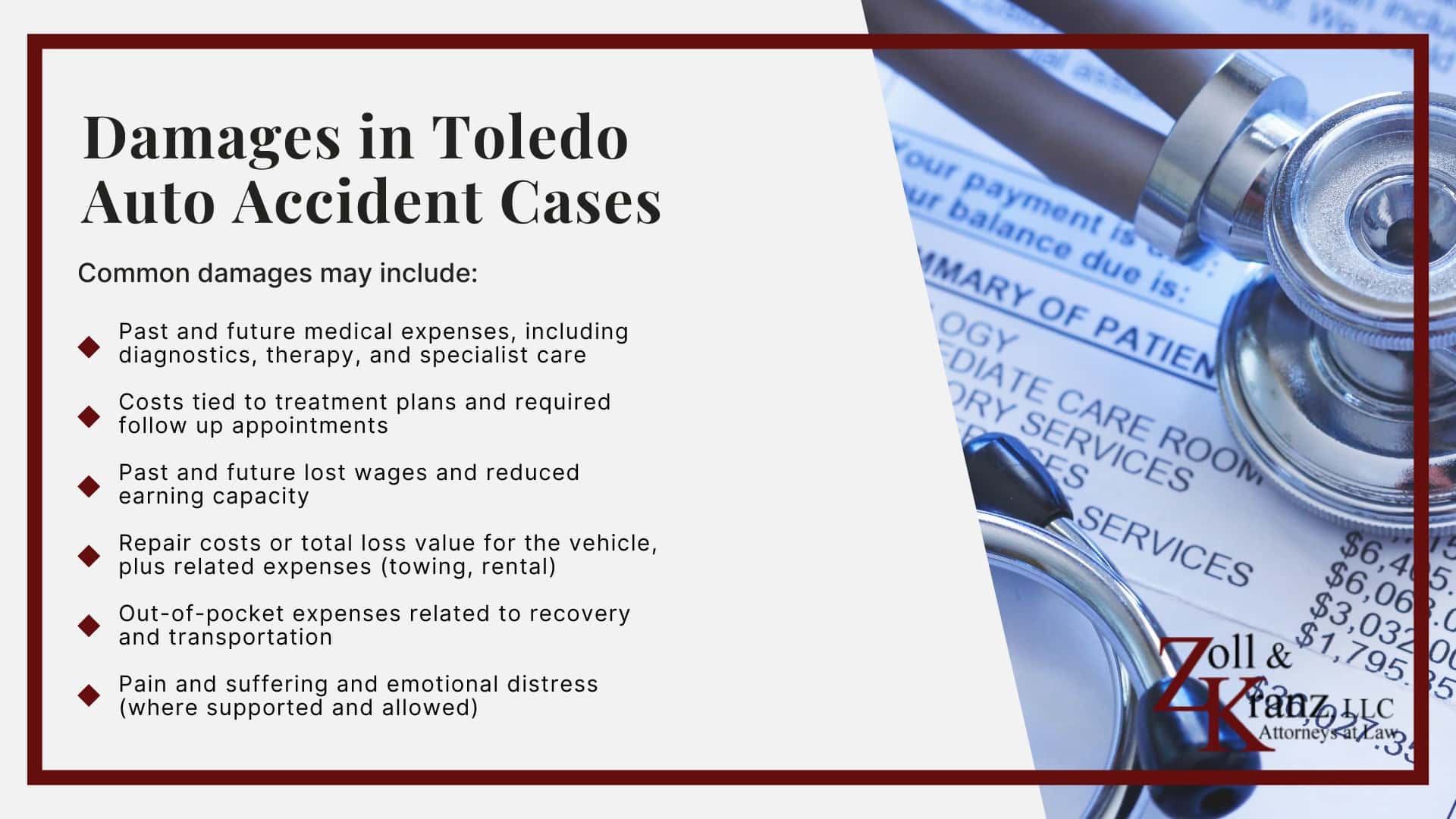
Economic damages in auto accident cases include total medical bills, property damage, and lost wages, and those numbers generally rise or fall based on the completeness of records.
Medical records are central because they document injuries, treatment, and prognosis, providing evidence that directly links your injuries to the crash, especially when insurance companies argue the injuries were preexisting or unrelated.
Non-economic damages, such as pain and suffering and emotional distress, can add substantial value, but they are still evaluated through consistency, treatment history, and documentation of limitations.
Insurance policy limits can cap the recovery from the at-fault driver unless additional coverage is available, which makes it even more important to present a claim that is fully supported.
The more evidence you have to support your position, the more likely it becomes that the insurer treats the claim seriously and makes a meaningful offer.
Strong documentation can also shorten disputes by clarifying what happened early, which can reduce delays and keep the focus on damages.
In practice, solid evidence can make a big difference in a car accident claim, and weak documentation can leave you struggling to prove fault or the extent of your losses.
Preserving Evidence After an Auto Accident
Preserving evidence starts at the scene and continues through medical treatment and the claims process.
After a crash, the first priorities are safety and urgent medical needs, but the steps you take next can protect both your health and your personal injury claim.
A systematic approach also reduces the chances of missing key proof that later becomes difficult to obtain, such as surveillance footage that may be overwritten within days.
It can also help avoid disputes about whether treatment was delayed or whether symptoms were documented promptly.
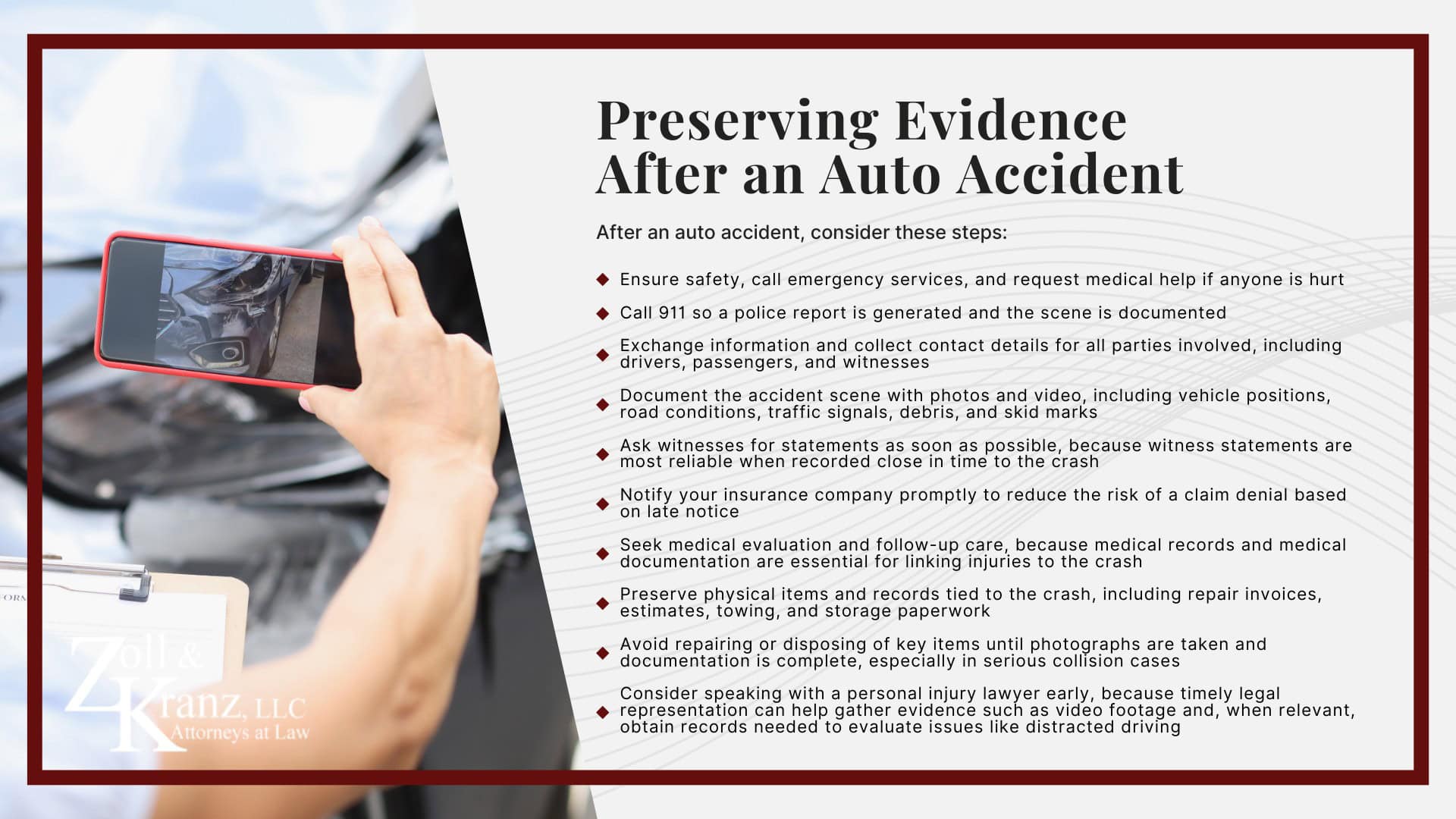
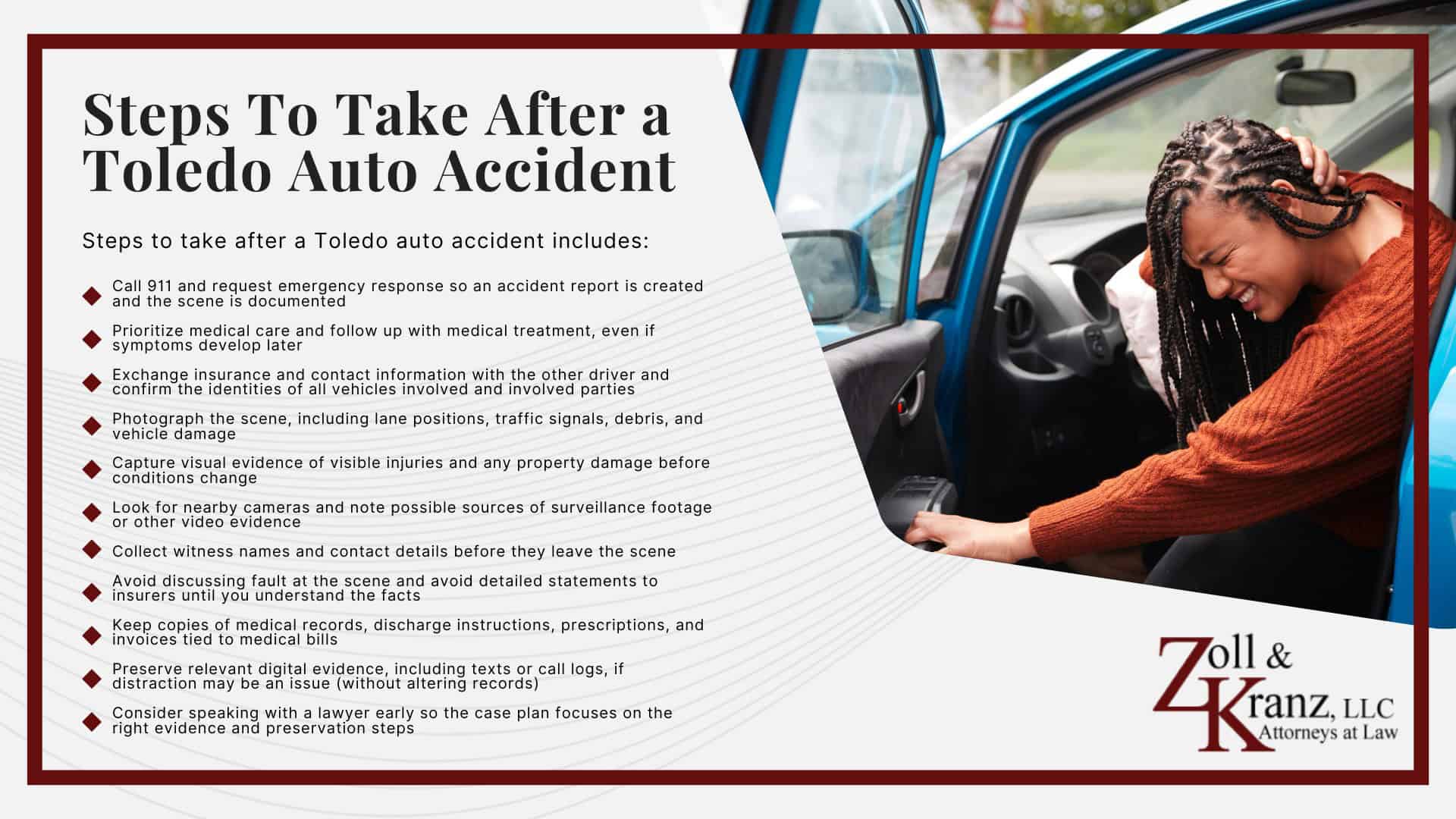
After an auto accident, consider these steps:
- Ensure safety, call emergency services, and request medical help if anyone is hurt
- Call 911 so a police report is generated and the scene is documented
- Exchange information and collect contact details for all parties involved, including drivers, passengers, and witnesses
- Document the accident scene with photos and video, including vehicle positions, road conditions, traffic signals, debris, and skid marks
- Ask witnesses for statements as soon as possible, because witness statements are most reliable when recorded close in time to the crash
- Notify your insurance company promptly to reduce the risk of a claim denial based on late notice
- Seek medical evaluation and follow-up care, because medical records and medical documentation are essential for linking injuries to the crash
- Preserve physical items and records tied to the crash, including repair invoices, estimates, towing, and storage paperwork
- Avoid repairing or disposing of key items until photographs are taken and documentation is complete, especially in serious collision cases
- Consider speaking with a personal injury lawyer early, because timely legal representation can help gather evidence such as video footage and, when relevant, obtain records needed to evaluate issues like distracted driving
Strong evidence is often built in the first hours and days after an accident, not months later.
If you focus on safety, documentation, and organized recordkeeping, you place your claim in a stronger position whether it resolves through settlement or a car accident lawsuit.