No fees unless we win.
Get a free consultation
8 Reviews
5.0
★★★★★

How is Fault Determined in a Car Accident?

Our Experienced Car Crash Lawyers Can Help Determine Fault

Fault in a car accident is usually determined by objective evidence, not assumptions about what “must have happened.”

A Toledo personal injury attorney can explain which records matter under Ohio law, evaluate how the available proof affects liability and claim value, and outline how fees and case costs typically work before you hire counsel.

Your lawyer can preserve crash reports, photos, video, witness statements, and medical records, then use that documentation to identify responsible parties and support a fault analysis in settlement negotiations or litigation.

How is Fault Determined in a Car Accident

Contact the Toledo OH Car Crash Lawyers at Zoll & Kranz Today

A serious crash can create immediate financial pressure, with medical bills, missed work, and uncertainty about what comes next.

In many cases, the key question becomes how is fault determined in a car accident, and the answer depends on evidence, not assumptions or conflicting statements.

A Toledo personal injury attorney can review what happened, explain your options, and outline how fees and case costs typically work while building a record that supports a clear liability analysis.

Determining fault in a car accident usually starts with early evidence collection, including police reports, scene photos, video, vehicle damage documentation, and witness accounts.

Lawyers also use medical records and treatment timelines to connect injuries to the collision, which can matter when insurers try to dispute causation or reduce the value of the claim.

When the file is organized, the documentation becomes the foundation for evaluating fault in car accident disputes and responding to insurer arguments.

A Toledo attorney can also identify all potentially responsible parties based on the evidence and applicable law, then manage communications with the insurance company so the claim stays focused on provable facts.

If negotiations do not produce reasonable terms, counsel can file suit, take depositions, and use sworn testimony and additional records to clarify liability and damages.

If you or a loved one was hurt, contact Zoll & Kranz to discuss how fault may be determined in your case and what steps can protect the evidence needed to prove it.

You can also use the chatbot on this page to see if you qualify today.

Determining Fault in Car Accident Cases

In a car accident or other auto accident, fault is usually based on driver conduct and objective proof collected after the car crash.

Fault determined in a car accident case often turns on whether a driver violated traffic laws, such as running a red light or speeding, because those violations are primary evidence of negligence.

Key evidence in most investigations includes the police report, witness statements, scene photos, and damage analysis, along with physical evidence like skid marks, debris, and vehicle positioning that can help reconstruct the impact point and sequence of events.

Photos and video footage showing vehicle damage, roadway conditions, traffic signs, and the moment of impact can provide strong visual support when drivers involved give conflicting accounts.

An insurance company typically makes an initial liability decision based on state laws and the details of the crash, but insurers also run their own investigations.

A car insurance company uses an insurance adjuster to review evidence from the scene, take statements from the drivers and witnesses, and decide who they believe is liable.
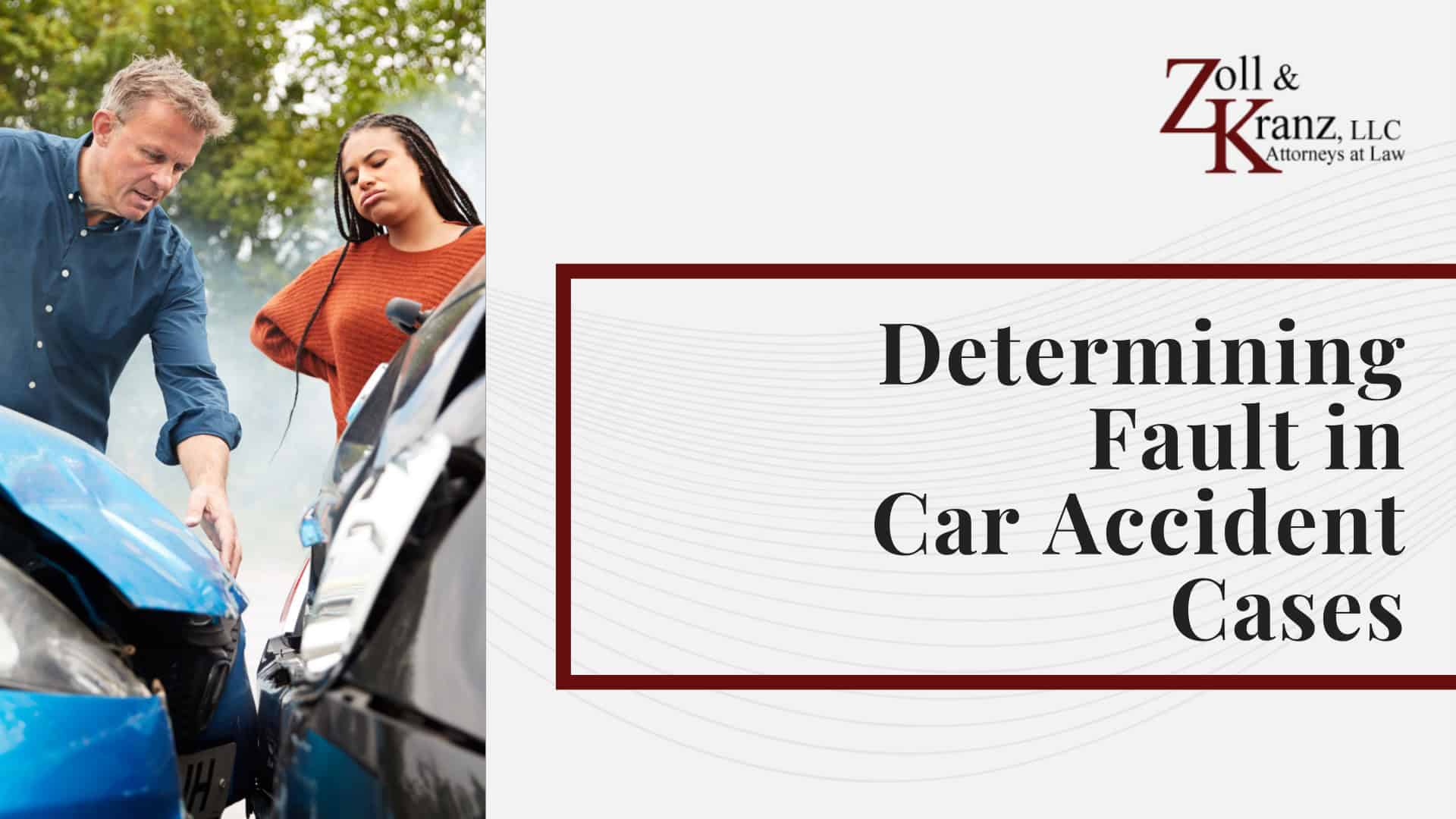
Adjusters commonly evaluate speed, traffic violations, distractions, time of day, weather, and road conditions as part of the decision.

In states that use comparative negligence, fault can be divided among multiple drivers involved, and the percentage assigned can affect how a car accident claim is paid.

If the parties disagree about liability or damages, the dispute may be addressed through negotiation, arbitration, or litigation.

In that setting, the same evidence is tested under formal rules and may be supported by sworn testimony and expert analysis.

How is Fault Determined?

When people ask how is fault determined in a car accident, the answer is usually a combination of legal standards and evidence.

The goal is to compare what each driver did against the duties imposed by traffic laws and reasonable care.
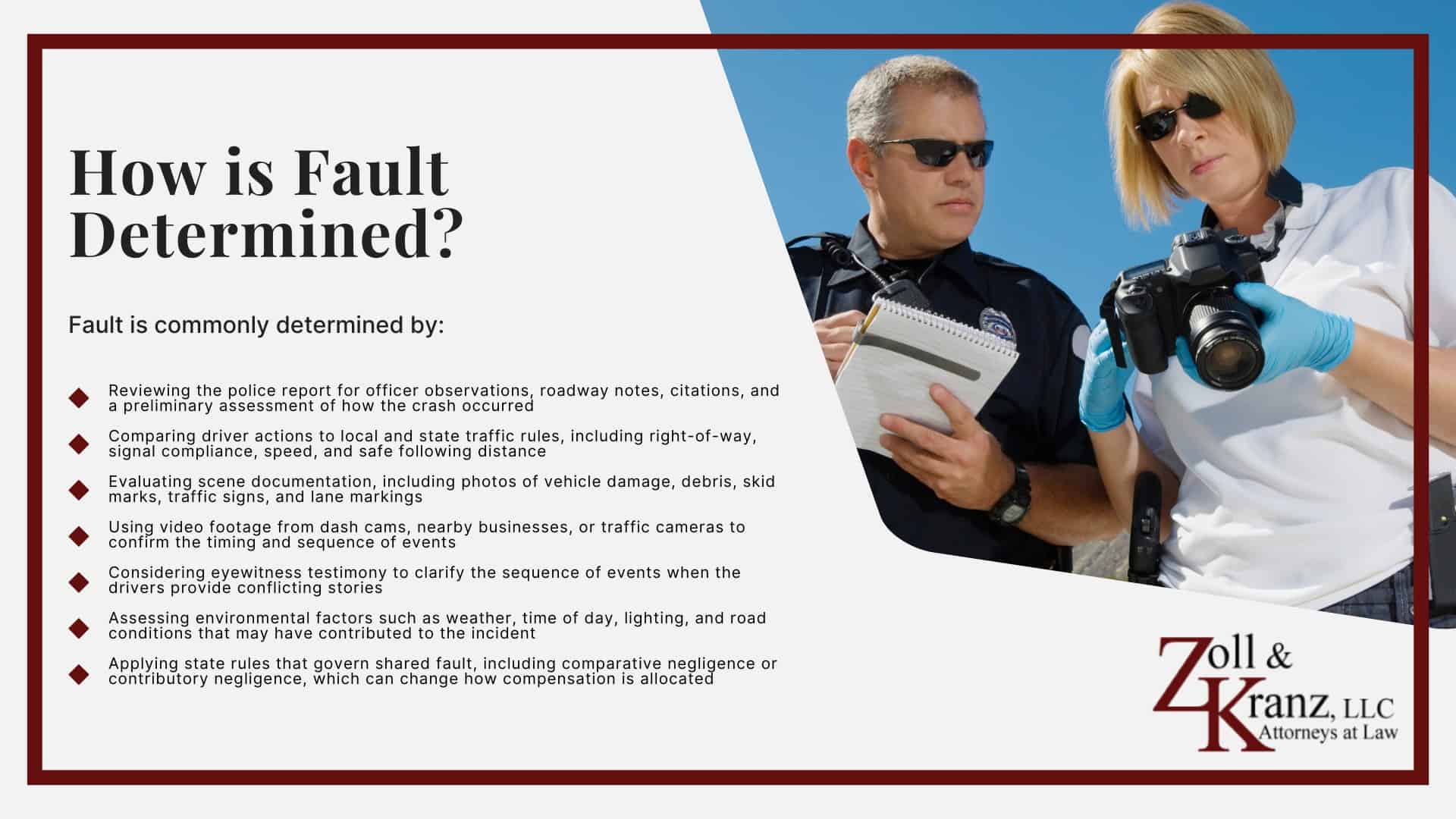
Fault is commonly determined by:

  • Reviewing the police report for officer observations, roadway notes, citations, and a preliminary assessment of how the crash occurred
  • Comparing driver actions to local and state traffic rules, including right-of-way, signal compliance, speed, and safe following distance
  • Evaluating scene documentation, including photos of vehicle damage, debris, skid marks, traffic signs, and lane markings
  • Using video footage from dash cams, nearby businesses, or traffic cameras to confirm the timing and sequence of events
  • Considering eyewitness testimony to clarify the sequence of events when the drivers provide conflicting stories
  • Assessing environmental factors such as weather, time of day, lighting, and road conditions that may have contributed to the incident
  • Applying state rules that govern shared fault, including comparative negligence or contributory negligence, which can change how compensation is allocated

The party found primarily negligent is generally responsible for damages, but in comparative systems an adjuster or jury may assign percentages to each driver.

Who Can Be Held Liable?

Liability in a car accident is not always limited to the other driver.
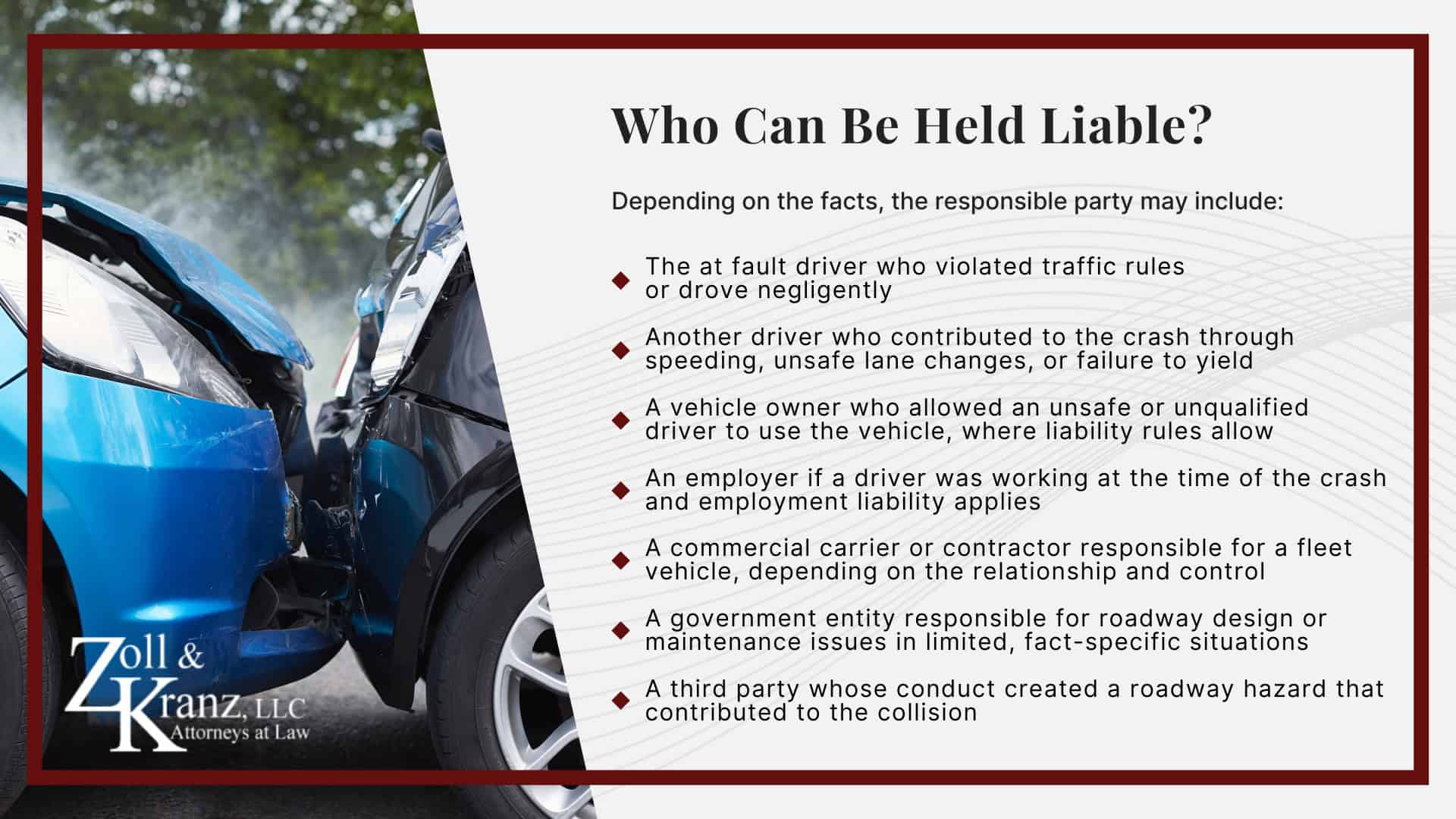
Depending on the facts, the responsible party may include:

  • The at fault driver who violated traffic rules or drove negligently
  • Another driver who contributed to the crash through speeding, unsafe lane changes, or failure to yield
  • A vehicle owner who allowed an unsafe or unqualified driver to use the vehicle, where liability rules allow
  • An employer if a driver was working at the time of the crash and employment liability applies
  • A commercial carrier or contractor responsible for a fleet vehicle, depending on the relationship and control
  • A government entity responsible for roadway design or maintenance issues in limited, fact-specific situations
  • A third party whose conduct created a roadway hazard that contributed to the collision

A car accident lawyer can evaluate whether more than one party should be considered when building a claim for damages.

Consequences of Being at Fault

Being responsible for an at fault accident can lead to financial, insurance, and sometimes criminal consequences.

Your car insurance rates may increase, and a car insurance company may choose not to renew your policy depending on the circumstances and your history.

If your coverage does not fully cover the harm, you may face out-of-pocket exposure for the remaining damages, which can create financial strain, especially when the crash involves serious injuries and high medical bills.

Fault findings can also affect how injuries are proven and paid. Medical records help link injuries to the crash and support the severity and mechanism of injury, which matters for recovering medical expenses in car accident settlements.

Police reports provide an objective account of the crash scene, officer observations, and often a preliminary assessment of fault, which insurers frequently rely on.

If the conduct involves reckless driving, DUI, or other serious violations, an at-fault finding can also lead to criminal charges.

Certain behaviors increase exposure.

Texting while driving and driving under the influence can significantly contribute to liability, and they can change how a claim is evaluated by insurers and, if litigation occurs, by a jury.

Proving You are Not At Fault in a Car Accident

If an insurer wrongly assigns you fault, you are not required to accept that conclusion.

Proving you are not responsible often requires building a file that is stronger than the other driver’s narrative and addressing the specific reasons the adjuster gave for the decision.

Steps that often help include:

  • Consulting with a lawyer early, because coordinated evidence collection can significantly aid in proving fault after a car crash
  • Gathering visual evidence, including photos and videos from the accident scene that show vehicle positions, damage patterns, skid marks, and traffic control devices
  • Speaking with eyewitnesses and securing statements while memories are fresh
  • Obtaining the police report and confirming key facts about road conditions, citations, and witness listings
  • Requesting available footage from traffic cameras, nearby businesses, or dash cams when the timeline is disputed
  • Challenging the insurer’s conclusion through additional documentation and, if needed, pursuing relief in court when the insurer denies the claim or assigns fault without support

A lawyer can also explain how shared-fault rules work in your jurisdiction and what evidence is most likely to move the liability analysis.

Insurance Claims and Fault Determination

During a car accident claim, the insurance adjuster collects information, evaluates liability, and uses the findings to decide how much compensation to offer.

Insurance companies may use their investigation results to justify a low settlement, reduce payment based on shared fault, or deny liability altogether.

Because the adjuster’s decision is not the final word, well-organized proof can improve the likelihood of a meaningful offer and can position the case for litigation if needed to recover financial compensation for medical expenses, wage loss, and other damages.
The Legal Process of Toledo Car Accident Lawsuits

Most Toledo car accident lawsuits begin as insurance claims, not lawsuits.

After the accident happened, the injured person typically reports the crash, seeks medical help, and opens a claim with the driver’s insurer or their own carrier depending on the available insurance coverage.

The early phase is evidence-driven because the ability to recover often depends on proving fault, documenting bodily injuries, and showing the financial impact through records like repair bills, medical invoices, and wage documentation.

If liability is clear and damages are supported, many claims resolve through settlement.

Insurers evaluate who is at fault, what coverage applies, and whether the insurance pays the full loss based on policy limits and claim defenses.

Disputes often arise over fault, the extent of injuries, and the value of non economic damages, and insurers may reduce offers by arguing shared responsibility under comparative fault rules.

Even when the insurer agrees to pay something, disagreements over medical causation, wage loss, and future needs can push a case toward litigation.

When settlement fails, a lawsuit moves the case into formal procedures, including filing a complaint, exchanging evidence, and taking sworn testimony.

Litigation can also clarify the factual record by requiring disclosures from both sides, which can be important when the defense disputes injury severity or attempts to shift responsibility to the injured parties.

A lawyer’s role is to protect legal rights, evaluate legal options, and build a case that supports financial compensation based on documented losses.

Steps to Take After a Car Accident

The steps taken at the scene and in the days that follow can affect fault findings, damages documentation, and the strength of an insurance claim.

A structured approach helps protect health, preserve evidence from the accident scene, and reduce avoidable mistakes.

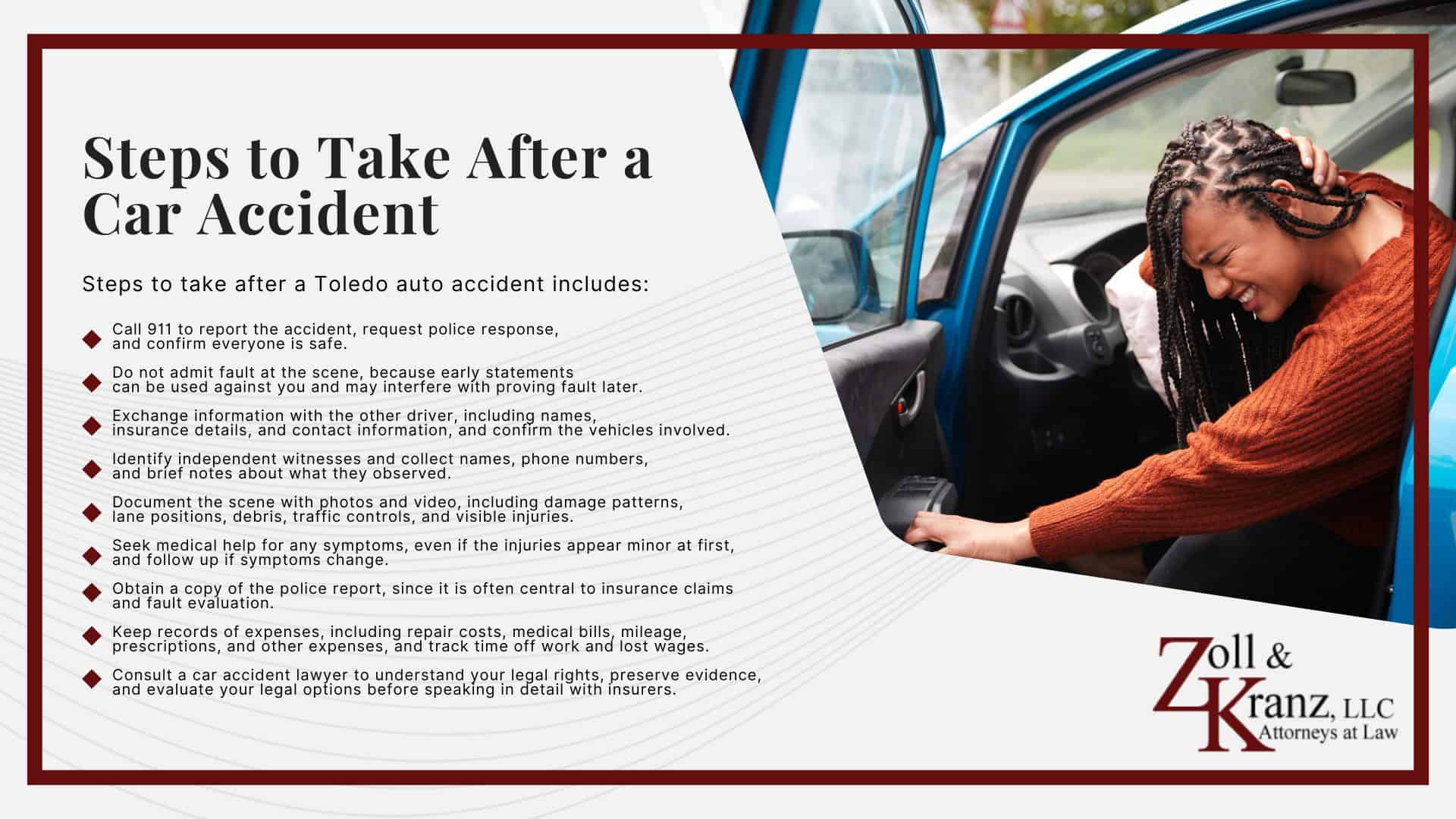
Steps to take include:

  • Call 911 to report the accident, request police response, and confirm everyone is safe.
  • Do not admit fault at the scene, because early statements can be used against you and may interfere with proving fault later.
  • Exchange information with the other driver, including names, insurance details, and contact information, and confirm the vehicles involved.
  • Identify independent witnesses and collect names, phone numbers, and brief notes about what they observed.
  • Document the scene with photos and video, including damage patterns, lane positions, debris, traffic controls, and visible injuries.
  • Seek medical help for any symptoms, even if the injuries appear minor at first, and follow up if symptoms change.
  • Obtain a copy of the police report, since it is often central to insurance claims and fault evaluation.
  • Keep records of expenses, including repair costs, medical bills, mileage, prescriptions, and other expenses, and track time off work and lost wages.
  • Consult a car accident lawyer to understand your legal rights, preserve evidence, and evaluate your legal options before speaking in detail with insurers.

How Our Lawyers Can Assist You

Zoll & Kranz can take over the claim process so the case is built around records and consistent proof rather than incomplete statements.

Our legal team helps protect injured parties by preserving evidence, managing communications with insurers, and presenting a documented damages picture tied to both economic losses and non economic damages.

We can also explain how insurance coverage works, what the insurer is likely to dispute, and what steps may be needed if the insurance pays only part of the loss or denies liability.

Ways lawyers can assist include:

  • Investigating how the accident happened and building the record needed for proving fault
  • Securing scene documentation, witness statements, and police reports, including statements from independent witnesses
  • Communicating with the driver’s insurer and your carrier so you do not have to manage adjusters while recovering
  • Documenting damages, including medical treatment, wage loss, and property damage, along with repair bills and repair costs
  • Evaluating whether you may be accused of shared fault and addressing the evidence needed to limit that argument
  • Demanding appropriate settlement value that accounts for medical costs, lost wages, and documented non-economic harm
  • Advising whether litigation is necessary when settlement offers do not reflect the documented personal injury and financial losses

If you want to discuss your case, we offer a free consultation to review the evidence, coverage, and next steps to seek compensation.

Do You Qualify For a Toledo Car Crash Lawsuit?

You may qualify for a Toledo car crash lawsuit if you were hurt in a car or other vehicle collision caused by another driver’s negligence and you can document resulting losses.

In most cases, eligibility turns on whether you can prove the other party was responsible and whether the record supports liability for your injuries and related costs.

A lawsuit is often considered when the insurer disputes fault, undervalues the claim, delays payment, or refuses to pay what the documentation supports.

Fault disputes are common because the insurance carrier is making a financial decision, not acting as a neutral referee.

The insurer will review statements, the police report, and scene evidence, then decide whether it believes the other driver is responsible and what percentage of fault it assigns to each side.

If the insurer blames you, even partly, that can reduce the compensation offered and change how the claim is evaluated.

A lawyer can help protect your position by focusing the case on objective proof and organizing the facts so liability analysis is based on evidence rather than informal assumptions.

Gathering Evidence for a Toledo Car Crash Lawsuit

Strong cases are built on organized evidence that shows how the crash happened and how it harmed you.

Proof should address driver conduct, road conditions, and the injury timeline so the insurer or court can decide the claim based on facts.

Evidence also helps answer practical questions, such as where each vehicle was, what each driver could see, whether speed or distraction played a role, and how the damage pattern matches the claimed impact.

Common evidence includes:

  • Police report, crash diagram, and any citations issued
  • Photos and video of the scene, road conditions, traffic controls, debris, skid marks, and vehicle positions
  • Photos of damage to each car and any visible injuries
  • Witness names, contact information, and written statements
  • Medical records, diagnostic imaging, and bills documenting treatment and injuries
  • Proof of time missed from work and wage records
  • Repair estimates, towing invoices, rental receipts, and other loss documentation
  • Insurance communications, claim numbers, and adjuster correspondence
  • A written timeline of symptoms, appointments, and restrictions to connect injury progression to the accident

The sooner you preserve this information, the better.

Road conditions can change, vehicles get repaired, and video from nearby cameras may be overwritten, which can make later reconstruction more difficult.

Common Damages in Toledo Car Crash Lawsuits

Damages are the losses you may seek to recover through a claim or lawsuit, and they are usually proven through records rather than estimates.

The categories depend on the facts, but they typically include financial losses tied to bills and wage documentation, plus non-economic harm tied to pain, limitations, and reduced daily function.

Even in a straightforward crash, the dispute is often less about whether you were hurt and more about the amount that should be paid for the harm.

Common damages include:

  • Medical expenses for treatment, rehabilitation, medications, and follow-up care
  • Lost wages, reduced earning capacity, and documented work restrictions
  • Vehicle repair or replacement costs and related expenses (towing, storage, rental)
  • Out-of-pocket costs connected to recovery and transportation
  • Pain and suffering and other non-economic harm where supported by records
  • Future care costs when injuries require ongoing treatment or long-term limitations
  • Property losses inside the vehicle when supported by documentation

Statute of Limitations for Toledo Car Crashes

Ohio has deadlines that control how long you have to file a lawsuit after a crash.

In many cases, the limitations period is two years from the date of injury, but the correct deadline can depend on the parties involved and the legal theory.

The deadline applies even if the insurance claim is still being negotiated, so waiting for the insurer to “do the right thing” can create real risk if the filing window closes.

Missing the deadline can end the ability to file in court, even if liability is clear.

Waiting can also weaken the claim before any deadline passes because evidence disappears, road conditions change, vehicles are repaired, and witnesses become harder to locate.

If you suspect the other driver was responsible and your injuries are significant, it is safer to speak with a lawyer early to protect evidence, confirm the correct deadline, and preserve your legal options.

Zoll & Kranz: Determining Fault in Toledo Car Crashes

Fault is determined by comparing what each driver did against traffic rules and the evidence collected after the crash.

Zoll & Kranz can review the police report, scene documentation, witness accounts, and medical records to determine who was responsible and how the injuries and losses connect to the collision.

We also examine roadway factors, including road conditions, traffic control devices, and damage patterns, because those details often shape liability decisions.

We handle communications with the insurer so the claim is presented with clear evidence and a supported damages picture.

If the insurance carrier tries to shift blame, minimize injuries, or delay payment, we focus on proof that supports liability and the full scope of damages.

If you want help evaluating fault, liability, and what compensation may be available, contact Zoll & Kranz to discuss your case and the next steps to protect your claim.

You can also use the chatbot on this page for a free case evaluation.

Frequently Asked Questions

Published by:
Share
Picture of Michelle L. Kranz
Michelle L. Kranz

Michelle is a founding partner of Zoll & Kranz, located in Toledo, Ohio. Michelle has been a plaintiff’s lawyer for the entirety of her practice – over 32 years. She devotes the majority of her time to complex consolidated litigation and class action including advocating for people injured by medical devices, prescription medications, or corporate negligence.

This article has been written and reviewed for legal accuracy and clarity by the team of writers and attorneys at Zoll & Kranz, LLC and is as accurate as possible. This content should not be taken as legal advice from an attorney. If you would like to learn more about our owner and experienced Ohio injury lawyer, Michelle L. Kranz, you can do so here.

Zoll & Kranz, LLC does everything possible to make sure the information in this article is up to date and accurate. If you need specific legal advice about your case, contact us. This article should not be taken as advice from an attorney.

Other cases we handle in Toledo
All
Auto Accidents
Injury Types
Medical Malpractice
Nursing Home Abuse
Other Accidents & Injuries
You can learn more about other Toledo cases we handle below:
Auto Accident Lawsuit Timeline in Toledo
Bedsores in Toledo Nursing Homes
Collecting Evidence in Toledo Medical Malpractice Cases
Collecting Evidence in Toledo Nursing Home Negligence Cases
Common Car Accident Injuries in Toledo, OH
Common Causes of Nursing Home Negligence in Toledo
Common Types of Car Accident Damages
Dehydration and Malnutrition in Toledo Nursing Homes
Distracted Driving Accidents in Toledo, OH
Dropped Patients in Toledo Nursing Homes
DUI Accidents in Toledo
Duty of Care Owed by Toledo Nursing Home Facilities
Emotional and Mental Abuse in Toledo Nursing Homes
Evidence in Toledo Auto Accident Cases
Failure to Perform Procedure Malpractice Lawyer in Toledo
Falls in Toledo Nursing Homes
Head-On Collisions in Toledo
Hit-and-Run Accidents in Toledo
How To File a Car Crash Lawsuit in Toledo
How To Report Poor Nursing Home Care in Toledo
Inattentive Staff in Toledo Nursing Homes
Infections in Toledo Nursing Homes
Initial Steps To Take in a Toledo Medical Malpractice Case
Interstate Accidents in Toledo
Liability in Toledo Medical Malpractice Claims
Liability in Toledo Nursing Home Negligence Cases
Medication Errors in Toledo Nursing Homes
Neglect in Toledo Nursing Homes
Negligence in Toledo Medical Malpractice Cases
Negligent Hiring or Training in Toledo Nursing Homes
Nursing Home Negligence Wrongful Death Cases in Toledo
Paralysis in Auto Accidents
Patient Rights in Toledo Nursing Homes
Personal Injury Lawyer Toledo, Ohio
Physical Abuse in Toledo Nursing Homes
Process of a Medical Malpractice Case in Toledo
Rear-End Collisions in Toledo, OH
Rental Car Accidents in Toledo
Rollover Accidents in Toledo
Securing a Police Report in Toledo After an Auto Accident
Sexual Abuse in Toledo Nursing Homes
Sideswipe Accidents in Toledo
Toledo Anesthesia Errors Lawyer
Toledo Auto Accident Lawyer
Toledo Bicycle Accident Lawyer
Toledo Burn Injury Lawyer
Toledo Bus Accident Lawyer
Toledo Cancer Misdiagnosis Lawyer
Toledo Car Accident Lawyer
Toledo Catastrophic Injury Lawyer
Toledo Daycare Injury Lawyer
Toledo Delayed Diagnosis Lawyer
Toledo Emergency Room Error Lawyer
Toledo Failure To Diagnose Lawyer
Toledo Insurance Claim Lawyer
Toledo Mass Torts Lawyer
Toledo Medical Malpractice Lawyer
Toledo Medication Error Lawyer
Toledo Misdiagnosis Medical Malpractice Lawyer
Toledo Motorcycle Accident Lawyer
Toledo Nurse Error Lawyer
Toledo Nursing Home Abuse Lawyer
Toledo Nursing Home Negligence Safety and Preventative Measures
Toledo Pedestrian Accident Lawyer
Toledo Spinal Cord Injury Lawyer
Toledo Surgical Error Lawyer
Toledo Toxic Exposure Lawyer
Toledo Traumatic Brain Injury Lawyer
Toledo Truck Accident Lawyer
Toledo Wrongful Death Lawyer
Wrong Site Surgery Malpractice in Toledo
Were you or a loved one injured in Toledo?

A serious injury can have life-altering results.

Don’t settle for less than you deserve, speak with an award-winning personal injury lawyer today.

8 Reviews
5.0
★★★★★
Recovered damages
$35 Million+

Table of Contents

Practice Areas
About Zoll & Kranz, LLC

For over 37 years, Zoll & Kranz has been fighting for clients who have been the victims of the wrongful death of a loved one.

Do you believe you’re entitled to compensation?

Use our Instant Case Evaluator to find out in as little as 60 seconds!

Guides & Resources

Other Toledo Personal Injury Cases

All
Auto Accidents
Injury Types
Medical Malpractice
Nursing Home Abuse
Other Accidents & Injuries
Local Toledo Resources
Education
Emergency Services
Courthouses
Department of Motor Vehicles
Sights to See