Filing a car crash lawsuit in Toledo usually starts after a car accident claim does not resolve on reasonable terms.
Most car accident victims first report the crash, get medical care, and open a claim with the insurance company, but the legal right to pursue a car accident lawsuit depends on meeting filing deadlines and building a record that supports liability and damages.
A personal injury lawsuit is not just paperwork.
It is a structured legal process where the plaintiff must prove the at fault driver caused the collision and that the crash resulted in compensable losses supported by evidence.
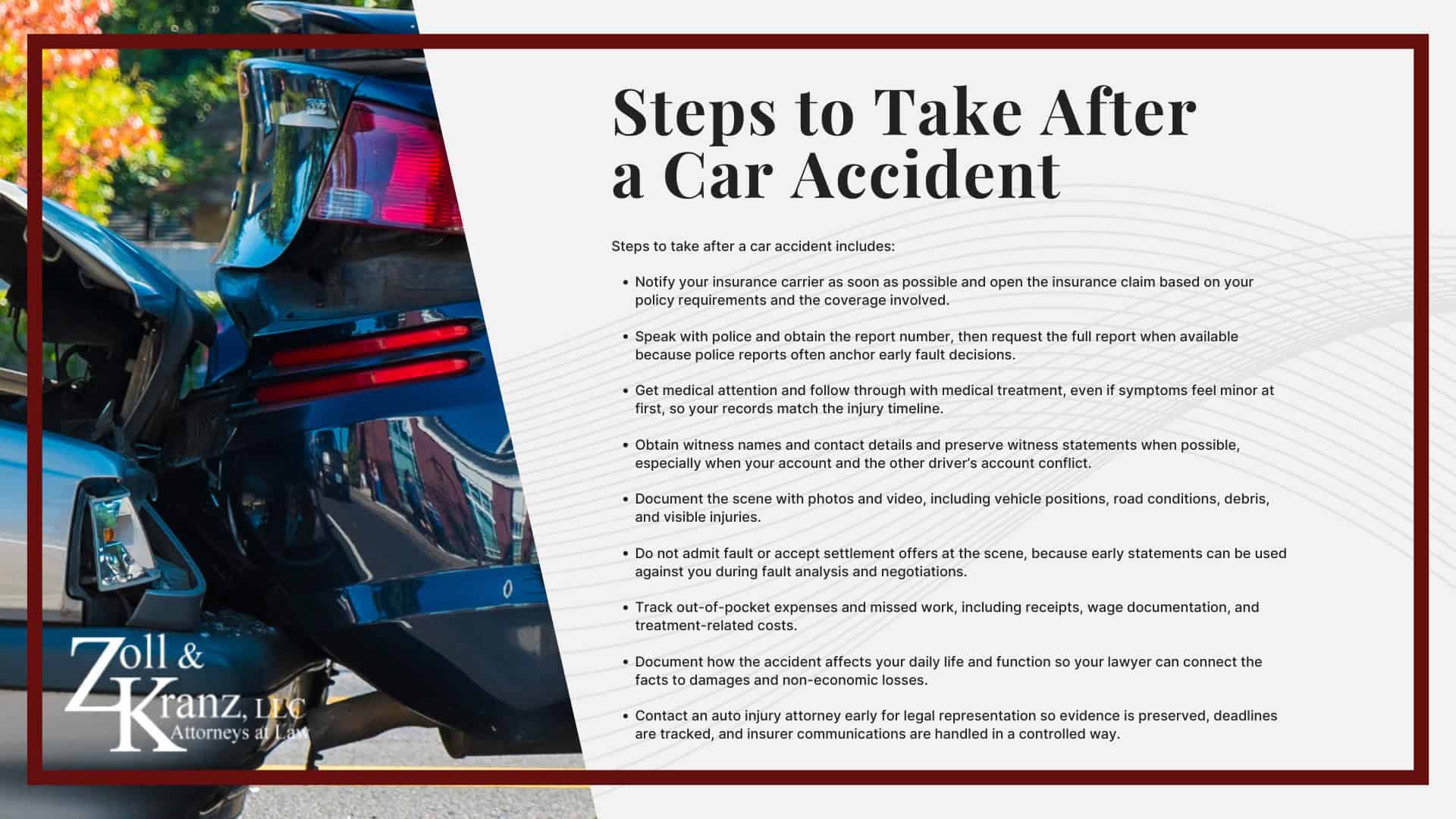
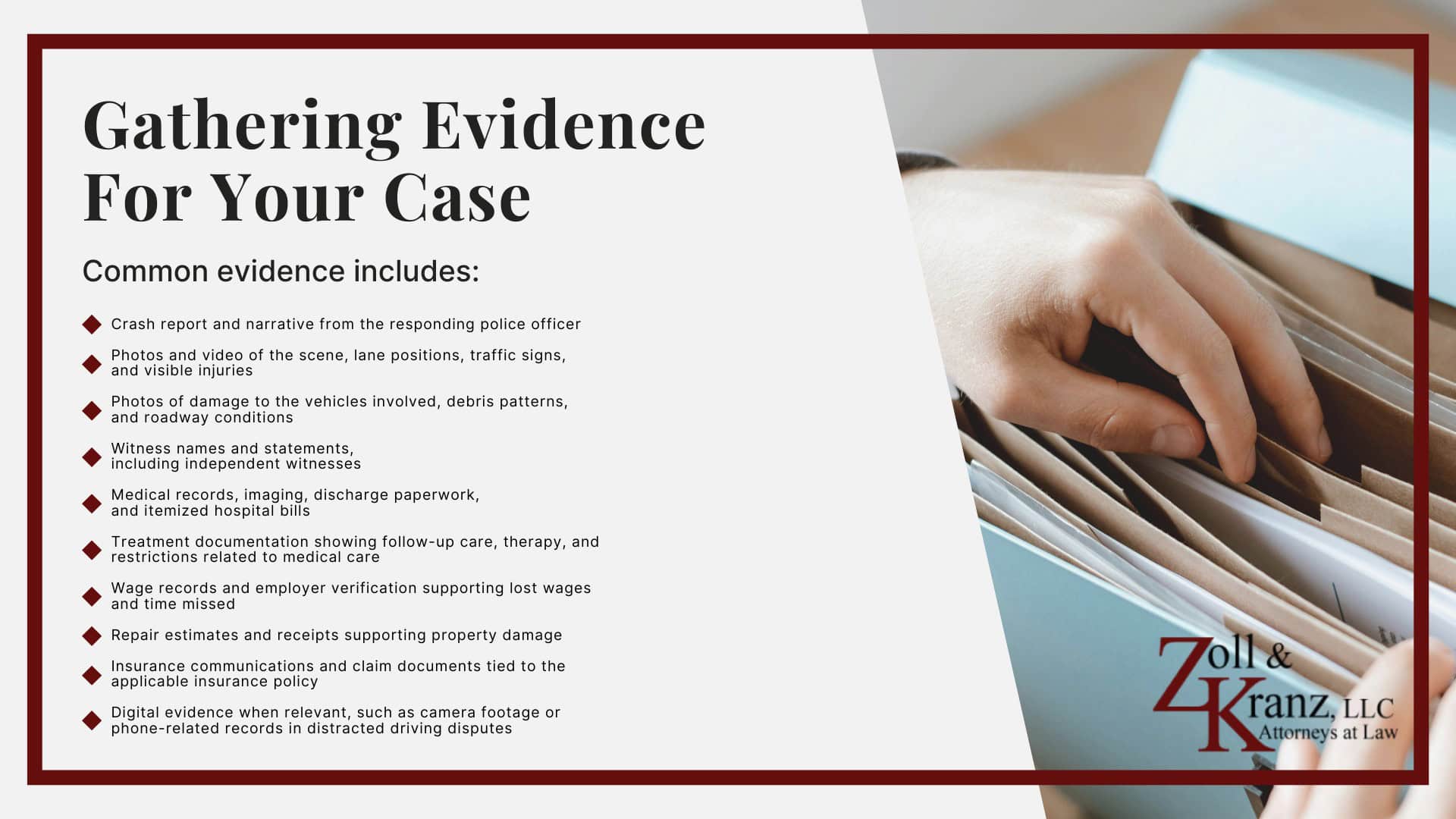
A typical car accident lawsuit process begins by preserving evidence from the accident scene, collecting witness information, obtaining an official crash report, and assembling medical records that link treatment to the accident.
If negotiations fail, the next step is to file a car accident case in court, serve the defendant, and proceed through the stages of litigation.
Many cases still resolve through settlement after the lawsuit is filed, but the lawsuit creates formal deadlines and evidence tools that can move a disputed claim toward resolution.
The goal remains the same: seek compensation based on provable losses and pursue fair compensation consistent with the facts and applicable car accident laws.
Choosing a Car Accident Attorney
Choosing the right car accident attorney can significantly affect how your claim is built, negotiated, and, if needed, tried.
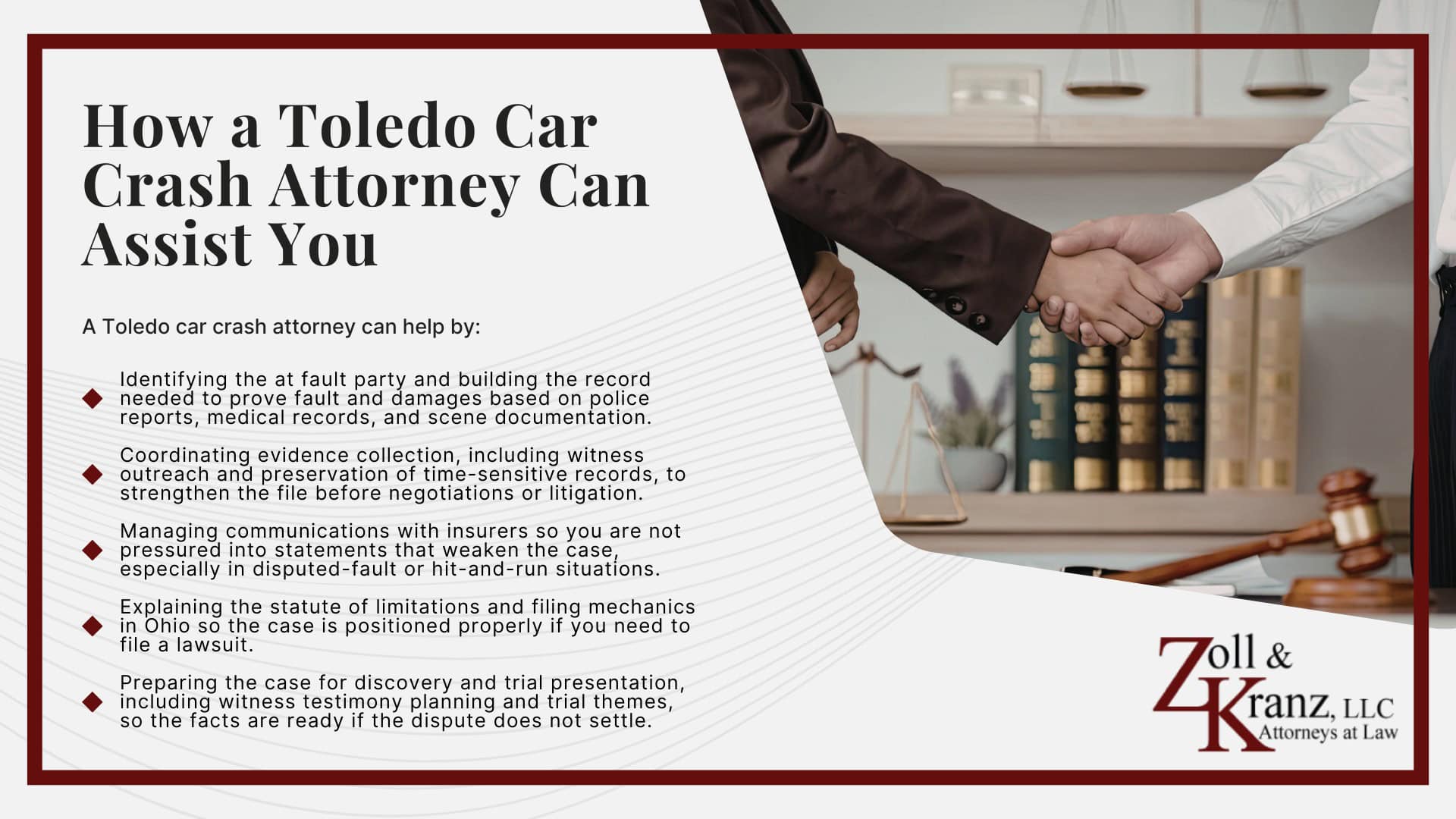
A car accident lawyer protects your rights and builds the case against insurers by collecting evidence, organizing records, and framing the damages in a way the insurer or jury can evaluate.
A skilled attorney can also help you gather evidence and negotiate with insurance companies, which matters when liability is contested or the injuries are serious.
Consulting with a car accident attorney can provide clarity on your legal options and potential compensation.
Many car accident cases settle through settlement negotiations rather than trial, but the ability to prepare a trial-ready case often affects the quality of settlement offers.
A law firm with experience in Toledo motor vehicle litigation can also help maximize compensation by using effective strategies, including evidence preservation, expert input when needed, and careful damages documentation.
If you have questions after a motor vehicle accident, it is usually advisable to reach out to a personal injury lawyer for a consultation early so deadlines and evidence issues are addressed before they become problems.
The Role of Insurance Companies
In most car accident injury claim situations, the insurer is the first decision-maker on liability and settlement value, and the process is not neutral.
Insurance companies often try to minimize payouts during car accident claims, and they may deny or undervalue claims, which can prompt the need for a lawsuit.
Insurance adjusters may argue that the victim shares more fault than the evidence supports, or they may challenge medical causation by questioning the timing of treatment or the completeness of records.
Negotiating with insurance companies can be difficult without representation, especially when adjusters push for quick statements or fast settlement decisions.
A car accident lawyer can help prevent victims from settling for less than they deserve by handling communications, presenting organized proof, and responding to tactics meant to reduce value.
This is also why it is often important to notify the insurance company immediately after a crash for coverage purposes, while still being careful about recorded statements and detailed fault discussions until you have reviewed the facts and documentation.
Outcomes of Car Accident Lawsuits
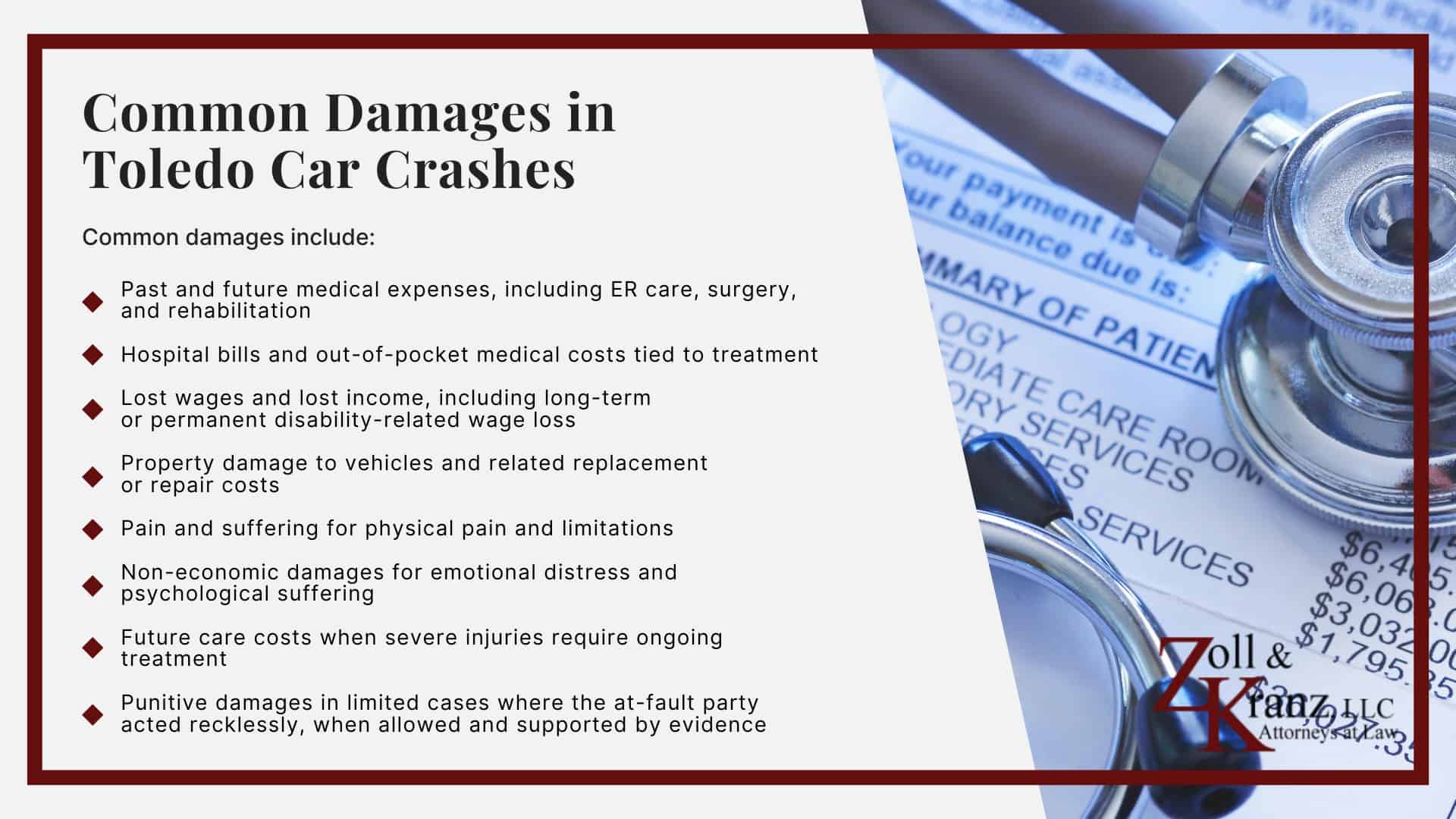
Car crash lawsuit outcomes are determined by the severity of injuries, the strength of evidence, and established liability.
Many car accident cases settle before reaching trial because both sides often prefer to avoid the time, cost, and uncertainty of court proceedings.
In many cases, settlement negotiations intensify after evidence is exchanged and both sides assess how a jury might view fault, damages, and credibility.
If a lawsuit is filed, the defendant has the opportunity to respond, which can lead to further negotiations or proceed to trial if necessary.
The discovery process then allows both parties to gather evidence and information from each other, including document requests, written questions, and depositions.
Mediation is also commonly used as an alternative dispute resolution method in car accident cases, giving both sides a structured setting to pursue settlement.
If the insurance company refuses to negotiate fairly, proceeding to trial may be the best way forward.
Trial allows each side to present evidence, question witnesses, and make arguments about who was responsible for the accident and what compensation is appropriate.
At the end of trial, the jury deliberates and decides on fault and the amount of damages to be awarded.
A car accident lawsuit can feel long and emotional, but many people experience a sense of closure when the process ends, whether the case resolves through settlement or a jury decision.