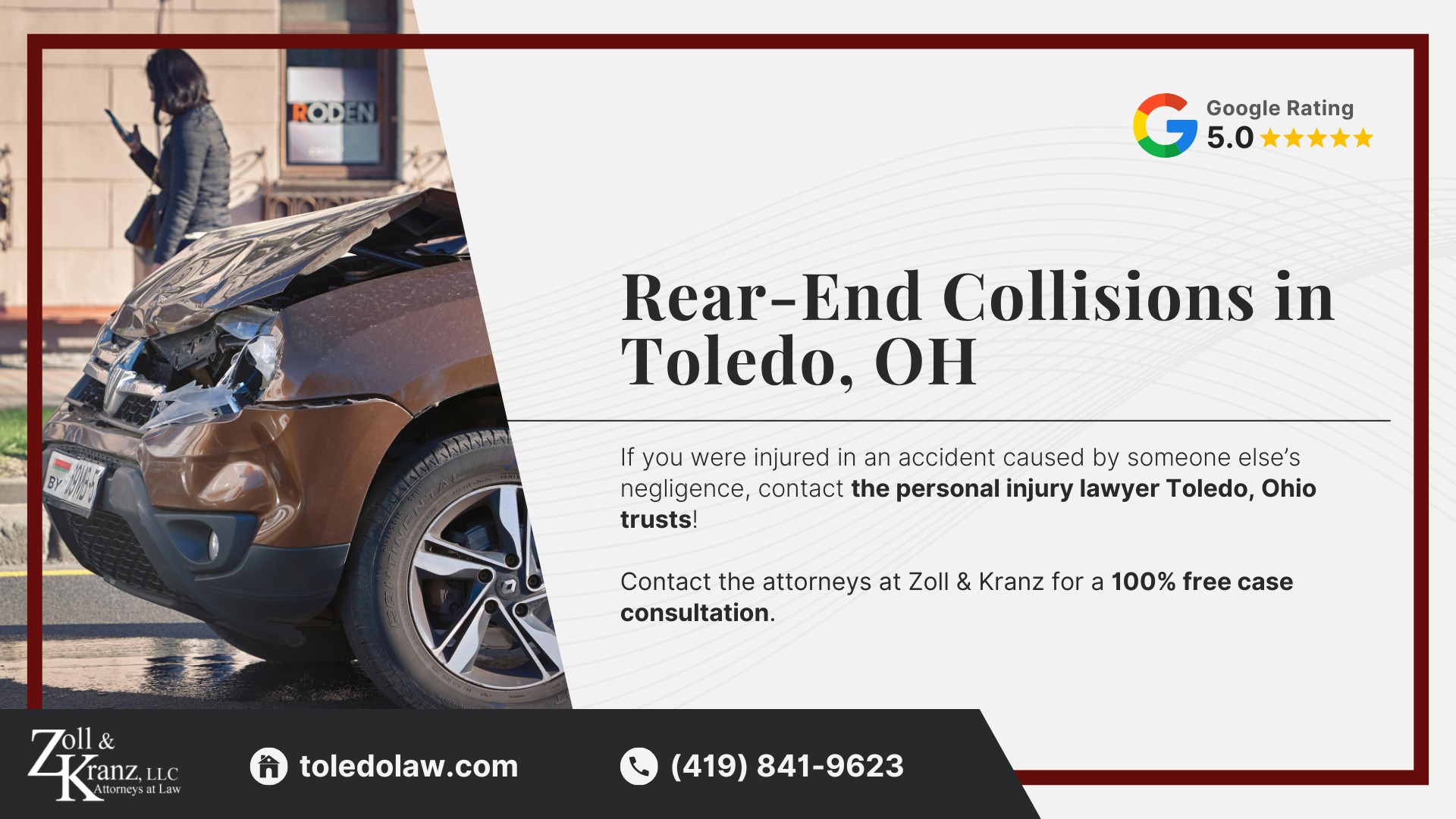
Rear-end collisions typically occur when a driver fails to stop in time to avoid hitting the vehicle in front of them.
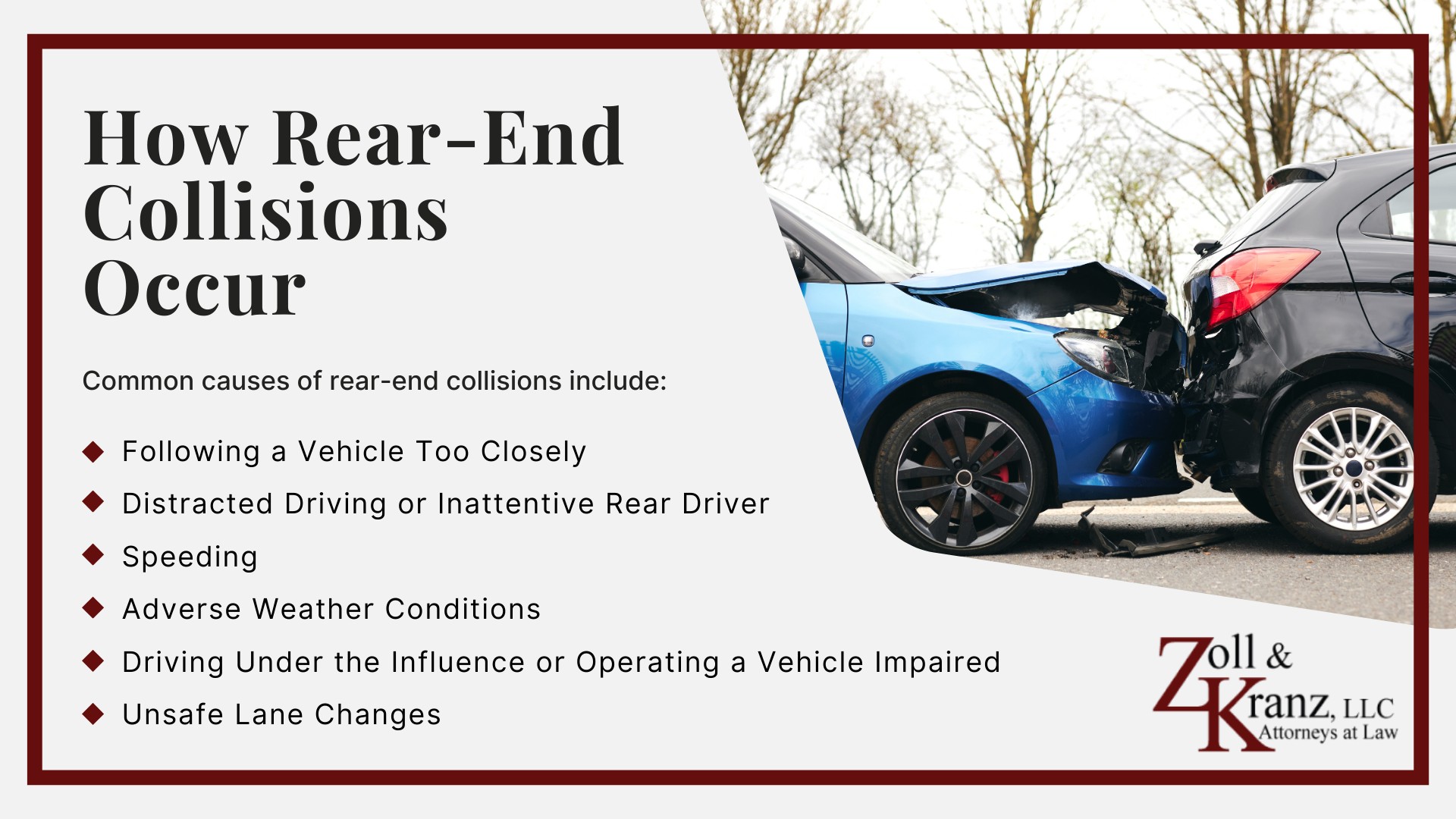
Common causes of rear-end collisions include:
- Following a Vehicle Too Closely
- Distracted Driving or Inattentive Rear Driver
- Speeding
- Adverse Weather Conditions
- Driving Under the Influence or Operating a Vehicle Impaired
- Unsafe Lane Changes
Following a Vehicle Too Closely
One of the most common causes is following too closely, which reduces the time and distance needed to react when traffic slows or stops.
When drivers do not maintain a safe following distance, even a brief delay in reaction can lead to a collision.
Distracted Driving or Inattentive Rear Driver
Distracted driving is another major contributor.
Texting, adjusting navigation systems, eating, or otherwise taking attention off the road can prevent drivers from noticing sudden changes in traffic flow.
Speeding
Speeding further increases the risk by lengthening stopping distances and reducing a driver’s ability to react safely.
In congested areas of Toledo, sudden stops during rush hour frequently lead to rear-end crashes when drivers are not fully attentive.
Adverse Weather Conditions
Adverse weather conditions — such as rain, snow, or ice — also play a significant role.
Slippery roads reduce tire traction and make it harder to stop quickly, especially when drivers fail to adjust their speed.
Driving Under the Influence or Operating a Vehicle Impaired
Impaired driving, including alcohol or drug use, can slow reaction times and impair judgment.
Driving while impaired increases the likelihood of striking another vehicle from behind.
Unsafe Lane Changes
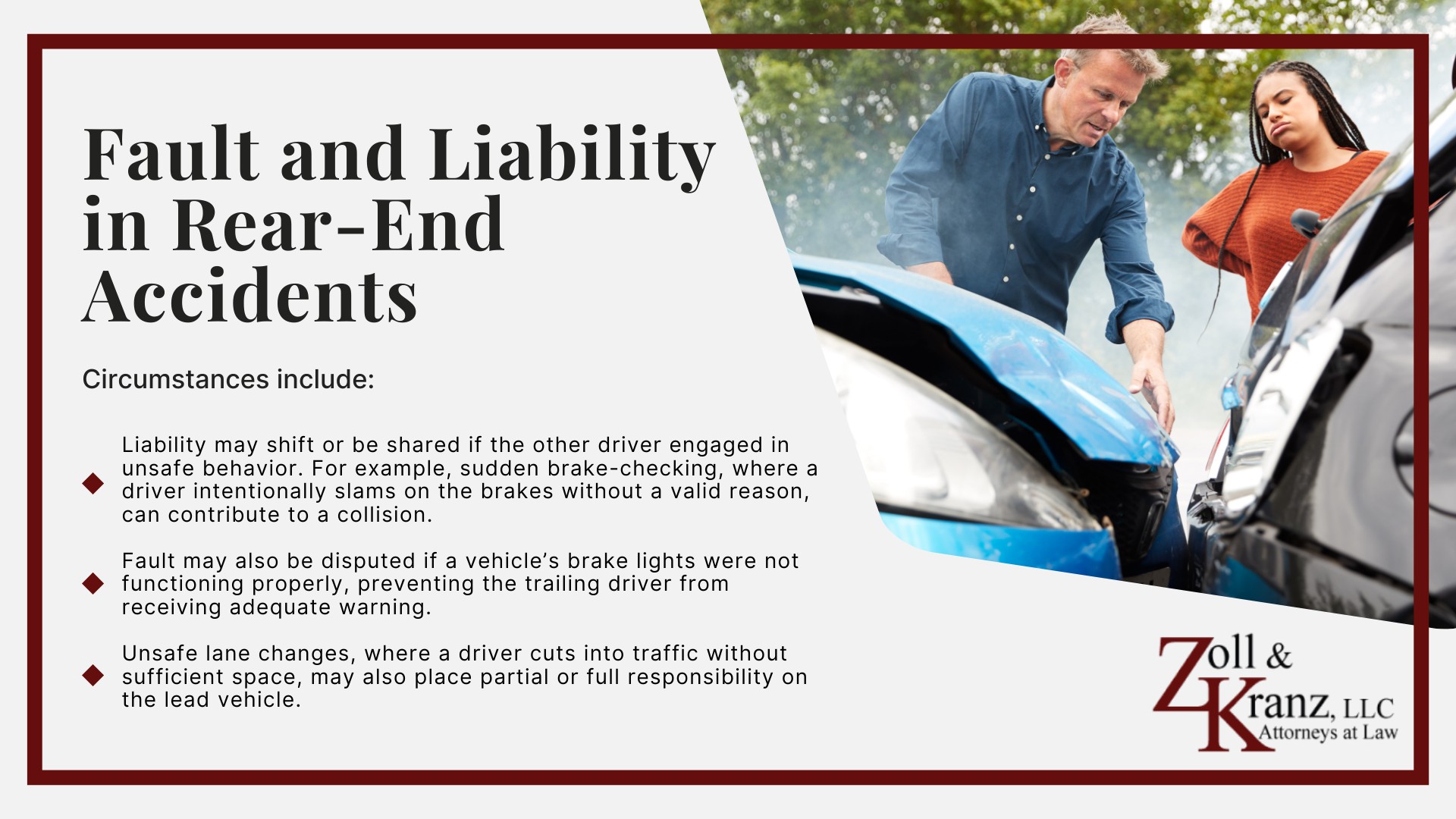
Rear-end collisions can also occur due to unsafe lane changes, where a driver abruptly merges into traffic without adequate space, forcing the trailing vehicle to brake suddenly.
A combination of driver inattention and insufficient stopping distance is at the core of these accidents, making them both common and largely preventable.