A sideswipe crash can look straightforward, two vehicles traveling the same direction with damage along the side, but the legal process often becomes contested when the other driver denies an unsafe lane change or claims you drifted first.
These collisions frequently happen in highway traffic where blind spots, fatigue, and split second decisions lead to driver error, and fault can turn on small details that insurers challenge early.

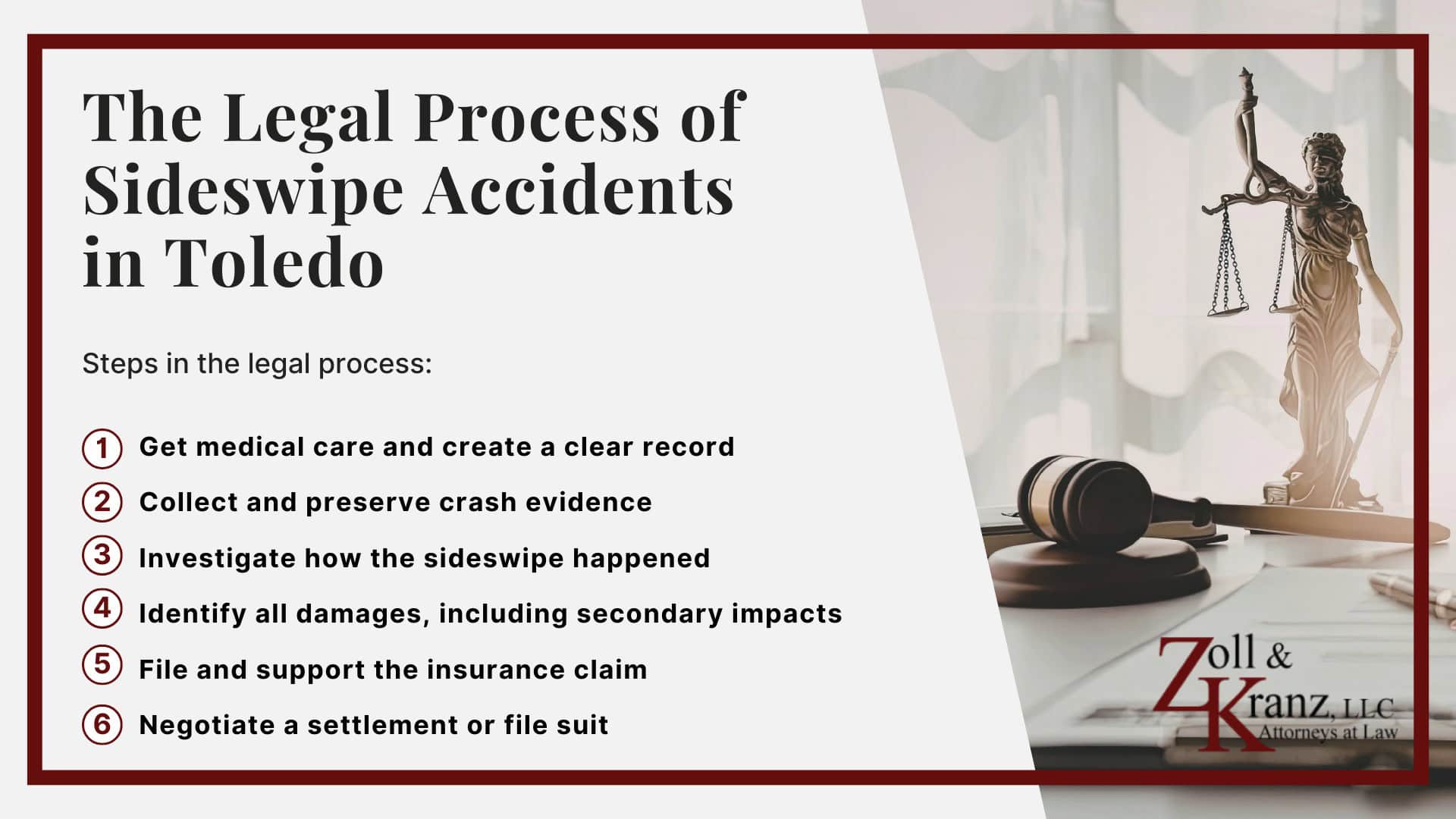
Steps in the legal process:
- Get medical care and create a clear record: Treatment comes first, then documentation. Medical notes, symptom timelines, and follow up care help connect the crash to the injury and counter “minor impact” arguments.
- Collect and preserve crash evidence: Police reports, photos of lane markings and vehicle position, witness contact information, and any available video footage can lock in the facts before they disappear or get rewritten.
- Investigate how the sideswipe happened: Your lawyer evaluates point of impact, damage patterns, roadway layout, and statements to determine which driver left their lane or made an unsafe merge. If reckless driving, impairment, or drowsy driving may have played a role, that evidence gets developed early.
- Identify all damages, including secondary impacts: Many sideswipes trigger a more serious event after the initial contact, such as a spin out, curb strike, or collision with another vehicle. The claim must account for the full chain of harm, not just the first scrape.
- File and support the insurance claim: The demand is built around liability proof and documented losses, then presented to the insurers involved. This stage often includes recorded statement disputes, coverage arguments, and attempts to shift fault.
- Negotiate a settlement or file suit: If the insurer minimizes injuries or denies liability, your attorney can move the case toward litigation and prepare it for court. The goal is a result tied to the evidence, not the insurer’s version of events.
Strong evidence early makes it harder for an insurance company to minimize the crash or shift responsibility onto you.
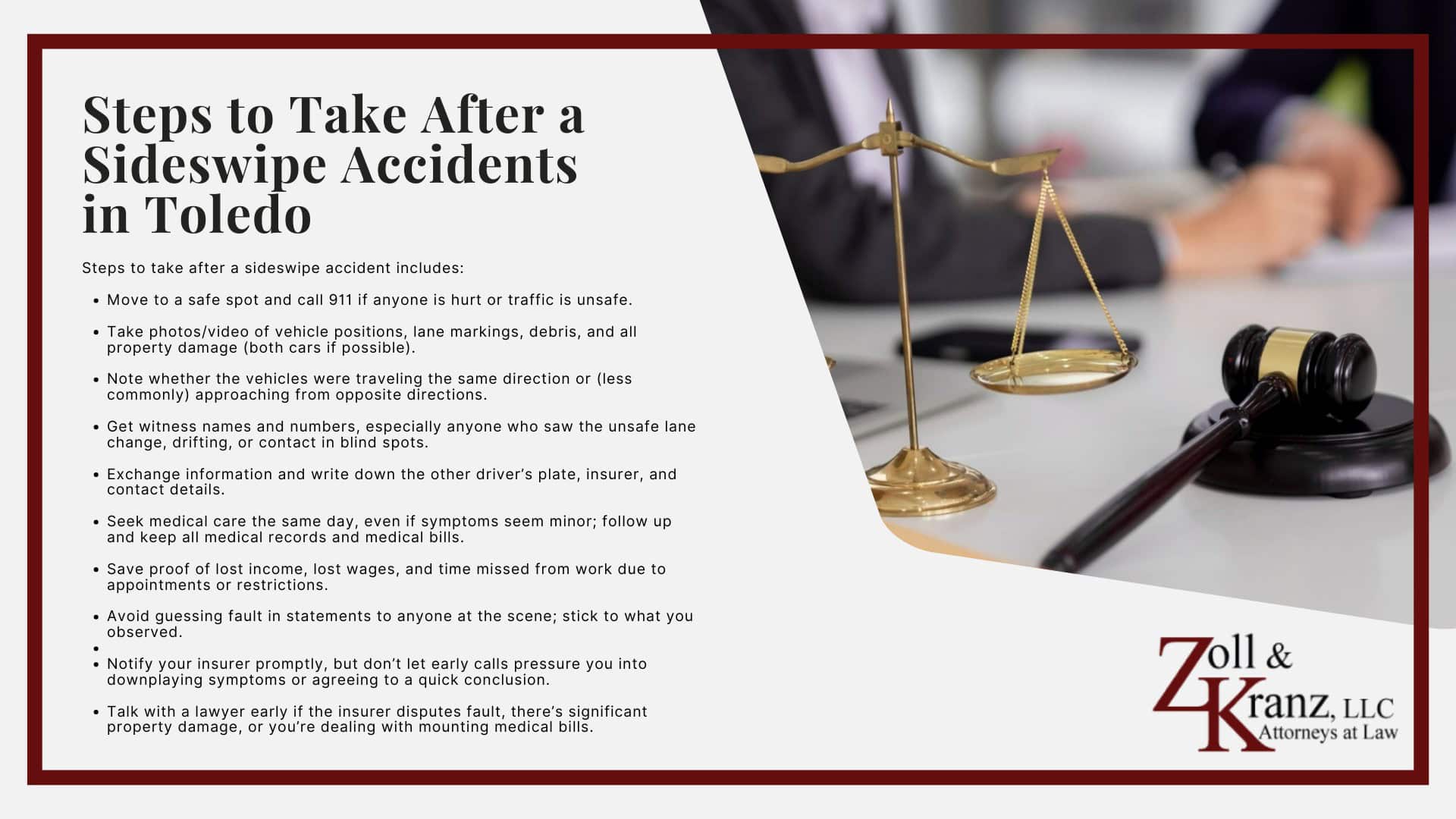
Steps to Take After a Sideswipe Accidents in Toledo
Right after a sideswipe crash, your priorities should be safety, medical care, and preserving proof while it’s still available.
Even when the damage looks minor, internal injuries can show up later, and delayed care can make it harder to connect treatment to the crash.
Steps to take after a sideswipe accident includes:
- Move to a safe spot and call 911 if anyone is hurt or traffic is unsafe.
- Take photos/video of vehicle positions, lane markings, debris, and all property damage (both cars if possible).
- Note whether the vehicles were traveling the same direction or (less commonly) approaching from opposite directions.
- Get witness names and numbers, especially anyone who saw the unsafe lane change, drifting, or contact in blind spots.
- Exchange information and write down the other driver’s plate, insurer, and contact details.
- Seek medical care the same day, even if symptoms seem minor; follow up and keep all medical records and medical bills.
- Save proof of lost income, lost wages, and time missed from work due to appointments or restrictions.
- Avoid guessing fault in statements to anyone at the scene; stick to what you observed.
- Notify your insurer promptly, but don’t let early calls pressure you into downplaying symptoms or agreeing to a quick conclusion.
- Talk with a lawyer early if the insurer disputes fault, there’s significant property damage, or you’re dealing with mounting medical bills.
Laws for Sideswipe Accidents in Ohio
Sideswipe claims often turn on whether a driver stayed in an own lane and moved only when it was safe.
Ohio’s marked lanes statute requires drivers to travel “as nearly as is practicable” within a single lane and not move from that lane until the driver has first ascertained the movement can be made with safety.
Ohio also prohibits moving right or left on a highway unless the driver has exercised due care to confirm the movement can be made with reasonable safety, and the statute ties that duty to the use of an appropriate signal.
When a sideswipe involves impaired driving or drunk driving, those violations can become powerful liability evidence because they point to unreasonable decision making behind the wheel.
Ohio’s OVI law makes it illegal to operate a vehicle while under the influence of alcohol or drugs, and that kind of violation can help explain why a driver drifted, merged blindly, or failed to react to traffic conditions.
If the facts support reckless behavior beyond ordinary negligence, Ohio also has a reckless operation statute prohibiting driving in willful or wanton disregard for the safety of persons or property.
Drowsy driving and driver fatigue often show up in sideswipe cases because they fit the mechanics of many lane departure collisions, slow drift across lane lines, delayed mirror checks, and late corrections.
In crashes involving other vehicles, investigators typically evaluate whether the initial sideswipe triggered a chain reaction, and whether the at fault driver’s unsafe movement created the hazard that followed.
The insurance institute has published research on lane departure prevention and blind spot monitoring, including studies examining lane change crashes and the role of technology designed to reduce lane departure and lane change collisions.
In an Ohio claim, that background does not decide fault by itself. The case still turns on collision specific proof, roadway markings, point of impact, vehicle damage patterns, witness statements, and medical records that show the full injury sequence.
Ohio’s Statute of Limitations for Car Accident Cases
Ohio generally applies a two-year statute of limitations to personal injury claims arising from a car accident.
That deadline can sneak up faster than people expect, especially when treatment stretches on or symptoms worsen weeks after the crash.
Waiting also makes it harder to prove what happened because video footage can be overwritten, skid marks fade, and witnesses become harder to locate.
If you were injured in a sideswipe accident, speaking with an attorney early helps protect your right to recover damages and keeps your legal options open.
Common Evidence in Accident Claims
Sideswipe cases often come down to details that show where the two cars were positioned, what each driver did just before contact, and why the vehicles traveling in the same lane area ended up colliding.
Because causes of sideswipe collisions are frequently disputed, early documentation can make or break liability.
Common evidence includes:
- Photos/video of vehicle damage and the crash scene, including lane markings and the road ahead
- Skid marks, debris patterns, and points of impact that show the direction of travel and who drifted
- Police reports and diagrams identifying the vehicles involved and the at fault party (when determined)
- Witness statements from drivers, passengers, or bystanders who saw the sideswipe impacts
- Dashcam, traffic camera, or nearby business footage capturing the accident
- Insurance details for both drivers and any communications from the insurance company
- Medical records showing diagnosis and treatment, including broken bones, torn ligaments, or internal bruising
- Documentation of medical care, follow-up appointments, and physical therapy
- Notes about weather conditions, visibility, and traffic conditions at the time of the crash
- Records of any recorded statement requests and what was said (or why a statement was declined)
Damages Available in a Toledo Car Accident Claim
Even when a sideswipe looks like “minor damage,” the injuries can be serious, especially if the impact causes a head on collision, a secondary crash, or a sudden jerk that injures the neck, back, or shoulders.
A claim should account for both financial losses and the personal toll of recovery, supported by medical attention records and a clear timeline.
Damages may include:
- Emergency treatment and ongoing medical care, including imaging, specialists, therapy, and medication
- Future medical needs tied to the injuries, such as continued rehab for torn ligaments or lasting pain
- Lost income if you miss work, plus reduced earning ability when injuries limit job performance
- Out-of-pocket costs related to recovery, transportation to appointments, and assistive devices
- Property damage to your vehicle and related expenses (towing, rental car, repairs)
- Non economic damages, such as pain, suffering, and loss of normal life after the accident