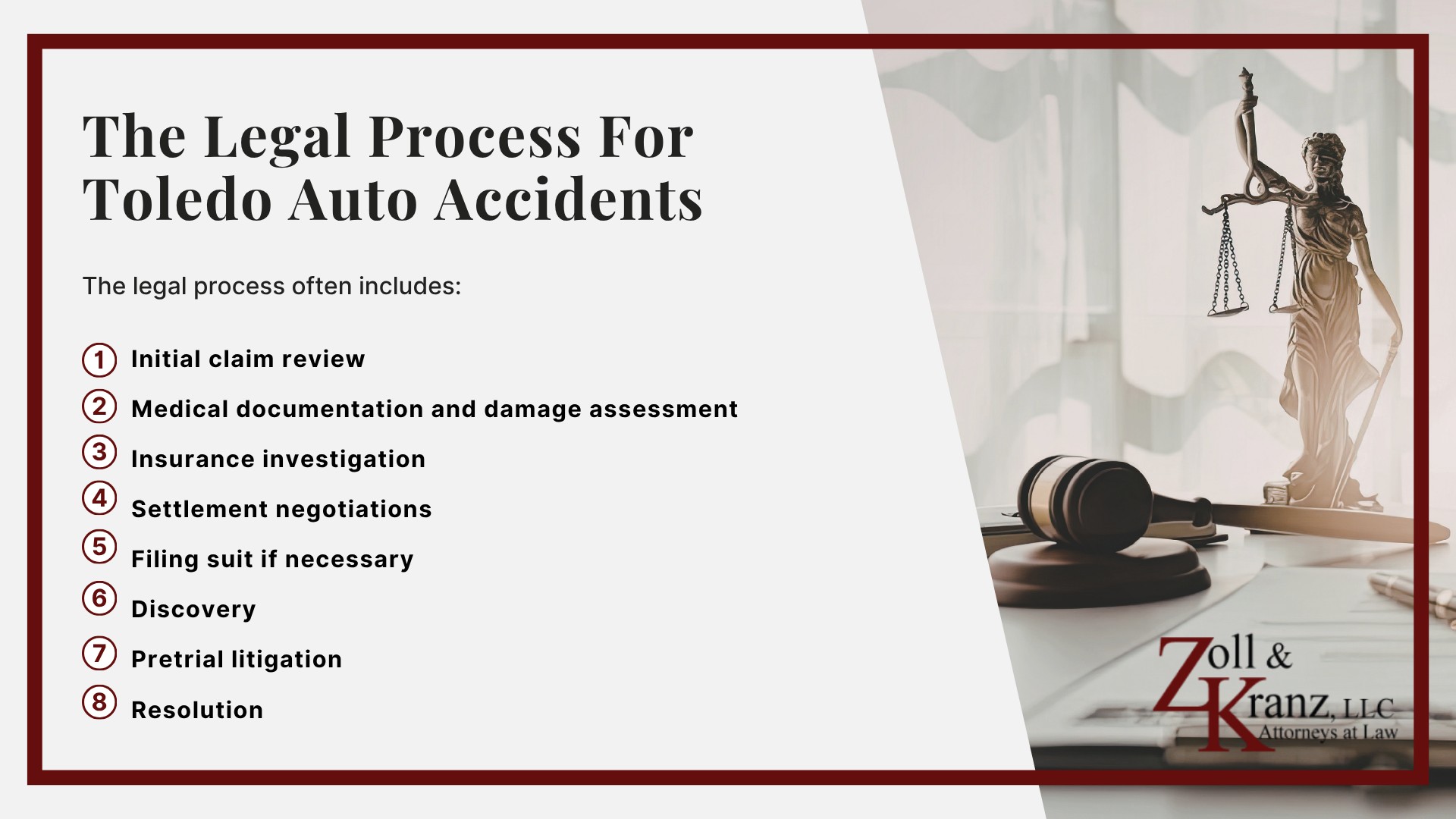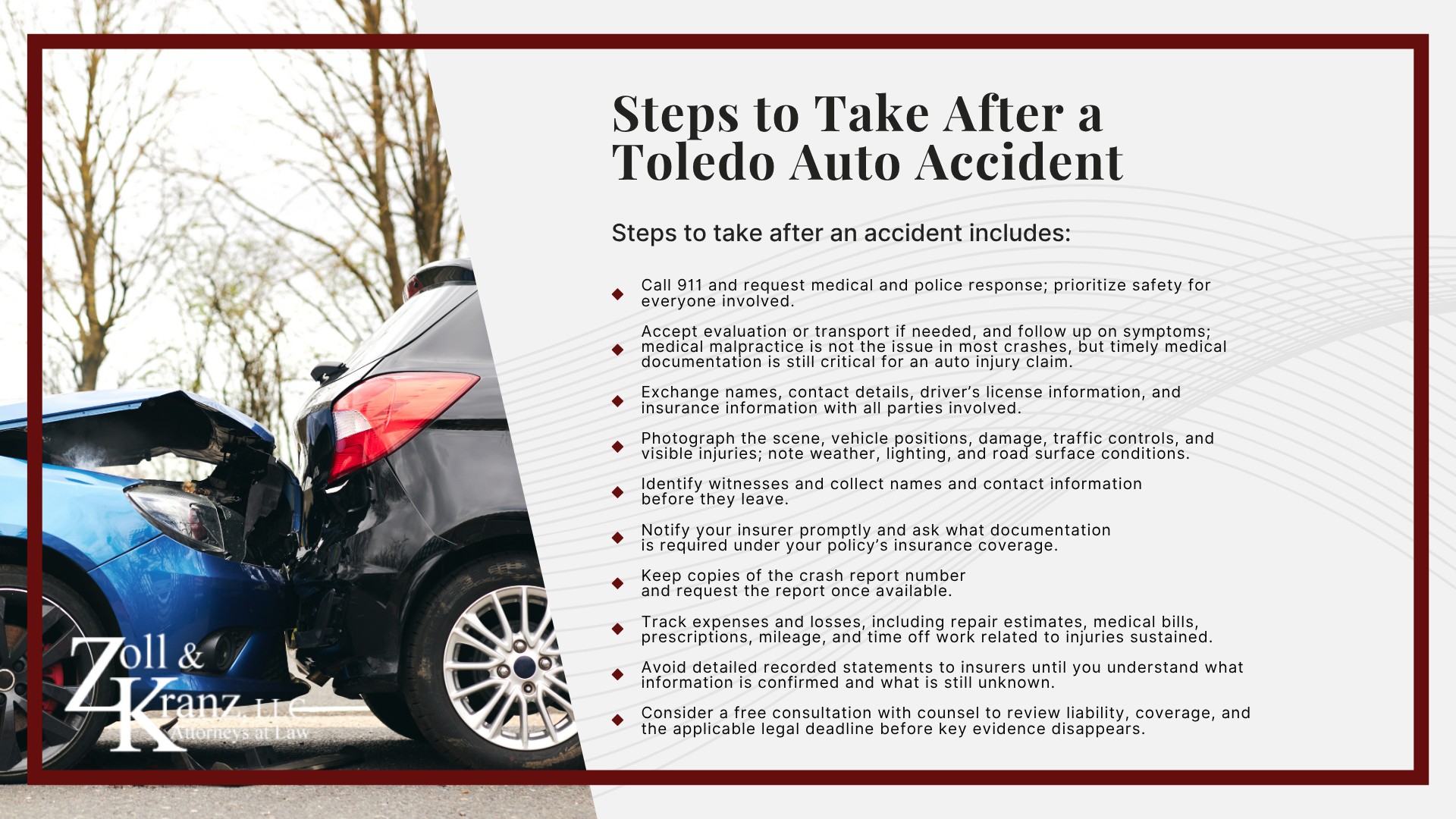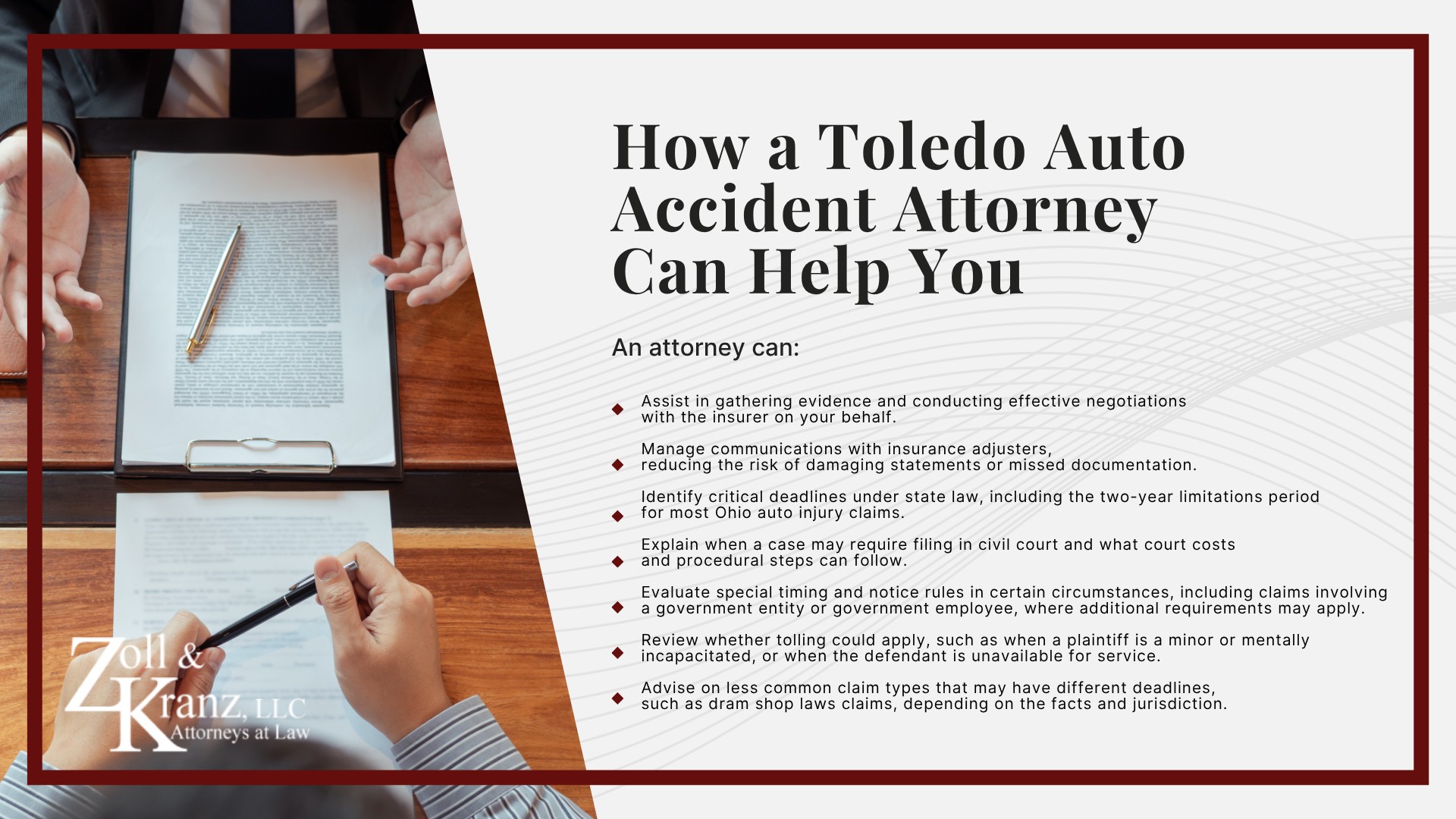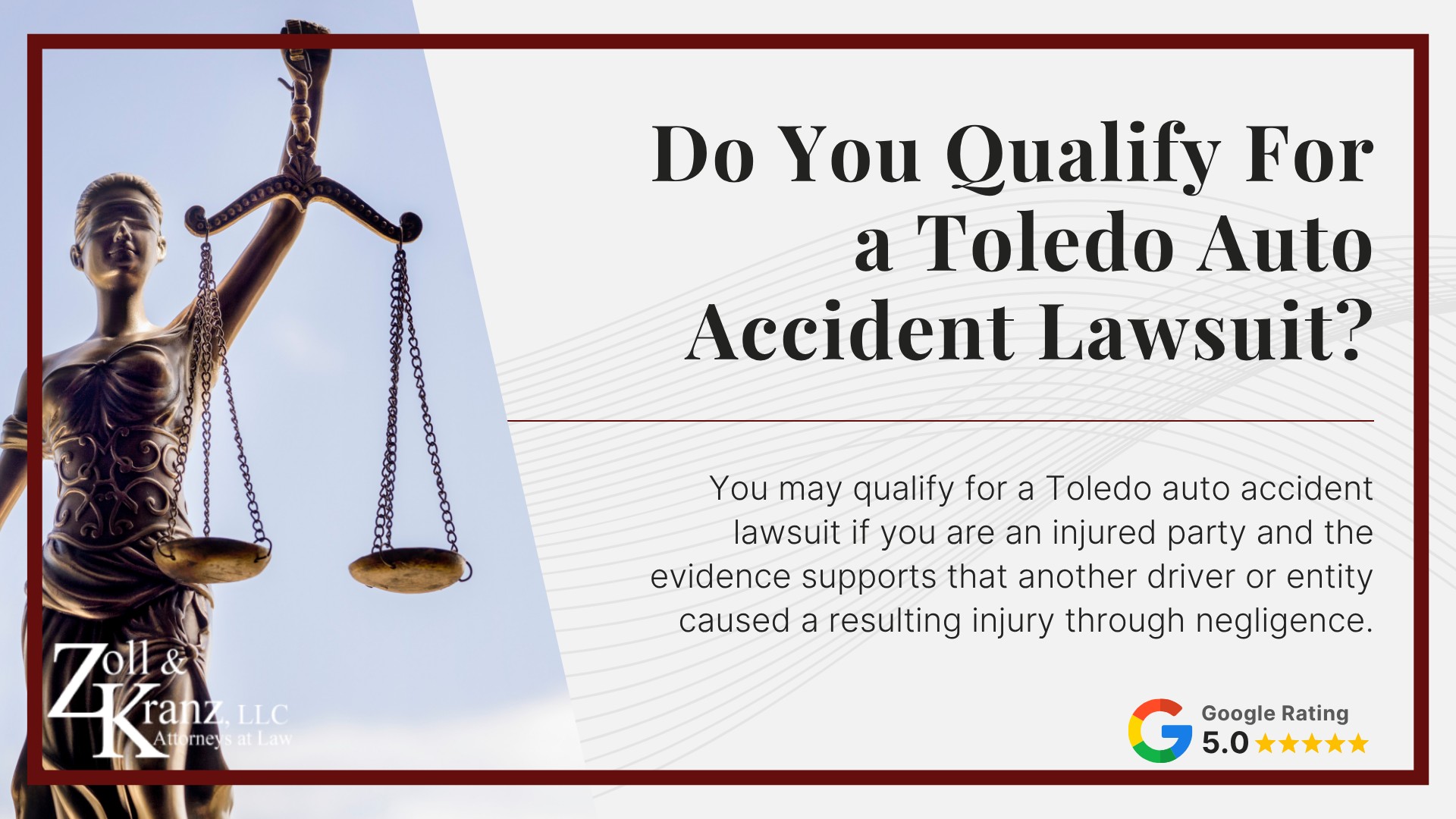

The statute of limitations is the deadline for filing a lawsuit after a crash, and in Toledo that deadline usually comes from Ohio law.
Under Ohio Revised Code § 2305.10, most actions for bodily injury or injury to personal property must be filed within two years after the cause of action accrues, which for ordinary auto cases is generally when the injury or property loss occurs.
That two-year rule applies to many car accident claims arising from collisions in Toledo and throughout Ohio.
It also means many personal injury cases tied to a crash can be lost if they are not filed on time, even when liability appears strong.
A claim involving other injuries may require separate analysis if the facts involve unusual accrual or tolling issues under Ohio law.
The same filing period does not automatically answer every related claim, because a personal injury claim involving a car accident, slip-and-fall incident, or another event can be governed by different facts even when the same statute is cited.
Ohio law also treats wrongful death separately, with a civil action for wrongful death generally tied to a two-year period measured from the date of death.
Early review matters because insurance negotiations do not stop the filing clock from running.
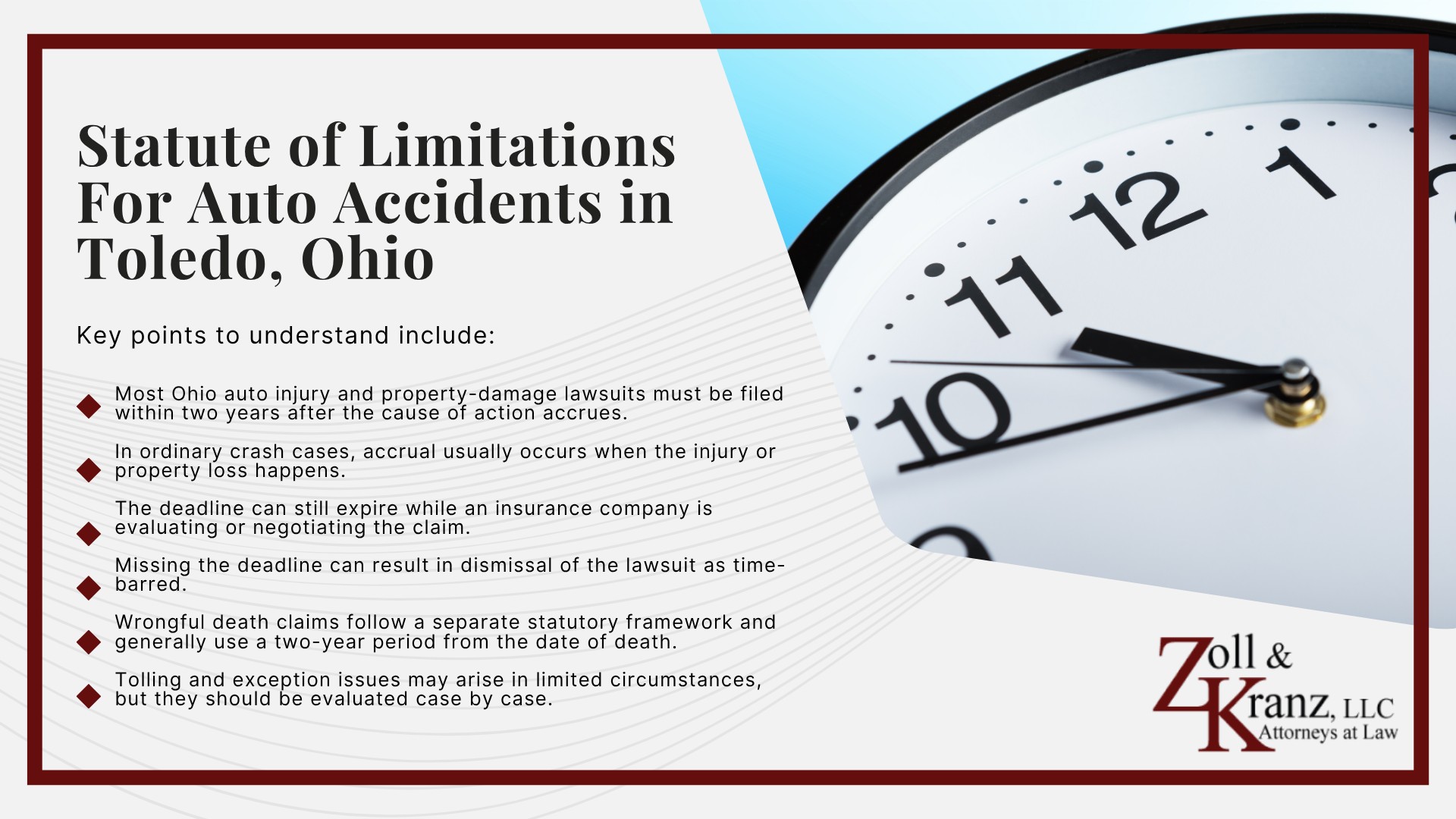
Key points to understand include:
- Most Ohio auto injury and property-damage lawsuits must be filed within two years after the cause of action accrues.
- In ordinary crash cases, accrual usually occurs when the injury or property loss happens.
- The deadline can still expire while an insurance company is evaluating or negotiating the claim.
- Missing the deadline can result in dismissal of the lawsuit as time-barred.
- Wrongful death claims follow a separate statutory framework and generally use a two-year period from the date of death.
- Tolling and exception issues may arise in limited circumstances, but they should be evaluated case by case.
Because filing rules can affect whether a claim survives at all, it is safer to confirm the deadline early rather than assume settlement talks will protect it.
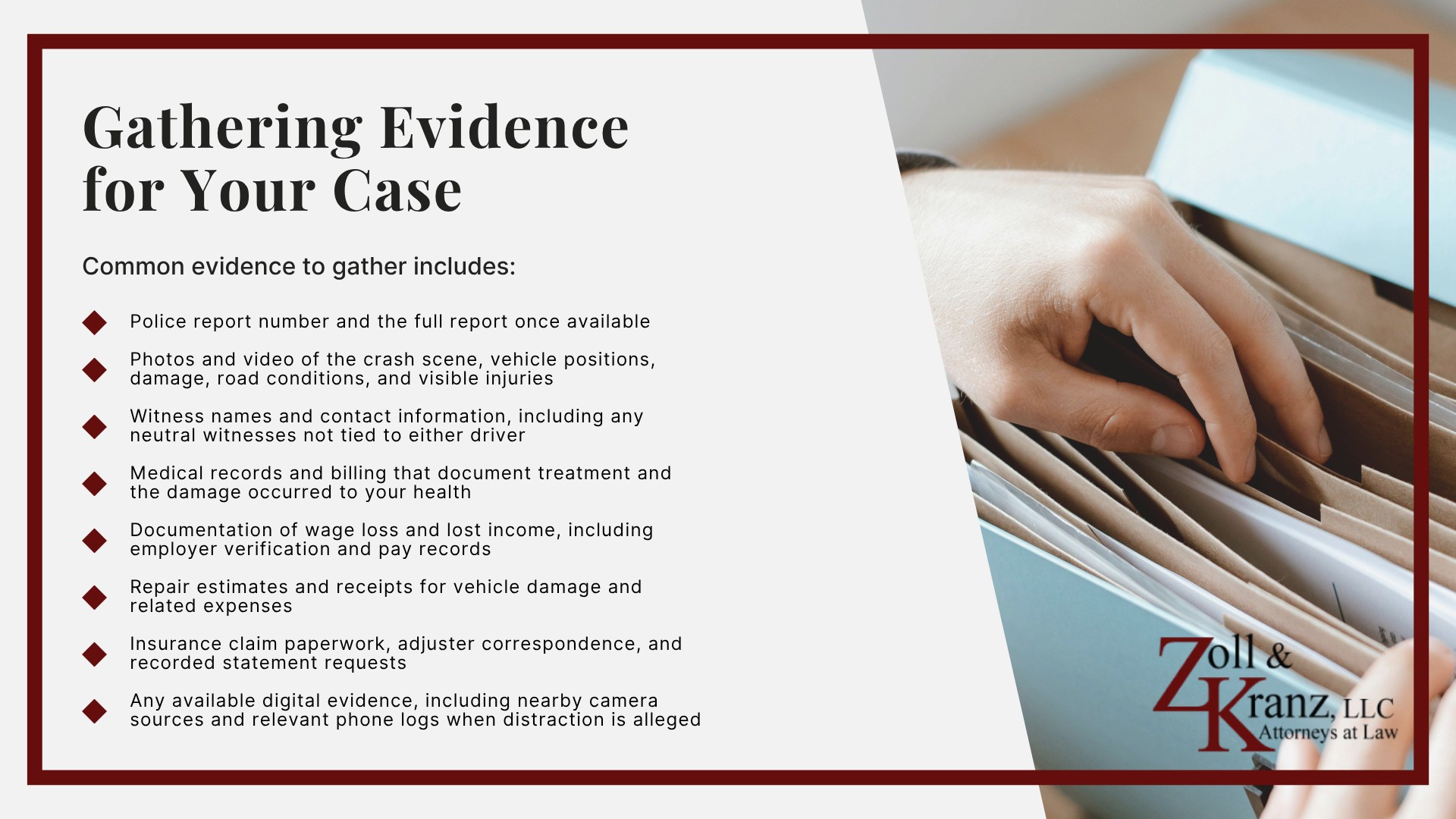
Evidence still matters just as much as timing, so police reports, photos, witness statements, and medical records should be preserved as soon as possible.
A lawyer can review the facts, identify the controlling deadline, and determine whether any exception or separate claim framework applies.
Factors That Can Affect the Filing Deadline
Most car accident cases in Ohio follow the general two-year filing period, but some claims require closer review because tolling rules or special statutory frameworks may apply.
A lawyer can determine whether the standard deadline controls or whether a different rule may affect when suit must be filed.
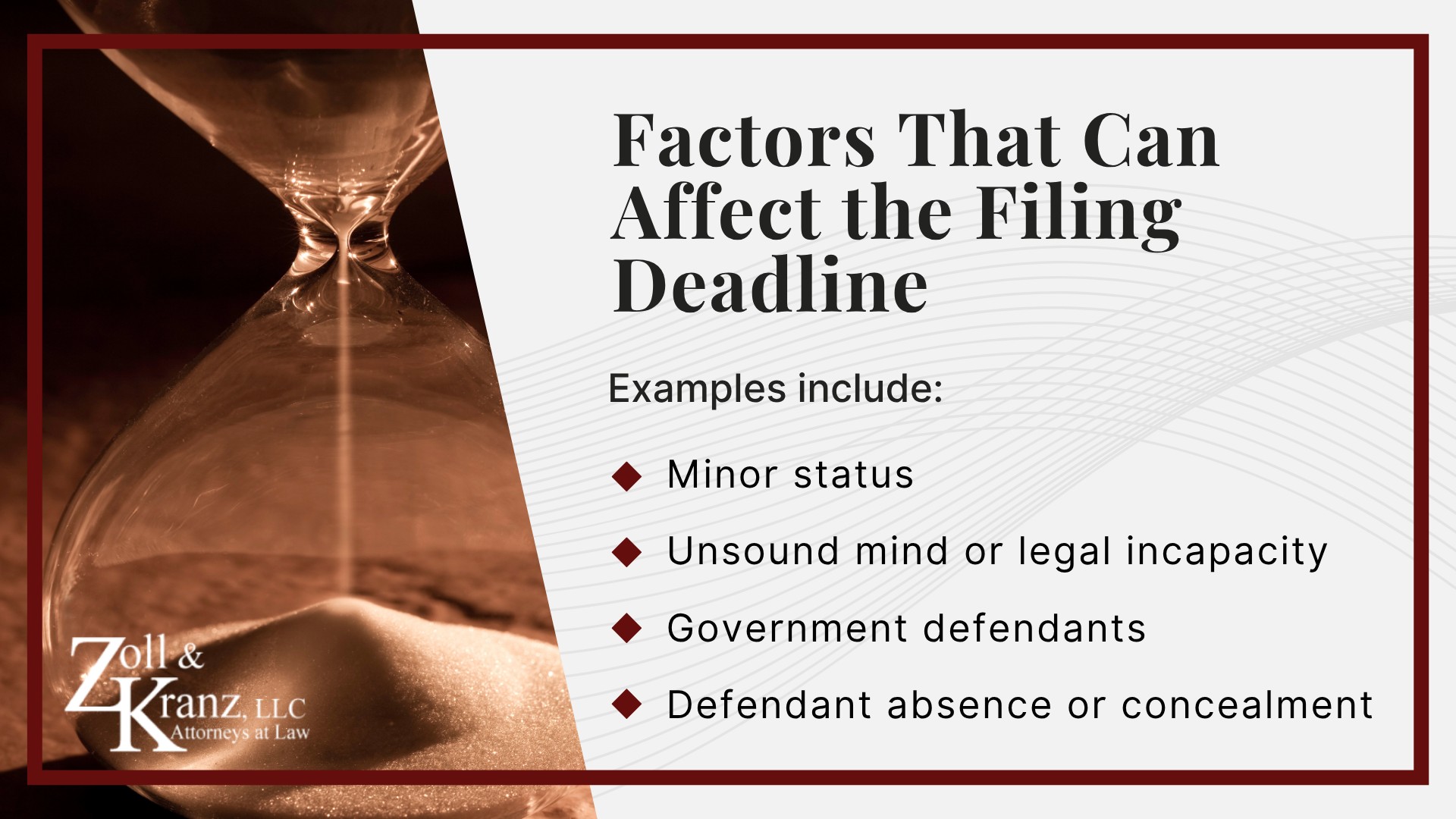
Examples include:
- Minor status: If the injured person was a minor at the time of the crash, Ohio tolling rules may affect when the limitations period begins to run.
- Unsound mind or legal incapacity: Ohio law may toll the deadline if the injured person was of unsound mind when the cause of action accrued.
- Government defendants: Claims involving political subdivisions or the State of Ohio can require analysis under separate statutory schemes, and those cases should be evaluated early.
- Defendant absence or concealment: Ohio law may toll the running of the statute when a defendant is out of state, absconding, or concealing themself.
Consequences of Missing the Statute of Limitations
Missing the filing deadline can end a lawsuit seeking compensation, even when the evidence of fault is strong.
As we’ve established, most actions for bodily injury or injury to personal property must be brought within two years after the cause of action accrues, and a late filing is typically subject to dismissal as time-barred.
Once that happens, the injured person may lose the ability to seek compensation through the court system from the at-fault party for losses tied to the crash.
Waiting can also damage the case before the deadline ever arrives because witness memory fades, records become harder to obtain, and the insurer may gain leverage during negotiations.
Limited exceptions may exist under Ohio law, but they depend on specific facts and should be evaluated early rather than assumed.
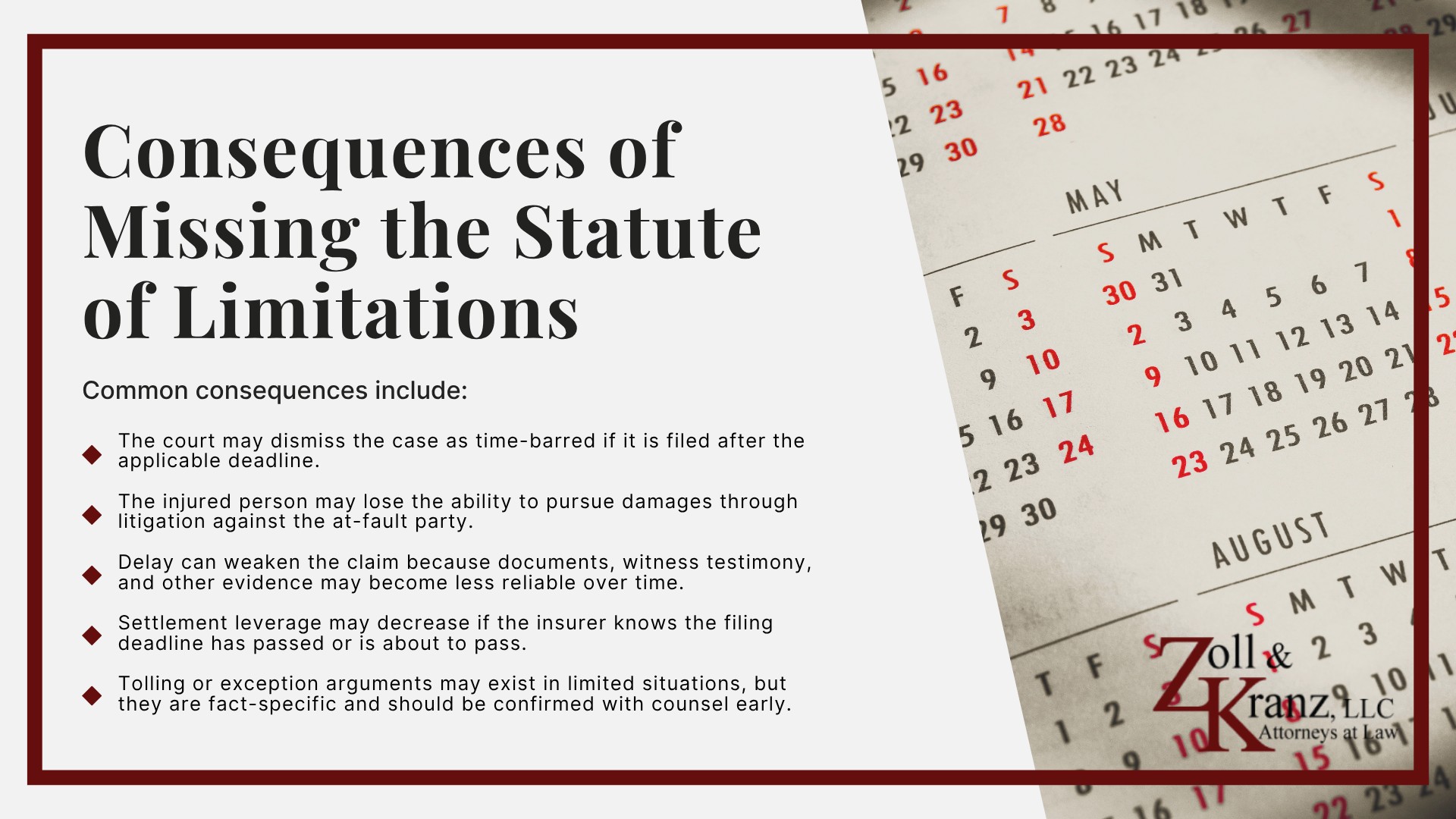
Common consequences include:
- The court may dismiss the case as time-barred if it is filed after the applicable deadline.
- The injured person may lose the ability to pursue damages through litigation against the at-fault party.
- Delay can weaken the claim because documents, witness testimony, and other evidence may become less reliable over time.
- Settlement leverage may decrease if the insurer knows the filing deadline has passed or is about to pass.
- Tolling or exception arguments may exist in limited situations, but they are fact-specific and should be confirmed with counsel early.