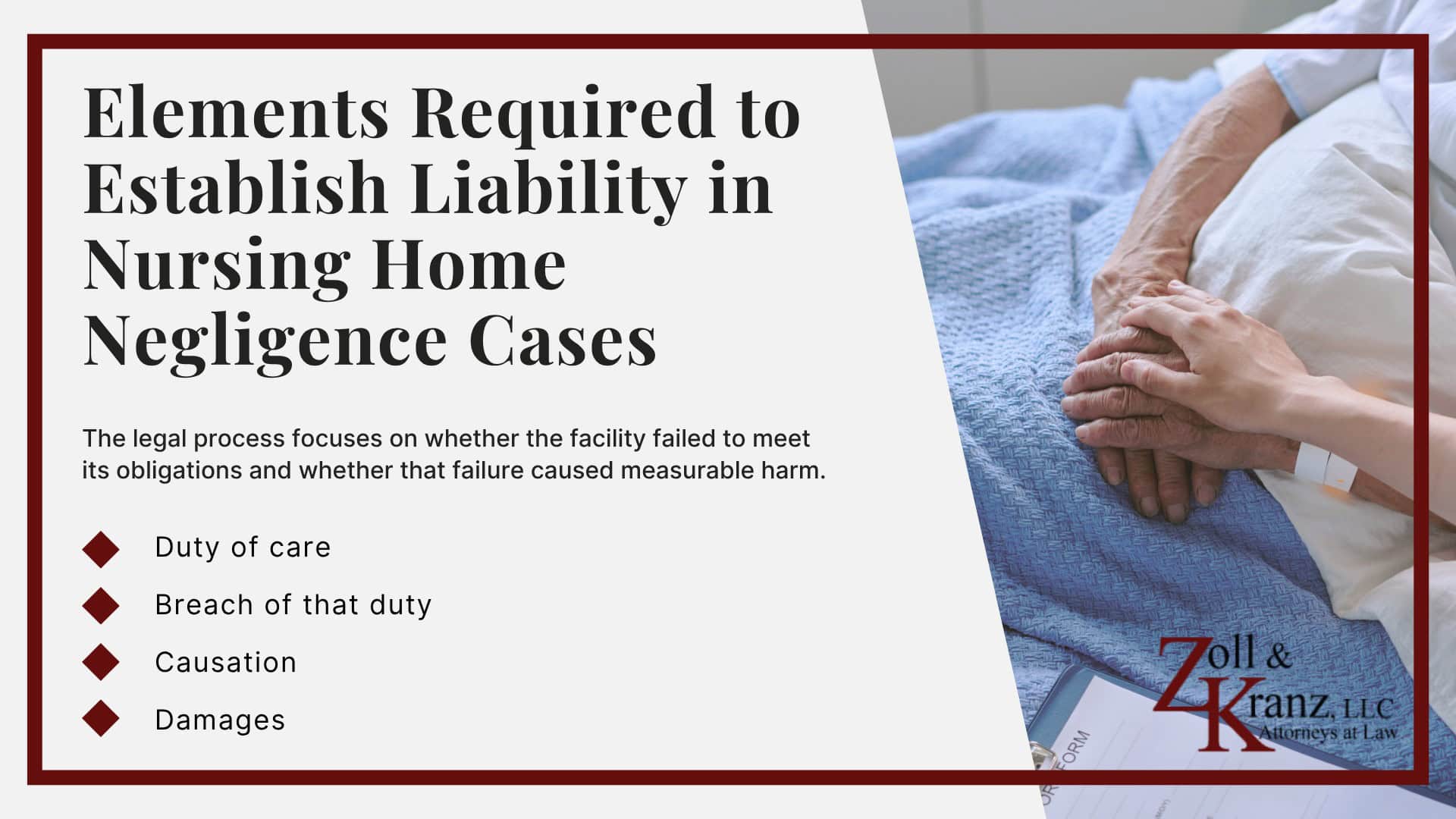
A nursing home negligence claim requires proof of four legal elements: duty of care, breach of duty, causation, and damages.
Each element plays a distinct role in establishing liability, and the success of a claim often depends on the medical records, care plans, staffing records, and other documents created during a resident’s stay.

The legal process focuses on whether the facility failed to meet its obligations and whether that failure caused measurable harm.
Duty of Care
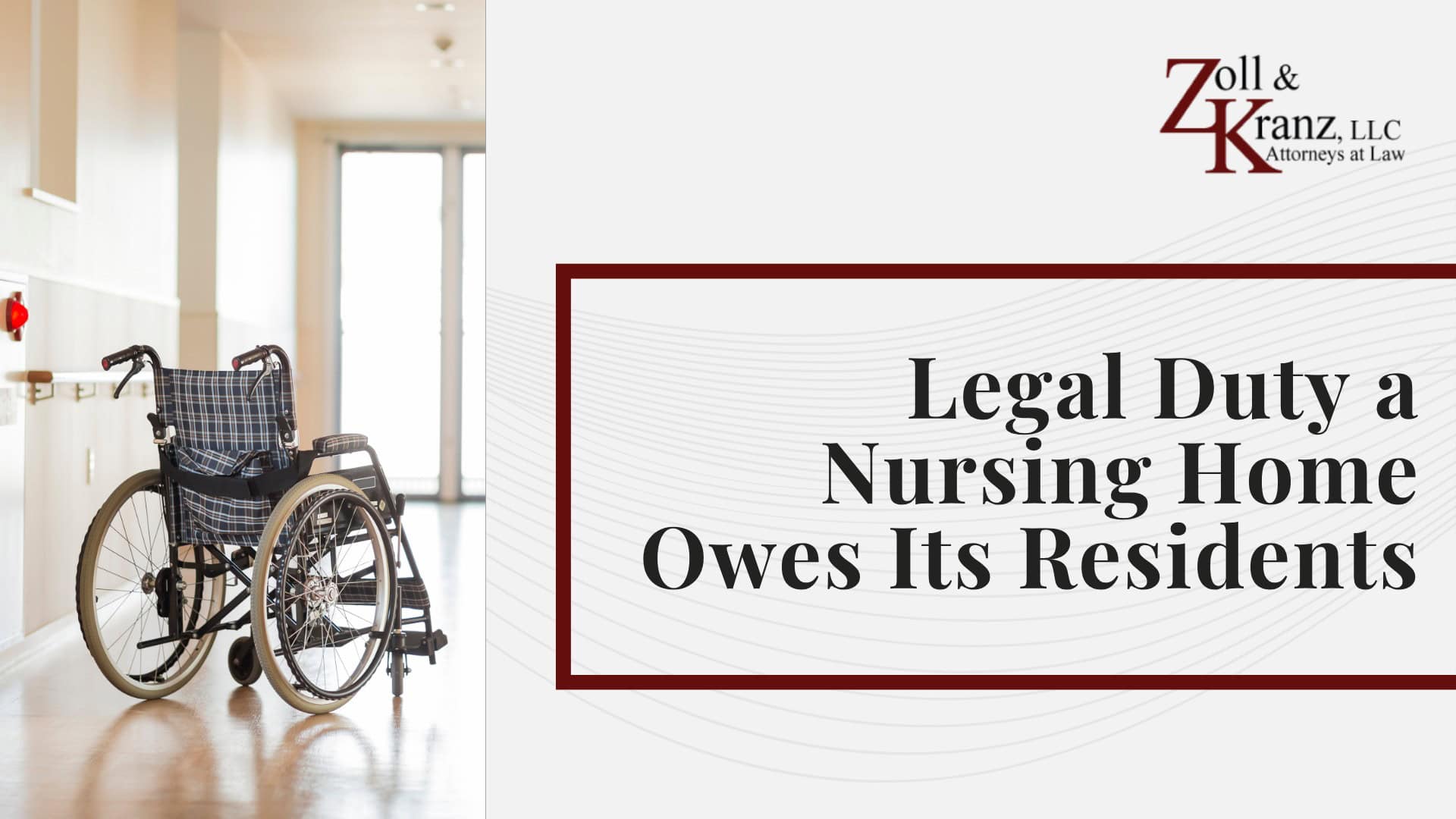
A nursing home owes residents a legal duty to provide care that meets accepted professional standards and complies with federal and Ohio law.
This duty arises when a resident is admitted to the facility and continues throughout the resident’s stay.
The purpose of these legal obligations is to protect residents from preventable injuries, neglect, abuse, and unsafe conditions.
Because the duty is established by statute and regulation, it is rarely disputed in a nursing home negligence case.
Breach of Duty
A breach occurs when a nursing home fails to meet the standard of care owed to a resident.
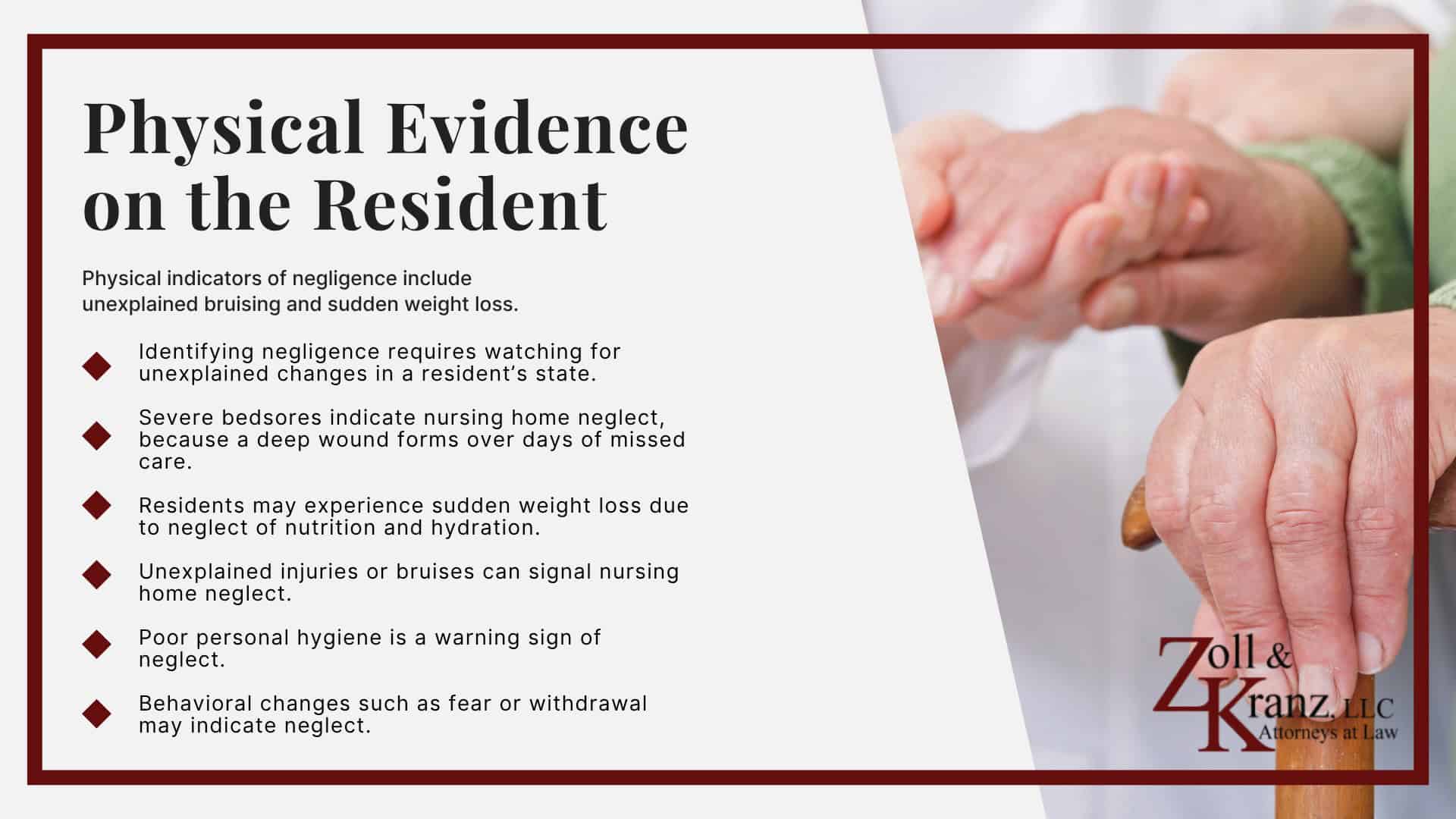
Examples include failing to follow a care plan, providing inadequate supervision, ignoring fall risks, failing to prevent pressure ulcers, administering medications improperly, or operating with insufficient staffing.
Violations of laws and regulations designed to protect residents can serve as powerful evidence of negligence.
A facility’s failure to follow its own policies, care plans, or staffing requirements may also support a finding that the standard of care was breached.
Causation
Causation requires proof that the breach of duty directly contributed to the resident’s injury or decline.
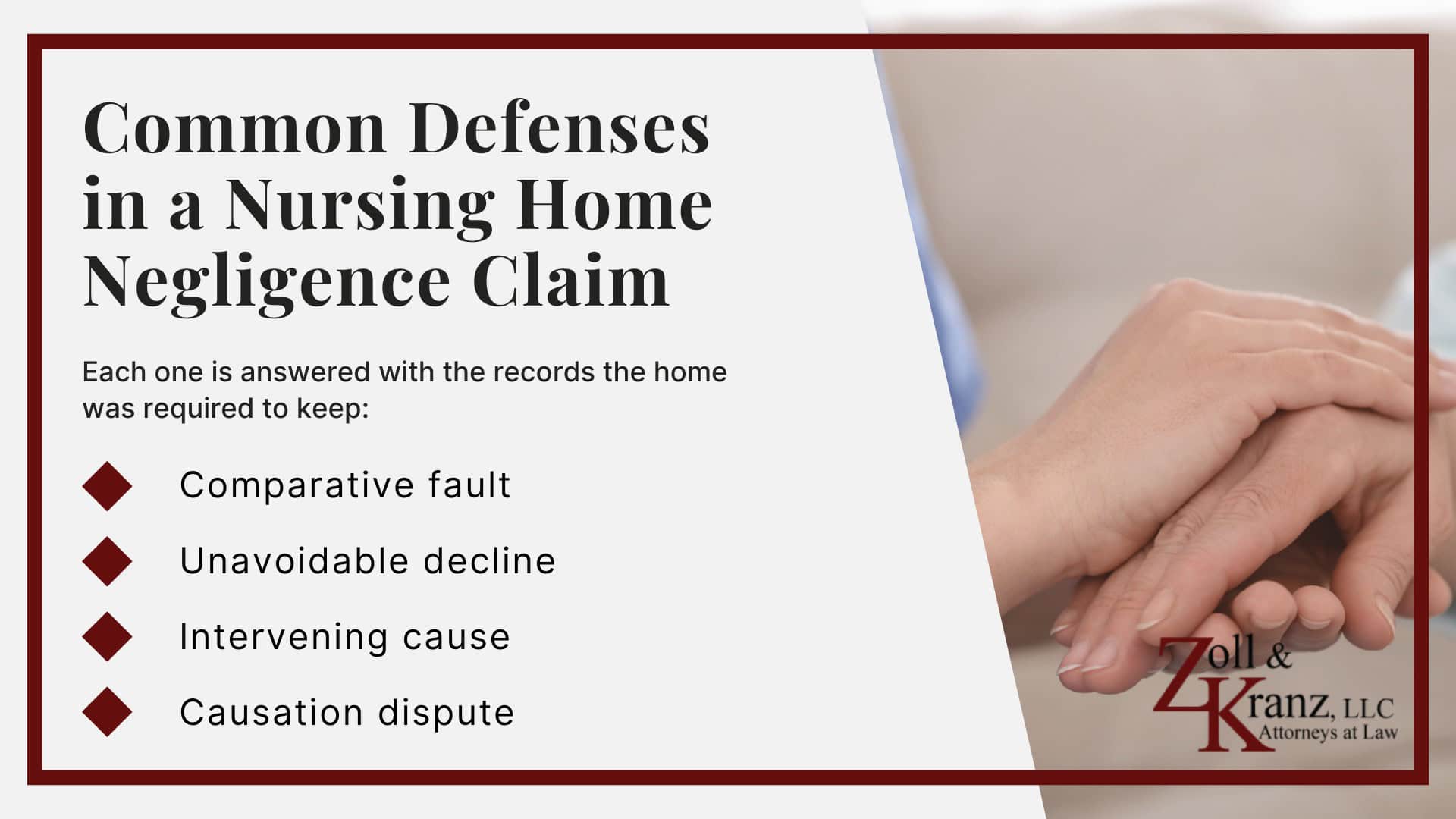
Nursing homes often argue that a resident’s condition resulted from age, preexisting illness, or an unavoidable medical complication rather than negligence.
Medical records, treatment notes, staffing records, incident reports, and expert testimony frequently help establish whether the injury would likely have occurred absent the facility’s failure to provide appropriate care.
Damages
The final element requires proof that the resident suffered actual harm.
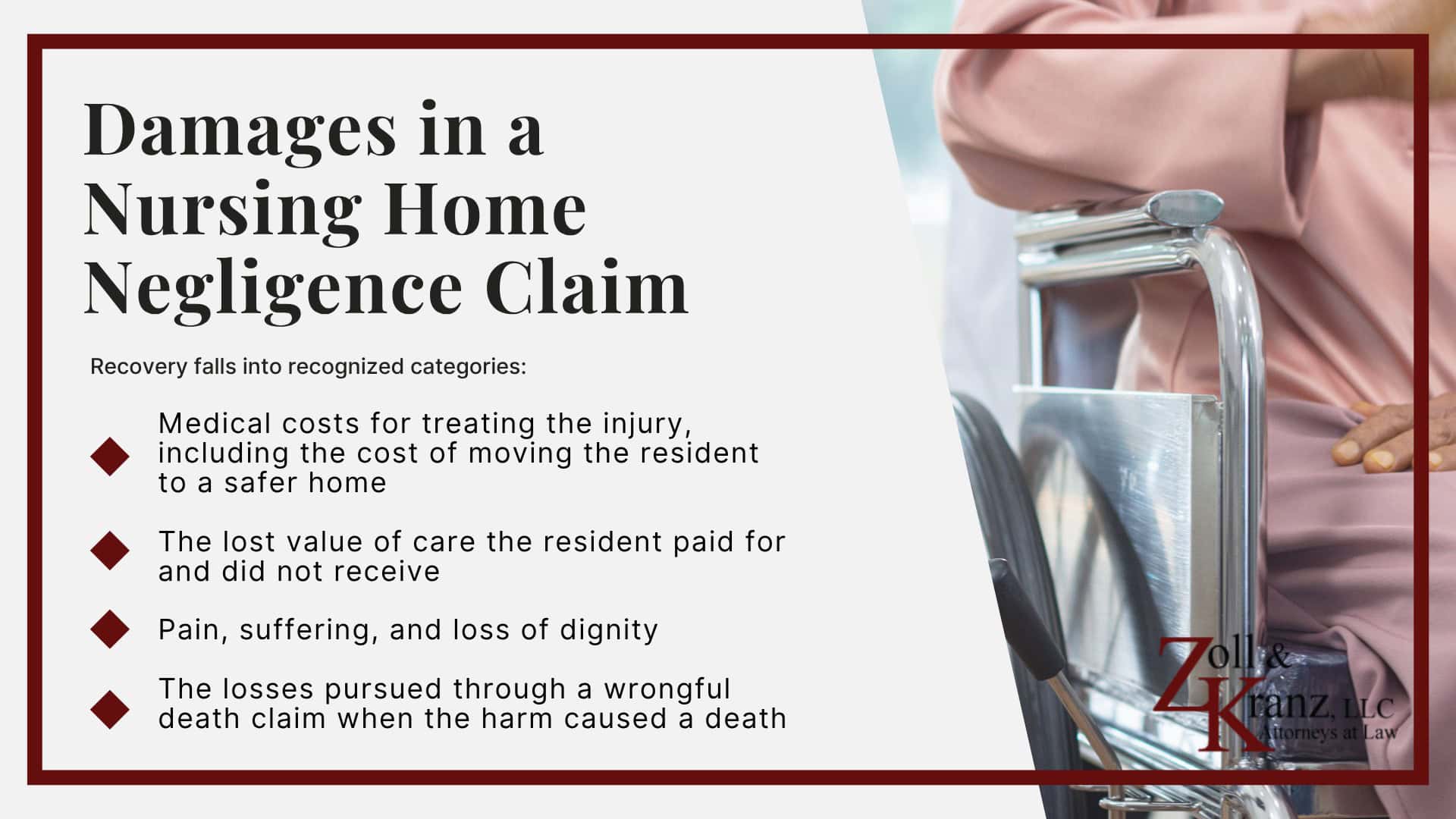
Damages may include medical expenses, hospitalization costs, pain and suffering, emotional distress, loss of dignity, physical injuries, or other losses resulting from the facility’s conduct.
When negligence contributes to a resident’s death, surviving family members may have the right to pursue a wrongful death claim under Ohio law.
Without damages, a negligence claim cannot succeed even if a breach of duty occurred.