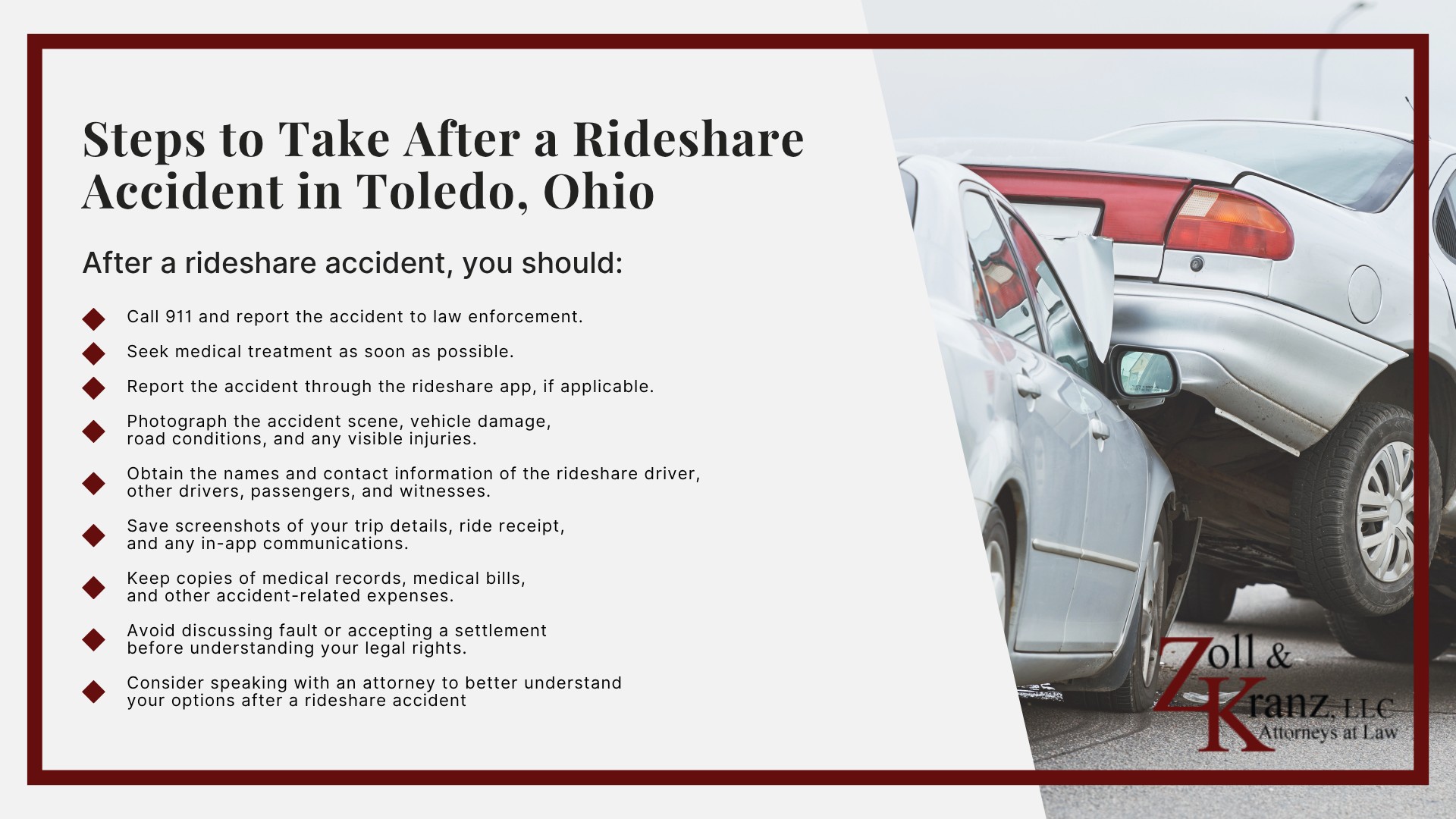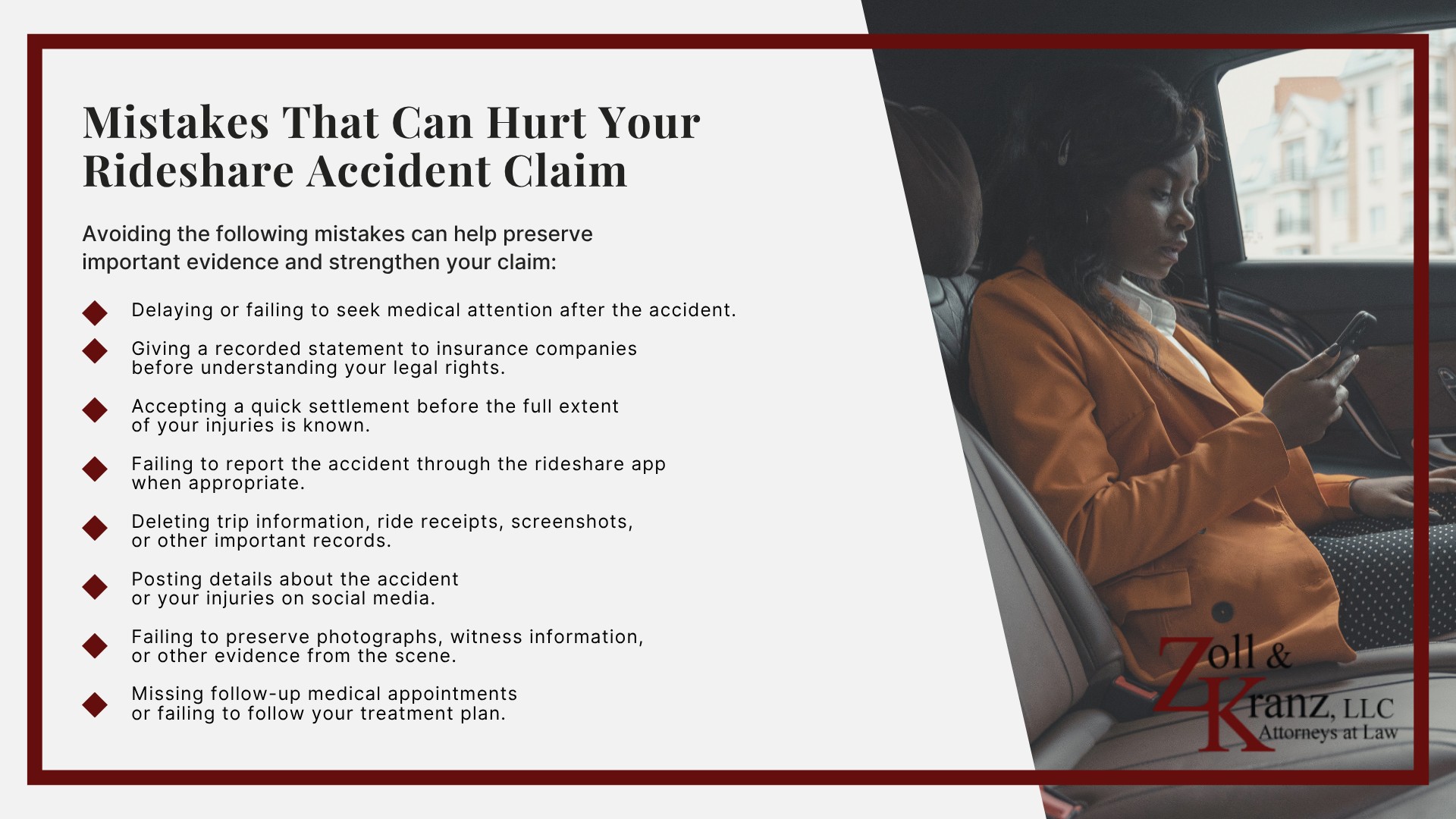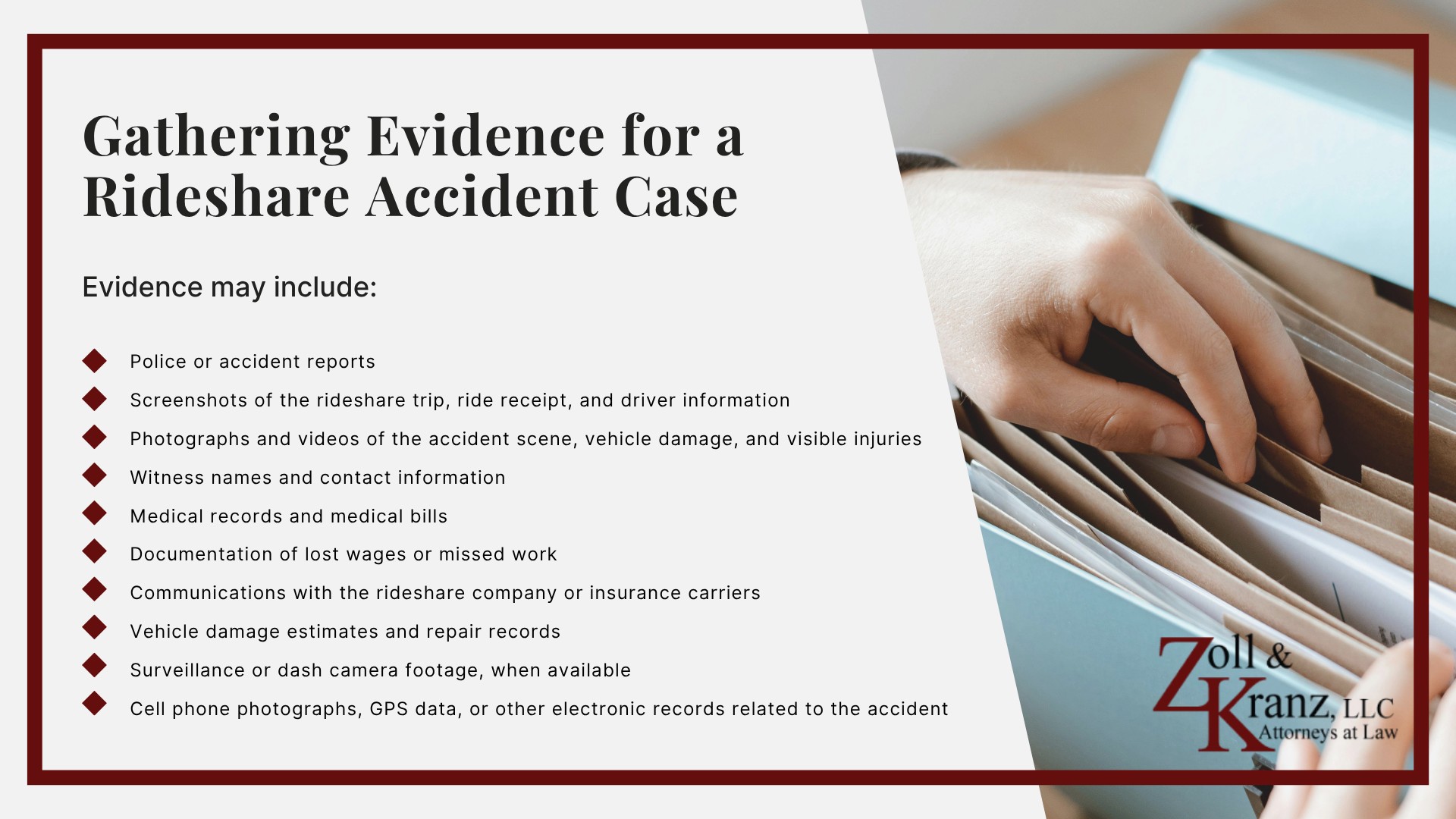
Rideshare accident claims often involve legal and insurance issues that differ from those in a typical car accident.
Depending on the circumstances, a claim may involve multiple parties, including the rideshare driver, the other driver, the rideshare company, or other individuals whose negligence contributed to the collision.
One of the first steps is determining liability and identifying which insurance policies may apply, including personal auto insurance and commercial liability insurance provided through the rideshare platform.
Because multiple insurers may be involved, questions about coverage and responsibility are common after an Uber or Lyft accident.
Understanding how these claims work can help injured individuals protect their legal rights and, when appropriate, recover compensation for medical expenses, lost wages, and other damages.
Although every case is different, obtaining timely legal representation can help injured individuals better understand their options and the legal issues that may affect their claim.
How Rideshare Accident Claims Work in Ohio
Ohio follows a fault-based system for motor vehicle accidents, including crashes involving companies such as Uber and Lyft.
The insurance coverage available after a rideshare accident often depends on whether the driver was logged into the rideshare app, waiting for a ride request, traveling to pick up a passenger, or actively transporting a rider at the time of the collision.
Different insurance policies may cover accidents during each stage of a rideshare trip, making it important to determine which coverage applies before a claim is resolved.
An accident report, medical records, witness statements, photographs, and other evidence can help establish how the collision occurred and identify the parties responsible.
Because rideshare accidents frequently involve multiple insurance carriers and unique coverage questions, understanding how Ohio law applies can help injured individuals better protect their legal rights and pursue compensation when another party’s negligence caused the crash.
Common Causes of Rideshare Accidents in Toledo, OH
Rideshare accidents occur for many of the same reasons as other motor vehicle collisions, but the use of rideshare apps, frequent passenger pickups, and unfamiliar routes can create additional risks.
Determining how the accident happened is an important part of evaluating liability and identifying the parties that may be responsible.
Depending on the circumstances, rideshare accidents can result in significant injuries to passengers, rideshare drivers, pedestrians, cyclists, and occupants of other vehicles.
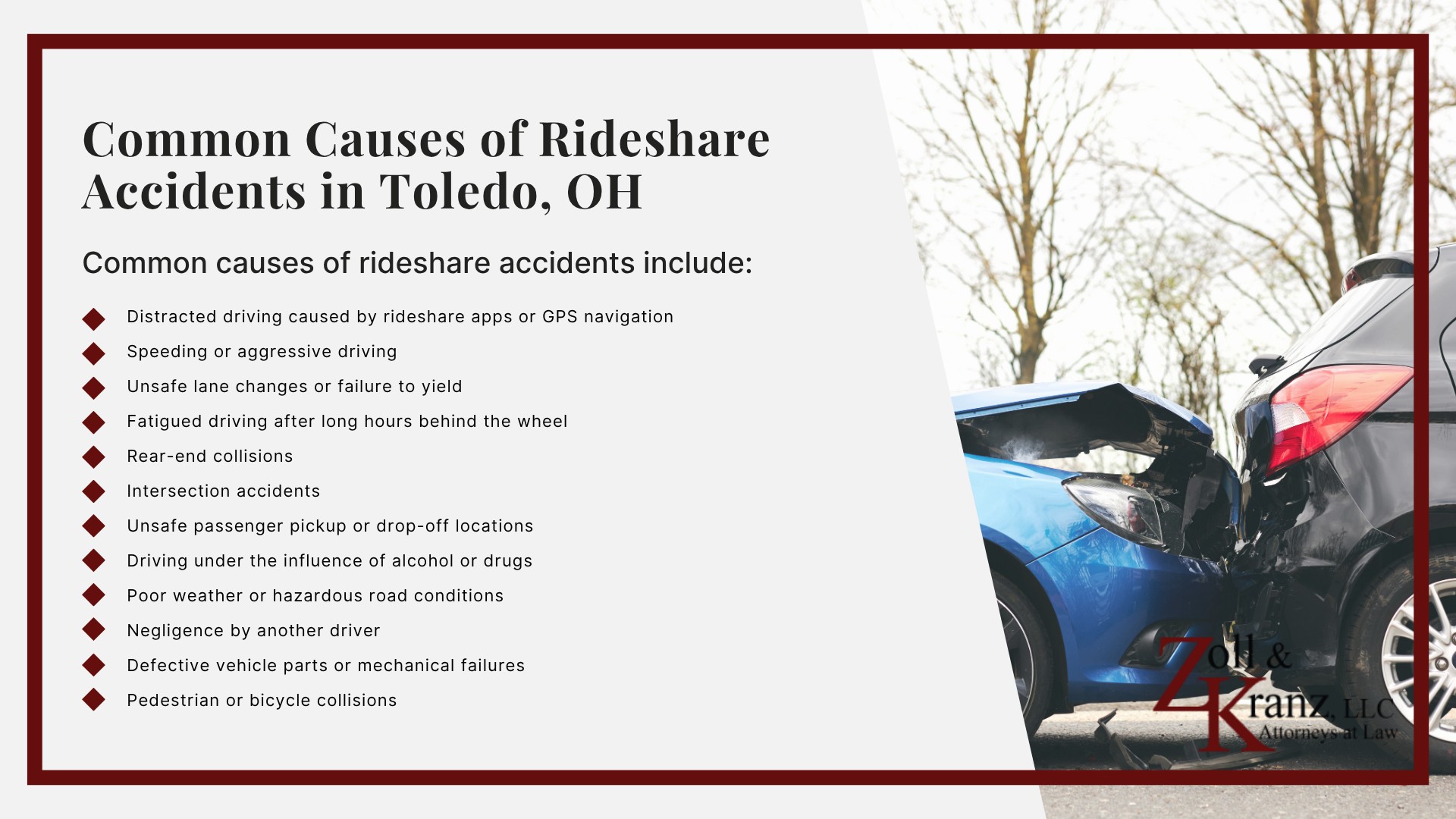
Common causes of rideshare accidents include:
- Distracted driving caused by rideshare apps or GPS navigation
- Speeding or aggressive driving
- Unsafe lane changes or failure to yield
- Fatigued driving after long hours behind the wheel
- Rear-end collisions
- Intersection accidents
- Unsafe passenger pickup or drop-off locations
- Driving under the influence of alcohol or drugs
- Poor weather or hazardous road conditions
- Negligence by another driver
- Defective vehicle parts or mechanical failures
- Pedestrian or bicycle collisions