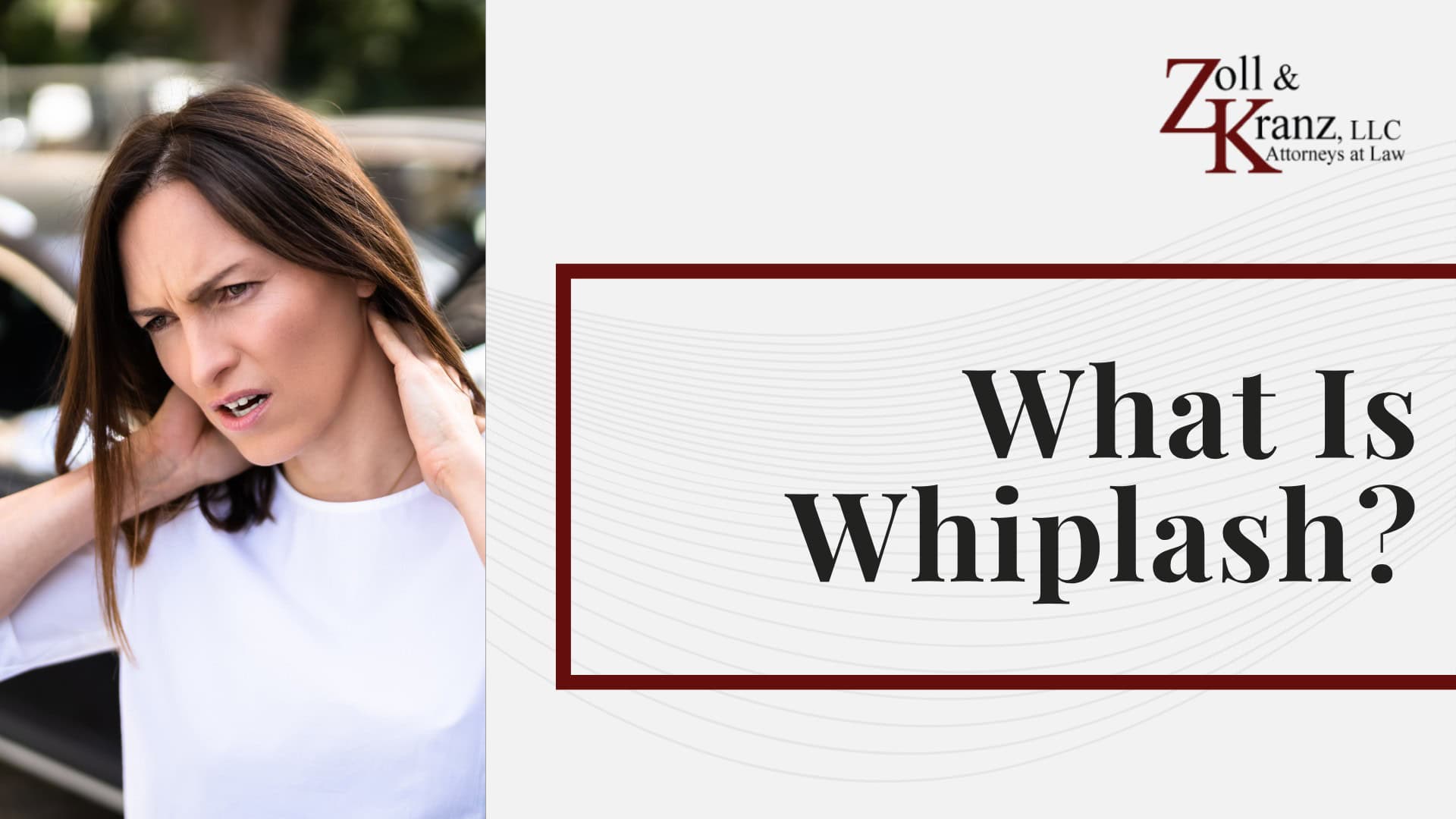
Whiplash is a neck injury caused by a rapid back-and-forth movement of the head and neck.
This acceleration-deceleration motion can strain or injure the muscles, ligaments, joints, discs, and other soft tissue structures in the cervical spine.
Although whiplash is commonly associated with car accidents, it may also result from falls, sports impacts, and other forms of trauma.
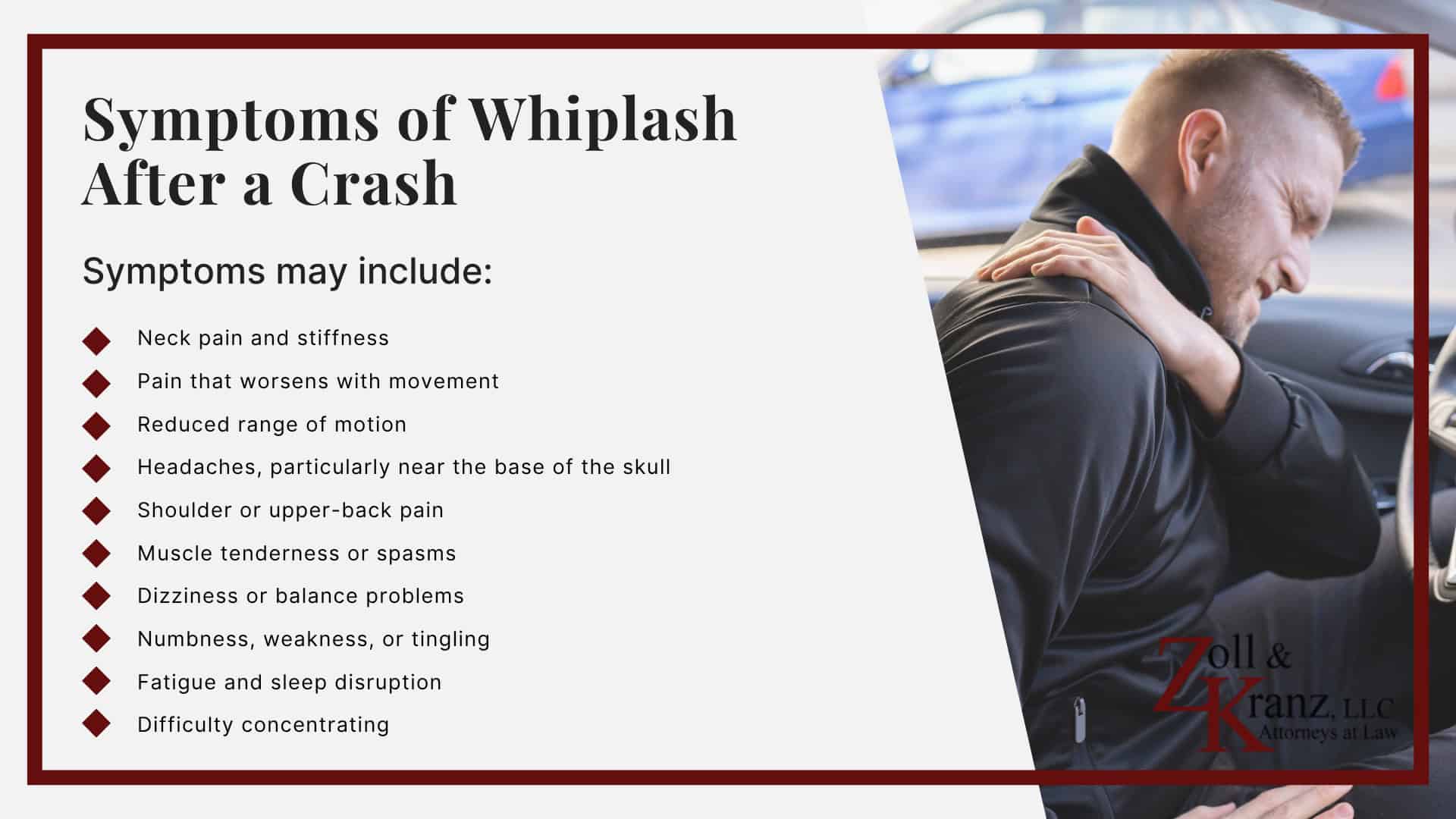
The injury may cause neck pain, stiffness, headaches, dizziness, shoulder discomfort, or pain that extends into the arms.
Symptoms do not always appear immediately and may develop hours or days after the collision.
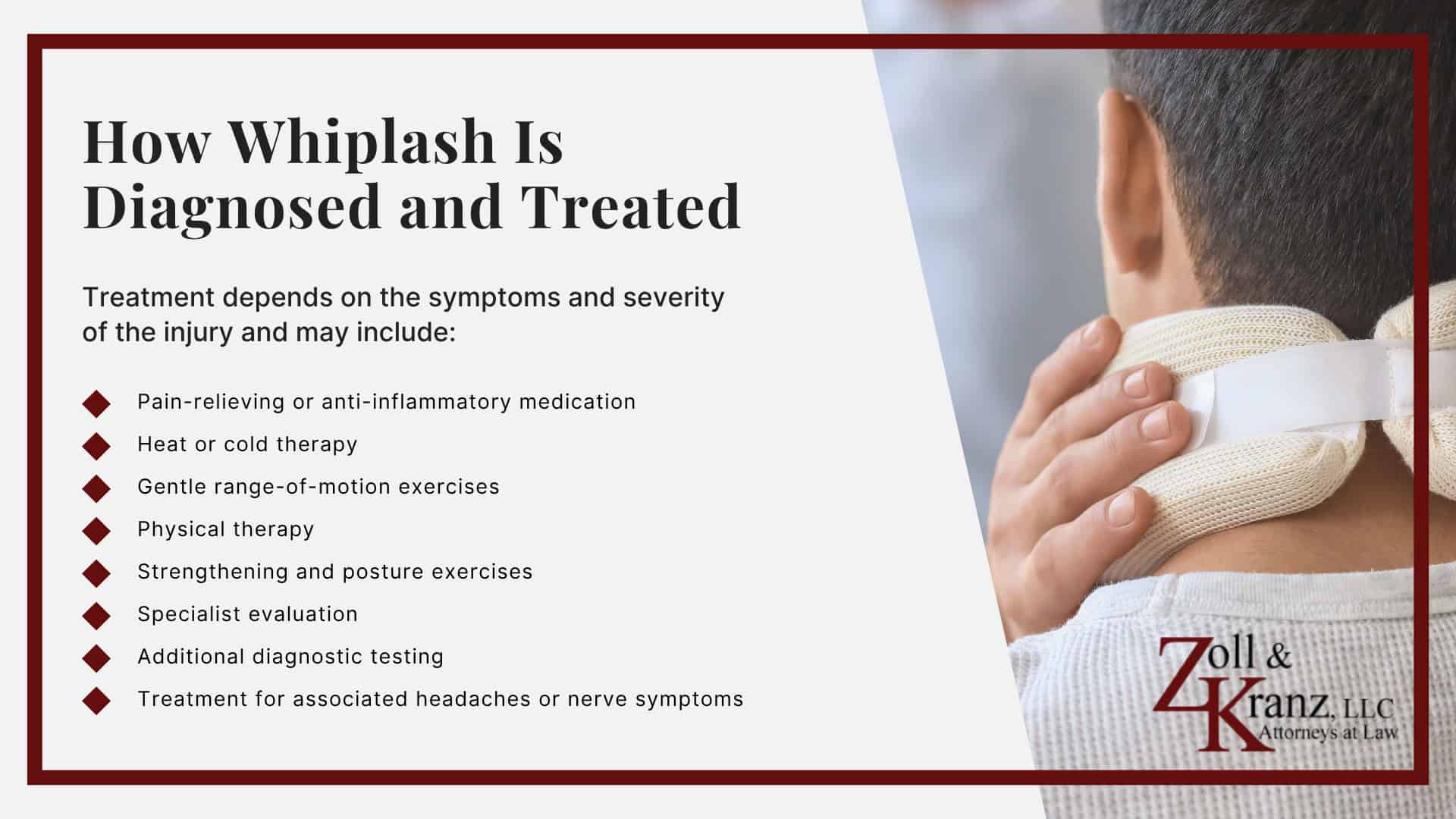
A whiplash injury can range from a relatively mild strain that improves with conservative care to a condition involving persistent pain and significant functional limitations.
Because imaging does not always show acute soft tissue injuries, the absence of a fracture on an X-ray does not necessarily mean that an injured person has no legitimate symptoms.
A Toledo whiplash lawyer can review the medical documentation and collision evidence to determine whether the injury may support a personal injury case.
How Whiplash Happens in Car Accidents
Whiplash occurs when the force of a car crash moves the neck beyond its normal range of motion.
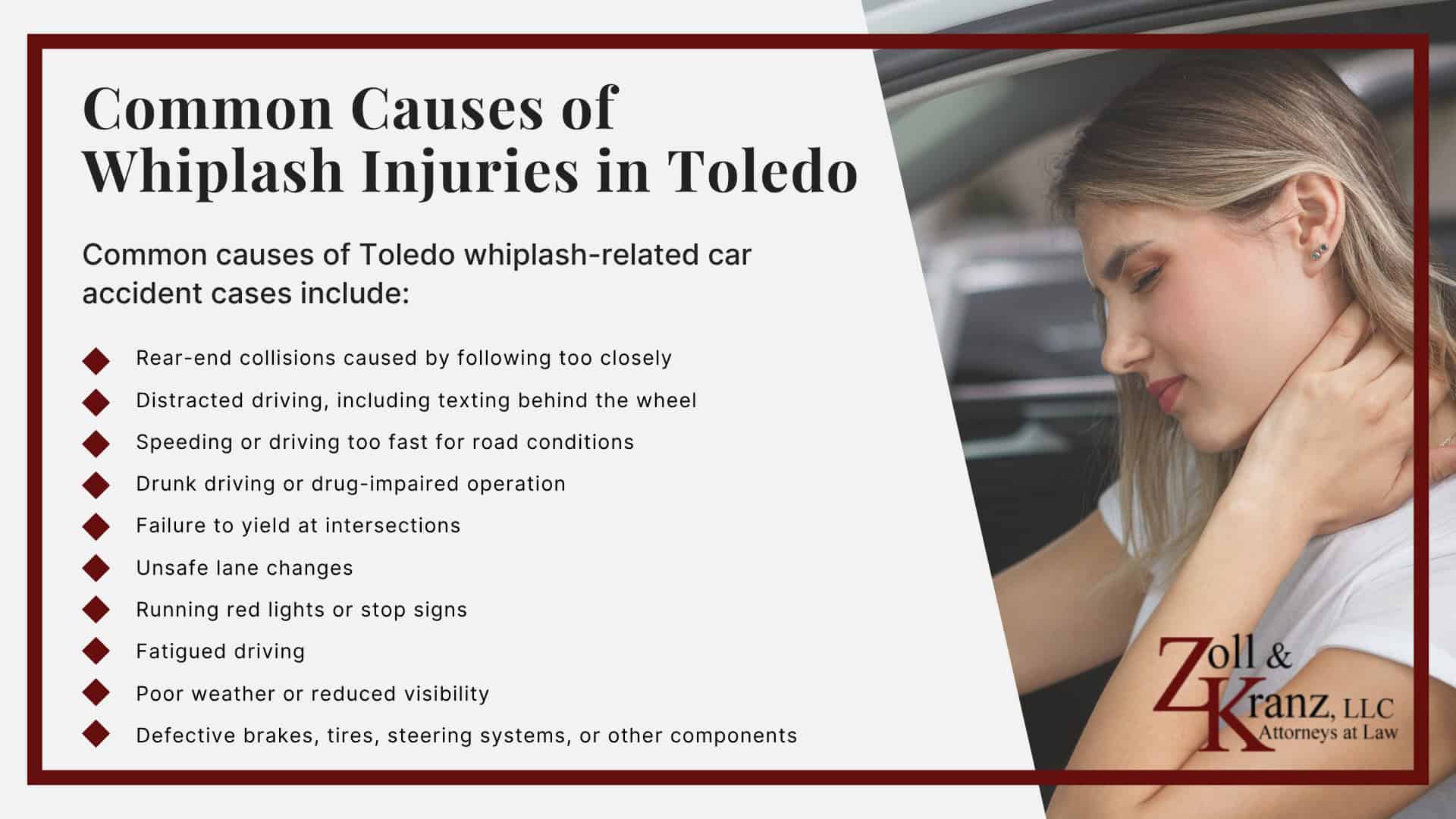
A rear-end auto accident is a frequent mechanism because the struck vehicle may be pushed forward while the occupant’s head initially remains behind, followed by a rapid forward motion.
Front-end and side-impact collisions can also cause whiplash when the body is suddenly restrained or moved in a different direction than the head.
Whiplash may occur when:
- One car hits the rear of another vehicle at a traffic signal.
- A driver runs a stop sign or other traffic signs and causes a side-impact collision.
- A head-on motor vehicle accident throws occupants forward against their seat belts.
- A multi-vehicle collision creates impacts from more than one direction.
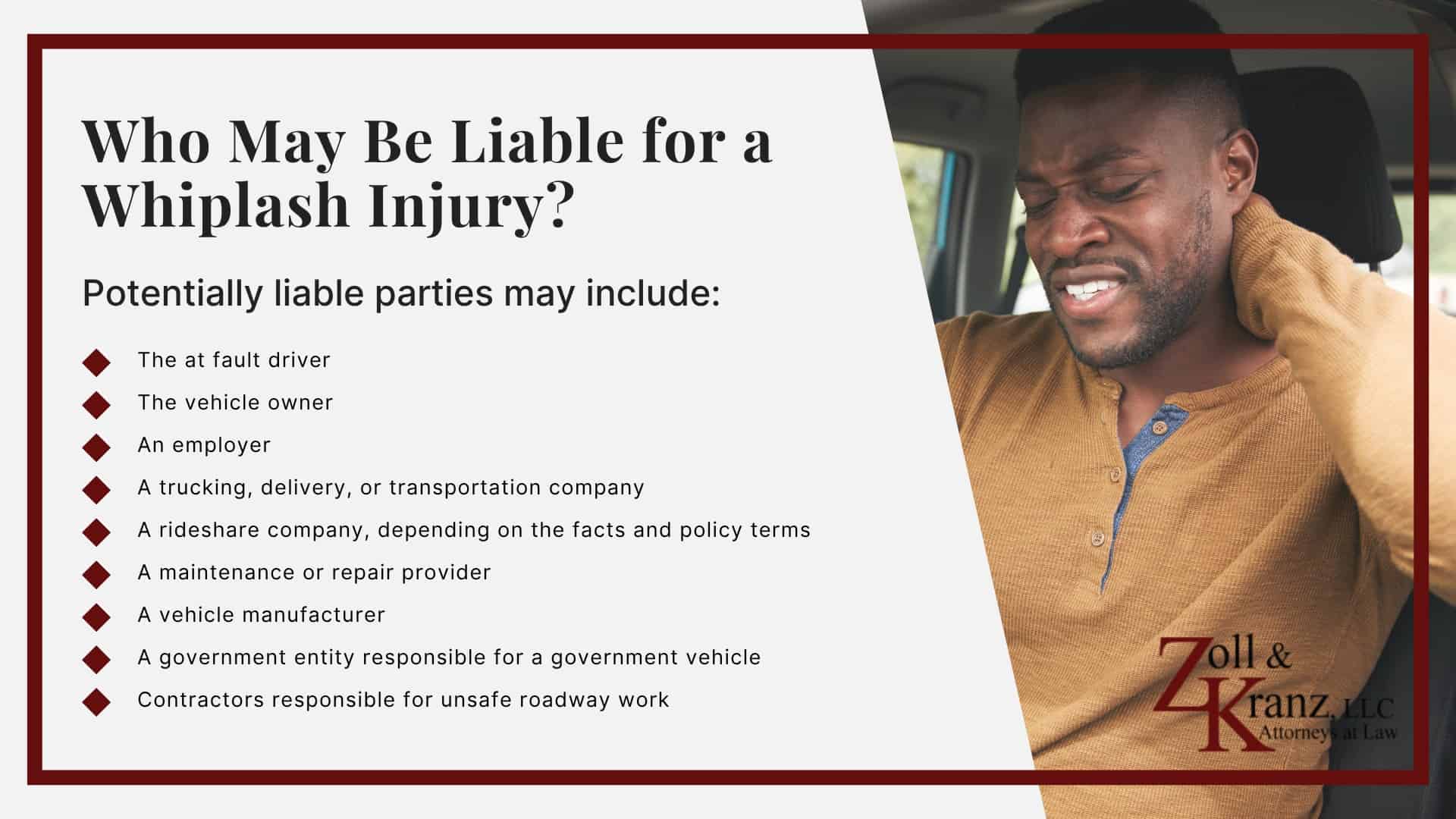
- A commercial vehicle, rideshare vehicle, or one of several delivery drivers strikes another motorist.
- A crash involves a city-owned or other government vehicle.
Even minor accidents can produce a sudden neck movement, although the seriousness of the injury depends on the force, direction, occupant position, medical history, and other case-specific factors.
An experienced car accident attorney can examine the crash dynamics without assuming that visible vehicle damage alone establishes the severity of the injury.